

Avoid these common gold chain mistakes for lasting shine
Buying a solid gold chain feels like a straightforward decision until you realize how many subtle mistakes can quietly drain your investment. Even experienced jewelry enthusiasts get tripped up by misleading hallmarks, deceptive pricing, and construction details that only reveal themselves after months of wear. The good news is that most of these errors are completely avoidable with the right knowledge upfront. This article walks you through the most frequent pitfalls, from choosing the wrong karat to overlooking clasp quality, so every purchase you make reflects both your personal style and smart decision-making.
Table of Contents
- Choosing the wrong gold karat for your lifestyle
- Falling for plated jewelry when you want solid gold
- Overlooking the importance of chain design and construction
- Misjudging sizing, weight, or clasp quality
- Why smart buyers think beyond price tags
- Discover lasting gold chains without compromise
- Frequently asked questions
Key Takeaways
| Point | Details |
|---|---|
| Pick gold wisely | Choose a karat that suits your wear style and durability needs, like 14K for daily use. |
| Avoid plated lookalikes | Verify chains are solid gold using hallmark stamps and weight before buying. |
| Check chain construction | Opt for solid, well-constructed designs over hollow links for longer-lasting pieces. |
| Right size and clasp | Ensure chain length, weight, and clasp style are comfortable and secure for you. |
Choosing the wrong gold karat for your lifestyle
Now that you know pitfalls aren’t always obvious, let’s start with one of the biggest sources of regret: picking the wrong gold purity for your actual lifestyle. The karat (K) rating of a gold chain tells you exactly how much pure gold it contains. A 24K chain is 99.9% pure gold. An 18K chain contains 75% gold and 25% other metals. A 14K chain is 58.3% gold, and a 10K chain is 41.7% gold. Those other metals, called alloys, are added to increase strength and durability.
The problem is that many buyers chase the highest karat without thinking about how they’ll actually wear the piece. 24K pure gold is the softest and most scratch-prone, while 14K offers significantly better durability, though alloy composition can influence tarnish risk. That matters enormously when you’re talking about a chain worn daily.
Here is a clear breakdown to help you choose wisely:
Pros and cons by karat:
- 24K: Richest gold color, highest resale value, ideal for display or investment pieces. Scratches and dents easily. Not recommended for daily wear.
- 18K: Beautiful warm tone, excellent for special occasion wear, moderate durability. Slightly softer than 14K. Higher price point.
- 14K: Strong, scratch-resistant, holds up well to daily activity. Slight color variation due to alloy mix. The most popular choice for everyday chains.
- 10K: Most affordable, very durable, best for high-impact wear. Slightly less vibrant in color and lower gold content.
Karat comparison table:
| Karat | Gold content | Durability | Tarnish risk | Best use |
|---|---|---|---|---|
| 24K | 99.9% | Low | Low | Investment, display |
| 18K | 75% | Medium | Low | Special occasions |
| 14K | 58.3% | High | Medium | Everyday wear |
| 10K | 41.7% | Very high | Medium | Active lifestyles |
Browsing durable gold chain styles before committing to a karat can help you connect design preferences with practical purity choices.
Pro Tip: If you wear your chain every day through work, workouts, or outdoor activities, 14K gold is almost always the smartest choice. It holds its shape better and requires less maintenance than 18K or 24K options.
Falling for plated jewelry when you want solid gold
Once you know the right karat, it’s easy to slip up on authenticity itself, especially if a deal seems too good to be true. Gold-plated and gold-filled chains look nearly identical to solid gold in photos and even in person under casual inspection. But the difference in longevity and value is dramatic.
Solid gold means the metal throughout the entire chain is a gold alloy, from the surface to the core. Gold-filled chains have a thick layer of gold bonded to a base metal, making up at least 5% of the item’s total weight. Gold-plated chains have only a thin coating of gold, usually just a few microns thick, applied over a base metal like brass or copper. That coating fades, chips, and can cause skin reactions over time.
Hallmark stamps and weights are your primary tools for telling these apart, and knowing how to read them protects you from paying solid gold prices for plated products. Solid gold chains carry stamps like 10K, 14K, 18K, or their decimal equivalents (417, 585, 750). Gold-filled pieces are often stamped “GF” or “1/20 14K GF.” Plated pieces may have no stamp at all or carry a “GP” or “EP” mark.
Telltale signs of plated or filled chains:
- The price is significantly below market value for the stated karat
- The chain feels unusually light for its size
- There is no hallmark stamp, or the stamp reads “GP,” “GEP,” or “GF”
- The color appears uneven or fades near clasps or link edges
- Seller descriptions use vague language like “gold tone” or “gold style” instead of “solid gold”
- The chain causes skin discoloration or irritation after short periods of wear
A gold chain that looks stunning in the store but starts flaking or turning green within a few months was never a good deal, no matter what the price tag said. Real value in jewelry comes from what the piece looks like five years from now, not five minutes after unboxing.
When shopping online, stick with retailers that openly publish metal content, sourcing information, and visible hallmark stamps on product photography. Buying premium gold chains from a trusted source with clear authenticity guarantees removes the guesswork entirely.
Overlooking the importance of chain design and construction
Even with authentic, high-karat gold, your experience can suffer if you don’t consider how the chain is made. Two chains can carry the same karat stamp and still differ enormously in how they hold up over time. The difference often comes down to whether the chain is solid or hollow, and how the individual links are connected.
Solid chains are made entirely from gold alloy throughout. Hollow chains have a core that is empty or filled with a non-gold material to reduce weight and cost. While hollow chains look identical on the surface, certain chain designs with hollow links are far more prone to bending and breaking under pressure. A single sharp pull or accidental snag can collapse a hollow link permanently.
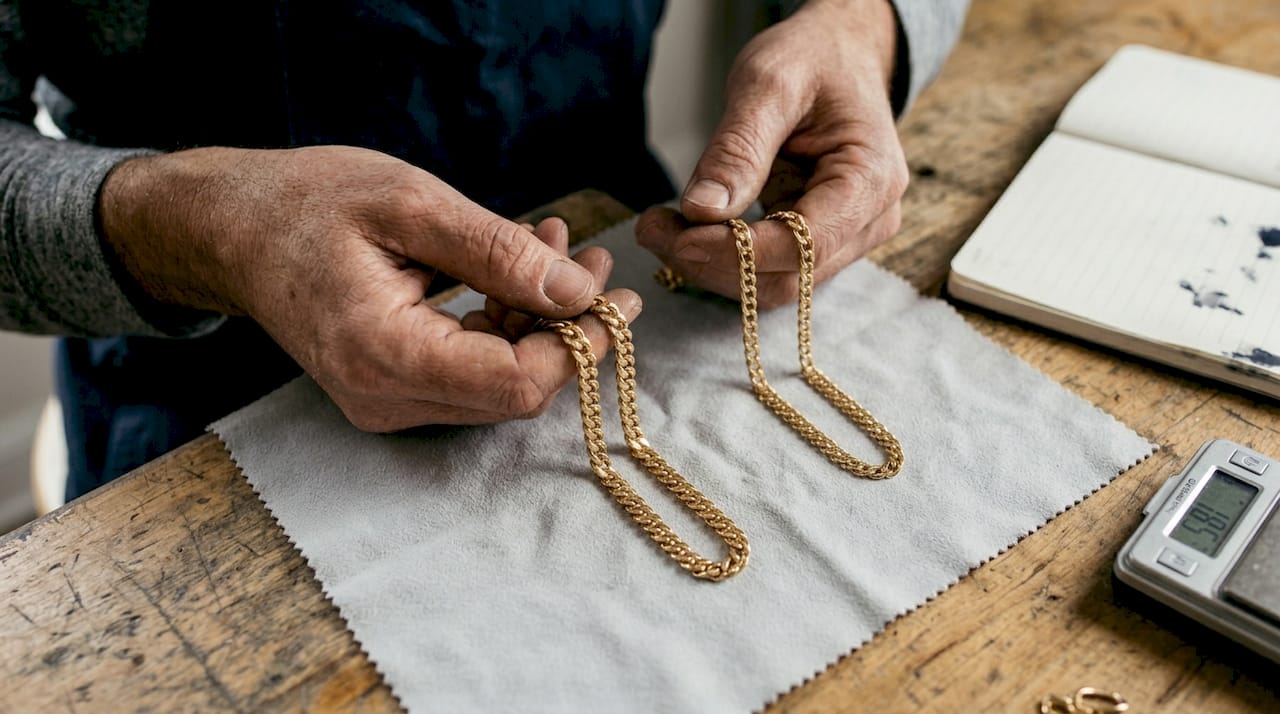
Soldering also matters. Soldered links are fused shut with a gold-compatible metal during manufacturing, creating a secure, closed loop. Unsoldered links are simply bent into shape and can gradually work themselves open with repeated wear.
Steps to assess chain construction quality:
- Ask the seller or read the product description to confirm whether the chain is solid or hollow.
- Look at the chain’s weight relative to its length and width. Solid chains feel noticeably heavier.
- Examine link edges under magnification or in bright light. Clean, smooth seams typically indicate good soldering.
- Tug gently on the chain in different directions. Quality construction shows no flex or give at the link connections.
- Check if individual links have any visible gaps or asymmetry, which can signal unsoldered or poorly finished links.
- Ask for a material certificate or product documentation that confirms construction type.
Durability by chain style:
| Chain style | Construction | Durability rating | Best for |
|---|---|---|---|
| Franco | Solid, tight links | Excellent | Daily wear |
| Cuban link | Solid or hollow | High (solid), Medium (hollow) | Everyday styling |
| Rope | Twisted solid | High | Pendants, layering |
| Box | Solid links | Medium-High | Light daily use |
| Mariner | Solid oval links | High | Active wear |
| Snake | Hollow mesh | Low-Medium | Occasional wear |
For something that combines both style and construction quality, the mariner link chain is an excellent example of a design built for longevity. Similarly, the diamond cut cable link chain demonstrates how solid construction can pair beautifully with refined styling.
Pro Tip: When in doubt between two similar chains at similar prices, always choose the heavier one. Weight is a reliable indicator of solid construction, and solid chains last significantly longer for frequent wearers.
Misjudging sizing, weight, or clasp quality
Finally, mistakes aren’t just about the gold itself. Small physical details can make or break your satisfaction with a chain you otherwise love. Getting the sizing, weight, and clasp wrong leads to discomfort, breakage, and eventually a chain that sits in a drawer unused.
Chain length is the first consideration. A 16-inch chain sits at the collarbone, which works well for pendants. An 18-inch chain falls just below the collarbone and is the most versatile for men and women. A 20-inch chain sits on the chest, and 24 to 30 inches suits layered styling or larger pendants. Choosing a length too short creates tension and increases the chance of breakage.
Chain width should match both your physical frame and how you plan to wear it. Thin chains under 2mm work beautifully on their own but struggle to support heavy pendants. Wider chains (4mm and above) make a bolder statement and carry more weight comfortably. If you’re layering multiple chains, choosing varying widths creates dimension without tangling.
Clasp quality is where many buyers make their biggest oversight. Sturdy clasps and appropriate chain thickness are critical factors in preventing breakage and discomfort. There are two main clasp types to know:
- Lobster clasps use a spring-loaded lever mechanism that snaps shut firmly. They are more secure and less likely to open accidentally.
- Spring-ring clasps use a small circular ring with a push-button mechanism. They are less bulky but easier to accidentally open, especially with heavier chains.
Troubleshooting common chain comfort and breakage issues:
- Chain feels too tight: Go up at least 2 inches in length, especially for wider or heavier styles
- Chain breaks repeatedly: Check whether the clasp is the weak point; a quality lobster clasp replacement can solve this
- Chain tangles constantly: Switch to a slightly stiffer chain style like a Franco or Cuban link
- Chain irritates your skin: Verify metal alloy content; nickel-free or high-karat options typically reduce skin sensitivity
- Pendant slides or bunches up: Use a pendant bail that matches the chain width for better balance
For a statement piece that handles weight and daily wear without sacrificing comfort, the high polish mariner chain is a strong example of how width and clasp quality can work together perfectly.
Why smart buyers think beyond price tags
After walking through all these pitfalls, it’s worth pausing to address something that doesn’t get discussed enough: the psychology of the gold chain purchase. Most buyers focus heavily on price and karat number while underweighting construction, clasp design, and sizing. That’s a mistake we see repeatedly, and it leads to dissatisfaction that has nothing to do with budget.
Here is what we’ve observed about seasoned collectors and confident gold chain wearers. They don’t chase the highest karat they can afford. They ask questions about construction. They hold the chain before buying. They think about the clasp. They consider whether the width suits the kind of pendant they plan to wear now and in two years.
The uncomfortable truth about cheap gold chain deals is this: a plated or hollow chain that looks beautiful in a photo and costs 60% less than a solid equivalent isn’t a deal. It’s a delayed disappointment. You pay for the look upfront and then pay again with repair costs, replacement costs, and the erosion of your confidence in the piece.
Real value in gold jewelry comes from the intersection of authenticity, thoughtful construction, and practical fit for your life. A 14K solid Franco chain worn daily for ten years delivers far more value than a 24K plated novelty piece that loses its shine in a season. Browsing practical gold buying advice can help you build the framework for making purchases you’ll never regret.
The most satisfied buyers we’ve seen aren’t necessarily the ones who spent the most. They’re the ones who asked the right questions before buying and chose pieces that matched how they actually live.
Discover lasting gold chains without compromise
If you’re ready for confidence and sparkle, your next step is simple. At Baker Gold Chains, every piece in our collection addresses exactly the pitfalls we’ve outlined above. Each chain is solid gold, fully hallmarked, sourced from reputable U.S. suppliers, and backed by our lifetime craftsmanship guarantee. You won’t find hollow links or misleading karat claims here.
Whether you’re looking for something timeless like our solid diamond cut rope chain or something with elegant warmth like our heart necklace in 14K gold, every piece is crafted to last and built to be worn with confidence every single day. We offer free insured shipping on orders over $150 and flexible financing options, so quality is always within reach.
Frequently asked questions
How can I tell if a gold chain is solid or just plated?
Check for hallmark stamps, consistent color throughout, and compare weight; plated chains feel lighter and cost significantly less than comparable solid gold pieces. Solid chains carry stamps like 10K, 14K, or 18K without “GP” or “GF” designations.
Which gold karat is best for daily wear chains?
14K gold typically offers the best balance of strength and shine for everyday chains, as 24K is far too soft for regular wear and scratches under normal daily activity.
Are all gold chains with the same karat equally durable?
No. Chain design and whether it’s solid or hollow greatly affect durability beyond karat value alone, since hollow link designs are significantly more prone to bending or collapsing under pressure.
What clasp is most secure for gold chains?
Lobster clasps are generally considered stronger and safer than spring-ring clasps, as sturdy clasps and appropriate thickness work together to prevent accidental opening and reduce breakage risk during regular wear.

