

What Is 10K Gold? Durability, Value, and Jewelry Insights
Most shoppers assume that all gold jewelry is made from pure gold. That’s rarely the case. Almost every piece sold in stores or online is an alloy, meaning gold mixed with other metals to achieve specific properties. 10K gold is one of the most popular alloys on the market, especially in the United States, and for good reason. It offers a genuine gold content, lasting durability, and a price point that makes real gold accessible for everyday wear and gifting. This guide breaks down exactly what 10K gold is, how to verify its authenticity, and why it earns a permanent spot in so many jewelry collections.
Table of Contents
- Understanding 10K gold: Composition and meaning
- Identifying real 10K gold: Stamps, hallmarks, and testing
- Why choose 10K gold? Durability, price, and style advantages
- Care, maintenance, and long-term value of 10K gold jewelry
- The case for 10K: Why less gold can be more practical
- Find your perfect 10K gold chain or necklace
- Frequently asked questions
Key Takeaways
| Point | Details |
|---|---|
| 10K gold definition | 10K gold contains 41.7% pure gold blended with other metals to boost durability. |
| Authenticity markers | A 10K or 417 stamp helps confirm genuine 10K gold, but professional testing is best for uncertain pieces. |
| Everyday durability | 10K gold offers affordability and strong wear resistance, making it perfect for daily jewelry. |
| Care guidelines | Gentle cleaning and proper storage help 10K gold jewelry maintain its look for years. |
Understanding 10K gold: Composition and meaning
To understand 10K gold, you first need to understand how the karat system works. Pure gold is labeled as 24K, meaning 24 out of 24 parts are gold. Anything below that is an alloy where some of those parts are replaced by other metals. 10K gold contains 10 out of 24 parts pure gold, with the remaining 14 parts made up of other metals such as silver, copper, zinc, or nickel. This is why 10K gold contains 41.7% pure gold, as reflected by the 417 millesimal fineness stamp you’ll often find stamped inside a ring or on a chain clasp.
The table below gives you a clear picture of how 10K compares to other common gold alloys:
| Karat | Parts gold | Percentage of gold | Common fineness stamp |
|---|---|---|---|
| 10K | 10/24 | 41.7% | 417 |
| 14K | 14/24 | 58.3% | 585 |
| 18K | 18/24 | 75.0% | 750 |
| 24K | 24/24 | 99.9% | 999 |
The other metals in the alloy serve an important purpose. Gold in its pure form is very soft. It scratches, bends, and dents easily with regular wear. By mixing it with harder metals like copper and zinc, jewelers create a material that holds its shape far better over time. The more alloying metals present, the harder and more resilient the piece becomes. This is exactly why 10K gold is stronger than 18K gold, even though it contains less actual gold.
10K gold also comes in several color variations depending on the specific metals used in the alloy:
- Yellow gold: Achieved with a balanced mix of copper and silver. This is the most traditional and recognizable look.
- White gold: Made by adding palladium or nickel, then typically coated with rhodium for a bright, silver-like appearance.
- Rose gold: Created by increasing the copper content, which gives the metal a warm, pinkish tone.
Each color has its own style appeal, but yellow 10K gold remains the most popular choice for chains and everyday jewelry. If you want to see how 10K yellow gold looks in a finished piece, the octagonal box chain is a great example of a refined, wearable design that shows off the metal’s natural warmth.
Pro Tip: If you’re buying gold jewelry primarily for everyday wear or as a practical gift, 10K gold gives you the most durability per dollar. You’re getting real gold without paying the premium of higher karats, and the piece will hold up to daily use far better than softer alternatives.
Identifying real 10K gold: Stamps, hallmarks, and testing
Once you understand what 10K gold is made of, it’s crucial to recognize how to tell real from fake when shopping. The most reliable first step is checking for a hallmark, which is a tiny stamp pressed into the metal during manufacturing. For 10K gold, the U.S. standard stamps are either “10K” or “417,” with the number referring to the millesimal fineness value. In other countries, you may see slight variations, but these two are the ones to look for when buying domestically.
Here’s a side-by-side comparison of common karat stamps so you can quickly reference what to look for:
| Karat | U.S. stamp | Millesimal stamp | Gold content |
|---|---|---|---|
| 10K | 10K | 417 | 41.7% |
| 14K | 14K | 585 | 58.3% |
| 18K | 18K | 750 | 75.0% |
To verify an item’s authenticity at home, follow these steps in order:
- Check for a karat stamp. Look inside rings, on clasps, or near the end of chains. The stamp should be clean and legible.
- Examine the stamp with a magnifying glass. Sometimes stamps are tiny or worn. A jeweler’s loupe helps you read them clearly.
- Perform a magnet test. Real gold is not magnetic. Hold a strong magnet near the piece. If it sticks or is strongly attracted, the metal likely contains a high percentage of base metals or iron.
- Look for discoloration. Worn edges or bends that reveal a different metal color underneath may indicate gold plating rather than solid gold.
- Test density if possible. Gold is very dense. If a piece feels unusually light for its size, that can be a red flag.
“To check authenticity, shoppers should look for a hallmark or stamp indicating karat purity, with common U.S. stamps including 10K or 417, but worn, missing, or unclear stamps can require professional testing.”
Home tests are helpful starting points, but they have real limits. A piece could pass a magnet test and still not be solid gold. It might be gold-filled or heavily plated. If a stamp is missing, worn away, or you simply want certainty before a significant purchase, a certified jeweler can help. X-ray fluorescence (XRF) testing is the professional standard. It reads the exact elemental composition of the metal without damaging the piece and gives you definitive results within minutes.
For more guidance on buying authentic gold jewelry, check out more jewelry buying tips on our site. Being informed before you buy is always the right move.
Why choose 10K gold? Durability, price, and style advantages
Knowing how to spot authentic 10K gold gives you peace of mind. Now let’s look at why 10K is such a smart pick for many shoppers. The benefits go well beyond price.
Strength and scratch resistance. Because 10K gold contains more alloying metals than higher karat options, it resists everyday wear very well. 10K gold’s increased strength and affordability make it ideal for frequently worn jewelry. Chains, rings, and bracelets take a lot of abuse over time. They catch on fabric, get bumped on surfaces, and are exposed to sweat and friction daily. A harder alloy holds up to all of that significantly better than softer 18K or 24K gold.

Price accessibility. Because 10K gold contains less pure gold by weight, it’s priced lower than 14K or 18K equivalents of the same style and size. For shoppers who want a genuine gold piece without a steep budget, this matters enormously. You’re not compromising on authenticity. You’re making a practical financial choice that still delivers real, lasting value. Check out affordable gourmette chain options as an example of what elegant 10K gold jewelry looks like at an accessible price.
Style variety. 10K gold is available in virtually every style you can imagine. Here are some of the most popular chain styles made in 10K:
- Rope chains: Twisted links that catch light from multiple angles. A timeless choice for men and women alike.
- Franco chains: Tight, square links with a bold, structured look. Popular in men’s fashion.
- Cuban link chains: Flat, interlocking oval links. One of the most recognizable styles in modern jewelry.
- Mariner link chains: Oval links with a horizontal bar through each one, inspired by nautical design. The mariner link chain in 10K gold is a standout option for everyday wear.
- Box chains: Square links that create a clean, geometric look. Elegant and versatile for pendants.
A note on skin sensitivity. Higher-karat gold contains more pure gold and fewer reactive metals, which makes it a better option for people with nickel or copper sensitivities. If you have sensitive skin, ask about the specific alloy composition of any 10K piece before buying. Many are fine for most people, but it’s worth knowing.
Pro Tip: 10K gold is one of the best choices for gifting, especially for children or teens. Its durability means the piece will survive active daily life, and its price point lets you give a genuinely meaningful gold gift without overextending your budget.
Care, maintenance, and long-term value of 10K gold jewelry
With all the benefits of 10K gold, how do you ensure your jewelry stays beautiful for years? Maintenance is key. The good news is that caring for 10K gold is straightforward, and a little attention goes a long way.
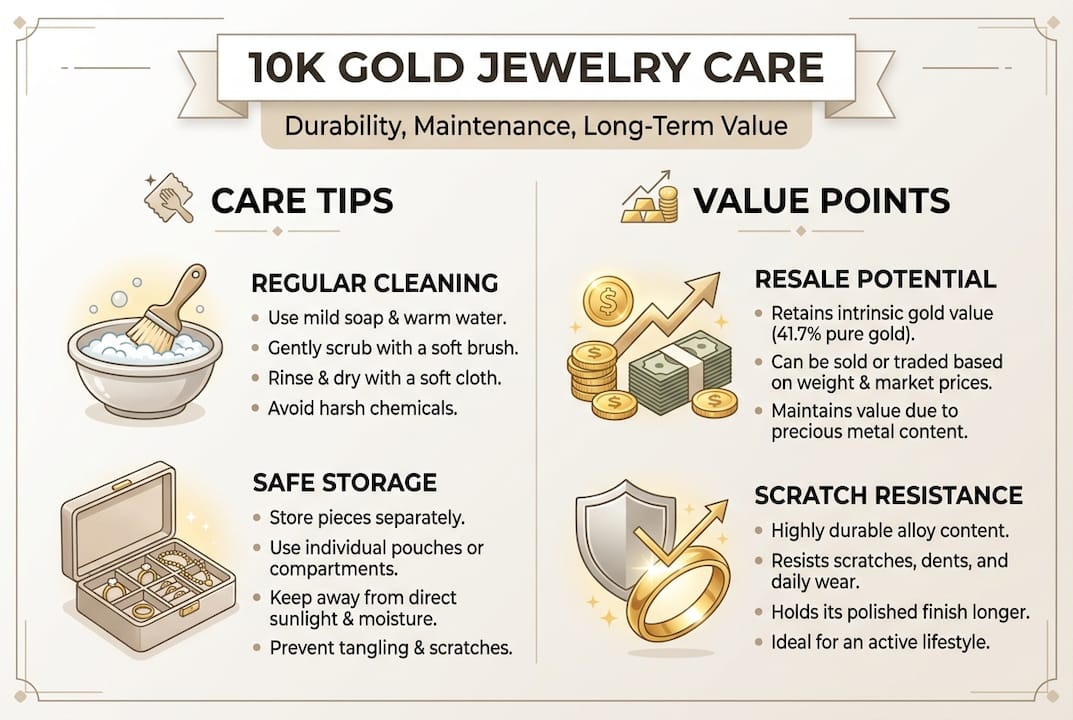
The alloying metals in 10K gold improve its resistance to physical damage, but they also make it slightly more susceptible to surface tarnishing than higher-karat gold. Pure gold doesn’t tarnish. But the copper and silver in 10K alloys can oxidize over time, especially when exposed to harsh chemicals, sweat, and certain environments. Knowing what to avoid matters just as much as knowing what to do.
Here’s a step-by-step routine to keep your 10K gold jewelry in great condition:
- Clean regularly with mild soap and warm water. Use a soft toothbrush to gently scrub away oils and residue. Rinse thoroughly and pat dry with a clean cloth.
- Inspect clasps and links periodically. Look for signs of wear, loosening links, or bent closures. Catching small issues early prevents bigger problems later.
- Store pieces separately. Keep each jewelry item in its own soft pouch or compartment to prevent scratching between pieces.
- Polish occasionally with a jewelry cloth. A soft polishing cloth designed for gold removes light surface dullness and restores shine quickly.
- Have a jeweler inspect the piece annually if you wear it every day. A professional can spot early signs of stress fractures or weakening links that you might miss.
Avoid these common mistakes that shorten the life of your 10K gold jewelry:
- Wearing jewelry in chlorinated pools or hot tubs. Chlorine can degrade the alloy metals and weaken the structure over time.
- Storing chains in tangled piles. This causes friction that dulls the finish and can break delicate links.
- Applying perfume, hairspray, or lotion directly onto jewelry. These products leave residue that builds up and dulls the surface.
- Using abrasive cleaners or rough cloths. These scratch the metal surface, especially on polished finishes.
On the topic of long-term value: 10K gold does retain gold’s intrinsic worth. Its resale value is lower per gram than higher-karat gold, simply because it contains less gold by weight. However, well-crafted 10K pieces in classic styles can still carry sentimental and aesthetic value as heirlooms. For pieces you plan to pass down, choosing a timeless design in solid 10K gold, like a solid rope chain, gives you both durability and lasting appeal.
When your piece needs professional attention, a jeweler may use XRF instrumented testing after hallmark and construction checks to verify composition. This is especially useful if you’re reselling or appraising a piece without clear documentation.
The case for 10K: Why less gold can be more practical
Most jewelry guides position higher-karat gold as the obvious premium choice and treat 10K as a budget compromise. We think that’s the wrong way to frame it. In our experience helping customers find the right piece, 10K gold often outperforms higher-karat alternatives where it actually counts: real life.
18K gold is beautiful. There’s no question about that. But it’s also softer, which means it shows wear faster on pieces that are used daily. A 10K chain worn every day for five years will almost always look cleaner and hold its structure better than an 18K chain put through the same routine. The math on gold content doesn’t translate directly to math on longevity.
The smart buyer thinks about context. Are you buying a piece for a child who plays sports? 10K is the clear choice. Buying a chain as a meaningful but practical gift? 10K gives you real gold without the anxiety of gifting something that dents easily. Living an active lifestyle? 10K gold is built for that. The buyers who are happiest with their purchase aren’t always the ones who bought the highest karat. They’re the ones who matched the alloy to their actual needs.
Find your perfect 10K gold chain or necklace
Ready to explore real 10K gold pieces for yourself or as a gift? Here’s where you can find styles that balance value, strength, and beauty.
At Baker Gold Chains, every piece is made from solid, authentic gold sourced from reputable U.S. suppliers. Our 10K gold collection includes everything from the elegant diamond cut rope chain to the refined gourmette chain, each crafted for lasting wear. We back every purchase with a lifetime craftsmanship guarantee and offer free insured shipping on orders over $150. Whether you’re treating yourself or finding the right gift, our collection makes it easy to buy with confidence.
Frequently asked questions
Is 10K gold real gold?
Yes, 10K gold is real gold. It contains 41.7% pure gold alloyed with other metals for added strength, making it a legitimate and widely recognized gold standard in the United States.
Will 10K gold tarnish or turn your skin green?
10K gold rarely causes skin discoloration, but people with sensitive skin may have mild reactions depending on the alloy composition, particularly if the piece contains a higher percentage of copper or nickel.
How can I tell if my jewelry is truly 10K gold?
Look for a stamp reading “10K” or “417” on the clasp or inner band. If the stamp is worn or missing, have a certified jeweler test it using XRF or acid testing for a definitive answer.
Is 10K gold a good choice for daily wear?
Absolutely. 10K gold’s increased strength and affordability make it one of the best options for jewelry worn every day, offering durability that higher-karat alternatives often can’t match under regular use.

