

Gold chain vs gold plated: How to choose quality jewelry
When you’re shopping for a gold chain, the price tag alone won’t tell you the whole story. Many buyers assume that a lower price simply reflects a smaller or simpler piece, when in reality it often signals a very different material altogether. Understanding the difference between solid gold and gold-plated chains can save you money, prevent disappointment, and help you choose a piece that truly lasts.
Table of Contents
- Understanding gold chains and gold-plated jewelry
- Durability and lifetime value: What matters most?
- Cost breakdown: Is gold-plated the better bargain?
- How to spot authenticity: Shopping tips for selecting gold chains
- Why choosing solid gold is worth it: What most buyers overlook
- Explore premium gold chains and fine jewelry
- Frequently asked questions
Key Takeaways
| Point | Details |
|---|---|
| Solid gold outlasts plated | Chains made from solid gold maintain their shine and durability far longer than any plated alternative. |
| Gold-plated costs less upfront | Gold-plated chains are cheaper at purchase but require more upkeep and frequent replacements. |
| Verify authenticity before buying | Look for hallmarks, documentation, and reputable retailers to ensure the chain is truly gold. |
| True value is long-term | Solid gold jewelry holds its worth, resists wear, and is ideal for heirloom-quality gifts. |
| Smart buyers look beyond price | Consider durability, resale potential, and craftsmanship for lasting satisfaction, not just the sticker cost. |
Understanding gold chains and gold-plated jewelry
Before you can make a confident buying decision, you need to know exactly what you’re comparing. The terms “gold chain” and “gold-plated chain” sound similar, but they describe completely different products.
A solid gold chain is made entirely of gold alloy throughout its full structure. When you see labels like 10K, 14K, or 18K, those numbers tell you the gold purity. For example, 14K gold contains 58.3% pure gold mixed with other metals like silver, copper, or zinc to add strength. The higher the karat, the more gold content the piece holds.
A gold-plated chain, on the other hand, is made from a base metal, usually brass, copper, or stainless steel, and then coated with a very thin layer of gold. That coating is typically measured in microns. Standard gold plating is often as thin as 0.5 microns, while higher-end plating, sometimes called “gold vermeil,” may reach 2.5 microns or more. Either way, the gold layer is a fraction of what you’d find in a solid gold piece.
Here are the key differences at a glance:
- Material composition: Solid gold is gold all the way through; plated chains are base metal with a surface coating
- Karat stamps: Solid gold carries a karat stamp (10K, 14K, 18K); plated pieces may say “GP,” “GF,” or “GEP”
- Weight and density: Solid gold is noticeably heavier than plated alternatives of the same size
- Craftsmanship: Solid gold chains require skilled metalwork throughout the entire piece, not just the surface
- Longevity: Solid gold maintains its appearance indefinitely with basic care
One of the most common misconceptions is that gold-plated jewelry is “almost as good” as solid gold. In practice, the two are not comparable for long-term wear. You can find more gold chain buying tips to help you navigate your options before you buy.
Pro Tip: If you’re unsure whether a chain is solid gold or plated, check for a karat stamp on the clasp or a small tag near the closure. Solid gold pieces will always carry a clearly stamped purity mark from the manufacturer.
Durability and lifetime value: What matters most?
After understanding the materials, it’s important to see how each type performs in everyday life. This is where the real difference becomes clear for most buyers.
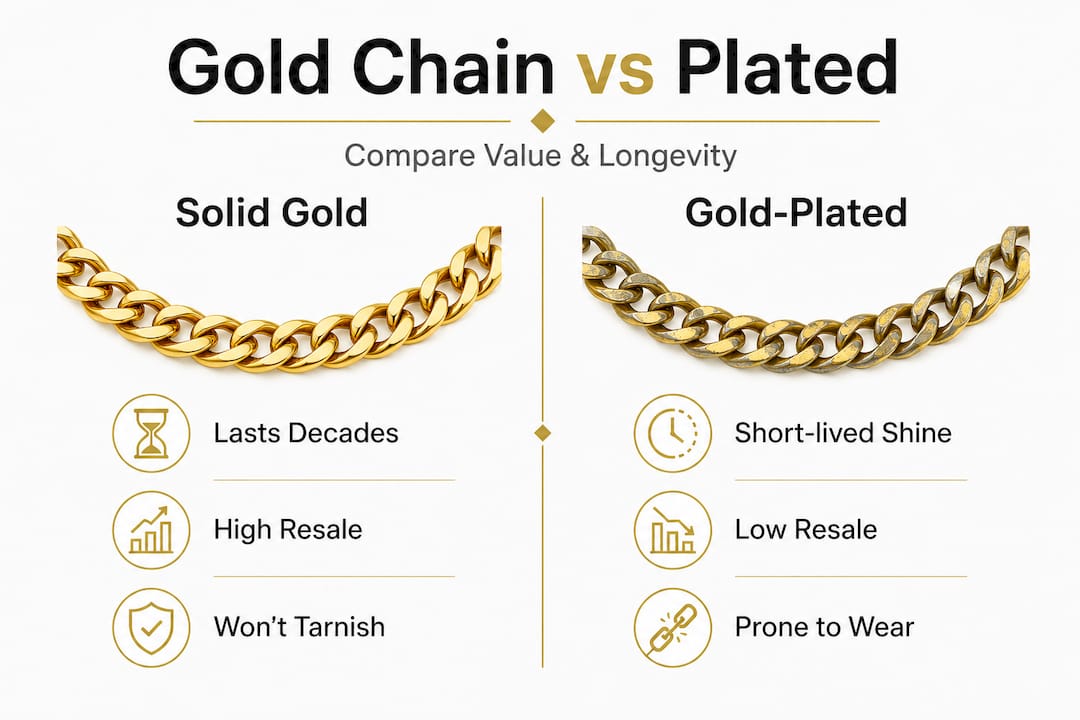
Gold-plated chains begin to show wear relatively quickly. With regular use, the thin gold surface layer rubs away through contact with skin, clothing, sweat, and moisture. Once the plating wears through, the base metal underneath is exposed. This leads to discoloration, a greenish tint on the skin, and a dull or patchy appearance on the chain itself. Replating is possible, but it adds recurring costs and is not always practical for intricate chain styles.
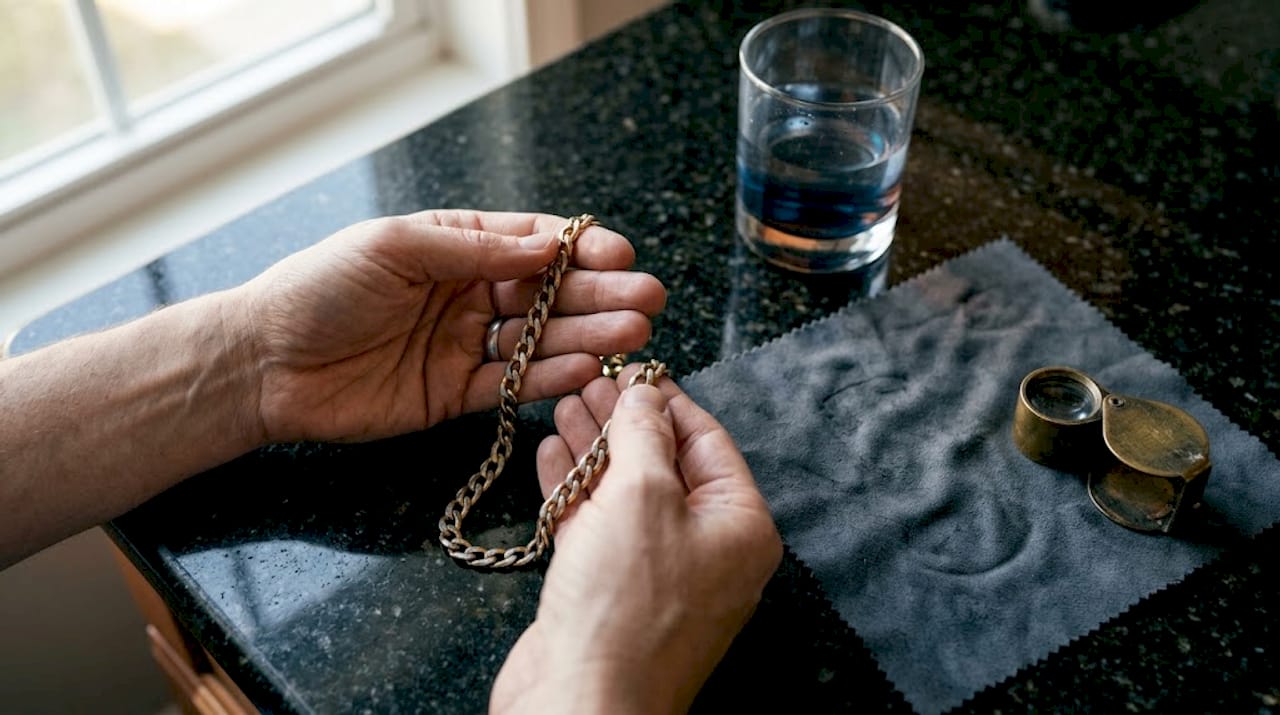
Solid gold chains behave very differently. Because the gold content runs through the entire piece, there is no surface layer to wear away. A solid gold rope chain worn daily for decades will still look like gold, because it is gold all the way through. Minor scratches can be polished away, and the metal itself does not tarnish or corrode under normal conditions.
| Feature | Solid gold chain | Gold-plated chain |
|---|---|---|
| Material | Gold alloy throughout | Base metal with gold coating |
| Tarnish resistance | Excellent | Poor over time |
| Skin reaction | Minimal (hypoallergenic options) | Possible (base metal exposure) |
| Maintenance needed | Low (occasional polish) | High (replating required) |
| Resale value | Retains gold market value | Essentially none |
| Lifespan | Decades or more | 1 to 3 years typical |
“A solid gold chain is not just jewelry. It is a piece you can pass down, trade in, or wear every single day without worrying about what’s underneath.”
The resale value difference is significant. Solid gold chains can be sold based on their gold weight and market price, which means they hold real monetary value. Gold-plated chains have no meaningful resale value because the actual gold content is negligible. For buyers who see jewelry as both a personal item and a financial asset, this distinction matters a great deal.
Cost breakdown: Is gold-plated the better bargain?
Having looked at long-term durability, let’s dig into how costs actually compare over time. The upfront price of a gold-plated chain is lower, but the full picture looks quite different when you factor in longevity and replacement.
Here’s a realistic cost comparison over a five-year period:
| Item | Gold-plated chain | Solid 10K gold chain |
|---|---|---|
| Initial purchase price | $20 to $80 | $150 to $500+ |
| Replating cost (per session) | $30 to $60 | Not needed |
| Replacement frequency | Every 1 to 2 years | Once (lasts decades) |
| 5-year total estimated cost | $200 to $400+ | $150 to $500 |
| Resale recovery | $0 | $50 to $300+ |
The numbers tell a clear story. A buyer who purchases a gold-plated chain every two years, plus pays for occasional replating, can easily spend more over five years than someone who invests in a solid gold piece from the start. The 10K gold rope chain is a great example of an entry-level solid gold option that delivers lasting value without requiring a large upfront investment.
When calculating the true cost of any chain, consider these four factors:
- Purchase price: What you pay upfront for the piece
- Maintenance cost: Replating, polishing, or repair fees over time
- Replacement frequency: How often you’ll need to buy a new chain
- Resale or trade-in value: What you can recover when you upgrade or sell
For gifting purposes, the cost calculation shifts slightly. A gold-plated chain may seem like a thoughtful and affordable gift, but the recipient will likely notice wear within a year or two. A solid gold chain, even at a modest 10K purity, communicates genuine care and provides a lasting reminder of the occasion.
Pro Tip: If budget is a concern, choose a lighter or thinner solid gold chain rather than a heavier gold-plated one. A slim 10K solid gold chain will outlast and outperform a thick gold-plated alternative every time.
How to spot authenticity: Shopping tips for selecting gold chains
Now you’re ready to apply the knowledge. Here’s how to identify real gold when shopping, whether in person or online.
The most reliable indicator of solid gold is the karat stamp. Legitimate solid gold pieces are stamped with their purity level, typically found on the clasp, a small tag, or directly on the chain links. Common stamps include 10K, 14K, 18K, 417 (10K in European notation), 585 (14K), and 750 (18K). If a piece carries a stamp like “GP,” “GEP,” “GF,” or “HGE,” it is gold-plated or gold-filled, not solid gold.
Here are the key things to check when evaluating a chain:
- Karat stamp location: Check the clasp and any connecting rings for purity markings
- Weight and feel: Solid gold has a satisfying density; plated chains often feel lighter and less substantial
- Color consistency: Solid gold maintains even color throughout; plated pieces may show wear spots or discoloration near high-contact areas
- Seller documentation: Reputable sellers provide certificates of authenticity or material disclosures
- Magnet test: Gold is not magnetic; if a chain is attracted to a magnet, it contains ferrous base metals and is not solid gold
- Acid test: Jewelers use nitric acid to confirm gold purity; this is a professional-level test but widely available at reputable shops
You can find additional gold authenticity tips that walk through each verification method in detail. For a closer look at how craftsmanship shows up in a finished piece, the 14K sparkle chain is a good example of what genuine gold texture and finish look like in a well-made piece.
When shopping online, always read the product description carefully. Look for explicit statements like “solid 14K gold” rather than vague phrases like “gold-tone” or “gold-colored.” Reputable sellers will clearly state the karat purity, the weight of the piece, and the chain’s dimensions.
Pro Tip: Ask any seller directly, “Is this piece solid gold throughout, or is it gold-plated?” A trustworthy retailer will answer clearly and provide documentation. Hesitation or vague answers are a red flag.
Why choosing solid gold is worth it: What most buyers overlook
Here’s something most buying guides won’t tell you: the decision to buy solid gold is not just about the chain itself. It’s about avoiding a specific kind of regret that comes from settling for less.
We’ve seen this pattern repeatedly. A buyer chooses a gold-plated chain to save money upfront. Within a year, the color starts to fade near the clasp. By year two, the base metal shows through in patches. The piece gets tossed in a drawer. Then the buyer comes back looking for something real, something that will actually last. The money spent on the plated chain is gone, and they’re starting over.
Solid gold doesn’t work that way. It ages gracefully. Scratches develop a natural patina that many wearers actually prefer. The chain you buy today can be resized, repaired, or passed on to someone else decades from now. That kind of staying power is not just practical. It carries emotional weight.
For gifts especially, solid gold communicates something that plated jewelry simply cannot. When you give someone a premium gold chain, you’re giving them something that will still look exactly like gold on their 20th anniversary, at their child’s graduation, or years after you’re gone. That’s the part most buyers overlook when they focus only on price.
There’s also the investment angle. Gold has historically held its value over time, and solid gold jewelry participates in that. You’re not just buying an accessory. You’re holding a tangible asset that can be liquidated, traded, or appraised. Gold-plated jewelry offers none of that. The thin coating has no meaningful gold content by weight, so it carries no commodity value at all.
The honest advice is this: if you’re buying a chain for yourself or someone you care about, choose solid gold. Start with 10K if budget is tight. Go with 14K if you want the best balance of durability and purity. Either way, you’ll never regret buying the real thing.
Explore premium gold chains and fine jewelry
Ready to choose the right chain? Here’s where to find quality gold jewelry that delivers on everything this article has covered.
At Baker Gold Chains, every piece is made from solid 10K, 14K, or 18K gold sourced from reputable U.S. suppliers. Whether you’re looking for an everyday chain or a special gift, the collection covers a wide range of styles and budgets. The diamond cut rope chain is a popular entry point for buyers who want genuine solid gold without a large upfront cost. For something with more visual texture and character, the pendant chain with textured links offers a refined 14K option that pairs beautifully with any pendant. All orders over $150 ship free with insurance, and every piece is backed by a lifetime craftsmanship guarantee. Shop Baker Gold Chains today and buy with confidence.
Frequently asked questions
What is the main difference between a gold chain and a gold-plated chain?
A solid gold chain is made entirely of gold alloy throughout its structure, while a gold-plated chain is a base metal coated with a thin gold surface layer that wears away over time.
Will a gold-plated chain tarnish or peel over time?
Yes, gold-plated chains are prone to tarnishing and peeling because the thin surface coating wears through with regular use, exposing the base metal underneath.
How can I check if a chain is real gold or just gold-plated?
Look for a karat stamp (10K, 14K, 18K) on the clasp or chain, perform a magnet test, and ask the seller for authenticity documentation. Reputable retailers will provide clear material disclosures.
Is a solid gold chain a better investment than gold-plated?
Solid gold chains retain real monetary value tied to gold market prices and last for decades, making them a significantly smarter long-term investment than gold-plated alternatives.
Can I gift a gold-plated chain to someone special?
While gold-plated chains are more affordable upfront, gifting solid gold is strongly preferred for meaningful occasions because it offers lasting quality, genuine material value, and sentimental durability.

