

What is a rope chain? Your complete style and durability guide
Rope chains are one of the most recognized styles in fine jewelry, yet they’re frequently confused with box chains, snake chains, or even Franco chains at first glance. That confusion matters more than you might think. Choosing the wrong chain style can mean ending up with something that doesn’t hold up to daily wear, doesn’t complement your pendant, or simply doesn’t feel like you. This guide walks you through everything you need to know about rope chains: what they are, how they’re made, which styles suit different lifestyles, and how to keep yours looking great for years to come.
Table of Contents
- What is a rope chain? Anatomy and definition
- Rope chain styles: Types, materials, and detailing
- Why choose a rope chain? Advantages and best uses
- Caring for your rope chain: Maintenance and longevity tips
- Our take: What most guides miss about rope chains
- Discover your perfect rope chain at Baker Gold Chains
- Frequently asked questions
Key Takeaways
| Point | Details |
|---|---|
| Unique rope design | Rope chains feature twisted, interwoven links that provide a flexible and highly reflective look. |
| Variety of options | You can choose from solid, hollow, diamond-cut, and various gold colors to match your personal style. |
| Ideal for daily wear | Solid gold rope chains are especially strong and suitable for everyday use and gifting. |
| Easy care routine | Simple, regular cleaning and careful handling can keep your rope chain looking brilliant for years. |
What is a rope chain? Anatomy and definition
A rope chain is a type of jewelry chain made from multiple small links twisted and interlocked together in a spiral pattern. The result looks remarkably like a length of actual rope, which is exactly where the name comes from. Each segment of the chain consists of oval or round links arranged at angles to each other, creating that characteristic twisted, textured appearance.
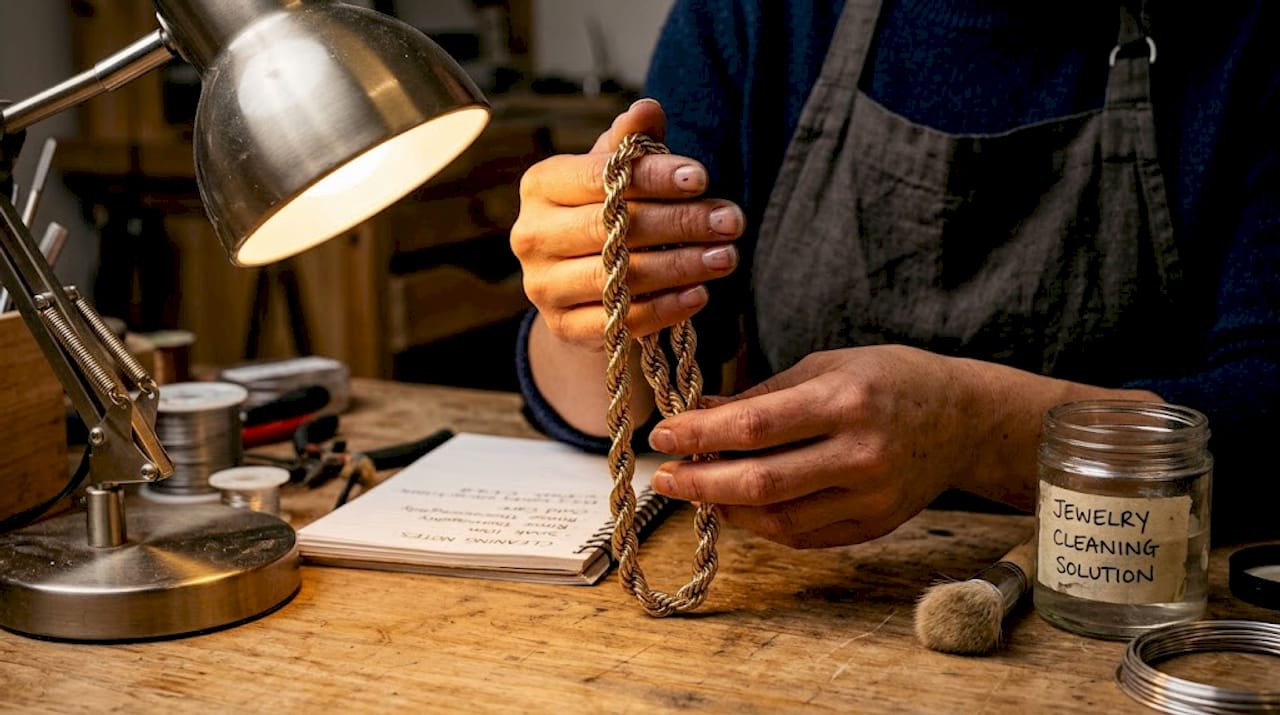
What sets rope chains apart structurally is the way those links interlock. Unlike a simple cable chain where each link sits flat and connects to the next in a single plane, rope chain links rotate around each other. This means the chain has a natural flex and a three-dimensional surface that catches light from multiple angles. That reflective quality is one reason rope chains look so rich, even at a modest width.
The light rope chain details at Baker Gold Chains illustrate this well. Even at just 2.00 mm wide, the twisted link construction gives the chain a visual weight and texture that a flat cable chain of the same width simply can’t match.
Common rope chain variations include:
- Solid rope chains: Made from solid gold throughout. These are heavier, more durable, and better suited for everyday wear. They also hold their shape well when supporting pendants.
- Hollow rope chains: Constructed with a hollow interior to reduce weight and cost. They look identical to solid chains but require more careful handling to avoid denting.
- Diamond-cut rope chains: Feature faceted links that have been cut or polished to create flat, reflective surfaces. The result is a noticeably brighter, more sparkling appearance. The solid diamond cut rope chain is a great example of how this technique elevates the visual impact of the style.
Key characteristics: Rope chains vs. similar styles
| Feature | Rope chain | Cable chain | Box chain | Franco chain |
|---|---|---|---|---|
| Link structure | Twisted, interlocked | Flat oval links | Square box links | V-shaped interlocked |
| Texture | Highly textured | Smooth | Smooth | Textured |
| Light reflection | High (multi-angle) | Low to medium | Medium | High |
| Durability | High (solid) | Medium | Medium | Very high |
| Pendant support | Good to excellent | Good | Good | Excellent |
Visual identifiers to look for when spotting a rope chain:
- A spiral or twisted pattern running the full length
- A textured, three-dimensional surface rather than a flat one
- Links that appear to wrap around each other rather than connect end to end
- A chain that catches light from multiple directions as it moves
Pro Tip: When checking craftsmanship on a rope chain, hold it up to light and let it hang freely. A well-made rope chain will twist uniformly from clasp to clasp with no gaps, kinks, or uneven sections. Any inconsistency in the twist pattern is a sign of lower-quality construction.
Rope chain styles: Types, materials, and detailing
Now that you know what defines a rope chain, let’s explore the different styles and materials available.
Rope chains come in a wider range of options than most people expect. The style you choose affects not just the look but also the weight, price, and long-term durability of your piece. Understanding these differences helps you match the right chain to your lifestyle and budget.
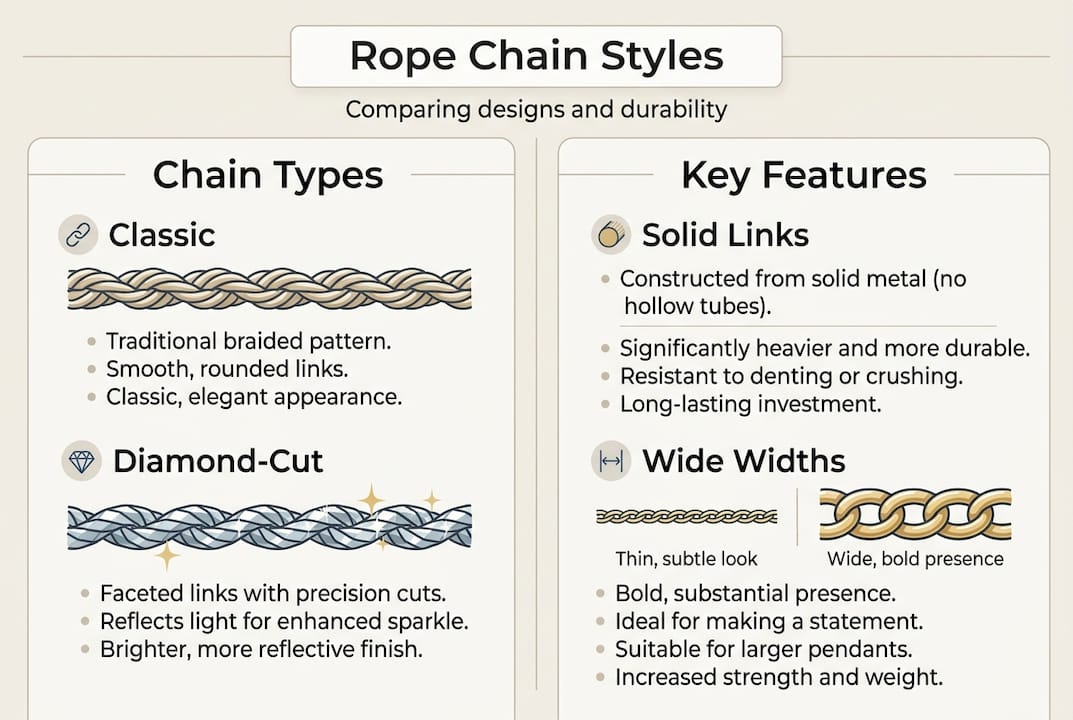
Classic rope chains are the standard version. The links are polished but not faceted, giving a warm, consistent glow. These work well for both casual and formal settings and are often the first choice for people buying their first gold chain.
Diamond-cut rope chains take the classic design a step further. The faceting process adds tiny flat surfaces to each link, dramatically increasing how much light the chain reflects. A white gold rope chain in diamond-cut style, for example, can look almost as bright as a piece set with actual diamonds. This style tends to appeal to buyers who want maximum visual impact without moving to a heavier or wider chain.
Width is another major variable. Rope chains are available from delicate 1.5 mm widths all the way up to bold 7 mm or wider statement pieces. Thinner chains suit layering or minimalist looks, while wider options like large rope chain styles make a strong standalone statement.
Rope chain comparison: Style, durability, and price
| Chain type | Durability | Style appeal | Relative price |
|---|---|---|---|
| Solid rope | Very high | Classic to bold | Higher |
| Hollow rope | Medium | Classic | Lower |
| Diamond-cut solid rope | Very high | Dressy, high-shine | Higher |
| Diamond-cut hollow rope | Medium | Dressy | Moderate |
How to choose the right material and style for your lifestyle:
- If you wear jewelry daily, choose a solid rope chain. The extra weight is worth it for the durability and resistance to bending or denting.
- If budget is a priority, a hollow rope chain in 14K gold gives you the look of solid gold at a lower price point. Just treat it with more care.
- If you want maximum shine, go with a diamond-cut version. The faceted links catch light in a way that plain polished links simply don’t.
- If you’re layering chains, a thinner rope chain (1.5 to 2.5 mm) in yellow or white gold pairs well with other styles without competing for attention.
- If you’re buying as a gift, yellow gold rope chains in 14K are the most universally flattering and tend to hold sentimental value well over time.
Gold is the most popular metal for rope chains, and for good reason. It doesn’t tarnish, it holds its color, and it retains real monetary value. Yellow gold remains the most classic choice, while white gold offers a cooler, more modern look. Rose gold is a softer, warmer option that has grown in popularity. If you’re open to exploring other gold chain variations, rose gold in particular offers a distinctive look that stands out from more traditional options.
Why choose a rope chain? Advantages and best uses
Once you know the types and materials, understanding the key advantages of rope chains will help you make the most of your choice.
The structural design of a rope chain is one of its biggest practical strengths. Because the links are interlocked and twisted rather than simply connected, the chain distributes tension across multiple contact points. This means that if one section of the chain experiences stress, the load spreads rather than concentrating in one spot. The result is a chain that resists breakage better than many other styles at the same width.
Rope chains have remained one of the most consistently popular chain styles in fine jewelry for decades, valued equally for their visual texture, structural strength, and versatility across casual and formal settings.
Solid diamond cut rope chain options in 10K or 14K gold are especially well suited for everyday wear. The higher gold content in 14K adds richness to the color, while the solid construction means the chain handles the bumps and friction of daily life without losing its shape.
Practical benefits of wearing a rope chain:
- Holds up well to daily activity including work, exercise, and casual wear
- Works as a standalone piece or as a base for pendants and charms
- Available in widths that suit both subtle and statement looks
- Timeless design that doesn’t go out of style between seasons
- Holds real resale or sentimental value as a gift or heirloom piece
- Layers well with other chain styles for a modern, stacked look
For gifting, rope chains are an especially thoughtful choice. They’re personal without being too specific. A well-made gold rope chain suits a wide range of tastes and ages, and it carries a sense of permanence that fashion jewelry simply doesn’t. You can explore more about matching chain styles to occasions through chain style tips on the Baker Gold Chains blog.
Pro Tip: When pairing a pendant with a rope chain, match the pendant bail width to the chain thickness. A pendant with a narrow bail (the loop that slides onto the chain) can pinch or slide awkwardly on a thick rope chain. For pendants with wider bails, a 3 to 5 mm rope chain provides both the visual balance and the physical support the pendant needs.
Caring for your rope chain: Maintenance and longevity tips
After discovering when and why to choose a rope chain, knowing how to care for it ensures your investment lasts and looks great for years.
Gold itself doesn’t tarnish or rust, but rope chains have a textured, multi-link structure that can trap oils, soap residue, and debris over time. That buildup dulls the shine and, if left uncleaned, can gradually weaken the connection between links. Regular, simple care prevents this entirely.
The durable rope chain examples at Baker Gold Chains are built to last, but even the best-made chain benefits from consistent maintenance. Think of it the way you’d think about caring for a quality leather belt or a fine watch: a little regular attention goes a long way.
Routine rope chain care: A step-by-step checklist
- Clean every two to four weeks using warm water mixed with a small amount of mild dish soap. Avoid antibacterial soaps, which can contain chemicals that dull gold over time.
- Use a soft-bristle brush (a clean toothbrush works well) to gently work the soapy water into the twisted links. The rope structure can trap residue, so light scrubbing helps.
- Rinse thoroughly with clean, lukewarm water. Make sure no soap remains in the links, as dried soap residue creates a filmy appearance.
- Pat dry with a soft, lint-free cloth and then allow the chain to air dry completely before storing or wearing. Moisture trapped in the links can cause issues over time.
- Store your rope chain flat or loosely coiled in a soft pouch or lined jewelry box. Avoid storing it tangled with other chains, which can cause kinks or scratches.
- Remove your chain before swimming, showering, or applying lotions and perfumes. Chlorine, saltwater, and chemical-based products can degrade the metal’s surface finish over time.
For comparison, you might also consider how care routines differ across chain styles. A mariner chain alternative, for example, has larger, flatter links that are easier to clean but may show surface scratches more readily than a textured rope chain.
Pro Tip: Avoid ultrasonic cleaners for hollow rope chains. The vibration can stress the thin metal walls and cause dents or structural weakening. Ultrasonic cleaning is generally safe for solid rope chains, but hand cleaning is always the gentler and safer option for any gold chain.
Our take: What most guides miss about rope chains
Most buying guides focus on the basics: rope chains look great, they’re durable, they come in different widths. That’s all true. But there are a few things we’ve noticed that don’t get enough attention.
The biggest misconception we see is that rope chains are fragile because of their twisted structure. In reality, a solid rope chain is one of the more resilient chain styles you can buy. The interlocked links distribute stress in a way that makes the chain resistant to single-point failure. Where buyers run into trouble is with hollow rope chains worn daily. That’s a care and selection issue, not a design flaw.
The other thing worth saying: rope chains are far more versatile than they look in product photos. In practice, they layer beautifully with flat cable chains or box chains, and they work with everything from simple cross pendants to bold statement pieces. Real-world rope chain experiences from everyday wearers consistently highlight how well the style transitions between casual and dressed-up settings. That versatility is genuinely rare in a single chain style.
Discover your perfect rope chain at Baker Gold Chains
Ready to find your own rope chain or gift a lasting piece? Our curated options make it simple.
At Baker Gold Chains, we carry a full range of authentic solid gold rope chains in 10K, 14K, and 18K gold, sourced from trusted U.S. suppliers. Whether you’re starting with a classic shop rope chain for everyday wear or stepping up to a bold large rope chain collection piece that makes a real statement, we have options across styles, widths, and budgets.
Every piece comes with our lifetime craftsmanship guarantee, and orders over $150 ship free with insurance included. Explore the full selection at Baker Gold Chains and find the rope chain that fits your style, your budget, and your life.
Frequently asked questions
What makes a rope chain different from other chains?
A rope chain is made of twisted, interlocked links that create a spiral, textured appearance resembling actual rope, which gives it a distinctive look and strength that flat-link chains like cable or box styles simply don’t have.
Are rope chains good for everyday wear?
Solid rope chains are highly durable and well suited for daily wear, while hollow rope chains are better reserved for occasional use since their thinner walls are more vulnerable to denting under regular pressure.
Can I put a pendant on a rope chain?
Yes, rope chains are a popular choice for pendants, and thicker rope chains in the 3 to 5 mm range provide the best balance of visual proportion and physical support for heavier or wider pendant designs.
How do I clean and maintain my rope chain?
Use warm water with a small amount of mild dish soap and a soft brush to clean the links, then rinse thoroughly and dry completely. The proper cleaning routine keeps the chain bright and prevents residue buildup in the twisted link structure.
Are rope chains available in metals other than gold?
Rope chains are most commonly found in yellow gold, white gold, and rose gold, but they’re also available in silver. The white gold rope chain in particular offers a bright, modern look that appeals to buyers who prefer a cooler metal tone.

