

Your guide to the most popular types of gold clasps
The clasp on your gold chain is easy to overlook until something goes wrong. A weak or poorly matched clasp can mean losing a pendant you’ve worn for years, or watching a valuable bracelet slip off unnoticed. Yet most jewelry buyers focus entirely on the chain style and karat, giving little thought to how the piece actually stays on. This guide covers the most common gold clasp types, how each one works, and how to match the right clasp to your chain, lifestyle, and priorities. Whether you’re buying new or upgrading an existing piece, knowing your options makes all the difference.
Table of Contents
- How to evaluate gold clasps: What matters most
- Spring ring clasps: Classic choice for lightweight chains
- Lobster clasps: Reliable security for everyday wear
- Specialty gold clasps: Box, barrel, magnetic, and beyond
- Choosing the right gold clasp for your chain: Practical recommendations
- Expert perspective: Why gold clasps are more than ‘just hardware’
- Find your perfect gold chain or upgrade your clasp at Baker Gold Chains
- Frequently asked questions
Key Takeaways
| Point | Details |
|---|---|
| Match clasp to chain | Select a clasp type based on your chain’s thickness, weight, and your daily routine. |
| Security comes first | Lobster clasps and some specialty locks offer the highest safety for valuable gold chains. |
| Consider ease of use | For those with dexterity concerns, magnetic clasps can be a practical but less secure solution. |
| Inspect for wear | Regularly check clasp tension and closure to prevent jewelry loss. |
How to evaluate gold clasps: What matters most
Not all clasps are created equal, and the right choice depends on more than just looks. Before you settle on a style, it helps to understand what separates a reliable clasp from one that will let you down.
Here are the key criteria to consider:
- Security: Can the clasp hold firmly under daily movement and light stress?
- Durability: Is the metal thick enough to resist wear over time?
- Ease of use: Can you open and close it comfortably, especially behind your neck?
- Aesthetic fit: Does the clasp complement the chain’s weight and style?
- Maintenance: Does it require regular checks or professional servicing?
Matching the clasp to your chain’s thickness and weight is critical. A delicate 0.7mm box chain needs a small, lightweight clasp that won’t pull or distort the links. A heavier Cuban or Franco chain demands a clasp with a stronger hold and larger surface area. As the jewelry clasp guide from the Gem Society notes, a weak clasp risks losing valuable jewelry along with the chain itself.
Gold purity also plays a role. Higher karat gold, like 18K, is softer and may wear down a clasp’s moving parts faster than 14K or 10K. If you wear your chain daily, a 14K clasp often offers a better balance of beauty and strength.
Pro Tip: Before purchasing any gold chain, test the clasp with one hand. If it’s difficult to open or close, it will be frustrating to use every day. A solid double link charm bracelet or a pendant chain with textured links both benefit from clasps that are easy to operate without sacrificing security.
Never sacrifice security for style alone. A beautiful clasp that pops open under light tension is a liability, not an asset.
Spring ring clasps: Classic choice for lightweight chains
The spring ring clasp is probably the first type you’ve encountered. It’s small, circular, and features a tiny spring-loaded lever that you pull back to open a gap in the ring. Once you release the lever, the spring snaps it shut.
This mechanism works well for lighter jewelry. Here’s a quick breakdown:
- Best for: Thin necklaces, delicate gold chains, small pendants
- Advantages: Low profile, affordable, blends seamlessly with fine chains
- Limitations: Less secure for heavy pendants or thick chains; can be tricky for people with limited finger dexterity
Spring ring clasps are among the most common for light necklaces and bracelets, according to GIA. Their subtle size is a genuine advantage on fine jewelry, where a bulky clasp would look out of place. An adjustable box chain is a perfect example of a style that pairs naturally with a spring ring clasp.
That said, spring rings have real limitations. The small lever can be hard to grip, especially with cold or stiff fingers. And over time, the spring tension weakens. A clasp that once snapped shut firmly may start to feel loose after a year or two of daily wear.
Important: Inspect the spring tension on your clasp every few months. If it feels loose or fails to snap shut with a clear click, it’s time to replace it before you risk losing your chain.
Pro Tip: When buying a gold chain with a spring ring clasp, gently test the spring by pulling the lever and releasing it several times in the store or upon delivery. A healthy spring snaps back immediately with no hesitation.
For everyday fine chains and lightweight pendants, spring ring clasps remain a dependable, time-tested option.
Lobster clasps: Reliable security for everyday wear
If you need something more secure and versatile, lobster clasps are a leading contender. Named for their resemblance to a lobster’s claw, these clasps feature an oval or elongated body with a spring-loaded gate that opens when you press a small lever.
Key characteristics:
- Shape: Oval or elongated claw with a spring gate
- Security: High. The gate requires deliberate pressure to open, reducing accidental release
- Sizes: Available in a wide range, from small necklace clasps to large bracelet versions
- Ease of use: Easier to grip than spring rings, especially for those with larger fingers
Lobster clasps are known for their secure grip and easy operation, making them a top pick on higher value gold chains. If you’re wearing a puffed heart necklace or any piece with a meaningful pendant, a lobster clasp gives you real peace of mind.

The main tradeoff is bulk. Lobster clasps are slightly larger and more visible than spring rings, which can affect the look of very delicate chains. They also tend to cost a bit more, particularly in larger sizes or higher karat gold.
Here’s a quick comparison:
| Feature | Spring ring | Lobster clasp |
|---|---|---|
| Security level | Moderate | High |
| Ease of use | Moderate | High |
| Visibility on chain | Low | Moderate |
| Best for | Fine chains | All chain weights |
| Longevity | Moderate | High |
For daily wear on gold chains of medium to heavy weight, lobster clasps are the practical choice. They hold well, last long, and are easy enough to manage on your own.
Specialty gold clasps: Box, barrel, magnetic, and beyond
Moving beyond the most common, specialty clasps open up new possibilities for style and function. Each type has a distinct design and serves a specific purpose.
- Box clasp: A rectangular or square clasp where a tongue slides into a box and locks in place. Often decorative, used on statement pieces and multi-strand necklaces.
- Barrel clasp: Two cylindrical halves that screw together. Secure when properly tightened, but can loosen with wear.
- Magnetic clasp: Two magnetic ends that snap together. Extremely easy to use, ideal for those with arthritis or limited hand mobility.
- Toggle clasp: A T-bar that passes through a ring and holds by resting across it. Stylish but less secure for active wear.
- Fish hook clasp: A curved hook that slides into a box. Common on box chains and some bracelets.
As box and barrel clasps offer a more decorative look but vary in security. A bold, wide piece like a designer bold width bracelet can look stunning with a box clasp, where the clasp itself becomes part of the design.
Here’s how specialty clasps compare:
| Clasp type | Security | Style appeal | Convenience |
|---|---|---|---|
| Box | Moderate | High | Moderate |
| Barrel | Moderate | Low | Low |
| Magnetic | Low | Moderate | Very high |
| Toggle | Low to moderate | High | High |
| Fish hook | Moderate | Moderate | Moderate |
Pro Tip: Magnetic clasps are a great solution for anyone who struggles with traditional clasps due to arthritis or reduced grip strength. Just avoid using them on heavy chains or pieces with high monetary value, since the magnetic hold can release under stress.
Specialty clasps reward buyers who take time to match the design to the piece’s purpose and weight.
Choosing the right gold clasp for your chain: Practical recommendations
Now that you know the options, here’s how to select the gold clasp that best fits your chain and lifestyle.
- Assess your chain type and weight. Fine chains under 1mm pair best with spring ring clasps. Heavier chains above 2mm benefit from lobster or box clasps.
- Consider your daily habits. Active wearers need high-security clasps like lobster styles. Occasional wear allows more flexibility.
- Think about dexterity. If you have difficulty with small mechanisms, magnetic or toggle clasps offer easier handling.
- Match style to the piece. A statement necklace can carry a decorative box or toggle clasp. A simple chain looks best with a discreet spring ring or lobster clasp.
- Inspect before you buy. Always check that the clasp opens and closes cleanly with firm tension.
Selecting a clasp should always factor in personal wear habits and chain style. For children’s jewelry, prioritize security over aesthetics. For valuable pendants, always choose a lobster or box clasp rated for the pendant’s weight.
If you notice your clasp feels loose, won’t snap shut properly, or shows visible wear, don’t wait. A jeweler can replace or upgrade a clasp for a modest fee, and it’s far cheaper than replacing a lost chain. For more guidance on caring for your gold pieces, browse our gold jewelry advice.
Pro Tip: Ask your jeweler to inspect the clasp whenever you bring in a piece for cleaning or resizing. Catching a weakening clasp early prevents loss.
Expert perspective: Why gold clasps are more than ‘just hardware’
In the jewelry world, clasps are often treated as an afterthought. You pick the chain, you pick the karat, and the clasp just comes along for the ride. But experienced collectors know that the clasp tells you a lot about a piece’s overall quality.
We’ve seen it happen more than once. A customer brings in a beautiful 14K gold chain, and the pendant is gone. The chain is intact. The clasp failed. That loss is permanent, and it’s almost always preventable.
Here’s the deeper point: on a well-made piece, the clasp is crafted with the same attention as the chain itself. It has proper spring tension, smooth edges, and a finish that matches the metal. On a lower-quality piece, the clasp is often the first thing to show wear or fail entirely. Collectors who treat original clasps as a mark of craftsmanship are right to do so. A solid figaro bracelet with a well-matched, solid gold clasp is a more complete and trustworthy piece than one with a mismatched or flimsy closure.
Investing in a quality clasp, or choosing a chain that already has one, is one of the smartest decisions you can make for long-term enjoyment of your jewelry.
Find your perfect gold chain or upgrade your clasp at Baker Gold Chains
Ready to invest in jewelry with reliable clasps? Baker Gold Chains can help. Every piece in our collection is made from solid 10K, 14K, or 18K gold and comes with clasps that are matched to the chain’s weight and style.
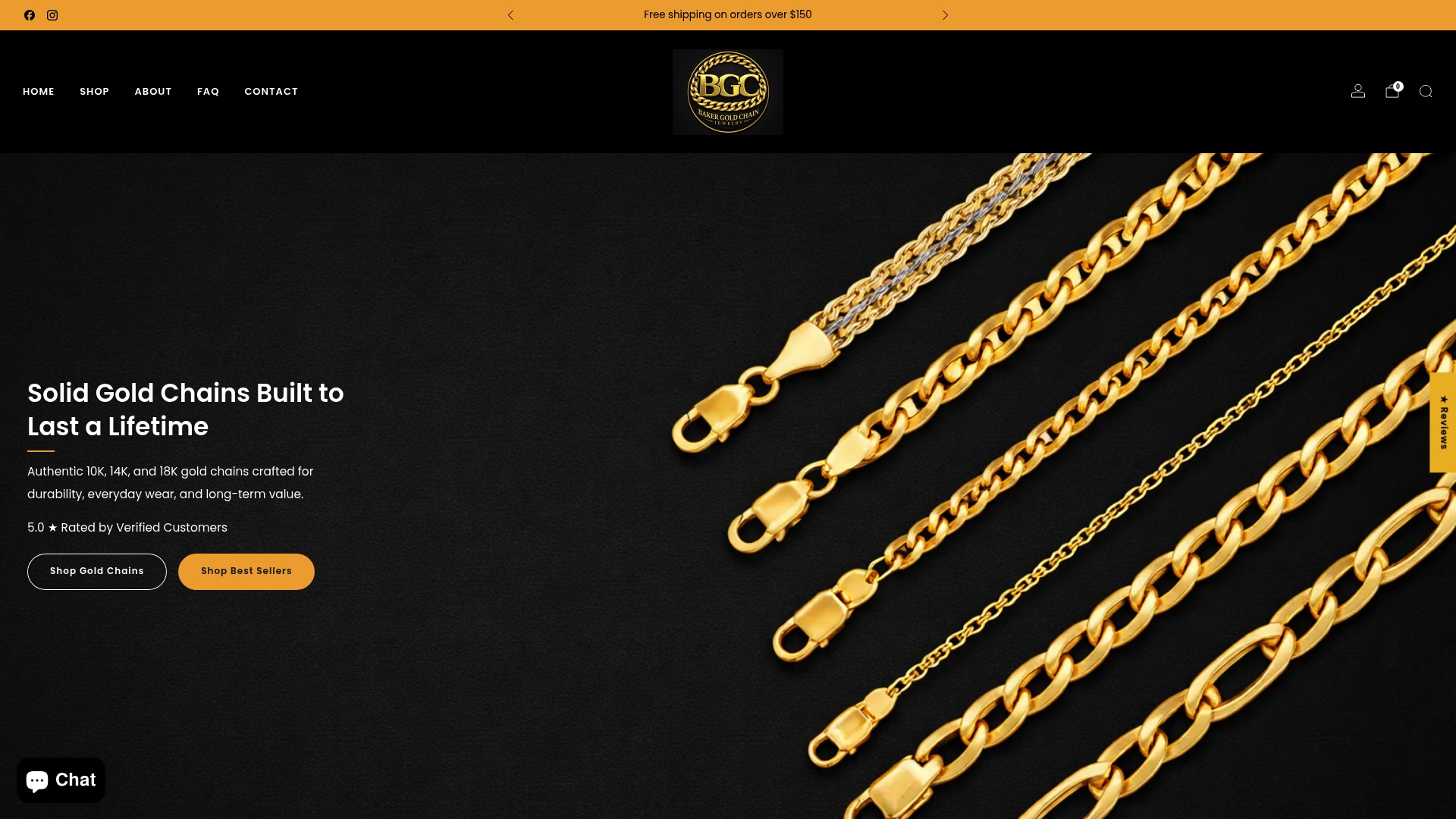
Whether you’re looking for a delicate necklace like our puffed heart necklace or a bold statement bracelet like our onyx and mop bracelet, you’ll find pieces built to last. Our team is also available to help you choose the right chain and clasp combination for your needs. Visit Baker Gold Chains to browse our full collection and shop with confidence.
Frequently asked questions
What is the most secure type of gold clasp for chains?
Lobster clasps are widely considered the most secure option for gold chains, especially for daily wear and valuable pieces. Their spring-loaded gate requires deliberate pressure to open, making accidental release unlikely.
Are magnetic clasps safe for heavy gold chains?
Magnetic clasps offer real convenience for lightweight necklaces but aren’t recommended for heavy or expensive gold chains. As clasp security guides note, decorative clasps like these vary in security and can release under stress.
How do I know when to replace a gold clasp?
Replace your clasp if you notice weak tension, difficulty closing, or visible wear on the spring or gate. As the Gem Society points out, a weak clasp risks losing the chain and any attached pendant.
Which type of clasp is best for fine or delicate gold chains?
Spring ring clasps are best for fine and lightweight gold chains due to their small, discreet profile and simple mechanism that doesn’t add bulk to the piece.
Can a jeweler swap the clasp on my gold chain?
Yes, a jeweler can replace or upgrade your chain’s clasp to better suit your security or style needs. Wear habits and chain style should guide that decision, so bring both to the conversation.

