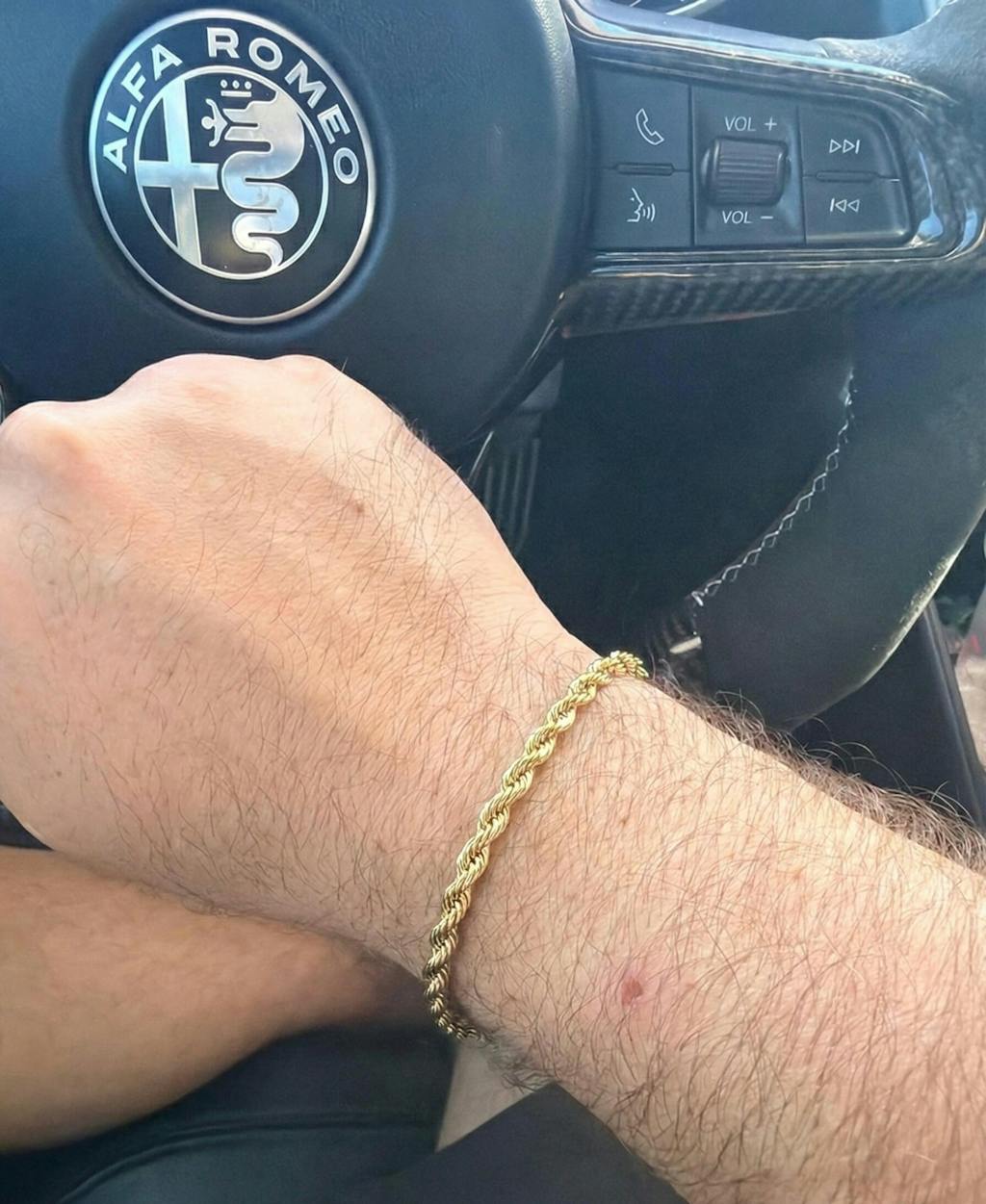
How to select the perfect pendant chain: a guide
Picking a pendant chain sounds simple until you realize your favorite piece keeps slipping off, breaking at the clasp, or looking completely off with the pendant you love. The chain is not just a carrier for your pendant. It is a structural and style decision that affects how long your jewelry lasts and how good it looks every day. Whether you are buying for yourself or as a gift, this guide walks you through every key factor, from weight and karat to chain style and sizing, so you can make a confident, informed choice the first time.
Table of Contents
- What to consider before selecting a pendant chain
- Different chain styles and what they’re best for
- How to size a chain for your pendant
- Common mistakes when selecting pendant chains (and how to avoid them)
- Our expert perspective on pendant chains
- Find your perfect pendant chain with Baker Gold Chains
- Frequently asked questions
Key Takeaways
| Point | Details |
|---|---|
| Match chain to pendant | Choose a chain with a thickness and style that supports and complements your pendant. |
| Prioritize durability | Aim for sturdy chains and secure clasps to protect both pendant and chain in daily wear. |
| Choose the right length | The chain should position your pendant comfortably and suit your preferred neckline. |
| Avoid common mistakes | Check for gold karat matching, clasp construction, and overall build quality before purchase. |
What to consider before selecting a pendant chain
Before you start browsing, it helps to get clear on a few basics. The right chain is not just about what looks good in a photo. It needs to work with your pendant, your lifestyle, and your budget.
Pendant weight and material
The first thing to assess is how heavy your pendant is. A lightweight charm needs a very different chain than a chunky statement piece. Pendant weight and material must match chain strength and thickness for everyday use. If you pair a heavy pendant with a thin, delicate chain, you are setting yourself up for a broken clasp or a snapped link.
Also check the bail, which is the loop or connector that attaches the pendant to the chain. A wide bail needs a chain with links wide enough to thread through it. A narrow bail works with most chain styles.
Gold karat and color matching
Matching the gold karat of your chain to your pendant is important for two reasons: appearance and wear rate. Different karats have slightly different gold content, which means they can wear down at different speeds when rubbing against each other. A yellow gold pendant chain in 14K pairs best with a 14K pendant for consistent color and durability. If you prefer cooler tones, explore white gold chain options for a clean, modern look.
Key factors to evaluate before buying:
- Pendant weight and bail size
- Gold karat and color consistency
- Chain thickness and link construction
- Clasp type and security
- Intended use: daily wear versus special occasions
| Factor | Why it matters |
|---|---|
| Pendant weight | Determines minimum chain thickness |
| Gold karat | Affects color match and wear rate |
| Clasp type | Impacts security and ease of use |
| Chain length | Controls pendant placement |
| Link style | Influences flexibility and strength |
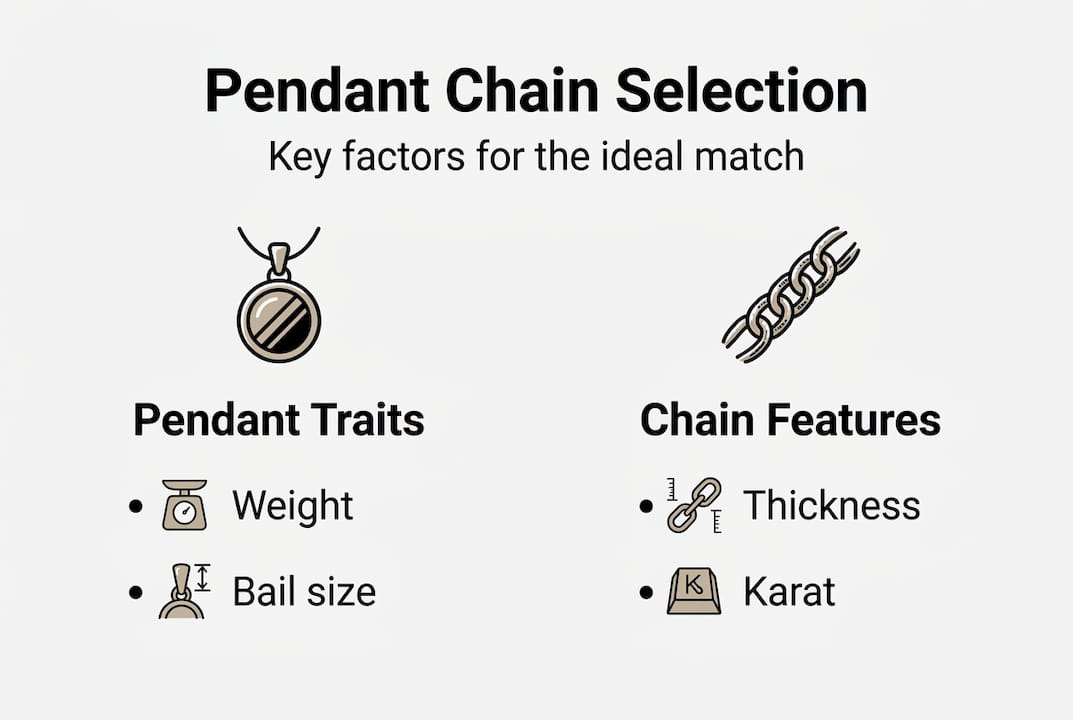
Pro Tip: If you wear your pendant every day, prioritize clasp quality and chain thickness over decorative style. A lobster claw clasp is more secure than a spring ring clasp for active daily wear.
Budget considerations
Spending more on a chain often means better craftsmanship and thicker gold. A budget chain may look similar at first but can show wear much faster. Think of the chain as part of the pendant investment, not an afterthought.
Different chain styles and what they’re best for
With your needs in mind, it is time to look at the most popular chain styles and what each one does well.
Rope chains
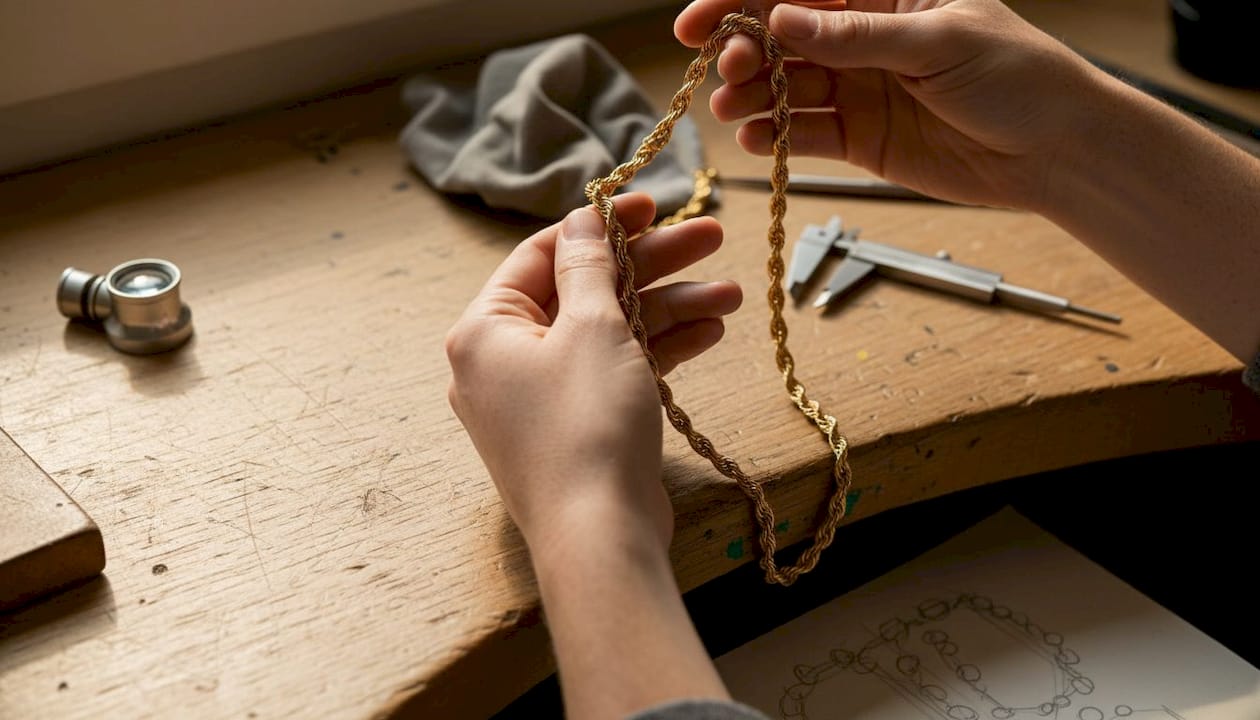
Rope chains are made of twisted segments that spiral together, creating a strong, textured look. They are one of the best choices for heavier pendants because of their structural integrity. Rope, box, and cable chains are favored for pendant support and durability. A diamond cut rope chain adds extra brilliance with faceted surfaces that catch the light.
Box chains
Box chains have square links connected in a smooth line. They lie flat, resist tangling, and work well with pendants that have a simple bail. They are a reliable everyday choice.
Cable chains
Cable chains use uniform oval or round links. They are classic, versatile, and available in many thicknesses. Thinner cable chains suit delicate pendants, while thicker ones handle more weight.
Curb chains
Curb chains have interlocking, flat links that lie flush against the skin. They are bold and strong, making them a good match for larger, heavier pendants. They also look great worn alone.
Figaro and wheat chains
Figaro chains alternate between short and long links, giving them a distinctive pattern. Wheat chains are braided with four strands, making them flexible and strong. Both work well for medium-weight pendants.
When selecting a chain for a pendant you wear daily, prioritize structural strength over decorative detail. The most beautiful chain means nothing if it breaks within a year.
Bead chains
Bead chains, like the diamond cut bead chain, are elegant and lightweight. They suit small, lightweight pendants and are ideal for layering.
| Chain style | Best for | Tangle risk | Strength rating |
|---|---|---|---|
| Rope | Heavy pendants | Low | High |
| Box | Everyday wear | Very low | High |
| Cable | Delicate pendants | Low | Medium |
| Curb | Statement pieces | Low | High |
| Figaro | Medium pendants | Low | Medium |
| Bead | Lightweight charms | Medium | Low |
Styles that tangle less:
- Box chains
- Curb chains
- Rope chains
These are the safest bets if you tend to wear your necklace during physical activity or sleep.
How to size a chain for your pendant
Choosing the right style is only half the challenge. Getting the size right is just as important for both comfort and visual balance.
Step-by-step sizing guide:
- Measure your neck. Use a soft tape measure and add 2 to 4 inches for the desired drop length.
- Choose your length based on pendant placement. A 16-inch chain sits at the collarbone, 18 inches falls just below it, and 20 inches rests on the upper chest.
- Check the bail opening. Make sure the chain links are small enough to hold the pendant securely but wide enough to thread through the bail.
- Select the right thickness (gauge). For pendants under 10 grams, a chain of 1.5 mm to 2.5 mm works well. For heavier pieces, go 3 mm or thicker.
- Consider your neckline. V-neck tops pair well with longer chains. Crew necks and turtlenecks suit shorter lengths.
Proper chain length and gauge ensure comfortable wear and secure pendant display. For example, a white gold pendant chain sizing at 2.90 mm offers a solid balance of strength and elegance for most pendant types.
Layering considerations
If you plan to layer multiple chains, vary the lengths by at least 2 inches between each piece to prevent tangling. Mixing chain styles adds visual interest, but keep the metal color consistent for a polished result.
Pro Tip: Before buying online, use a piece of string cut to your desired chain length and hold it around your neck. This gives you a real sense of where the pendant will sit before you commit.
Body type and occasion
Shorter chains draw attention upward and work well for petite frames. Longer chains create a vertical line that elongates the silhouette. For formal occasions, a finer chain with a small pendant reads as elegant. For casual wear, thicker chains with bolder pendants feel more relaxed and confident.
Common mistakes when selecting pendant chains (and how to avoid them)
Even experienced buyers make avoidable errors. Here are the most common ones and how to steer clear of them.
Choosing a chain that is too thin
This is the most frequent mistake. A thin chain may look elegant, but if your pendant is even moderately heavy, the chain will stretch, kink, or snap over time. Always match chain thickness to pendant weight before anything else.
Ignoring clasp construction
Weak clasps and thin chains are leading causes of pendant loss. A lobster claw clasp is the gold standard for security. Spring ring clasps are lighter but less reliable for heavier pendants. Check pave curb chain clasp tips to understand how clasp construction affects long-term wear.
Mixing mismatched karats or colors
Pairing a 10K chain with an 18K pendant creates a visible color difference. The higher the karat, the richer and more yellow the gold appears. Mismatched karats also wear against each other at different rates, which can damage both pieces over time.
Matching your chain and pendant karat is one of the simplest ways to protect your jewelry investment long-term.
Underestimating long-term durability needs
Many buyers focus on how a chain looks in the store or in photos. Few think about how it will hold up after two years of daily wear. Ask yourself: will I wear this to the gym, in the shower, or while sleeping? If yes, you need a thicker, more durable chain with a secure clasp.
Common mistakes at a glance:
- Buying a chain based only on looks
- Skipping the bail size check
- Choosing a spring ring clasp for a heavy pendant
- Mixing gold karats without checking color compatibility
- Skipping inspection for weak or uneven links
Pro Tip: Before purchasing, gently tug on the chain at several points and inspect the clasp mechanism. A quality chain should feel solid with no give at the links and a clasp that snaps shut with a clear click.
Our expert perspective on pendant chains
Most buying guides focus on style first. We think that is backwards. After working with gold chains for years, the clearest lesson is this: craftsmanship and durability should always come before aesthetics.
A pendant is often something meaningful. It might hold a photo, a birthstone, or a symbol that matters deeply to you or someone you love. Risking that on a weak chain to save a few dollars is never worth it. We have seen beautiful pendants lost because the chain snapped at a thin link or the clasp gave out after a few months.
Our honest advice is to think about how often you will wear the piece and how much it means to you. If the pendant has sentimental or financial value, invest in solid rope chains or box chains with lobster claw clasps. These are not the flashiest options, but they are the most reliable. Style trends change. A chain that keeps your pendant safe never goes out of fashion.
Find your perfect pendant chain with Baker Gold Chains
Now that you know exactly what to look for, finding the right chain becomes much easier. Baker Gold Chains offers a carefully curated selection of authentic solid gold chains built for real-world wear.
Whether you need a bold diamond cut rope chain for a statement pendant or a refined textured gold pendant chain for everyday elegance, we have options in 10K, 14K, and 18K gold to match your style and budget. Every piece comes with free insured shipping on orders over $150 and a lifetime craftsmanship guarantee. Browse the full collection and shop all gold chains to find the one that fits your pendant perfectly.
Frequently asked questions
Which chain style is most durable for heavy pendants?
Rope and box chains are among the most durable options for supporting heavier pendants. Their construction distributes weight evenly across multiple contact points, reducing stress on any single link.
How thick should a chain be for everyday wear?
A chain between 1.5 mm and 2.5 mm thick offers a good balance of durability and comfort for most daily wear pendants. For heavier pieces, chain thickness is crucial for everyday use and pendant safety, so consider going up to 3 mm or more.
Can I mix different gold karats or colors for pendants and chains?
It is best to match gold karat to ensure color harmony and consistent wear, but some styles intentionally mix tones for a modern look. Matching gold karat ensures consistency in wear and appearance over time.
What is the best chain length for pendants?
Chain lengths between 16 and 20 inches suit most pendant sizes and necklines, but always adjust based on how the pendant looks when worn. Chain length directly affects pendant placement and overall style balance.