

What Is 18K Gold? A Complete Guide for Jewelry Buyers
Most people assume that the purest gold makes the best jewelry. It’s a logical thought, but it’s not quite right. Pure gold is actually too soft for most pieces you’d wear daily. That’s where 18K gold earns its place. It strikes a practical balance between high gold content and real-world wearability, making it a favorite for fine jewelry worldwide. This guide covers everything you need to know about 18K gold, from its exact composition and color options to its durability, value, and how to confirm you’re buying the real thing.
Table of Contents
- Understanding gold karat: What does 18K mean?
- 18K gold color, appearance, and alloys
- Is 18K gold durable enough for daily wear?
- 18K gold value: Pricing, investment, and authenticity
- A jeweler’s perspective: Why 18K gold stands out
- Discover your next 18K gold piece
- Frequently asked questions
Key Takeaways
| Point | Details |
|---|---|
| 18K gold explained | 18K gold means 75 percent pure gold blended with durable metals for jewelry. |
| Color and alloys | The look of 18K gold is influenced by which alloy metals are used, creating shades from warm yellow to subtle rose. |
| Balance of purity and strength | 18K offers a sweet spot between luxury purity and everyday wearability. |
| Trusted for fine jewelry | Jewelers and collectors value 18K gold for heirloom-quality pieces that last. |
| Shop smart | Look for authentic stamps, buy from reputable sources, and pick designs suited to your lifestyle. |
Understanding gold karat: What does 18K mean?
The karat system measures how much pure gold is in a piece of jewelry. One karat equals one part out of 24 parts total. So the higher the karat number, the more gold the piece contains. It’s a straightforward ratio, and once you understand it, reading any gold stamp becomes easy.
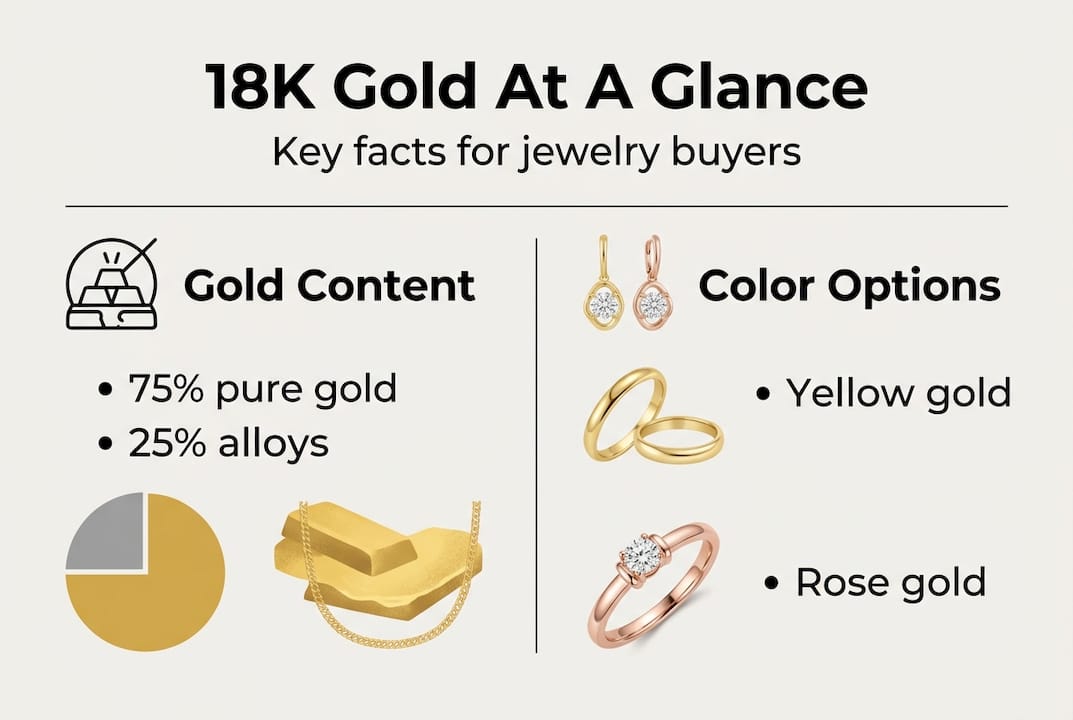
18K gold contains 75% pure gold and 25% alloy metals. That 75% figure is why you’ll sometimes see 18K pieces stamped with “750” instead of “18K.” Both marks mean the same thing. The remaining 25% is made up of metals like copper, silver, zinc, or palladium. These additions aren’t filler. They give the gold strength, color, and structure it wouldn’t have on its own.
Here’s how the most common gold karats compare:
| Karat | Gold % | Alloy % | Typical Use | Hardness (Mohs) |
|---|---|---|---|---|
| 24K | 99.9% | 0.1% | Bullion, investment | ~1.5-2 |
| 18K | 75% | 25% | Fine jewelry, luxury | ~2.5-3 |
| 14K | 58.3% | 41.7% | Everyday jewelry | ~3.5-4 |
| 10K | 41.7% | 58.3% | Budget jewelry | ~4 |
As you can see, 18K gold has moderate durability with a Mohs hardness of about 2.5 to 3, making it more scratch-resistant than 24K but softer than 14K. That middle position is actually a strength, not a weakness. It means 18K gold is firm enough for crafted settings and detailed designs, while still carrying a high gold content that matters for both beauty and value.
Common alloy metals used in 18K gold include:
- Copper: Adds warmth and hardness, used in rose gold blends
- Silver: Lightens color and improves workability
- Palladium: Creates a bright white tone without nickel
- Zinc: Strengthens the alloy and improves casting
- Nickel: Historically used in white gold, though now less common due to allergy concerns
For more context on how karats affect your buying decisions, our gold knowledge articles break down the details in plain language.
18K gold color, appearance, and alloys
With a foundation in what “18K” means chemically, let’s look at how its alloy blends give 18K gold its signature beauty and hue.
The color of 18K gold depends entirely on which alloy metals are mixed in. Pure gold is always yellow, but the 25% alloy portion can shift the final color significantly. This is why 18K gold comes in yellow, white, and rose varieties, each with a distinct look and feel.
18K yellow gold is the most traditional. It uses a blend of silver and copper alongside the gold, preserving that warm, classic tone most people picture when they think of fine jewelry. The color is richer and deeper than 14K yellow gold because of the higher gold content.
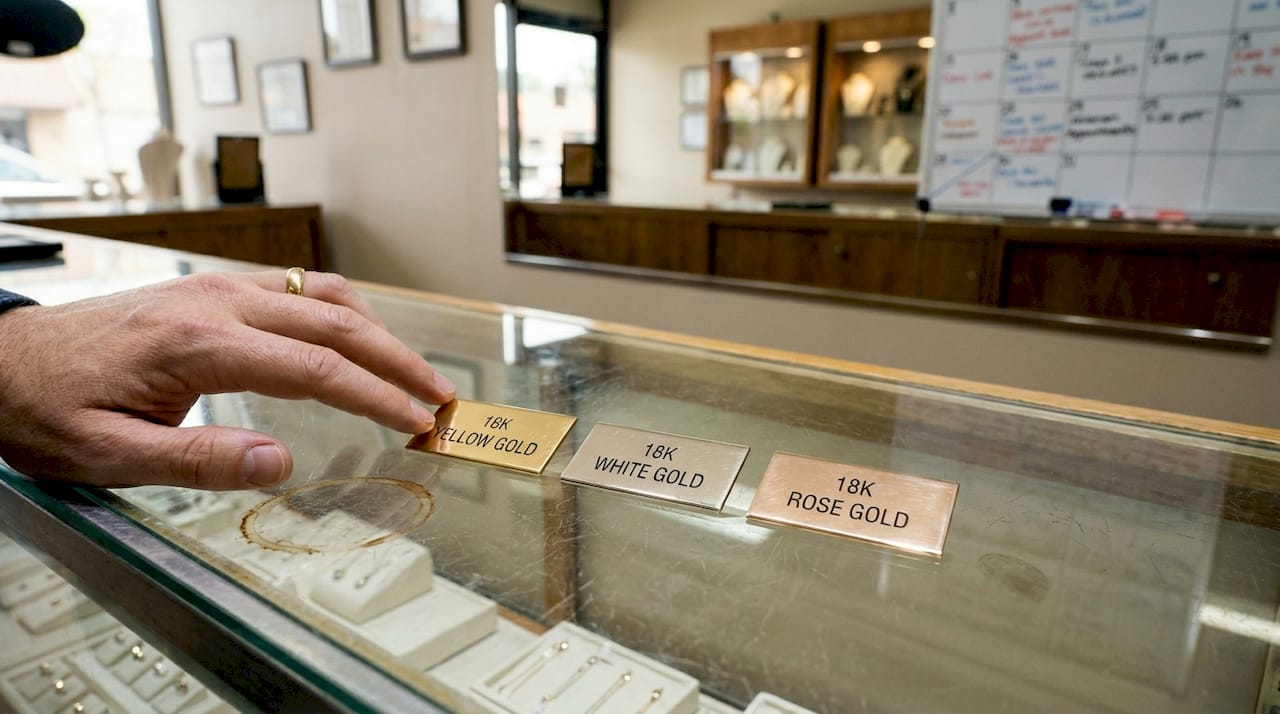
18K white gold gets its cool, silvery appearance from palladium or nickel in the alloy mix. Most 18K white gold pieces are also rhodium-plated to enhance brightness and protect the surface. Over time, that plating can wear, revealing a slightly warmer tone underneath. Replating is a routine and affordable fix.
18K rose gold leans on copper as its primary alloy. More copper means a warmer, pinker hue. It’s become especially popular in recent years for its romantic, vintage-inspired look.
Here’s a quick comparison:
| Type | Key Alloys | Color Tone | Popularity |
|---|---|---|---|
| Yellow gold | Silver, copper | Warm, classic gold | Traditional favorite |
| White gold | Palladium or nickel | Cool, silver-like | Modern and versatile |
| Rose gold | Copper-heavy | Warm pink to blush | Trendy and romantic |
18K gold gets its color and hardness from these alloy metals, which means the alloy choice affects more than appearance. It also influences how the piece feels on your skin. Nickel, for example, is a known allergen. If you have sensitive skin, look for nickel-free 18K white gold made with palladium instead.
Pro Tip: Always check for a hallmark stamp before buying. Authentic 18K gold will be stamped “18K” or “750.” If a piece claims to be 18K but has no stamp, ask the seller for documentation. You can also learn more about testing for real gold to protect your purchase.
Is 18K gold durable enough for daily wear?
Once you know how 18K gold looks and why, the next logical question is whether it’s tough enough for everyday wear.
The honest answer is: it depends on the piece and how you wear it. 18K gold is more scratch-resistant than 24K but softer than 14K, and it’s suitable for everyday jewelry when it’s well-designed. That distinction matters more than most buyers realize.
A well-crafted 18K gold necklace or pair of earrings can last a lifetime with basic care. A thin 18K ring worn daily without protection is more likely to show wear over time. The design and craftsmanship matter just as much as the gold content.
Best uses for 18K gold:
- Necklaces and chains (less contact friction than rings or bracelets)
- Earrings and pendants (minimal mechanical stress)
- Statement rings for special occasions
- High-craft pieces with gemstone settings
- Heirloom-quality jewelry meant to be passed down
Use caution with 18K gold for:
- Daily-wear rings on active hands
- Bracelets worn during physical work or sports
- Pieces with very thin or delicate shanks
The Mohs hardness scale puts 18K gold at roughly 2.5 to 3, while 14K gold sits at 3.5 to 4. That gap is real, but it doesn’t mean 18K is fragile. It means you should be thoughtful about the setting style and construction. A thick-walled 18K chain, for example, will outlast a thin 14K ring in most cases.
Pro Tip: When shopping for 18K gold rings or bracelets meant for daily wear, choose pieces with reinforced settings and ask about wall thickness. Reputable makers who specialize in caring for fine gold jewelry will guide you toward designs built to last.
18K gold value: Pricing, investment, and authenticity
Now that we’ve explored function and form, let’s focus on real-world value. What is 18K gold actually worth, and how do you confirm you’re getting the real thing?
Price is driven by gold content. Since 18K gold contains 75% pure gold, it costs more per gram than 14K (58.3% gold) but typically less than 24K (99.9% gold). The exact price also depends on craftsmanship, brand, and design complexity. A simple 18K chain and an intricately designed 18K ring may carry very different price tags even at the same weight.
18K gold is prized for balancing luxury and practicality, which is why many designer and luxury brands choose it as their standard. When you see a high-end jewelry house advertising a gold piece, it’s often 18K.
From an investment standpoint, 18K gold holds solid resale value because of its gold content. However, craftsmanship and brand recognition also play a role. A well-made 18K piece from a reputable maker will generally hold its value better than a mass-produced one.
How to verify authentic 18K gold jewelry:
- Check for a hallmark stamp: look for “18K,” “750,” or “18KT”
- Ask for a certificate of authenticity or material disclosure from the seller
- Use a magnet test: real gold is not magnetic
- Request an acid test or XRF (X-ray fluorescence) test from a certified jeweler
- Buy from established retailers with clear return and verification policies
“The best jewelry investment isn’t always the highest karat. It’s the piece with the right balance of gold purity, craftsmanship, and design for how you’ll actually wear it.”
For more guidance on verifying authentic gold before you buy, we recommend checking seller credentials and asking direct questions about sourcing and testing.
A jeweler’s perspective: Why 18K gold stands out
Here’s something the numbers alone won’t tell you: experienced jewelers often recommend 18K gold not because it’s the purest option, but because it’s the most honest one.
Conventional wisdom pushes buyers toward 24K for its purity or toward 10K for affordability. But both extremes come with trade-offs that many buyers only discover after purchase. 24K gold bends. 10K gold, while tough, contains less than half real gold by weight.
18K sits in a place that honors both tradition and practicality. It’s the karat most often chosen for heirloom pieces, not by accident, but because it holds up over decades while still carrying meaningful gold content. When a grandmother passes down a gold necklace, it’s often 18K. That’s not coincidence.
We’ve seen buyers fixate on purity as a proxy for quality. But the best piece isn’t the purest one. It’s the one built for its purpose, made with care, and chosen with intention. Our insider jewelry guides reflect that philosophy, helping you make decisions grounded in real understanding rather than marketing.
Discover your next 18K gold piece
Now that you understand what makes 18K gold special, you’re ready to find a piece that reflects that knowledge. At Baker Gold Chains, every 18K jewelry item is sourced from reputable U.S. suppliers with a commitment to authenticity and craftsmanship.
Whether you’re shopping for yourself or searching for a meaningful gift, our curated selection has something for every style. The 18K gold dragonfly earrings are a stunning example of what 18K craftsmanship looks like in a wearable, elegant design. Ready to explore more? Shop fine gold jewelry and find your next heirloom-quality piece today, backed by our lifetime craftsmanship guarantee and free insured shipping on orders over $150.
Frequently asked questions
Is 18K gold good for engagement rings?
Yes, 18K gold is a popular choice for engagement rings because its rich color and high gold content make it visually stunning, and it’s suitable for everyday jewelry when the setting is well-designed.
Will 18K gold tarnish or change color?
18K gold is highly resistant to tarnish, but the alloy metals in the mix can cause a subtle shift in tone over many years. Alloy metals affect color and long-term appearance, so proper care and occasional cleaning keep your piece looking its best.
How can I tell if my gold jewelry is really 18K?
Look for a hallmark stamp reading “18K,” “750,” or “18KT” on the piece. For added confidence, have it tested by a certified jeweler using an acid test or XRF scanner.
Is 18K more expensive than 14K or 24K gold?
18K gold typically costs more than 14K because it contains more gold by weight. It usually costs less than 24K, though pricing reflects gold content along with craftsmanship and design complexity.

