

Byzantine chain jewelry: history, craftsmanship and buying guide
If you searched “Byzantine chain” and landed on pages about blockchain consensus algorithms, you are not alone. The term “Byzantine” appears in two very different worlds, and the confusion is common. This guide is entirely about the jewelry version: an ancient, intricately woven chain style with roots in one of history’s greatest empires. Whether you are buying for yourself or selecting a meaningful gift, you will find everything here to understand, evaluate, and confidently choose an authentic Byzantine chain that lasts a lifetime.
Table of Contents
- Byzantine chain: meaning, origins, and structure
- How the Byzantine chain compares to other popular styles
- What to look for: authenticity, metals, and craftsmanship
- Practical tips: how to choose the right Byzantine chain
- Why mastering the basics of Byzantine chains pays off
- Explore authentic Byzantine and gold chains at Baker Gold Chains
- Frequently asked questions
Key Takeaways
| Point | Details |
|---|---|
| Distinctive weave | Byzantine chains are recognized by their intricate, flexible, and luxurious link patterns. |
| Comparison matters | Evaluating chain types side-by-side helps pinpoint the right style for everyday wear or gifting. |
| Buy for quality | Check for genuine metals, craftsmanship, and reputable sources to ensure a lasting investment. |
| Practical shopping tips | Follow step-by-step guidance to select, gift, and care for your Byzantine chain. |
| Expert perspective | Prioritize authenticity and craftsmanship over fleeting trends when buying classic jewelry. |
Byzantine chain: meaning, origins, and structure
The Byzantine chain is a style of jewelry chain defined by its repeating, interlocked link pattern. Each section of the weave uses a complex arrangement of rings that interlock in a way that creates a thick, textured, and flexible chain. That flexibility is one of its most prized qualities. The chain drapes naturally against the body, moves with you, and holds its shape across years of wear.
The origins trace back to the Byzantine Empire, which flourished from roughly 330 CE through the 15th century. Byzantine goldsmiths were known across the ancient world for their skill in metalwork, especially in creating intricate patterns with gold. The chain weave we recognize today as “Byzantine” is widely believed to have emerged from that tradition of detailed, labor-intensive craftsmanship. Jewelry historians often point to Byzantine-era artifacts as direct ancestors of the modern chain design.
“The Byzantine chain is a direct legacy of ancient goldsmithing traditions. Its construction demands precision and skill that machine production can approximate, but never fully replicate.” — Fine jewelry design perspective
You might notice this chain described by different names in different stores, including “King’s braid” or “Queen’s braid.” These are alternate names for the same foundational weave. The 14k gold square Byzantine chain is a popular modern example of how the pattern translates into solid gold jewelry for everyday wear. For those who prefer silver tones, the sterling silver gunmetal Byzantine chain demonstrates how the weave adapts beautifully across different metals and finishes.
One important note: if your search for “Byzantine chain” pulls up content about distributed systems, consensus protocols, or fault tolerance, that is a completely separate use of the word. The future of Byzantine fault tolerance is a technology topic and has no connection to the jewelry chain weave.
Key structural traits of a Byzantine chain:
- Links are arranged in a 4-in-1 interlocking pattern
- The weave creates visible segments that repeat uniformly across the length
- The chain is thicker and more three-dimensional than flat styles like box or Singapore chains
- Despite its density, the chain remains flexible and comfortable to wear
- The pattern allows for subtle variations, including square and rounded link versions
- Hand-assembled versions feature tight, even links with no gaps or inconsistencies
How the Byzantine chain compares to other popular styles
Understanding the unique look of a Byzantine chain, let’s see how it holds up next to other beloved designs.
Not all gold chains are created equal, and knowing what sets a Byzantine chain apart from other popular styles helps you buy smarter. Chain style affects how a piece looks, how it wears over time, and how much craftsmanship went into making it. The resource on chain style and durability at Baker Gold Chains breaks down exactly how construction details affect long-term performance.
| Chain style | Structure | Durability | Best use case | Craftsmanship level |
|---|---|---|---|---|
| Byzantine | Interlocked 4-in-1 weave | Very high | Statement wear, gifts, pendants | High |
| Rope | Twisted oval links | High | Everyday wear, layering | Medium |
| Box | Square linked segments | Medium | Pendants, minimalist wear | Medium |
| Singapore | Twisted flat links | Medium | Lightweight layering | Low to medium |
Byzantine chains consistently stand out for durability and craftsmanship demand. The interlocking structure means more contact points between links, which distributes stress more evenly. A rope chain can stretch or kink under tension. A box chain can snap at weak link joints. The Byzantine weave, by contrast, spreads any pulling force across multiple interlocked rings, giving it genuine structural resilience.
Reasons you might choose a Byzantine chain over simpler designs:
- You want a chain that functions as jewelry on its own, without a pendant
- You value visible texture and dimension in a piece
- You are buying a gift that needs to feel substantial and special
- You want a chain style with historical and cultural weight
- You prefer jewelry that holds its shape and resists everyday distortion
- You want a piece that looks equally appropriate dressed up or casual
If you are comparing Byzantine chains to other classic options, it is also worth reviewing gold chain alternatives to understand where Byzantine fits within the broader range of fine chain styles.
Pro Tip: If you are torn between a Byzantine chain and a simpler style, hold both in your hand if possible. The Byzantine chain’s weight and movement are immediately distinct. That tactile difference is part of what makes it memorable as a gift or personal piece.
What to look for: authenticity, metals, and craftsmanship
Comparison is helpful, but knowing what goes into an authentic, durable piece ensures your investment is worthwhile.
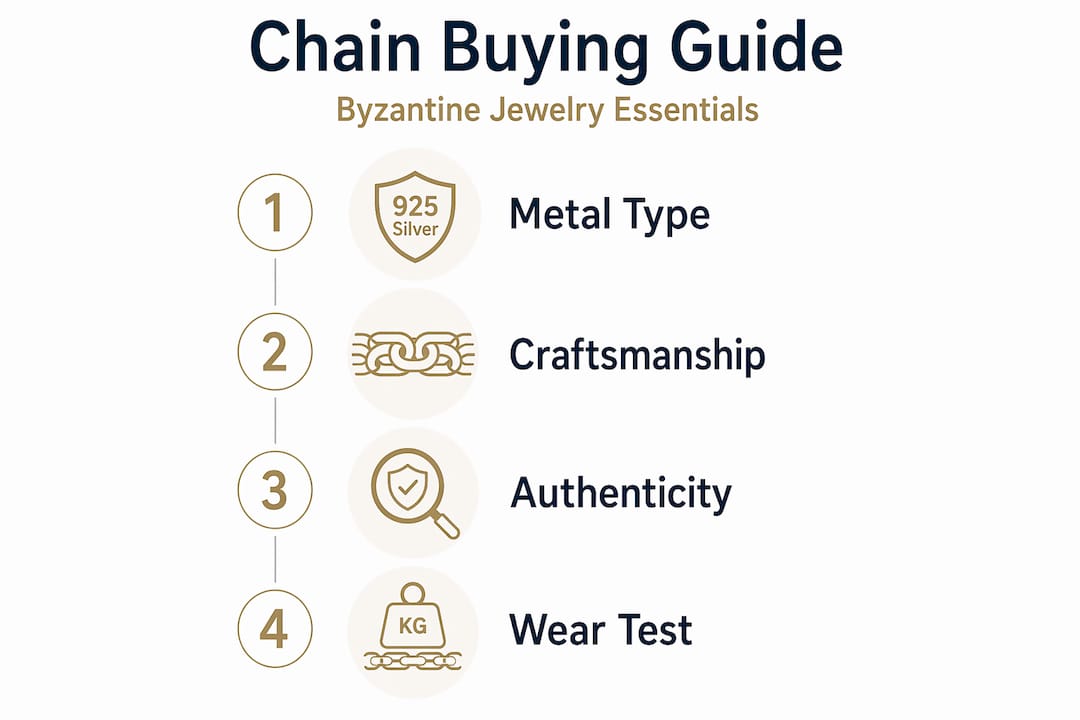
When you shop for a Byzantine chain, the metal type directly affects how the piece performs, looks, and retains value over time. Here is a quick reference for the most common metals used:
| Metal type | Karat or grade | Key attributes | Best for |
|---|---|---|---|
| Yellow gold | 10K, 14K, 18K | Classic warm tone, durable, valuable | Timeless everyday wear |
| White gold | 14K, 18K | Bright finish, rhodium-plated surface | Modern, versatile looks |
| Rose gold | 14K | Warm pink tone, fashionable | Trend-forward gifting |
| Sterling silver | .925 | Bright, affordable, widely available | Budget-conscious shoppers |
| Rhodium-plated silver | .925 + rhodium | Enhanced brightness, tarnish resistance | Long-lasting silver option |
The sterling silver rhodium-plated lite square Byzantine chain is a strong example of how a well-finished silver option can deliver impressive quality without the price point of solid gold. For shoppers who want something more distinctive, multi-style chain options that combine 18K yellow gold and sterling silver show how mixed metal designs add visual interest while maintaining quality standards.
Step-by-step guide for assessing authenticity:
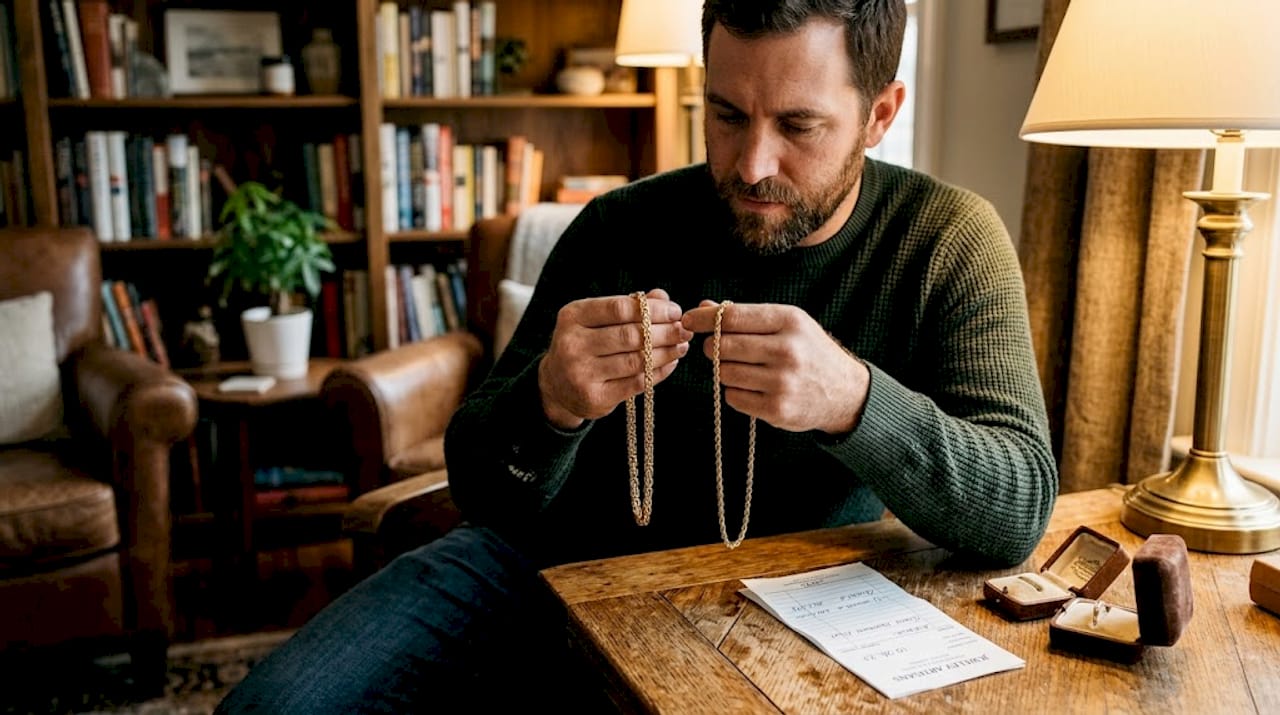
- Check for a karat stamp. Authentic gold chains carry a hallmark stamp, typically “10K,” “14K,” or “18K,” often found near the clasp. Sterling silver chains should show “.925.”
- Inspect the weave consistency. Each repeating section of a Byzantine chain should be identical in shape and spacing. Irregular or loose links signal poor assembly.
- Test the weight. Real gold is dense. A Byzantine chain made from solid gold should feel noticeably heavier than a plated or hollow version of similar size.
- Examine the clasp. Quality pieces use lobster-claw or box clasps with smooth, secure operation. A weak or loosely fitted clasp often signals lower overall build quality.
- Ask for documentation. A reputable retailer will provide authenticity documentation and stand behind the metal content of their pieces.
- Run a magnet test. Gold and sterling silver are not magnetic. If a chain pulls toward a magnet, it is not made from precious metal.
Red flags to watch for include discoloration at the link joints, irregular spacing in the weave, and clasps that do not snap shut cleanly. Machine-made chains are not inherently inferior, but very low-cost options often skip quality steps like proper link soldering, which weakens the chain significantly. Handcrafted Byzantine chains take more time to assemble and it shows in the evenness of every link.
Pro Tip: Always ask whether the chain is solid metal or hollow before buying. Hollow Byzantine chains cost less but are more vulnerable to denting and crushing under normal wear. For daily use, solid construction is worth the additional investment.
Practical tips: how to choose the right Byzantine chain
With a sharp eye for quality, you are ready to pick a Byzantine chain that stands out for years.
Choosing the right Byzantine chain comes down to a few concrete decisions. Getting these right means the piece will feel personal, wear well, and make an impression. The pendant chain selection guide at Baker Gold Chains offers detailed support for anyone pairing a chain with a pendant, which is especially useful if you plan to add one later.
Step-by-step buying guide:
- Decide on gauge (thickness). Byzantine chains range from about 4mm to 8mm wide. Thinner versions sit closer to a classic necklace look. Thicker versions make a bolder statement and are better for standalone wear without a pendant.
- Choose your length. 18 to 20 inches works well for most adults wearing the chain at the collarbone. 22 to 24 inches creates a longer, more relaxed look. For men, 24 inches is a comfortable starting point for a chain worn over the chest.
- Select your metal. 14K gold offers the best balance of durability and value for everyday wear. 18K gold delivers a richer color and higher purity. Sterling silver is the right choice when budget is a priority without compromising on appearance.
- Consider the clasp. Lobster-claw clasps are the gold standard for security and ease of use. Avoid spring-ring clasps on heavier chains, as they can fatigue and open unexpectedly.
- Match the occasion. A 5mm Byzantine chain in 14K gold works as both an everyday piece and a formal accessory. Thicker chains with higher gold content are more suitable as special occasion or gift items.
- Set a realistic budget. A solid 14K gold Byzantine chain is an investment piece. Factor in metal weight, craftsmanship, and authenticity documentation when comparing prices.
Gifting considerations:
A Byzantine chain is one of the safest fine jewelry gifts you can choose. It does not require knowing a ring size or gemstone preference. It suits men and women equally well. If you want to personalize it, pair it with a small pendant that reflects the recipient’s interests. A simple initial charm or birthstone pendant on a 4mm Byzantine chain in 14K gold is a thoughtful and lasting gift for birthdays, anniversaries, or graduations.
Care and storage:
Clean your Byzantine chain regularly with warm water, a small amount of mild dish soap, and a soft brush. Rinse thoroughly and dry with a lint-free cloth. Store it in a fabric-lined box or a separate pouch to prevent it from tangling or scratching other pieces. Avoid wearing it during activities that involve harsh chemicals, heavy physical contact, or saltwater exposure.
Pro Tip: Byzantine chains layer beautifully with simpler designs. Try pairing a 5mm Byzantine chain with a thin rope or box chain at a slightly different length. The contrast in texture creates a styled, intentional look without requiring a pendant.
Why mastering the basics of Byzantine chains pays off
The jewelry market has shifted significantly in recent years. Trend-driven pieces cycle through social media and retail shelves quickly, and buyers are increasingly tempted by fast fashion jewelry at low price points. The Byzantine chain sits at the opposite end of that spectrum, and that is exactly why understanding it matters.
Here is what most buying guides skip: an authentic Byzantine chain does not just hold its value because of the metal content. It holds its value because the construction is genuinely difficult to replicate at low cost without visible quality loss. When you know what to look for, including even link spacing, consistent weave density, proper hallmarking, and solid rather than hollow construction, you can immediately separate a quality piece from an imitation. That knowledge protects your purchase every time.
We have seen buyers come back to real Byzantine chain designs after purchasing cheaper imitations that lost their finish, stretched out of shape, or broke at the clasp within months. The peace of mind from buying a well-made piece with documented metal content is not a luxury. It is the point. A genuine Byzantine chain in solid gold or quality sterling silver does not need to be replaced. It becomes a piece you wear for decades and eventually pass on.
The uncomfortable truth about the current market is that convincing fakes and low-quality plated versions are widely available at prices that seem reasonable. Without understanding the basics of construction, metal testing, and authentic sourcing, buyers can easily overpay for something that will not last.
Explore authentic Byzantine and gold chains at Baker Gold Chains
Inspired to shop or see these details up close? Here is where to look for premium pieces.
Baker Gold Chains offers a curated range of authentic Byzantine chains in solid gold and sterling silver, sourced from reputable U.S. suppliers with full metal documentation. Every piece comes backed by a lifetime craftsmanship guarantee, so you are not just buying a chain. You are buying confidence in what it is made from.
Whether you are drawn to a 14K gold square Byzantine chain for its warm classic look, or you want to explore Singapore chain styles and other fine chain options, the Baker Gold Chains collection makes it easy to compare metals, gauges, and styles in one place. Orders over $150 ship free with insurance included, and flexible financing is available. You can shop knowing every piece has been selected for authenticity, durability, and timeless design.
Frequently asked questions
Is a Byzantine chain strong enough for daily wear?
Yes, authentic Byzantine chains are exceptionally durable thanks to their interlocked, flexible design, which distributes stress across multiple links rather than concentrating it at single points. Solid gold or solid silver construction adds further resilience for everyday use.
What metals are used in authentic Byzantine chains?
Genuine Byzantine chains are most often crafted in gold or sterling silver, but platinum and two-tone options are also available. The sterling silver rhodium-plated version is a popular choice for buyers seeking a bright finish with enhanced tarnish resistance.
How can I spot a fake or poor-quality Byzantine chain?
Inspect the links for seamless pattern continuity and check for authentic metal hallmarks near the clasp. Working with a retailer who provides documented authenticity and a craftsmanship guarantee removes most of the guesswork.
Can a Byzantine chain hold a heavy pendant?
Byzantine chains are strong but the thinner varieties, typically under 5mm, are best suited for light to medium-weight pendants. Thicker chains in solid 14K or 18K gold can support heavier pendant pieces with confidence and without distorting the weave over time.

