

How to spot fake gold chains: your authenticity guide
You finally find it: a gold chain that looks stunning, feels weighty, and comes at a price that seems almost too good. You buy it, wear it proudly, and then notice a green tint on your skin a month later. That sinking feeling is all too real for thousands of jewelry buyers every year. Fake gold chains are more convincing than ever, and the financial loss alone can sting badly. This guide walks you through every practical test, every red flag to watch for, and every tool you need to verify a gold chain’s authenticity before money changes hands.
Table of Contents
- What you need before inspecting a gold chain
- Step-by-step guide: How to spot a fake gold chain
- Understanding professional authentication methods
- Troubleshooting and edge cases: When to escalate
- Why careful gold chain authentication is your best investment
- Expert-backed gold chains you can trust
- Frequently asked questions
Key Takeaways
| Point | Details |
|---|---|
| Check hallmarks first | Genuine gold chains have clear karat or fineness stamps—unclear or missing marks are a red flag. |
| Combine at-home tests | No single DIY check is perfect; use magnet, visual, and density tests together for better results. |
| Professional tools for certainty | Advanced XRF or fire assay gives reliable results, especially when home tests are inconclusive. |
| Escalate suspicious cases | Odd results, forged markings, or value concerns should be checked by a jeweler before you buy. |
What you need before inspecting a gold chain
Now that you’re aware of what’s at stake, let’s start by getting prepared with the right mindset and tools before you inspect your chain.
The first concept to understand is hallmarking. A hallmark is a small stamp pressed into the metal that indicates its purity level. Legitimate gold chains carry stamps that correspond to their karat rating. Common purity stamps include karat marks (10K, 14K, 18K) and fineness numbers (417 for 10K, 585 for 14K, 750 for 18K, and 999 for 24K). For a deeper look at what these numbers mean and how to read them properly, understanding gold hallmarks is a great starting point before you test any piece.
Here is a quick reference table for gold purity marks:
| Karat | Fineness number | Gold content |
|---|---|---|
| 10K | 417 | 41.7% gold |
| 14K | 585 | 58.5% gold |
| 18K | 750 | 75.0% gold |
| 24K | 999 | 99.9% gold |
Before you examine any chain, gather these tools:
- A jeweler’s loupe or strong magnifying glass (10x or higher)
- A powerful neodymium magnet (refrigerator magnets are too weak)
- An accurate digital scale (precise to 0.01 grams)
- A clear glass or cup of water
- A clean white cloth
- A ceramic tile or unglazed porcelain piece (for scratch testing)
At-home tools get you far, but they have limits. A certified jeweler with professional equipment can catch what you cannot. It is worth acknowledging upfront that sophisticated fakes are designed specifically to defeat quick home checks. Counterfeiters have access to quality plating technology and can even stamp false hallmarks.
Pro Tip: Before you run a single test, photograph the chain, note the seller’s contact information, and write down the claimed karat and any stamps you can see. If something goes wrong later, that documentation is invaluable.
Step-by-step guide: How to spot a fake gold chain
With everything ready, it’s time to work through a practical set of tests to check your gold chain.
Step 1: Examine the hallmarks closely
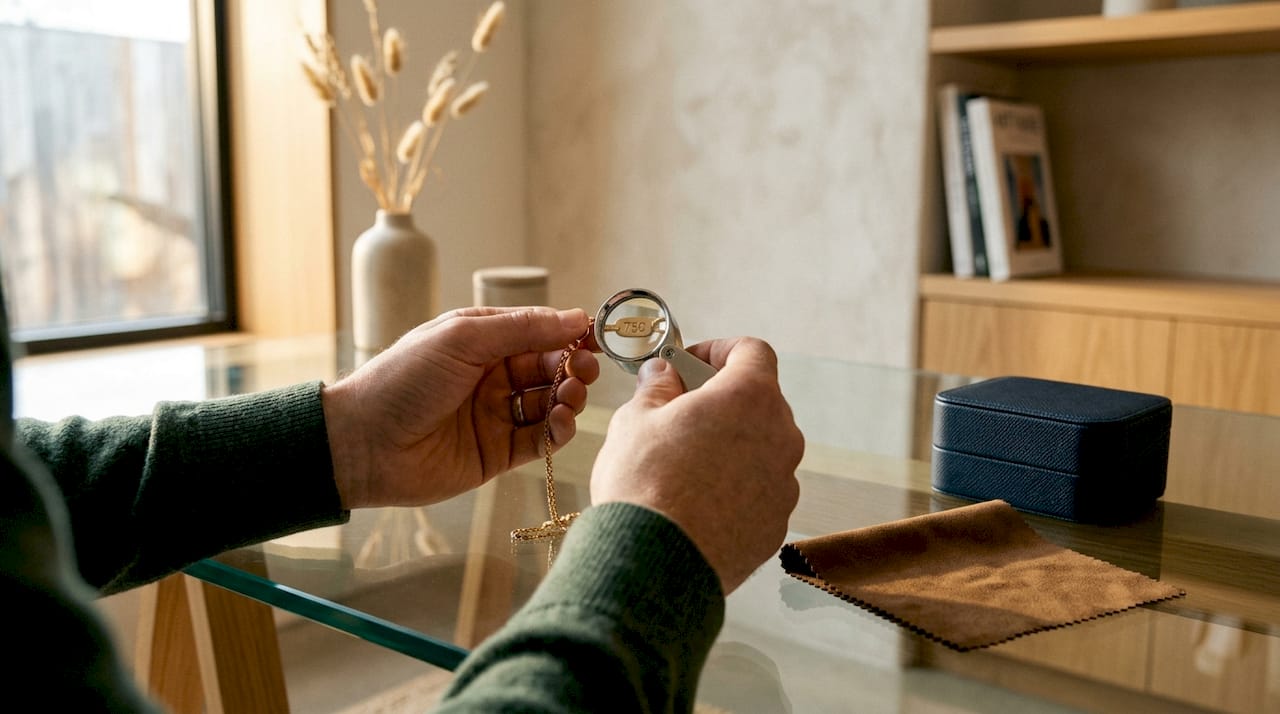
Hold the chain under your magnifier and look for a stamp on the clasp or near the end links. The stamp should be crisp, clear, and evenly pressed. Vague, blurry, or slightly smudged marks are a red flag. Also check that the stamp matches the chain’s claimed karat. A chain sold as 18K should read “18K” or “750,” not “18KGP” (which means gold-plated) or “18KGF” (gold-filled). Fake stamps are sometimes added after the fact and can look slightly raised or misaligned compared to genuine factory marks.
Step 2: Visual inspection for plating wear
Look at the chain’s clasps, end links, and any spots that receive friction during wear, such as around the lobster claw closure or where links rub together. Gold plating wears first at these high-friction points. If you see silver, copper, or brass peeking through, the chain is plated, not solid. Check for solder seams that appear discolored or patchy. Real gold chains have consistent color throughout, even on the inside of links. Review some helpful gold chain versus gold-plated tips to sharpen your eye for these differences.
Step 3: Magnet test
Hold the neodymium magnet close to the chain without touching it. Gold is non-magnetic, so a real gold chain should show zero attraction. Any pull toward the magnet signals that base metals like iron, nickel, or steel are present. That is a near-certain sign the chain is fake or heavily alloyed with non-gold metals. However, keep this important caution in mind:
“Magnet tests can quickly identify obvious fakes but rarely confirm authenticity.”
A chain that fails the magnet test is almost certainly fake. A chain that passes the magnet test is not automatically genuine. Some base metals used in sophisticated fakes are also non-magnetic. Always combine tests.
Step 4: Weight and density float test
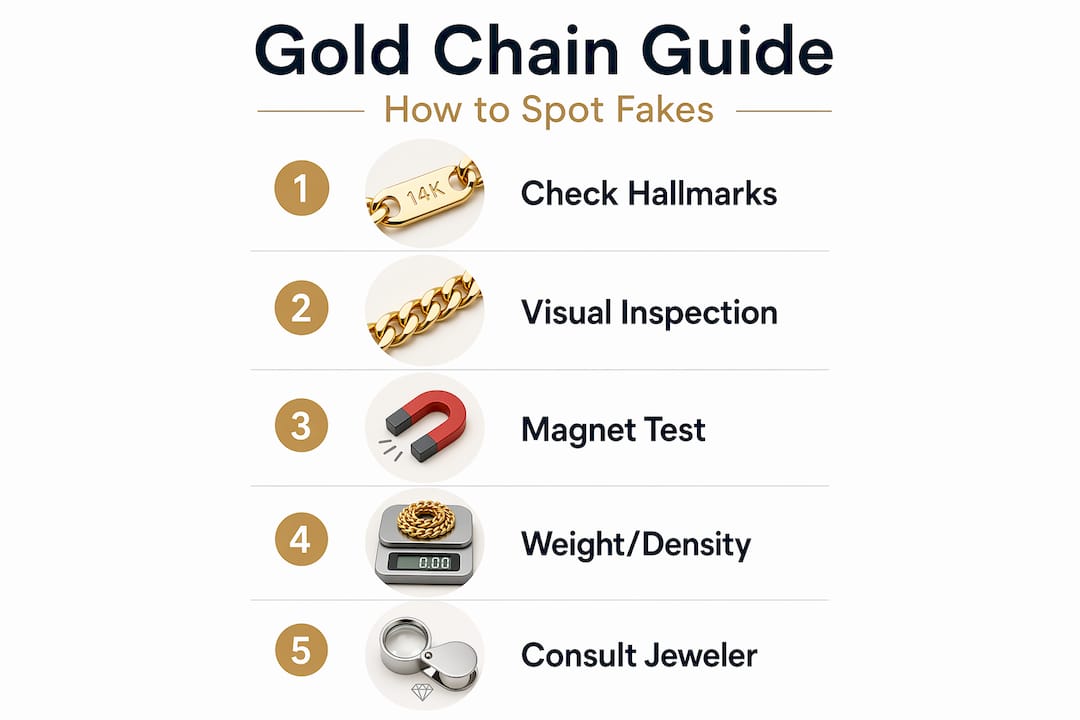
Real gold is extremely dense. A 14K gold chain of a given length will weigh noticeably more than a plated or hollow fake of similar visual size. Use your digital scale to weigh the piece, then compare it to published weight charts for the chain style and length. For the float test, lower the chain carefully into a glass of water. Solid gold sinks quickly and completely because of its high density. Plated or filled fakes often float, dip slowly, or hover mid-water. This is not a foolproof test for every chain type, but paired with the weight check it adds meaningful data.
Here is a comparison of home test reliability:
| Test method | Ease of use | Reliability | Detects sophisticated fakes? |
|---|---|---|---|
| Hallmark check | Easy | Moderate | No (stamps can be forged) |
| Visual inspection | Easy | Moderate | Partially |
| Magnet test | Easy | Low-Moderate | No |
| Weight/float test | Easy | Moderate | Partially |
| Acid test | Moderate | High | Mostly yes |
| XRF analysis | Requires lab | Very high | Yes |
Per guidance from DIY gold testing resources, no single home test is definitive. You should always combine at least two or three methods before drawing a conclusion. If any results conflict, do not assume the best.
Pro Tip: Start with the magnet test and hallmark inspection since they are fast and free. If both look good, move to the weight test. Three passing results in a row increase your confidence significantly without spending any money.
Avoiding common gold chain mistakes during the buying process can save you from a lot of headache down the road.
Understanding professional authentication methods
If you’re still uncertain after home tests, or if real money is on the line, it’s time to look at what specialists can do.
X-ray fluorescence analysis, known as XRF, is the gold standard for non-destructive jewelry testing. An XRF machine directs X-rays at the metal surface and reads the energy it reflects back. This tells a trained technician the exact elemental composition of the piece. XRF and fire assay are the most reliable verification methods for sophisticated counterfeits and thick-plated items. XRF analysis delivers purity results in under 60 seconds for most jewelry items, making it both fast and accurate.
Fire assay is a different method that is more invasive. It involves melting a small sample of the metal and chemically separating out the gold to measure it precisely. This is considered the most accurate method available but requires destroying a tiny portion of the piece. For heirloom or collector items, this trade-off may not be acceptable. For high-value resale, it is often worth it.
| Method | Cost estimate | Accuracy | Destructive? | Turnaround |
|---|---|---|---|---|
| Home tests | Free to $10 | Low-Moderate | No | Minutes |
| XRF analysis | $25 to $75 | Very high | No | Under 1 hour |
| Fire assay | $50 to $150+ | Highest | Yes (small) | 1 to 3 days |
Here is when it makes sense to pay for professional testing:
- The chain is valued at $500 or more
- You plan to resell the piece
- Home test results conflict with each other
- The hallmark looks suspicious or is missing entirely
- You inherited the chain and have no purchase documentation
- The seller cannot provide a certificate of authenticity
Advanced fakes are a real threat. Tungsten-plated gold can defeat simple home tests and sometimes even surface-level XRF scans because tungsten has a density very close to gold. A tungsten bar coated in a thin layer of real gold will feel right, weigh right, and pass a magnet test. Only deep XRF analysis or fire assay reliably catches this type of fraud. For high-stakes purchases, knowing how to approach buying gold jewelry safely is just as important as testing the piece itself.
For buyers considering high-value authenticated jewelry, you may find it helpful to read through a luxury watch authentication guide as well, since many authentication principles carry over across valuable collectibles. Understanding premium gold jewelry identification rounds out your approach to verification.
Troubleshooting and edge cases: When to escalate
Even with these tools and knowledge, some chains raise questions you just can’t solve at home. Here’s how to handle the tricky cases.
Some of the most confusing scenarios buyers face include:
- A chain passes the magnet test but has a blurry or inconsistent hallmark
- The chain feels lighter than expected for its claimed karat and length, but shows no visual wear
- The hallmark reads 14K but the color appears slightly off, more yellow or more pale than standard 14K
- A “gold” chain purchased at a significant discount comes with a receipt but no independent certificate
- The chain passes the float test but shows a faint green tinge after skin contact during initial wear
These conflict scenarios are exactly where home tests reach their limit. A chain that looks mostly legitimate but raises even one red flag deserves a closer look. Some gold-plated or filled chains use clever construction techniques that can fool casual inspection and basic testing, making expert review the only reliable next step.
“If one test disagrees with others, always err on the side of caution and treat the chain as unverified.”
When you take a chain to a jeweler for authentication, expect a brief visual inspection first, followed by either an XRF scan or a discussion of whether fire assay is warranted. Most jewelers charge a small fee, usually between $25 and $50 for a basic assessment. Bring your documentation: photos, receipts, any written claims from the seller about the metal’s purity. Ask for a written report of the findings. That report becomes your proof of authenticity or your basis for a refund request.
The timeless value of genuine gold chains is worth protecting with careful authentication at every step.
Why careful gold chain authentication is your best investment
Having covered the how-to and edge cases, let’s take a step back for a hard-won perspective on gold chain authentication.
Most buyers focus almost entirely on price as their primary quality signal. The thinking goes: if the price is right, the gold must be real. But that logic is exactly what experienced counterfeiters exploit. Trained scammers do not just target budget shoppers hunting for a deal. They also price fakes to match real gold chains because a convincingly priced fake is far more believable than one that seems suspiciously cheap. Both ends of the market face real risk.
We have seen buyers with years of jewelry experience get caught out by a beautifully crafted plated chain that wore well for months before showing wear. The lesson those buyers learned is simple: familiarity breeds complacency. When you think you already know what real gold looks and feels like, you start skipping steps. That is when fakes slip through.
The honest truth is that spending 10 to 15 minutes combining two or three tests before a purchase is the highest return-on-time activity in jewelry buying. That short window can prevent financial losses that take much longer to recover from emotionally and financially.
There is also a longer-term angle worth considering. Gold chains that are well-documented, properly authenticated, and maintained become genuinely valuable family assets. For resale, insurance purposes, or passing pieces down, having proof of authenticity multiplies the value of what you own. Explore durable collectible gold chain styles if you want to make choices that hold up both in quality and in long-term value.
The smartest approach is not to become paranoid about every piece of gold you see. It is to develop a calm, consistent habit of verifying before committing. Two or three quick checks take almost no time and give you real confidence.
Expert-backed gold chains you can trust
Armed with the tools and wisdom above, you’re now ready to choose gold chains where authenticity is never in doubt.
At Baker Gold Chains, every piece we sell comes with clear hallmark documentation, sourced from reputable U.S. suppliers committed to transparency. You never have to wonder about purity, because it is stated plainly and backed by our lifetime craftsmanship guarantee.
If you want to skip the guesswork entirely, browse pieces like the 10K Yellow Gold Singapore Chain or the elegant Graduated Bead Necklace in 14K yellow gold, both of which carry clear karat stamps and are built to last. Every order over $150 ships free with insurance, and our team is always available if you have questions about materials, documentation, or care. When authenticity is guaranteed from the source, you invest with confidence.
Frequently asked questions
Is real gold always non-magnetic?
Yes, pure gold is non-magnetic, so solid gold jewelry should show zero attraction to a strong neodymium magnet. Any pull toward the magnet is a strong indicator of base metals in the piece.
What are the most trusted stamps for genuine gold chains?
Look for karat stamps like 10K, 14K, or 18K, and fineness numbers such as 585 for 14K or 750 for 18K. Legitimate purity stamps should be crisp, clearly pressed, and consistent with the claimed metal quality.
Can gold-plated chains pass as real gold in home tests?
Some gold-plated or filled chains can pass basic home tests such as the magnet and float tests, but plated chains typically fail professional XRF or fire assay checks that measure actual metal composition.
When should I ask a jeweler for authentication?
If you notice conflicting test results, suspicious or missing markings, or are considering a high-value purchase, seek professional assessment. Escalating to professional XRF or expert review is the right call whenever home tests leave any doubt.
What is the highest assurance of real gold chain authenticity?
A professional XRF analysis or fire assay provides the highest level of certainty. For high-confidence verification, these methods measure the actual elemental composition of the metal, going far beyond what any home test can determine.

