

How to Layer Gold Necklaces for a Chic, Tangle-Free Look
Layering gold necklaces is the practice of wearing two or more chains at different lengths to create a deliberate, stacked effect on the chest. Done right, it adds depth, personality, and polish to almost any outfit. Done wrong, it produces a tangled cluster that looks accidental rather than styled. The difference comes down to three things: length spacing, chain texture, and the order you put them on. This guide covers all three, plus pendant placement and anti-tangle tools, so you can build a stack that holds together all day.
How to layer gold necklaces with the right lengths and spacing
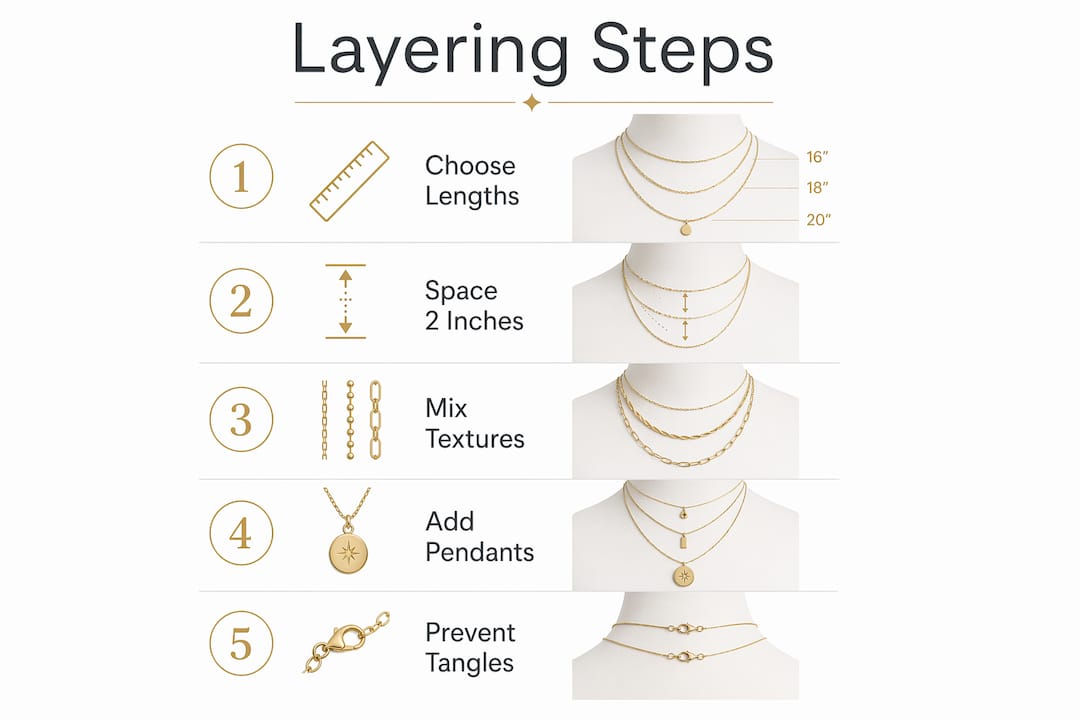
The 2-inch minimum difference rule between each necklace is the single most important principle in layering gold necklaces. When chains sit too close together, they merge visually and physically, turning a styled look into a tangled mess. Spacing them out gives each piece its own visual lane.
The most popular starting combination is 16", 18", and 20". A 16" chain sits at the collarbone, an 18" chain falls just below it, and a 20" chain rests at the upper chest. This trio works across most necklines and neck lengths. If you have a longer neck or prefer lower necklines, shift the entire stack down by two inches: 18", 20", and 22" creates the same clean separation with a slightly more relaxed placement.
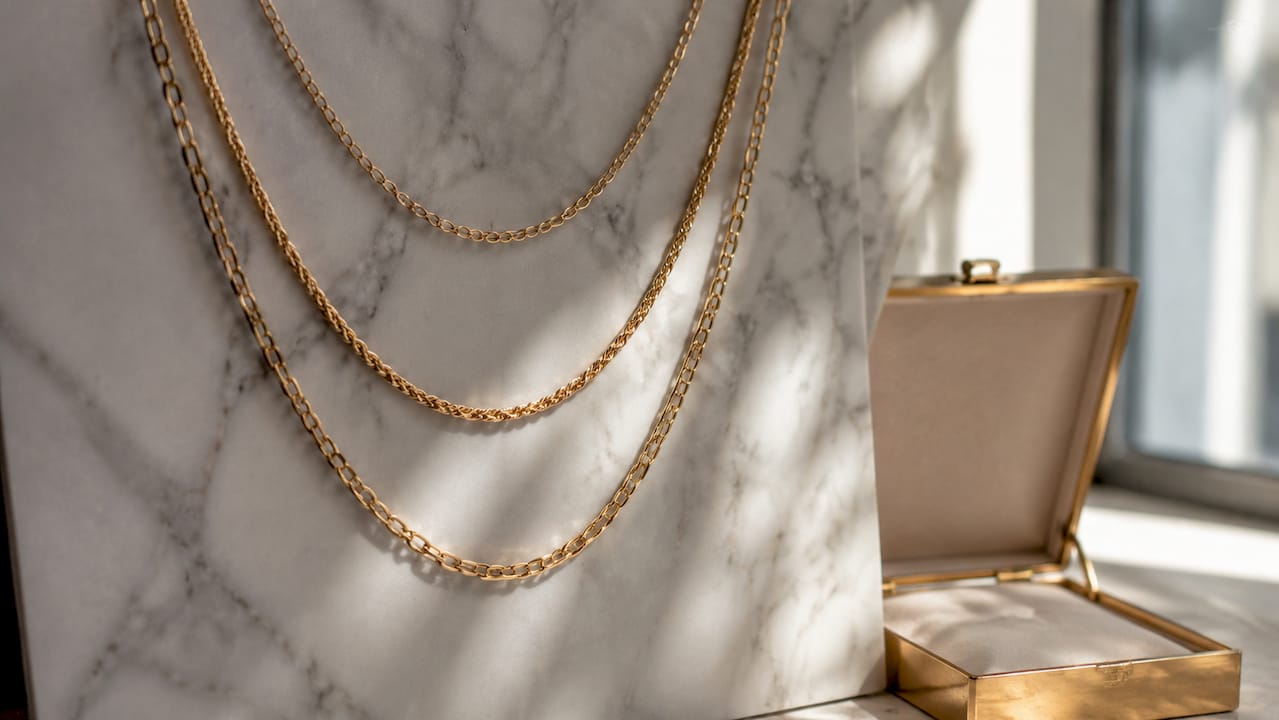
Three layers is the most stylish and manageable number for most people. Four or more layers require very delicate, thin chains and precise spacing to avoid looking overcrowded. If you want to go beyond three, keep each additional piece extremely fine and add at least two inches of separation between each one.
Here is a reference table for standard layering lengths and where each chain typically falls on the body:
| Length | Placement | Best for |
|---|---|---|
| 14" | High on the throat | Choker layer, V-neck tops |
| 16" | Collarbone | Base layer for most stacks |
| 18" | Just below collarbone | Middle layer, most necklines |
| 20" | Upper chest | Third layer, crew necks |
| 22" | Mid-chest | Fourth layer, open necklines |
| 24" | Lower chest | Statement or pendant layer |
Pro Tip: If you are between sizes, an extendable cable chain gives you flexibility to fine-tune placement without buying multiple lengths.
Which chain styles and textures work best for layering
Mixing different chain textures is not just a style choice. It is a functional one. Chains with contrasting textures like cable, box, rope, and Figaro rest separately on the skin because their surface structures interact differently. Identical dainty chains, by contrast, tend to tangle more because their smooth, uniform surfaces slide against each other with no natural resistance.
Here is how the most common gold chain necklace types compare for layering:
| Chain style | Visual weight | Tangle risk | Best pairing |
|---|---|---|---|
| Cable | Light | Low | Rope or Figaro |
| Box | Light to medium | Low | Herringbone or satellite |
| Rope | Medium | Low | Cable or box |
| Figaro | Medium | Medium | Snake or cable |
| Herringbone | Flat, bold | Low | Thin cable or satellite |
| Satellite | Light, textured | Very low | Any smooth chain |
A chunky rope or Franco chain paired with a thin cable chain creates natural spacing because chains in different weights behave differently when worn. The heavier chain pulls down and stays in place while the lighter one floats above it. This weight difference is what keeps them from wrapping around each other.
Pro Tip: Pair one flat chain like a herringbone with one round chain like a cable or rope. The flat surface and the round surface physically cannot interlock, which cuts tangling dramatically.
A good starter combination for anyone new to layering gold jewelry is a 16" satellite chain, an 18" cable chain, and a 20" rope chain. All three are widely available, affordable in solid gold, and visually distinct enough to read as three separate pieces rather than one confused cluster.
How to layer gold necklaces with pendants effectively
Pendants add a focal point to a layered stack, but they require careful placement. One pendant per stack is the standard rule because multiple pendants compete for attention and make the look feel busy rather than curated. Choose one pendant and let the other chains serve as supporting layers.
Where you place the pendant within the stack changes the entire feel of the look:
- Short layer (16"): A small pendant at the collarbone draws the eye upward and works well with open necklines or off-shoulder tops. Keep the pendant small, no larger than a dime, so it does not overwhelm the base layer.
- Middle layer (18"): A medium pendant here sits in the sweet spot between the collarbone and chest. Coin pendants, small crosses, and initial charms work well at this length.
- Long layer (20" or more): A larger pendant at the longest layer creates a natural anchor for the stack. Heavier pendants placed lower in the stack create balance and draw the eye downward, making the entire stack feel harmonious rather than top-heavy.
Meaningful pendants, such as zodiac signs, initials, or symbolic charms, add a personal dimension to a layered look. The key is to mix one meaningful pendant with two plain chains rather than stacking multiple symbolic pieces. Plain chains frame the pendant without competing with it. For more guidance on selecting the right piece, the gold pendants guide from Bakergoldchains covers styles, sizing, and quality markers in detail.
Pro Tip: If your pendant has a bail (the loop that attaches it to the chain), make sure the bail is wide enough to slide freely on the chain. A tight bail restricts movement and causes the pendant to sit crooked.
How to prevent necklace tangling and keep layers neat
Tangling is the most common complaint about layered necklaces, and it is almost entirely preventable with the right technique and tools. Follow these steps every time you put on a layered stack:
- Put on the longest necklace first. Starting with the longest chain and working upward prevents shorter chains from wrapping around longer ones as you clasp each piece.
- Add the middle-length chain second. Fasten it and let it settle before adding the next layer.
- Put on the shortest chain last. The shortest chain sits closest to the neck and is least likely to shift once the others are in place.
- Check the back. Make sure all clasps are positioned at the nape of the neck and not sliding to the front or side.
- Use a layering clasp if you wear the same combination daily. A layering clasp clips multiple necklaces together at the back and reduces tangling by about 80%. These small hardware pieces cost between $5 and $15 and are available at most jewelry supply retailers.
Spacing chains at least 1 to 2 inches apart gives each piece room to move independently without catching on its neighbors. Overcrowded chains not only tangle but also wear against each other, which can cause surface scratches over time. Reviewing common gold chain mistakes is worth doing before you commit to a daily layering routine.
Here is a quick reference for anti-tangle strategies:
| Strategy | How it helps |
|---|---|
| Longest chain first | Prevents shorter chains from wrapping during wear |
| 2-inch length spacing | Keeps chains in separate visual and physical zones |
| Mixed textures and weights | Reduces surface contact and sliding between chains |
| Layering clasp | Locks clasp positions and reduces movement at the back |
| Flat storage (laid out) | Prevents knots from forming between wears |
Key takeaways
Layering gold necklaces successfully requires three non-negotiable elements: a minimum 2-inch length difference between each chain, varied textures and weights, and the longest-first wearing order.
| Point | Details |
|---|---|
| Length spacing is the foundation | Use at least 2-inch gaps between chains to prevent merging and tangling. |
| Three layers is the sweet spot | A 16", 18", and 20" combination works for most necklines and neck lengths. |
| Mix textures deliberately | Pair flat chains with round chains to reduce physical contact and tangling. |
| One pendant per stack | A single pendant creates a focal point; multiple pendants create visual clutter. |
| Wear longest first | Putting on the longest chain first and working upward cuts tangling significantly. |
What I’ve learned from styling layered gold necklaces
Most people who struggle with layered necklaces are not making style mistakes. They are making spacing mistakes. I have seen beautifully chosen chains turn into a knotted mess simply because two of the three pieces were within half an inch of each other in length. The chains had no room to exist independently, so they did not.
The other mistake I see constantly is treating a layered stack like a collection rather than a composition. Adding every meaningful piece you own at once does not tell a story. It creates noise. Jewelry designer Jennifer Fisher makes this point clearly: focus on one main jewelry element at a time rather than competing with your own stack. That principle applies directly to necklace layering. Choose one chain as the statement piece, whether that is the chunkiest, the most textured, or the one with the pendant, and let the others support it.
My practical advice: build your stack on a flat surface before putting it on. Lay the chains out in order from longest to shortest, check that they are visually distinct from each other, and then put them on in reverse order. This takes thirty seconds and eliminates most of the frustration people associate with layering. Experimenting within the framework of length spacing and texture contrast gives you a lot of creative freedom. The framework is not a restriction. It is what makes the freedom possible.
— Blayne
Build your layered look with Bakergoldchains
If you are ready to put these principles into practice, Bakergoldchains offers a curated selection of solid 10K, 14K, and 18K gold chains built for exactly this kind of styling. Every piece is sourced from reputable U.S. suppliers and backed by a lifetime craftsmanship guarantee, so you are not just buying a chain for today’s look.

The Graduated Bead Necklace in 14K Yellow Gold is a strong starting point for any layered stack. Its graduated texture reads as distinct from smooth cable or rope chains, which means it sits cleanly in a three-piece combination without tangling. Pair it with a thinner cable chain above and a longer rope chain below for a complete, polished look. Free insured shipping applies to orders over $150, and flexible financing options are available at checkout.
FAQ
What is the best length combination for layering gold necklaces?
The most popular and practical combination is 16", 18", and 20". This trio creates clear visual separation and works across most necklines and neck lengths.
How do I stop my layered necklaces from tangling?
Put on the longest chain first and work upward to the shortest. Using a layering clasp at the back, which costs between $5 and $15, reduces tangling by about 80% for daily wearers.
How many necklaces should I layer at once?
Three is the most manageable and stylish number. Four or more layers require very fine, lightweight chains and precise 2-inch spacing to avoid a cluttered appearance.
Can I mix different gold karats when layering?
Yes. Mixing 10K, 14K, and 18K gold pieces in the same stack is fine because the color difference between karats is minimal. You can also mix yellow gold with white gold intentionally for contrast, as long as the combination looks deliberate rather than accidental.
Where should I place a pendant in a layered stack?
Place heavier pendants on the longest chain to anchor the stack and draw the eye downward naturally. Small pendants work well on the shortest chain as a collarbone focal point.

