

Gold pendants: styles, quality, and how to choose
Choosing a gold pendant sounds simple until you’re faced with dozens of styles, karat options, and price points that all claim to be the best. Whether you’re shopping for yourself or searching for a meaningful gift, the sheer volume of choices can make the process feel overwhelming. The good news is that a few clear criteria cut through the noise quickly. When you understand what makes a pendant high quality, durable, and genuinely worth wearing day after day, the right choice becomes much easier to spot. This guide walks you through everything you need to know.
Table of Contents
- How to evaluate gold pendants: The critical criteria
- Classic gold pendant types: Shapes, symbols, and motifs
- Designer and contemporary gold pendants: Modern artistry
- Comparing gold pendant types: Which is best for you?
- What most buyers overlook when choosing gold pendants
- Explore high-quality gold pendants and matching chains
- Frequently asked questions
Key Takeaways
| Point | Details |
|---|---|
| Quality first | Always check for hallmarking and verified purity before purchasing a gold pendant. |
| Classic styles last | Classic motifs like hearts and initials offer lasting appeal and everyday durability. |
| Modern artistry | Contemporary and designer pendants allow for unique expression, but require craftsmanship verification. |
| Comparison helps | Use summary tables to compare pendant types for suitability, style, and investment value. |
| Expert guidance | Professional tips and retail wisdom can steer you toward pendants that hold their value and beauty. |
How to evaluate gold pendants: The critical criteria
Before you fall in love with a design, it helps to know what separates a pendant that lasts a lifetime from one that loses its luster in a year. Quality starts with the gold itself, and that means understanding gold purity and hallmarks.
Gold purity is measured in karats (K). The most common options for pendants are 10K, 14K, and 18K gold. Higher karat gold contains more pure gold but is softer and more prone to scratching. Lower karat gold is more durable because it contains stronger alloy metals. For everyday pendants, 14K strikes a reliable balance between durability and gold content, while 18K suits special occasion pieces where richness of color matters more than toughness.
Key criteria to evaluate before buying:
- Hallmark stamp: Every authentic gold pendant should carry a karat stamp (such as 585 for 14K or 750 for 18K) along with a maker’s mark and, where applicable, an assay office mark. According to A Field Guide to Hallmarking, verifying claimed gold purity through hallmarking and assaying is essential, especially when resale value matters.
- Weight and thickness: A well-made pendant has a satisfying, solid weight. Hollow or very lightweight pendants may look fine at first but tend to dent or lose shape over time.
- Clasp and bail quality: The bail (the loop that connects the pendant to the chain) should be firmly soldered and proportionate to the pendant’s size. A weak bail is one of the most common failure points.
- Finish consistency: Look at the surface carefully. High-quality pendants have even polish, clean edges, and no rough spots where the metal was poured or cut.
- Craftsmanship detail: For pendants with engraving, filigree, or stone settings, check that the work is clean and uniform. Sloppy detail work is a clear sign of lower manufacturing standards.
Style versatility also matters. A pendant that works with multiple chain styles and necklace lengths gives you more ways to wear it, which means more value over time. When you’re thinking about pairing options, learning about buying premium gold jewelry can save you from costly mistakes.
Pro Tip: Before purchasing any gold pendant online, zoom in on the product photos and look for a visible hallmark stamp image. If the seller cannot show you a clear hallmark, ask for documentation of the gold’s purity before completing the purchase. This single step protects you every time.
Now that you understand the importance of quality and durability, let’s look at individual gold pendant types.
Classic gold pendant types: Shapes, symbols, and motifs
Having established quality criteria, let’s explore the classic pendant shapes and styles that stand the test of time. These are the styles that have been worn across generations, cultures, and occasions, and they remain popular for good reason.
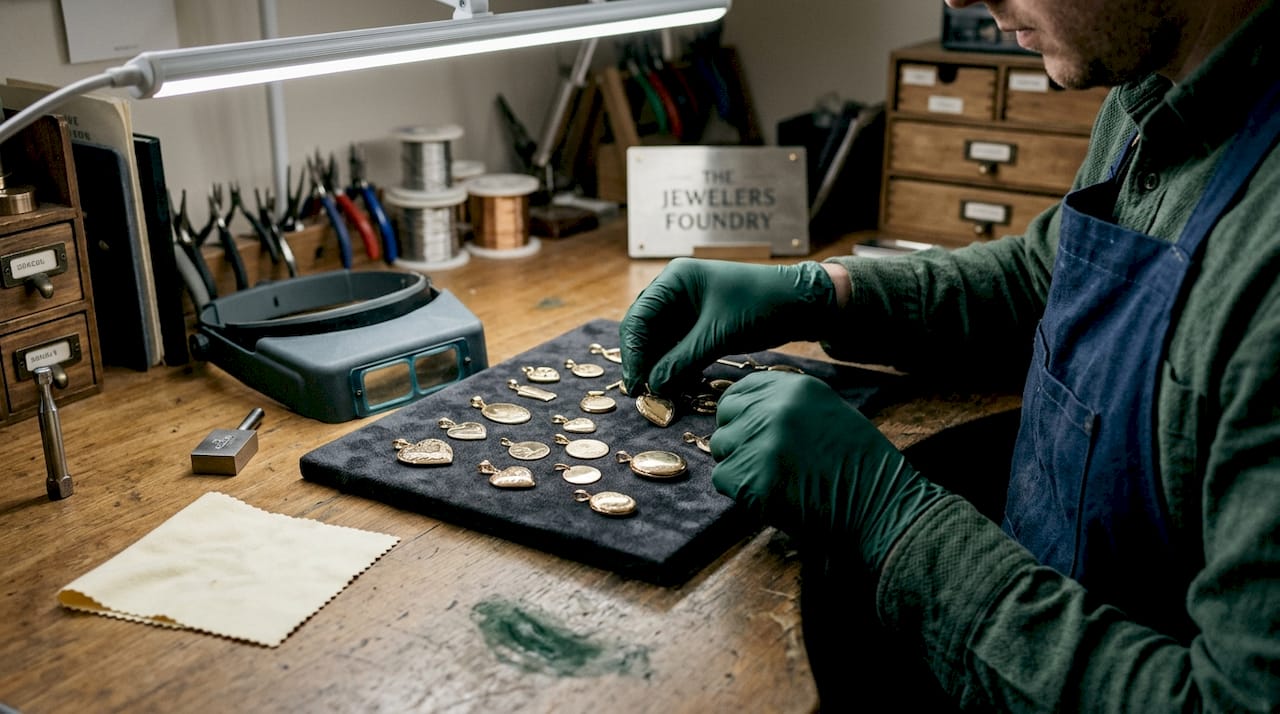
Heart pendants are probably the most recognized shape in fine jewelry. They work for romantic gifts, friendship gestures, and self-expression equally well. A well-crafted classic heart pendant in 14K yellow gold has a puffed, three-dimensional form that catches light beautifully and holds its shape through years of daily wear. Flat, stamped heart shapes tend to scratch and lose definition faster. The puffed version, made by casting solid gold, is the more durable choice by far.
Locket pendants have a long history as keepsakes. They open to hold a small photo or memento, which makes them deeply personal gifts. Quality lockets should have a tight hinge that closes flush without gaps. The hinge mechanism is where poor construction shows first, so press the locket open and closed several times before buying.
Initial and disc pendants are clean, modern, and highly personal. An initial pendant in 14K yellow gold works for everyday wear and dresses up easily for events. The disc format allows engraving on the back, which adds sentimental value without adding bulk.
Religious and symbolic motifs include crosses, evil eye designs, hamsa hands, and other culturally significant symbols. These pendants often carry personal or spiritual meaning, and many buyers want them made in a specific karat to honor the importance of the piece. Heavier symbolic pendants benefit from a thicker bail and a chain that can support the weight properly. Pairing them with the right selecting your pendant chain ensures the full piece looks intentional.
Nature-inspired motifs like leaves, flowers, butterflies, and stars bring organic beauty to fine jewelry. These designs often feature intricate detail work that requires skilled casting or hand-finishing. Look for crisp definition in the petals or veins of the design; blurry or rounded edges indicate the mold was not precise enough.
As noted in A Field Guide to Hallmarking, hallmark numbering confirms gold purity: 585 equals 14K, 750 equals 18K, and 999 equals 24K. Seeing these numbers stamped on a classic pendant gives you confidence that the piece is exactly what it claims to be.
| Pendant type | Best occasion | Everyday durability | Craftsmanship complexity |
|---|---|---|---|
| Heart (puffed) | Gifts, everyday | High | Medium |
| Locket | Gifts, keepsakes | Medium | High |
| Initial/disc | Everyday, casual | High | Low to medium |
| Religious symbol | Everyday, ceremonies | High | Medium |
| Nature motif | Special occasions | Medium | High |
Designer and contemporary gold pendants: Modern artistry
While classics anchor your collection, designer and contemporary pendants offer the opportunity for unique expression. These pieces push beyond traditional shapes and often combine techniques, materials, or proportions that feel fresh and modern.
Geometric pendants use clean lines, angles, and mathematical shapes to create a minimalist statement. Circles, hexagons, triangles, and asymmetric forms are popular in this category. The appeal is simplicity: a single gold circle in 18K yellow gold can be as striking as a heavily detailed piece, depending on how it is worn.
Organic and sculptural forms take inspiration from nature but interpret it abstractly. Rather than a literal flower, you might find a flowing, freeform gold shape that suggests movement. These are often handcrafted in small batches, which adds both uniqueness and higher price points.
Mixed-metal designs combine yellow gold with white gold, rose gold, or sterling silver to create visual contrast. A good example is a dragonfly designer pendant in 18K yellow gold and sterling silver, where each metal plays a distinct visual role. Mixed-metal pieces require more skill to execute cleanly, so craftsmanship is especially important to evaluate.
Statement pendants are oversized, bold, or layered designs meant to be the focal point of an outfit. They work best on heavier chains, like a textured gold chain that matches the pendant’s visual weight.
Key points to verify for contemporary pendants:
- Confirm the karat stamp is present even on modern or artistic designs. Hallmarks do not disappear just because a piece is trendy.
- Ask whether the piece was cast, hand-fabricated, or 3D-printed from wax. Each method has different implications for durability and detail retention.
- Check that stone settings, if any, are flush and secure. Contemporary designs sometimes sacrifice structural integrity for visual impact.
According to A Field Guide to Hallmarking, gold items are scientifically tested and hallmarked using lab methods such as XRF (X-ray fluorescence), which measures gold content accurately without damaging the piece. This kind of testing is the gold standard (literally) for verifying what you are buying.
Pro Tip: When buying a contemporary or designer pendant, search for the assay office mark alongside the karat stamp. The assay office mark tells you that an independent, certified lab, not just the manufacturer, confirmed the gold content. It is the clearest signal of verified quality you can get.
| Feature | Classic pendants | Contemporary pendants |
|---|---|---|
| Style range | Timeless, traditional | Modern, expressive |
| Hallmarking | Always present | Should be present |
| Craftsmanship focus | Symmetry, finish | Form, mixed materials |
| Chain pairing | Versatile | Specific to weight/design |
| Investment potential | High | Moderate to high |
Comparing gold pendant types: Which is best for you?
With all main types covered, a comparison will help you make the best choice for your needs and style. The right pendant depends on three things: how often you plan to wear it, what occasion it is for, and whether you want it to hold long-term value.
Gold items tested and hallmarked using XRF methods give buyers the most reliable assurance of purity, regardless of which style they choose.
Step-by-step guide to choosing the right pendant:
- Define the purpose. Is this for daily wear, a special occasion, or gifting? Daily wear needs durability first. Special occasions can prioritize design detail and gold richness.
- Set a karat preference. For everyday use, 14K is the practical choice. For gifts or special pieces, 18K adds warmth and a richer color.
- Choose a style category. Decide between classic shapes for timeless appeal or contemporary forms for personal expression.
- Check the hallmark. Always confirm the karat stamp before purchasing. No stamp means no guarantee.
- Match the chain. Consider pendant chain options that complement both the weight and design of your pendant.
- Factor in care. Pendants with gemstones or intricate detail require more careful maintenance. Review gold chain care tips to understand what upkeep looks like.
| Pendant style | Everyday wear | Gifting | Investment value |
|---|---|---|---|
| Heart (solid/puffed) | Excellent | Excellent | Good |
| Locket | Good | Excellent | Good |
| Initial/disc | Excellent | Good | Moderate |
| Religious symbol | Excellent | Excellent | Good |
| Geometric/designer | Good | Good | Moderate to high |
| Mixed-metal statement | Moderate | Good | Moderate |
What most buyers overlook when choosing gold pendants
Here is something we see consistently in fine jewelry retail: most buyers spend 90% of their time on design and almost no time on verification. They pick a shape they love, confirm the price fits their budget, and complete the purchase without ever checking the hallmark. This is the single biggest mistake in gold pendant buying.
The assay office mark is separate from the karat stamp. The karat stamp tells you what the seller claims the gold content is. The assay office mark tells you that an independent, certified body has confirmed that claim using lab-grade testing. As noted by A Field Guide to Hallmarking, gold items are tested and hallmarked using scientific methods like XRF, which leaves no room for error or misrepresentation.
Many buyers also underestimate how much durability matters for everyday wear. A pendant that looks stunning in a display case can show wear within months if the gold is too thin, the bail is poorly soldered, or the karat is not what it claims. We recommend reading about common gold chain mistakes before making any purchase, because the same principles apply to pendants.
Another commonly overlooked factor is the relationship between karat and skin sensitivity. Some buyers have mild reactions to the alloy metals in 10K gold, which contains a higher percentage of copper and silver. Choosing 14K or 18K reduces this risk while still offering excellent durability.
Finally, think about resale. A hallmarked 18K gold pendant from a reputable supplier holds its intrinsic gold value independently of trends or design preferences. That is a meaningful benefit if your tastes change or you want to upgrade later.
Explore high-quality gold pendants and matching chains
If this guide has helped you narrow down what you are looking for, the next step is finding pieces that meet every standard we have covered: verified hallmarking, solid craftsmanship, and timeless or contemporary design that fits your personal style.
Baker Gold Chains offers a curated selection of pendants sourced from reputable U.S. suppliers, with clear karat stamps and quality you can verify. Browse diamond halo pendants in 14K white gold for a classic statement, or explore the artfully crafted dragonfly pendant in 18K yellow gold and sterling silver for something more distinctive. Pair any pendant with a matching gold pendant chain to complete the look. Free insured shipping applies on orders over $150, and a lifetime craftsmanship guarantee backs every piece.
Frequently asked questions
How can I tell if a gold pendant is truly authentic?
Look for hallmark stamps and assay office marks on the back or edge of the pendant, which confirm gold purity through independent, lab-grade testing. According to A Field Guide to Hallmarking, gold items are scientifically tested using methods like XRF before hallmarks are applied.
What does 14K, 18K, or 24K mean for gold pendants?
These numbers indicate how much pure gold the piece contains. As shown in hallmark numbering, 585 stamps equal 14K (58.5% gold), 750 equals 18K (75% gold), and 999 equals 24K pure gold.
Are designer pendants less durable than classic pendants?
Not necessarily. Both styles can be equally durable when made with proper craftsmanship and verified gold purity, since XRF-tested hallmarking confirms quality regardless of design style.
Is it safe to buy gold pendants online?
Yes, as long as the seller provides clear hallmarking information and lab-tested purity documentation. Verified gold purity through hallmarking and assaying is the key indicator of a trustworthy online seller.
Which gold pendant style is most versatile for everyday wear?
Initial pendants, simple puffed heart shapes, and classic lockets are the strongest choices for daily wear because they combine durability, ease of pairing, and personal meaning that holds up over time.
Recommended
- Gold chain vs gold plated: How to choose quality jewelry – Baker Gold Chains
- How to select the perfect pendant chain: a guide – Baker Gold Chains
- How to identify and buy premium gold jewelry – Baker Gold Chains
- Daily wear gold jewelry: style, durability, and quality – Baker Gold Chains
- Gold vs Silver Jewelry: Style, Luxury & Buying Tips – Malibu Vibes Jewelry

