

How to Buy Gold Chains: Your Smart Buyer's Guide
Knowing how to buy gold chains sounds straightforward until you’re standing in front of dozens of options with wildly different prices, conflicting purity claims, and styles you can barely tell apart. The stakes are real. Buy the wrong chain and you could end up with a plated piece that fades in months, or pay full retail on a chain worth half the price. This guide cuts through the confusion by covering everything that matters: gold purity, chain styles, authenticity checks, pricing logic, and a clear purchase process you can follow with confidence.
Table of Contents
- Key takeaways
- How to buy gold chains: understanding purity first
- Popular gold chain styles and how to choose
- Checking authenticity and spotting fakes
- Pricing factors and what to expect to pay
- A practical checklist for your gold chain purchase
- My honest take on buying gold chains
- Shop solid gold chains you can trust
- FAQ
Key takeaways
| Point | Details |
|---|---|
| Karat purity drives price and durability | 10K, 14K, and 18K gold differ in gold content, hardness, and long-term value. |
| Chain style affects wearability | Some styles tangle or break more easily, so match the style to how you plan to wear it. |
| Hallmarks are your first authenticity check | Look for a karat stamp on every chain before buying online or in a store. |
| Weight and purity determine fair pricing | Calculate price per gram against current gold spot prices to avoid overpaying. |
| Buying from reputable sellers protects you | Certified or direct-to-consumer retailers offer better guarantees and lower counterfeit risk. |
How to buy gold chains: understanding purity first
The most important factor when buying gold jewelry is karat purity, and it directly affects cost, durability, and appearance. Gold is measured in karats, with 24K being pure gold. Since pure gold is too soft for everyday wear, it gets alloyed with other metals to add strength.
Here is what the three most common karat ratings actually mean:
| Karat | Gold Content | Best For |
|---|---|---|
| 10K | 41.7% pure gold | Everyday wear, budget buyers |
| 14K | 58.3% pure gold | Balanced quality and price |
| 18K | 75% pure gold | Premium pieces, richer color |
10K gold is 41.7% pure but significantly harder than higher karats, making it ideal for chains worn daily. It resists scratches and bending better than 18K, though the color appears slightly paler. 14K offers scratch resistance at a mid-range price and is the most popular choice in the U.S. market. 18K contains 75% gold, giving it a deeper, richer yellow tone and higher intrinsic value, but it scratches more easily.
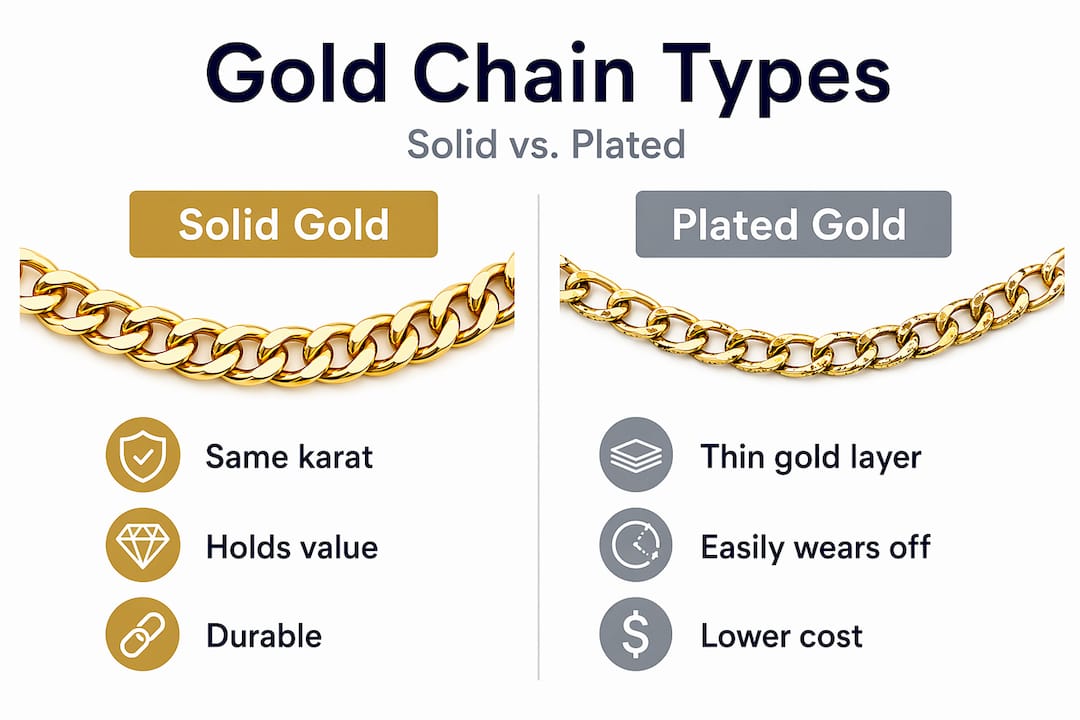
Beyond karat, you need to understand what the gold is actually made of. Solid gold means the entire chain is the same karat alloy throughout. Gold-filled chains bond a thick layer of gold to a base metal, while vermeil requires at least 2.5 microns of gold over sterling silver. Gold-plated chains have the thinnest coating and will fade fastest. For long-term value, why buy solid gold chains comes down to one thing: only solid gold retains its material worth over time.
Metal color is another choice. Yellow gold is alloyed with copper and silver, white gold uses palladium or nickel plus rhodium plating, and rose gold gets its pink tone from added copper. All three are available across karat levels.
Pro Tip: If you’re buying a chain for everyday wear, 14K is the sweet spot. You get real gold durability without paying the 18K premium.
Popular gold chain styles and how to choose
Style affects how a chain looks, how it holds up, and whether it suits your intended use. These are the most common types and what sets each one apart:
- Cuban link chains feature interlocking oval links that lay flat and close together. They are thick, heavy, and highly durable. Cuban links are excellent statement pieces and resist tangling well.
- Rope chains twist multiple strands together into a spiral pattern. They offer good durability but can tangle if the clasp catches. Rope chains catch light beautifully and work well solo or with a pendant.
- Box chains use square links connected in a line. They are sturdy, resistant to kinking, and lay flat against the skin. A great choice for pendant wear.
- Figaro chains alternate between one elongated link and two or three shorter links. They have a classic Italian look and are strong enough for daily wear.
- Franco chains feature V-shaped interlocking links that create an extremely tight, durable structure. These are popular in heavier, thicker styles.
- Byzantine chains are more ornate, with a complex interlocking pattern. They make bold standalone pieces but are not ideal for holding pendants.
For layering, thinner rope or box chains in 1 to 1.5mm widths work best because they sit at different levels without clumping. For a gift, a 14K Cuban or Figaro chain in a medium width tends to suit most styles and ages. For a pendant, a box chain or Franco chain provides a clean, secure foundation.
Pro Tip: Before buying, check the chain’s clasp type. A spring ring clasp is standard, but a lobster claw clasp is more secure for heavier chains or pendant setups.

Checking authenticity and spotting fakes
Knowing how to verify gold quality is non-negotiable. Fake and plated chains are sold openly, and some sellers count on buyers not knowing what to look for.
Here is a step-by-step process to check any gold chain before committing:
- Look for the karat stamp. Genuine chains carry stamps like 10K, 14K, or 18K, usually found near the clasp. In the U.S., legitimate jewelry is stamped by law. No stamp is an immediate red flag.
- Try the magnet test. Real gold is not magnetic. Hold a strong magnet near the chain. If the chain sticks or pulls, it contains significant ferrous metal and is not solid gold.
- Check for discoloration or wear spots. On plated chains, worn areas expose the base metal underneath. Look carefully at clasps, links, and high-contact points.
- Request a certificate or appraisal. Reputable jewelers provide documentation. Online retailers like Bakergoldchains source from U.S. suppliers and back their pieces with a lifetime craftsmanship guarantee.
- Buy from certified or direct-to-consumer sellers. Direct-to-consumer retailers offer better authenticity guarantees and can reduce the markup that comes from multi-layer distribution.
Red flags to watch for include prices far below market value, vague or missing product descriptions, sellers who can not name the gold content, and no return policy. If the deal looks too good to be true, it usually is.
Pricing factors and what to expect to pay
Gold chain pricing is not arbitrary, but it is easy to overpay without understanding what drives cost. Four main factors determine the price of any chain: gold weight in grams, karat purity, design complexity, and current market prices.
Gold prices reached historical highs near $4,800 per ounce in early 2026, which pushed retail chain prices up across the board. A heavier, higher-karat chain always costs more because there is more gold in it. A 20-gram 14K chain costs significantly more than a 5-gram 14K chain of the same style.
Here is a practical pricing framework to use:
- Calculate the melt value. Multiply the chain’s weight in grams by the current gold spot price per gram, adjusted for karat purity. This gives you the minimum fair price.
- Expect a retail premium. Retailers add a markup of 20 to 50 percent above melt value to cover labor, design, and overhead. Specialty or designer chains can go higher.
- Compare by price per gram. When comparing chains of the same karat, divide the price by the weight. A wide gap between similar pieces often signals a quality difference or inflated markup.
- Understand the role of gold chains in investment. Solid gold chains hold intrinsic value tied to gold prices. This is one strong reason why invest in gold chains makes financial sense. Unlike plated jewelry, solid gold can be resold or melted down.
Affordable gold chains are available in 10K, which gives you real gold at the lowest price point without sacrificing authenticity. The key is to avoid cheap plated pieces marketed with vague language and focus on declared karat content with verifiable stamps.
A practical checklist for your gold chain purchase
Having a clear process keeps you from rushing into a bad purchase. Here is how to approach buying a gold chain from start to finish:
- Define your purpose. Everyday wear needs 10K or 14K in a durable style like Cuban or Franco. A gift or special occasion piece might justify 18K. A pendant needs a specific length and link strength.
- Set a real budget. Factor in gold weight and karat, not just style. A thin 18K chain can cost more than a thick 10K chain of the same length.
- Choose your metal color. Yellow, white, or rose gold. Match it to the wearer’s existing jewelry or skin tone preference.
- Decide where to purchase. Buying gold chains online gives you more selection, transparent pricing, and easy comparison. In-store buying lets you feel the weight and inspect the piece directly. Both have merit, but common gold chain mistakes happen more often when buyers rush online without reading product specs carefully.
- Ask the right questions. What is the exact karat? What is the weight in grams? Is there a return policy? Does the chain come with documentation?
- Inspect on arrival. When your chain arrives, check the karat stamp immediately, test the clasp, and examine links under good light. Return it promptly if anything looks off.
Pro Tip: Always check the chain length before buying. Standard lengths are 16", 18", 20", 22", and 24". An 18" chain sits at the collarbone; a 22" drops to the chest. If you are unsure, go with 20" as a universal fit for men or women.
My honest take on buying gold chains
I’ve watched people overthink the style question and completely ignore the weight question, then wonder why their chain feels cheap or wears out in a year. In my experience, durability should lead every buying decision. A beautifully designed chain that breaks or fades is not a bargain at any price.
What I’ve learned is that flashy marketing around “gold-tone” or “gold-style” jewelry is everywhere, and it tricks a lot of buyers into thinking they are getting real gold. The karat stamp is the only thing that tells you the truth. I’ve seen chains with convincing-looking gold finishes that held a magnet like a refrigerator door. That is not a rare exception. It is common.
My take on style: timeless beats trendy almost every time. Cuban link, Figaro, and rope chains have been popular for decades. They will not look dated in five years. When I select a chain for everyday wear, I start with a solid 14K Cuban or Figaro in a practical width. It wears well, holds its value, and looks appropriate in almost any setting.
I also strongly recommend buying from specialists rather than general marketplaces. A jeweler who only deals in gold chains has a reputation built on that specific product. They are less likely to cut corners and more likely to stand behind what they sell. That peace of mind is worth the slightly higher price point when you find a retailer who earns it.
— Blayne
Shop solid gold chains you can trust
Bakergoldchains specializes in authentic solid gold chains made from 10K, 14K, and 18K gold, sourced directly from reputable U.S. suppliers. Every piece carries a proper karat stamp, comes with a lifetime craftsmanship guarantee, and ships free and insured on orders over $150. Whether you are looking for a budget-friendly entry point like the 10K Singapore chain or a refined everyday piece like the 14K white gold pendant chain, the catalog covers a wide range of styles, purities, and price points. Flexible financing options make it easy to buy solid gold without stretching your budget all at once. Browse the full collection at Bakergoldchains and find a chain that fits how you live and what you value.
FAQ
What karat is best for everyday gold chain wear?
14K gold is the most practical choice for daily wear. It contains 58.3% pure gold, resists scratching well, and costs less than 18K while still holding real long-term value.
How can I tell if a gold chain is real?
Check for a karat stamp near the clasp, such as 10K, 14K, or 18K. You can also test it with a strong magnet since real gold is not magnetic.
Why buy solid gold chains instead of plated?
Solid gold retains its material value over time and does not fade, chip, or expose a base metal underneath. Plated chains may look similar initially but deteriorate with regular wear.
Is buying gold chains online safe?
Yes, if you buy from reputable retailers who list exact karat content, chain weight, and offer clear return policies. Buying gold chains online from specialists with authenticity guarantees is often safer than buying from unknown in-store vendors.
How do gold chain prices compare across karat levels?
Price scales with both karat and weight. A 14K chain costs more than a 10K chain of the same weight because it contains more gold. With gold near $4,800 per ounce in 2026, even small differences in weight add up quickly at checkout.

