

Best Royalchaingroup.com Alternatives for Solid Gold Buyers
If you’re searching for royalchaingroup.com alternatives, Bakergoldchains is the recommended starting point. It offers solid-gold chains in 10K, 14K, and 18K with transparent gram-weight listings, metal certification from U.S. suppliers, free insured shipping on qualifying orders, and a lifetime craftsmanship guarantee. Before you buy from any seller, run through this quick checklist:
- Metal certification: Ask for a downloadable assay report or hallmark photos.
- Gram weight listed: The product page should state exact grams, not just “lightweight” or “delicate.”
- Return policy: Look for a clear window (typically 30 days) with no hidden restocking fees.
- Insured shipping: Confirm the package ships with tracking and insurance.
- Contactable customer service: A real phone number or email address, not just a contact form.
TheCaratCut’s buyer rankings and Learning Jewelry’s online buying guide both reinforce these same criteria as the baseline for any trustworthy gold seller.
Key Takeaways
Bakergoldchains is the recommended royalchaingroup.com alternative for buyers who want transparent gram listings, metal certification, insured shipping, and a lifetime craftsmanship guarantee from a U.S.-based solid-gold retailer.
| Point | Details |
|---|---|
| Gram weight is the priority check | Listings that state exact grams let you calculate fair value against gold spot price. |
| Solid vs. hollow matters most | Hollow chains inflate apparent size but reduce gold weight, durability, and repairability. |
| Warranty scope varies widely | A lifetime craftsmanship guarantee covers more than a manufacturing-defect-only policy. |
| Red flags to act on | No gram weight, vague returns, domain under six months, and no contact details are all reasons to walk away. |
| Bakergoldchains recommendation | Shop Bakergoldchains for certified solid gold in 10K, 14K, and 18K with insured shipping and a lifetime guarantee. |
Table of Contents
- Why a verified alternative protects your investment
- How to evaluate any online gold jeweler
- Why Bakergoldchains is a strong alternative to Royal Chain Group
- Questions to ask any seller and red flags to walk away from
- Is the price on a gold chain actually fair?
- What most buyers get wrong when shopping for gold online
- Bakergoldchains: transparent pricing, insured shipping, and a lifetime guarantee
- Sources
Why a verified alternative protects your investment
Unverified sellers create real financial risk. Fake “14K” stamps applied to brass base metals are common on generic marketplaces, and TheCaratCut specifically warns that hollow chains and unverified sellers routinely mislabel metals. The result: you pay solid-gold prices for a piece that tarnishes, breaks, or fails a basic acid test within months.
The specific risks buyers face include:
- Counterfeit karat stamps: A “14K” stamp on brass or low-grade alloy looks identical to the real thing without documentation.
- Hollow construction: Hollow chains appear larger but contain far less gold by weight, reducing durability and resale value.
- Thin plating: Terms like “gold-filled,” “gold-bonded,” and “gold vermeil” describe base metals coated in thin gold layers that wear off with regular use.
- New, ad-heavy sellers: Sellers online for less than six months and running aggressive social ads are frequently fast-fashion vendors using low-quality plating that fades in weeks.
Pro Tip: Before you commit to any purchase, ask the seller for hallmark photos and an assay report. A trustworthy seller makes these easy to find or delivers them on request without hesitation.
How to evaluate any online gold jeweler
The single most important item on your checklist is gram-weight transparency. A seller who lists exact grams lets you calculate what you’re actually paying for gold versus marketing premium. Everything else follows from there.
Work through these steps in order:
- Hallmark and assay report. Request a downloadable PDF assay report and clear photos of the hallmark stamp. Acceptable replies include a direct link to the document or an email attachment within 24 hours.
- Exact gram weight and karat. The product listing should state both. “Approx. 5g” is a yellow flag; “5.2g, 14K” is what you want.
- Solid vs. hollow construction. Ask directly. Solid chains cost more per gram but hold up to daily wear and can be repaired. Hollow chains cannot.
- Price-per-gram vs. spot price. Calculate the gold value yourself (see the pricing section below) and compare it to the asking price. A reasonable retail markup for direct-to-consumer solid gold is generally acknowledged to run 10–40% above gold value, as is reflected in recommendations by TheCaratCut and other industry sources, but may vary by seller.
- Return policy and warranty. Look for a clear return window and a craftsmanship guarantee. Learning Jewelry notes that warranty scope varies widely: some retailers cover lifetime maintenance while others limit coverage to manufacturing defects only.
- Insured shipping and delivery timeline. Confirm the carrier, insurance value, and estimated delivery window before checkout.
- Payment and financing options. Flexible financing matters for higher-ticket pieces; confirm whether buy-now-pay-later is available.
- Customer-service contactability. Call or email before you buy. Response time and tone tell you a lot.
- Independent reviews and third-party verification. Look for verified purchase reviews on neutral platforms. Industry bodies like the Responsible Jewellery Council set standards for ethical sourcing and supply-chain transparency.
Pro Tip: Watch the product description for the words “gold-filled,” “gold-bonded,” or “gold vermeil.” Learning Jewelry confirms these terms indicate plated or layered products, not solid gold. If you see them, you are not buying solid gold regardless of how the listing is styled.
For a deeper look at how to buy gold chains, Bakergoldchains publishes a step-by-step guide covering karat, chain styles, and spot-price calculations.
Why Bakergoldchains is a strong alternative to Royal Chain Group
Bakergoldchains maps directly to the checklist above. Here is how each dimension lines up:
- Authenticity and certification: Solid-gold pieces sourced from U.S. suppliers with metal certification; no plated or bonded products in the core catalog.
- Karat and gram-weight transparency: Product listings state karat (10K, 14K, or 18K) and gram weight so you can run your own price-per-gram check.
- Return policy and warranty: A lifetime craftsmanship guarantee covers the quality of workmanship, going beyond the manufacturing-defect-only coverage common at other retailers.
- Shipping: Free insured shipping on qualifying orders, with tracking included.
- Pricing: Transparent gram listings let you compare directly against spot price and assess the retail markup.
- Product selection: Rope, Franco, Cuban, Byzantine, box, Figaro, Jax link, paperclip, pavé, and statement chains, plus pendants, earrings, rings, bracelets, anklets, and certified diamond and wedding jewelry.
- Payment and financing: Flexible financing options are available at checkout for buyers who prefer to spread the cost.
Royal Chain Group is an established wholesale supplier with a broad industry footprint, and business directory data confirms it operates across multiple company variants. For retail buyers who want direct-to-consumer transparency, a specialist e-commerce retailer like Bakergoldchains offers clearer documentation and buyer-facing policies.
Questions to ask any seller and red flags to walk away from
Start with these five questions before placing an order:
- “Can you send me the assay report or certificate of authenticity?”
- “What is the exact gram weight of this piece?”
- “Is this solid gold, or is it hollow, gold-filled, or plated?”
- “Can you send photos of the hallmark stamp?”
- “What carrier do you use, and is the shipment insured?”
A trustworthy seller answers all five without hesitation. A seller who deflects, sends only marketing copy, or cannot produce hallmark photos is a seller worth skipping.
Watch for these red flags:
- No gram weight listed anywhere on the product page.
- Vague return policy or restocking fees buried in fine print.
- Domain registered less than six months ago combined with heavy paid social advertising.
- No phone number or physical address, only a contact form.
- Product images are low-resolution or clearly stock photos.
- Prices that look dramatically lower than spot-price math would justify.
- “14K” stamp claims with no supporting documentation.
For a practical guide to spotting fake gold chains, Bakergoldchains covers hallmark reading, the magnet test, and density checks in detail.
Note: the “RCI” mark you may see on some jewelry is a Royal Chain Inc. trademark. Homage Jewellery documents that a “925” stamp alongside it typically indicates sterling silver (92.5% silver), not gold, and some RCI pieces are manufactured in Italy.
Is the price on a gold chain actually fair?
Price-per-gram, adjusted for karat, is the quickest way to judge whether a listing is reasonable. Here is how to run the calculation:
- Find the current US gold spot price per troy ounce (check KITCO or the CME Group for live data).
- Divide by 31.1 to convert to price per gram.
- Multiply by the karat percentage: 10K = 41.7%, 14K = 58.3%, 18K = 75%.
- Multiply by the chain’s gram weight.
- Add a retail markup. Direct-to-consumer solid-gold sellers typically run 10–40% above gold value; heavily marketed brands run higher.
Sample calculation (illustrative figures only — update spot price at publishing):
A listing significantly above this range warrants a question about construction. A listing significantly below it should prompt you to ask whether the chain is hollow or plated. TheCaratCut’s buying guide reinforces that purchasing by weight rather than aesthetics is the clearest way to avoid overpaying or receiving a hollow design.
A few things to keep in mind:
- Hollow chains invalidate the price-per-gram check entirely because the listed gram weight reflects far less actual gold than a solid piece of the same size.
- Branded retail markups can run well above 40% and are not inherently a red flag, but you should know what you are paying for.
- Spot price fluctuates daily; recalculate before any significant purchase.
What most buyers get wrong when shopping for gold online
The conventional advice is to check reviews and compare prices. That is not wrong, but it misses the real leverage point: construction type. A five-star-reviewed hollow chain at a “fair” price-per-gram is still a poor purchase because the gram weight is misleading. You are paying for air inside the links.
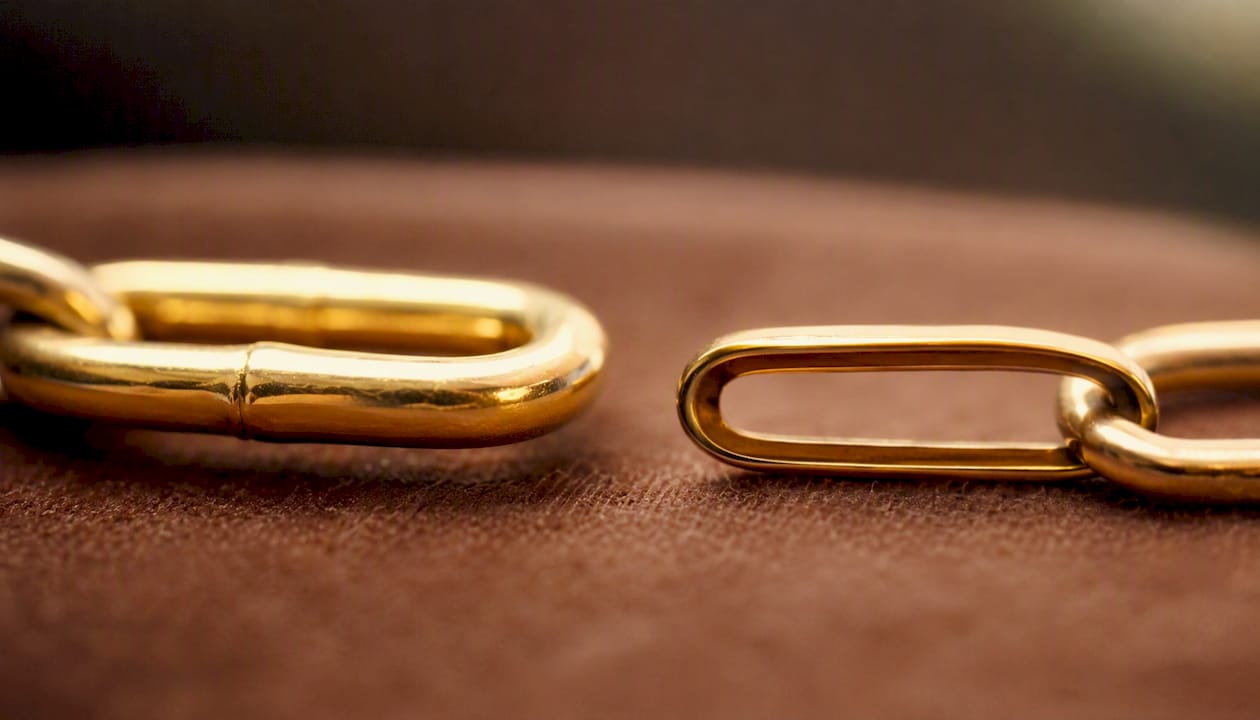
The second thing buyers underestimate is how much the warranty scope matters. A lifetime craftsmanship guarantee is not the same as a manufacturing-defect warranty. The first covers workmanship failures that show up over years of wear. The second covers only obvious defects you could spot at unboxing. For a piece you plan to wear daily, that distinction has real dollar consequences when a clasp fails or a link weakens two years in.
The third overlooked point: domain age and customer-service responsiveness are better proxies for trustworthiness than follower counts or ad spend. A seller with a two-year-old domain, a real phone number, and a 24-hour email response time has more skin in the game than a polished Instagram account launched four months ago.
Bakergoldchains: transparent pricing, insured shipping, and a lifetime guarantee
Bakergoldchains gives you the documentation, policies, and product range the checklist above calls for, without the guesswork of an unverified marketplace.
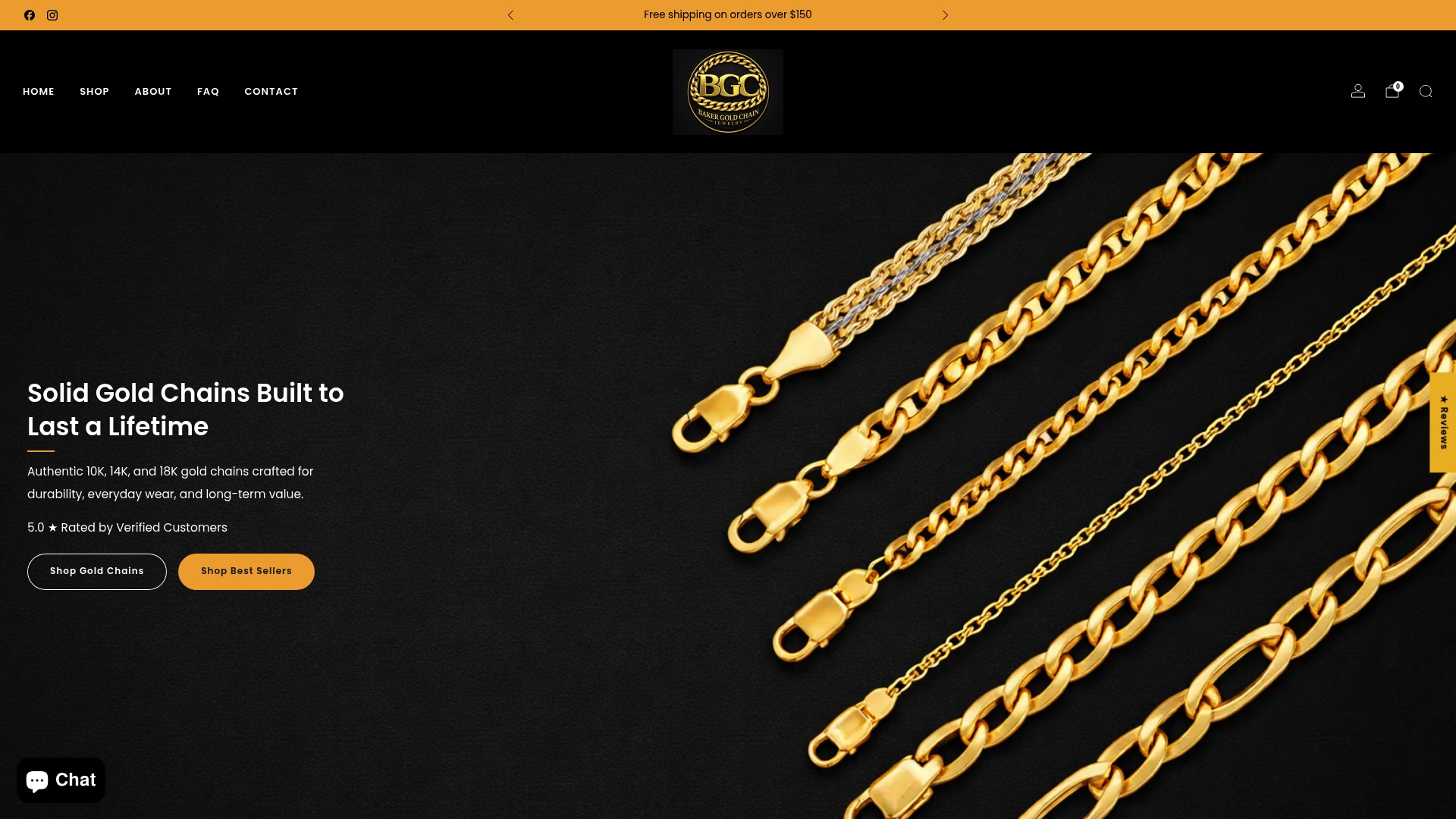
The 14K Yellow Gold Graduated Bead Necklace is a good starting point: the product page lists karat and weight clearly, so you can run your own spot-price calculation before checkout. Every order ships with insurance and tracking, financing is available at checkout, and the lifetime craftsmanship guarantee covers workmanship beyond the standard defect window. If the piece is not right, the return policy gives you a clear path back. Browse the full catalog at Bakergoldchains and confirm the gram weight, karat, and certification details on any product page before you buy.
Sources
- Best Places to Buy Gold Chains: 2026 Rankings | TheCaratCut
- Best Places to Buy Gold Chains Online Safely | Learning Jewelry
- Royal Chain Group Company Details: Email + Phone Contact Coverage | AeroLeads
- Royal Chain company overview | Tracxn

