

Timeless Jewelry Design Explained: Principles That Last
Timeless jewelry design is defined as the practice of creating pieces built on classic proportions, durable materials, and functional versatility that remain stylish across generations. The industry term for this discipline is “enduring design,” and it stands apart from trend-driven styling by prioritizing wearability over novelty. Experts at SuperJeweler, Luxyora, and Jewelers Mutual Group all point to the same three pillars: aesthetic balance, material quality, and emotional resonance. A piece that scores well on all three does not just survive fashion cycles. It becomes a signature. Understanding timeless jewelry design explained in full means looking at how those three pillars work together in every detail of a piece.
What makes jewelry timeless? Materials and craftsmanship
The foundation of any enduring piece is its material. Precious metals like gold, platinum, and sterling silver anchor timeless jewelry because they resist tarnish, hold their structure, and carry recognized financial value. High-quality gemstones, including diamonds, pearls, and sapphires, add aesthetic depth that synthetic alternatives cannot replicate over time. Plated or synthetic materials depreciate faster and often lose their finish within a few years of regular wear.
Craftsmanship is what separates a well-designed piece from a well-made one. Strong joinery, secure stone settings, and durable finishes keep a design wearable for decades without requiring constant repair. A prong that shifts or a clasp that weakens undermines even the most beautiful design. The construction must be as considered as the aesthetic.
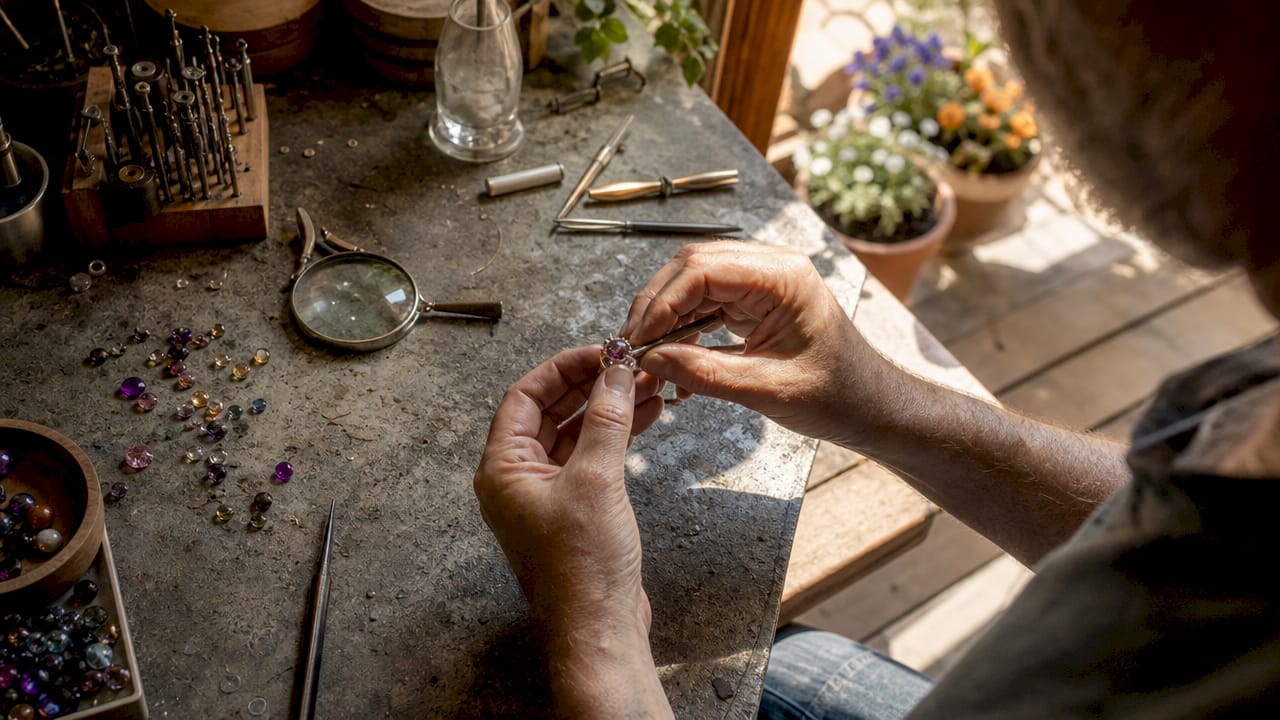
Simplicity in design actually raises the craftsmanship bar. When a piece uses minimal ornamentation, every line and curve is visible. There is nowhere to hide a rough edge or an uneven finish. That is why classic gold chains and solitaire settings demand such precise execution. The fewer the elements, the more each one matters.
Key material qualities to look for in a timeless piece:
- Solid gold (10K, 14K, or 18K): Resists tarnish and holds its value better than gold-filled or plated alternatives
- Platinum: Exceptionally dense and durable, ideal for settings that hold stones securely over decades
- Sterling silver: Affordable and classic, though it requires more maintenance than gold or platinum
- Diamonds, sapphires, and pearls: Gemstones with established market value and broad aesthetic appeal
- Secure settings: Prong, bezel, and pavé settings each offer different levels of stone protection; bezel settings are the most secure for daily wear
Pro Tip: Check for a karat stamp on any gold piece before purchasing. A 14K or 18K stamp confirms solid gold content and is a reliable indicator of long-term durability.
How do proportion and minimalism create enduring style?
Balanced proportions are the single most underrated factor in timeless jewelry design. Pieces designed to sit naturally at anatomical points like the collarbone, wrist bone, or earlobe feel like a natural extension of the wearer rather than an accessory competing for attention. That fit is not accidental. It is the result of deliberate scale decisions made during the design process.
Minimalism in jewelry does not mean plain or uninteresting. It means every design element serves a purpose. A fine chain with a single diamond pendant uses negative space as intentionally as it uses the stone itself. The restraint is the design. Pieces that follow this principle avoid what designers call “visual exhaustion,” the fatigue that comes from wearing something too busy or too large for repeated use.
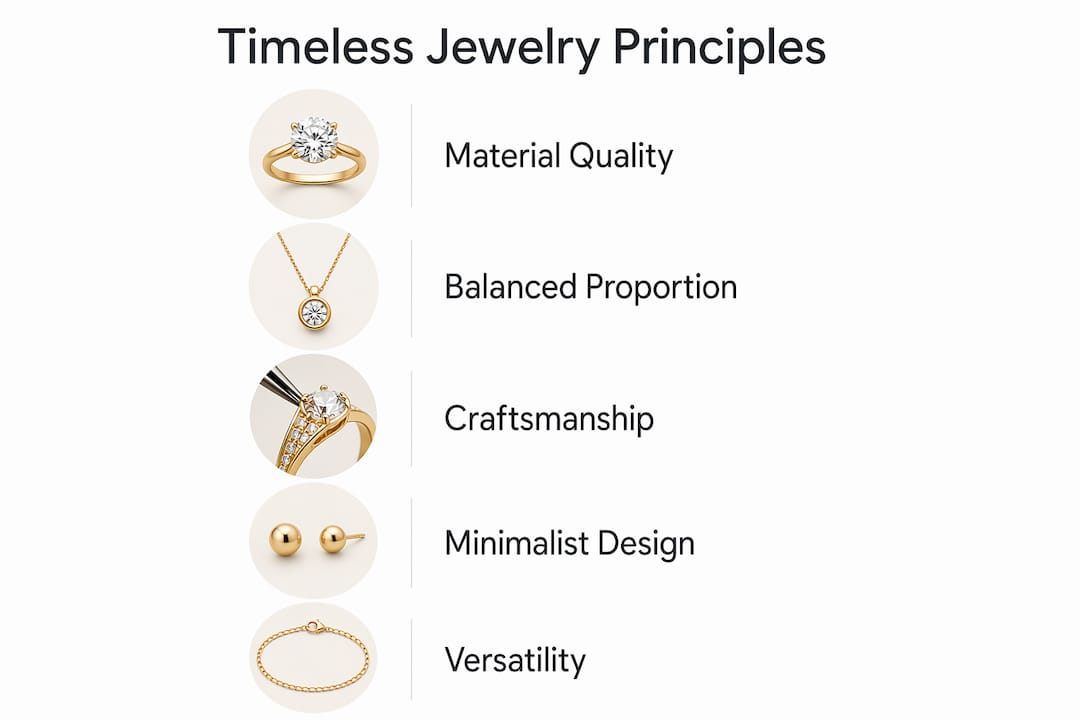
The wearability test is a practical way to evaluate any piece. Ask whether it sits comfortably at a natural body landmark, whether it moves with you rather than against you, and whether it draws attention to you or away from you. Classic pieces like gold hoops, solitaire rings, tennis bracelets, and fine chain necklaces pass this test consistently because their proportions were refined over decades of wear.
Timeless vs. trend-driven design: a direct comparison
| Design factor | Timeless design | Trend-driven design |
|---|---|---|
| Scale | Proportional to the wearer | Often exaggerated for visual impact |
| Ornamentation | Minimal and purposeful | Layered and fashion-specific |
| Material | Solid precious metals and stones | Plated metals, resin, or synthetic stones |
| Wearability | Daily comfort across occasions | Occasion-specific or season-specific |
| Longevity | Decades of relevance | 1–3 fashion cycles |
Four design principles that define enduring jewelry:
- Balanced scale: The piece does not compete with clothing or facial features. It complements them.
- Controlled visual rhythm: Classic designs avoid exaggerated size or trend-specific details that date quickly.
- Anatomical fit: Good weight distribution and symmetry allow the piece to sit naturally without shifting or pulling.
- Reinterpretability: The core design can be updated through metal color or stone size without losing its character.
Pro Tip: Before buying, hold the piece at arm’s length and look at it in proportion to your body. If it reads as balanced from a distance, it will likely wear well over time.
Why are timeless pieces so versatile across occasions?
Versatility is not a bonus feature of timeless jewelry. It is a defining characteristic. Neutral metal tones and simple silhouettes give classic pieces the flexibility to move from a casual daytime look to a formal evening outfit without any adjustment. That adaptability is exactly what makes them worth wearing repeatedly, and worth investing in.
The most versatile pieces share a few traits. They use metal tones that work with a wide range of clothing colors. They have silhouettes that do not clash with necklines, collar styles, or sleeve lengths. And they carry enough visual weight to register as intentional without dominating the overall look. Gold hoops, diamond studs, a simple tennis bracelet, and a fine chain necklace all meet this standard.
Layering and mixing metals have become modern approaches to classic styling. Combining yellow gold, white gold, and rose gold in a single look sounds unconventional, but it works because each metal tone is neutral on its own. The result is a personalized look that still reads as refined. Bakergoldchains carries pieces in 10K, 14K, and 18K gold across multiple metal tones, which makes building a layered collection straightforward.
Versatile pieces also build emotional value over time. A necklace you wear to a job interview, a wedding, and a Tuesday morning coffee run accumulates meaning that a trend piece never can. That emotional attachment is part of what makes daily wear gold jewelry such a reliable category for long-term satisfaction.
How to identify and invest in timeless jewelry today
Buying timeless jewelry requires evaluating three things at once: design, material, and craftsmanship. A beautiful design in poor materials will not last. Strong materials in a poorly executed design will not hold their appeal. All three must align for a piece to qualify as a genuine long-term investment.
Follow these steps when selecting a timeless piece:
- Start with the design test. Does the piece use balanced proportions? Does it avoid trend-specific details like oversized logos or novelty shapes? If you can imagine wearing it in ten years, it passes.
- Verify the material. Look for a karat stamp on gold pieces. Confirm that gemstones are natural rather than synthetic if that matters to your budget and values.
- Inspect the craftsmanship. Check stone settings for security. Look at clasps and joints for clean construction. A well-made piece feels solid without being heavy.
- Prioritize signature items first. Diamond studs, simple gold hoops, a fine chain, and a solitaire ring are the four pieces that anchor any timeless collection. Build from there.
- Consider financial value alongside personal value. Timeless jewelry maintains or increases in value due to material quality, craftsmanship, and consistent market demand for classic styles. That financial stability is a real advantage over trend-driven purchases.
Avoiding poorly made pieces is as important as choosing good ones. Watch for unusually low prices on gold items, as they often signal plated rather than solid metal. Avoid pieces with glued rather than set stones. And be skeptical of designs that rely entirely on a current trend for their appeal. The long-term value of jewelry comes from the combination of material integrity and design restraint, not from how fashionable a piece looks at the moment of purchase.
Key takeaways
Timeless jewelry design requires solid materials, balanced proportions, and functional versatility working together to create pieces that outlast fashion cycles.
| Point | Details |
|---|---|
| Material quality is non-negotiable | Solid gold, platinum, and natural gemstones outlast plated or synthetic alternatives by decades. |
| Proportion drives wearability | Pieces sized to sit naturally at anatomical points feel like a signature, not a distraction. |
| Minimalism demands precision | Simple designs expose every construction detail, raising the craftsmanship standard. |
| Versatility builds emotional value | Pieces that work across occasions accumulate personal meaning that trend items never develop. |
| Investment value follows design restraint | Classic styles maintain or grow in financial value because market demand for them remains steady. |
Why I think most people misunderstand timeless jewelry
The biggest misconception I encounter is that timeless means boring. People assume that choosing a classic piece means settling for something safe or uninspired. That gets it exactly backwards. A well-proportioned gold chain or a perfectly set solitaire ring is harder to design well than almost any trend piece. The restraint is the craft.
The second misconception is that timeless jewelry is only for formal occasions. The pieces that truly stand the test of time are the ones you reach for on an ordinary Tuesday. They work because they were designed to fit your body and your life, not a specific event or season.
What I have found after years of thinking about jewelry quality is this: the pieces people regret buying are almost always the trend-driven ones. The pieces they keep, wear, and eventually pass down are the ones built on classic proportions and honest materials. That pattern is not a coincidence. It reflects something real about how design and durability interact over time.
If you are building a collection, start with one genuinely well-made piece in solid gold. Wear it every day for a year. Notice how it holds up, how it fits into every context, and how your relationship with it deepens. That experience will teach you more about timeless design than any article can.
— Blayne
Bakergoldchains: gold jewelry built on timeless principles
Bakergoldchains specializes in solid gold jewelry made from 10K, 14K, and 18K gold, sourced from reputable U.S. suppliers. Every piece is built to the material and craftsmanship standards that define enduring design: solid metal construction, secure settings, and proportions refined for daily wear.
The Graduated Bead Necklace in 14K Yellow Gold is a strong example of these principles in practice. Its graduated scale creates natural visual balance, the 14K gold construction ensures long-term durability, and its silhouette works across casual and formal contexts. Bakergoldchains also offers Small Wedding Hoops in 14K Yellow Gold for readers looking to add a foundational hoop to their collection. Free insured shipping applies to orders over $150, and a lifetime craftsmanship guarantee backs every piece.
FAQ
What is timeless jewelry design?
Timeless jewelry design is the practice of creating pieces with classic proportions, durable materials, and functional versatility that remain stylish across decades. It prioritizes wearability and material quality over trend-specific details.
What materials make jewelry timeless?
Solid gold (10K, 14K, or 18K), platinum, and sterling silver are the foundational metals for timeless jewelry. Natural gemstones like diamonds, sapphires, and pearls add lasting aesthetic and financial value that synthetic alternatives cannot match.
How do I know if a jewelry design is truly timeless?
A timeless design sits naturally at anatomical points like the collarbone or wrist, uses balanced proportions that do not compete with clothing, and avoids trend-specific ornamentation. If you can imagine wearing it comfortably in ten years, it qualifies.
Does timeless jewelry hold its financial value?
Classic jewelry maintains or increases in value due to material quality, craftsmanship, and consistent market demand for enduring styles. Trend-driven pieces typically depreciate faster because their appeal is tied to a specific fashion cycle.
What are the most iconic timeless jewelry pieces?
Diamond studs, simple gold hoops, a fine chain necklace, a solitaire ring, and a tennis bracelet are the five pieces most consistently identified as timeless. Each uses balanced proportions, precious materials, and minimal ornamentation to remain relevant across generations.

