

Understanding Gold Hallmarks: A Buyer's Guide
Gold hallmarks are official stamps on jewelry that certify the metal’s purity and authenticity. They are the single most reliable indicator of what you are actually buying when you purchase a gold piece. Understanding gold hallmarks means knowing how to read these marks, what each symbol represents, and when to trust them. This guide covers the full picture: purity systems, maker marks, assay office stamps, modern verification tools, and the exceptions that trip up even experienced buyers. By the end, you will have the knowledge to shop with real confidence.
What are the common gold hallmark systems and purity marks?
Gold purity is expressed in two parallel systems: the karat system and the millesimal fineness system. Both appear on jewelry as stamped numbers, and both measure the same thing in different formats.
The karat system divides gold into 24 parts. A 14K stamp means 14 out of 24 parts are pure gold. The millesimal fineness system expresses that same ratio as parts per thousand. So 14K and 585 mean exactly the same thing: 58.5% pure gold.
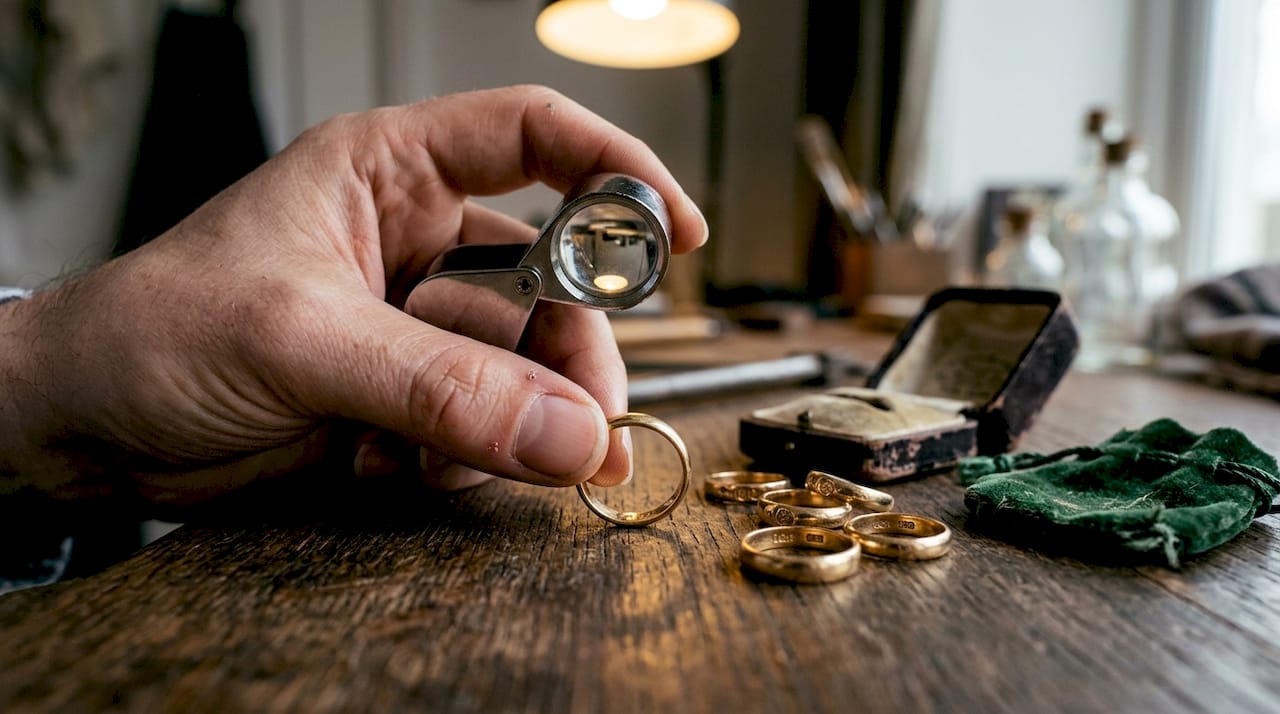
Here is how the most common marks compare:
| Karat stamp | Fineness mark | Gold content |
|---|---|---|
| 10K | 417 | 41.7% |
| 14K | 585 | 58.5% |
| 18K | 750 | 75.0% |
| 22K | 916 | 91.6% |
| 24K | 999 | 99.9% |
Purity affects more than price. Higher karat gold is softer and more prone to scratching, while lower karat gold is harder because it contains more alloy metals. An 18K chain has greater purity and value than a 10K chain, but a 10K chain holds up better to daily wear. Knowing this helps you choose the right piece for your lifestyle, not just your budget.
The alloy metals mixed into gold also determine color. Yellow gold uses silver and copper. White gold uses palladium or nickel. Rose gold gets its warm tone from a higher copper content. The karat stamp tells you the gold percentage. The color tells you about the alloy blend.
Pro Tip: If you see a three-digit number stamped on a piece and no letter, that is a millesimal fineness mark. Cross-reference it with the table above to identify the karat equivalent instantly.
How to read and interpret the marks within a gold hallmark
A single purity number is not a complete hallmark. A full hallmark set typically includes three distinct components: the sponsor or maker mark, the fineness mark, and the assay office mark. Each one plays a specific role.
- Sponsor or maker mark: This identifies the manufacturer or company that submitted the piece for testing. In the UK, it is usually initials inside a shaped shield. In the US, maker marks are less standardized but still common on fine jewelry.
- Fineness mark: This is the purity stamp, either in karats or millesimal fineness. It is the number most buyers recognize first.
- Assay office mark: This confirms an independent authority tested and approved the piece. The London assay office uses a leopard’s head. Edinburgh uses a castle. Birmingham uses an anchor.
- Date letter: Some hallmarking systems include a letter indicating the year of assay. This is common on British hallmarks and is especially useful for dating antique pieces.
- Traditional pictorial marks: Older British hallmarks include a lion passant, which certifies sterling silver content. Gold pieces have their own pictorial traditions depending on the era and country.
Full hallmark sets are significantly harder to counterfeit than individual stamps. A forger can laser-engrave a purity number, but replicating a complete set of sponsor, fineness, and assay marks with consistent depth and placement is far more difficult. When you see all three marks present and consistent, your confidence in the piece’s authenticity rises considerably.
Finding these marks takes effort. Hallmarks appear in discreet locations: inside ring bands, on earring posts, on the clasp of a necklace, or on the inner surface of a bracelet. A jeweler’s loupe costing $10–$15 gives you the magnification needed to read marks in these tight spots. This is a small investment that pays off every time you evaluate a piece.
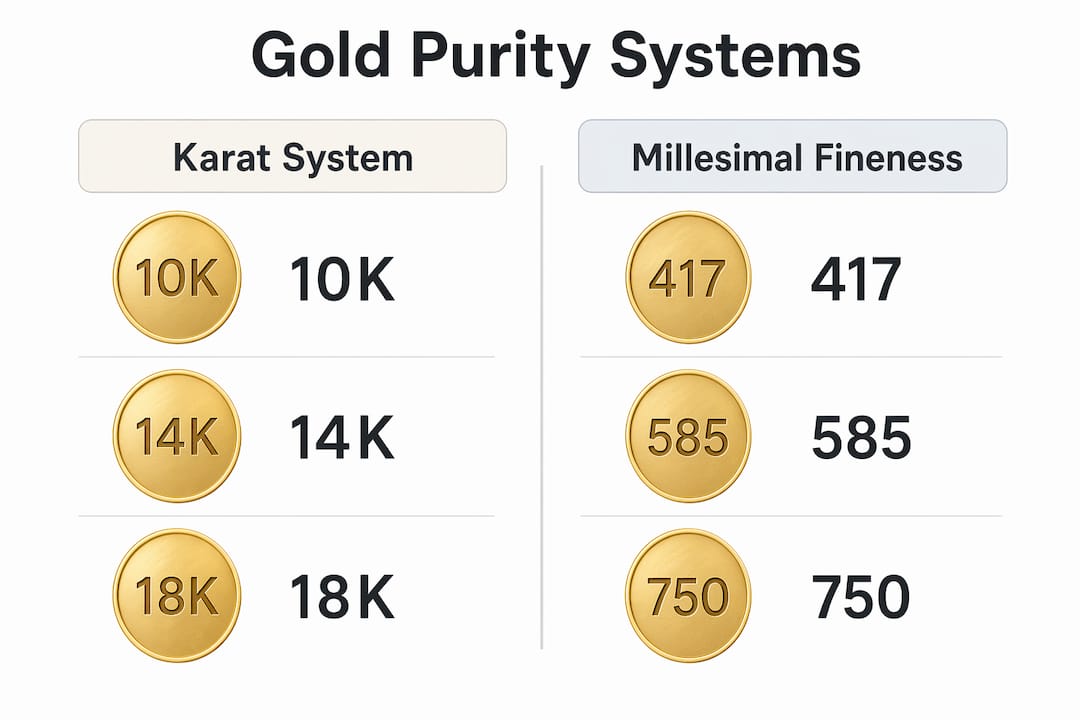
Pro Tip: When checking a chain, look at the clasp first. That is where makers most commonly stamp the hallmark on chain jewelry. On rings, check the inner band near the sizing mark.
How can you verify gold hallmarks using modern technology?
Visual inspection is a starting point, not a final answer. Modern verification tools add a layer of certainty that the naked eye cannot provide.
-
Use the BIS CARE app or website for HUID verification. India’s Bureau of Indian Standards assigns a 6-digit alphanumeric HUID code to each hallmarked piece. You can verify any HUID in approximately 30 seconds through the BIS CARE app or the official BIS website. An invalid HUID should be reported to BIS immediately.
-
Cross-reference with hallmark databases. Several countries maintain public databases of registered maker marks. The UK Assay Office and the Edinburgh Assay Office both publish searchable records. These let you confirm whether a sponsor mark belongs to a real, registered manufacturer.
-
Request XRF testing for high-value purchases. X-ray fluorescence, or XRF, is a non-destructive testing method that measures metal composition without damaging the piece. Reputable jewelers and assay offices offer this service. It is the definitive confirmation when a hallmark is unclear, missing, or suspected to be fake.
-
Treat hallmarks as a first step. Hallmarks can be forged, including laser-engraved HUID codes that look authentic. A hallmark alone does not guarantee purity. Combining visual inspection with database verification and professional testing gives you the most complete picture.
Pro Tip: For any gold purchase above $500, ask the seller for the piece’s HUID or maker mark registration details. A legitimate retailer will provide this without hesitation. Reluctance is a warning sign.
What misleading marks and exceptions should buyers watch out for?
Not every stamp on a gold-colored piece means solid gold. Several marks indicate plating or filling, and buyers frequently confuse these with genuine hallmarks.
- GP (Gold Plated): A thin layer of gold electroplated over a base metal. The gold content is minimal and will wear off over time.
- GEP (Gold Electroplated): Same as GP, just a more specific term for the electroplating process.
- GF (Gold Filled): A thicker layer of gold bonded to a base metal under heat and pressure. More durable than plating, but still not solid gold.
- HGE (Heavy Gold Electroplate): A marketing term for a thicker electroplated layer. Still not solid gold.
These stamps warn you that the piece has little intrinsic gold value. A GP bracelet may look identical to a 14K bracelet, but its resale value and longevity are entirely different. The distinction matters most when you are buying for investment or long-term wear.
Two genuine exceptions exist where solid gold pieces may carry no hallmark at all.
First, antique and vintage jewelry often lacks stamps. Pre-1960s American jewelry frequently had no mandatory hallmarking requirement. A piece from that era without a stamp is not automatically fake. It may simply predate modern regulations.
Second, very small items are legally exempt from hallmarking in some countries. In the UK, gold items under 1 gram do not require a hallmark. Tiny earrings, small chain links, and delicate charms may be genuine solid gold but carry no stamp because of this weight threshold.
The right response to any unmarked piece is professional appraisal, not assumption. An appraiser with XRF equipment can confirm the metal composition in minutes. For heirloom pieces or estate purchases, this step is not optional. It is the only way to know for certain what you own.
Here is a quick comparison of solid gold versus non-solid gold markings:
| Mark | Type | Intrinsic gold value |
|---|---|---|
| 10K, 14K, 18K | Solid gold | High |
| 585, 750, 916 | Solid gold (fineness) | High |
| GP, GEP | Gold plated | Very low |
| GF | Gold filled | Low |
| HGE | Heavy electroplate | Very low |
Key Takeaways
Reading gold hallmarks correctly requires combining purity mark knowledge, full hallmark identification, and modern verification tools to confirm authenticity before any purchase.
| Point | Details |
|---|---|
| Two purity systems exist | Karat stamps (10K, 14K, 18K) and millesimal fineness marks (417, 585, 750) express the same gold content differently. |
| Full hallmarks are harder to fake | Look for maker mark, fineness mark, and assay office mark together, not just a purity number. |
| Technology adds certainty | BIS HUID verification and XRF testing confirm what visual inspection alone cannot. |
| Plating marks signal low value | GP, GF, GEP, and HGE stamps indicate coated pieces with minimal intrinsic gold content. |
| Unmarked pieces are not always fake | Antique jewelry and items under legal weight thresholds may be genuine solid gold without any stamp. |
Why hallmark knowledge is the best fraud protection you have
I have seen buyers make the same mistake repeatedly: they spot a karat number and stop there. A “14K” stamp feels like enough. It is not. That number alone is the easiest part of a hallmark to fake. What actually protects you is knowing what a complete hallmark looks like and noticing when something is missing.
The buyers I trust most are the ones who check for authenticity before they fall in love with a piece. They carry a loupe. They know where to look on a ring versus a chain. They understand that a GP stamp is not a flaw in the piece. It is a flaw in the seller’s description if they called it solid gold.
The most common mistake I see from first-time buyers is confusing gold color with gold content. Rose gold, white gold, and yellow gold are all valid karat options. The color tells you about the alloy. The karat stamp tells you about the gold. You need both pieces of information to understand what you are buying.
My honest recommendation: treat hallmark reading as a skill worth building, not a box to check. Use a loupe. Learn the assay office symbols for the countries you buy from most often. For any significant purchase, ask for XRF confirmation or buy from a retailer who verifies gold purity through established sourcing. The five minutes you spend on verification will save you from years of regret.
— Blayne
Genuine hallmarked gold from Bakergoldchains
Bakergoldchains sources every piece from reputable U.S. suppliers, and each item carries the proper karat stamp for its gold content. You do not have to wonder whether the mark is real.
If you want a practical starting point, the 14K yellow gold wedding hoops are a clear example of what a properly hallmarked piece looks like in practice. For something with more presence, the 14K graduated bead necklace shows how solid gold wears and holds its finish over time. Every piece on the site comes with free insured shipping on orders over $150 and a lifetime craftsmanship guarantee. That is the kind of confidence that only comes from knowing exactly what the hallmark says.
FAQ
What does a gold hallmark actually tell you?
A gold hallmark certifies the metal’s purity and identifies the maker and testing authority. It tells you the percentage of pure gold in the piece and confirms an independent assay office verified that claim.
Where do I find the hallmark on a gold chain?
Check the clasp first. On most gold chains, the hallmark appears on the clasp or on a small tag attached near it. On rings, look inside the band.
Can a gold hallmark be faked?
Yes. Counterfeiters use laser engraving to replicate purity stamps and even HUID codes. A complete hallmark set is much harder to fake than a single number, and XRF testing provides definitive confirmation.
What does GP or GF mean on jewelry?
GP stands for gold plated and GF stands for gold filled. Both indicate the piece is not solid gold. These marks signal that a base metal is coated or bonded with a thin gold layer, which carries very little intrinsic value.
Is unmarked jewelry always fake gold?
No. Pre-1960s American jewelry and very small items below legal weight thresholds may be genuine solid gold without any stamp. A professional appraisal with XRF testing is the only reliable way to confirm the metal content of an unmarked piece.

