

Key Factors for Choosing Gold Jewelry That Lasts
Gold jewelry is one of the few purchases where getting it wrong costs you real money. With so many options across karats, styles, and price points, knowing the right factors for choosing gold jewelry before you buy protects both your budget and your satisfaction. Fine gold jewelry selection goes beyond picking something that looks good in a display case. Purity, craftsmanship, weight, authenticity, and design all work together to determine whether a piece holds up over time and holds its value. This guide breaks each factor down so you can shop with confidence.
Table of Contents
- Key Takeaways
- 1. Factors for choosing gold jewelry: start with purity
- 2. Durability and craftsmanship: what holds the piece together
- 3. Weight and construction method: solid vs hollow
- 4. Design and style: matching the piece to your life
- 5. Authenticity, certifications, and seller policies
- My honest take on prioritizing these factors
- Find pieces that meet every standard at Bakergoldchains
- FAQ
Key Takeaways
| Point | Details |
|---|---|
| Hallmarks reveal true purity | Check for stamps like 585 or 750 to confirm karat before buying any piece. |
| Lower karats wear better daily | 14K and 18K gold outperform 24K for everyday use because alloy metals add hardness. |
| Construction type affects value | Hollow pieces contain far less gold than solid ones, even when they look similar in size. |
| After-sales policies matter | Return, resizing, and repair support should be confirmed before completing any purchase. |
| Design and lifestyle must match | Choose styles suited to your actual wear habits to avoid damage and maximize long-term satisfaction. |
1. Factors for choosing gold jewelry: start with purity
Gold purity is measured in karats, a system that tells you what percentage of a piece is actual gold. The industry standard for grading this is the millesimal fineness system, which expresses gold content as parts per thousand. So when you see a hallmark number stamped on a piece, that number tells you exactly what you are dealing with. A 585 stamp means 14K gold, meaning 58.5% pure gold. A 750 stamp means 18K, which is 75% pure gold.
Understanding this system helps you cut through confusing marketing language fast. Terms like “gold tone,” “gold finish,” or “gold filled” are not the same as verified karat purity. Marketing descriptors are not reliable indicators of gold content. Only hallmarks and purity stamps are.
Here is what to look for when evaluating purity:
- 14K (585): 58.5% gold, the most popular choice for everyday jewelry in the U.S. Durable and cost-effective.
- 18K (750): 75% gold, richer color and higher purity with slightly less hardness than 14K.
- 24K (999): Nearly pure gold, but too soft for rings, chains, or bracelets worn regularly.
- 10K (417): 41.7% gold, the most affordable certified option with strong durability.
Hallmarks are typically stamped inside a ring band, on a clasp, or near the closure of a bracelet. Always look for them physically rather than relying on a description.
Pro Tip: If a piece has no visible hallmark or the stamp looks unclear, that is your signal to either request documentation from the seller or skip the purchase entirely. A legitimate gold piece will always carry a verifiable purity mark.
2. Durability and craftsmanship: what holds the piece together
Purity gets most of the attention, but craftsmanship determines how well a piece actually holds up. A well-made piece of 14K gold will outlast a poorly constructed 18K piece with weak solder joints and thin walls.
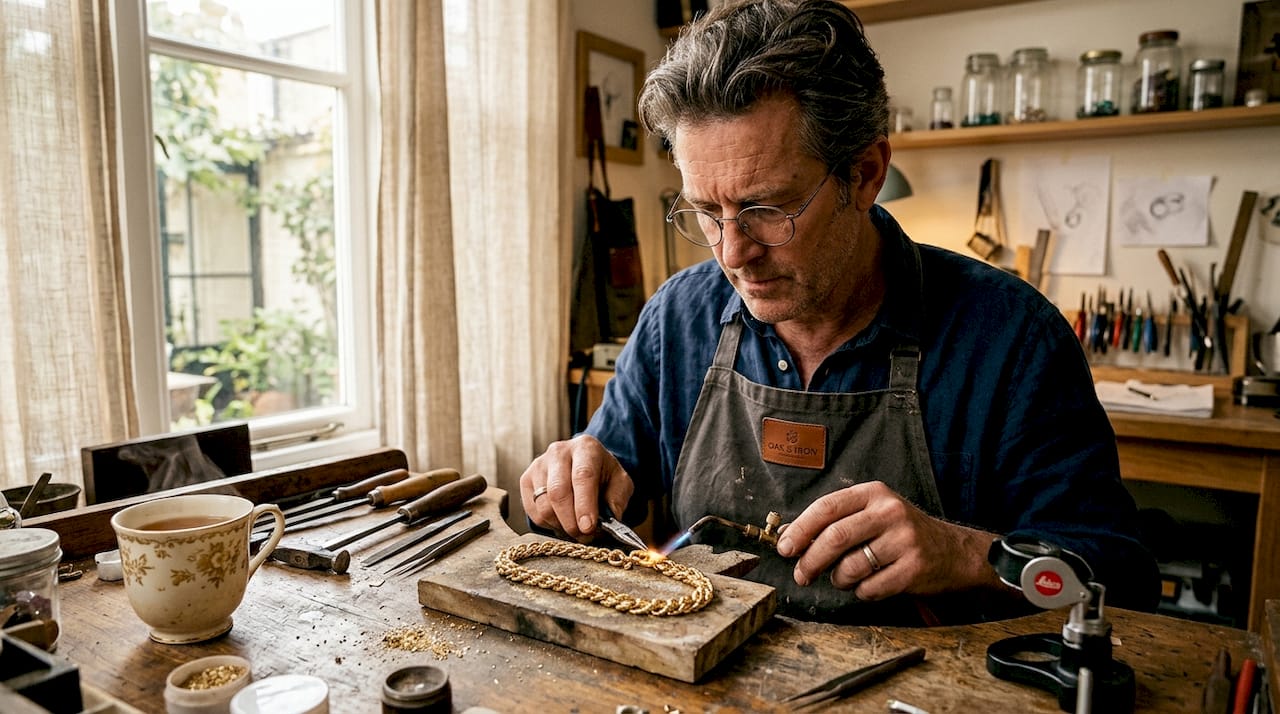
14K gold offers a strong balance of purity and durability, making it the go-to recommendation for daily wear. The alloy metals mixed into lower-karat gold, typically copper, silver, or zinc, add hardness that pure gold simply does not have. 24K gold, while beautiful, bends and scratches under regular handling.
Beyond karat, look closely at construction details. Smooth edges, secure clasps, even polish, and solid joinery are signs of quality workmanship. The failure points in most gold jewelry are the stress points: clasps, hinges, solder joints on pendants, and prong settings on rings.
Watch out for these red flags:
- Rough or uneven edges along the metal surface
- Clasps that feel flimsy or do not click closed firmly
- Visible gaps at solder joints where two pieces of metal meet
- Settings that wobble on rings or earrings
- Any surface snag that catches fabric or skin
For top features for durable jewelry, the combination of the right karat and solid construction is what separates jewelry that lasts years from jewelry that fails in months.
Pro Tip: When buying a chain, flex it gently between your fingers. Quality links should move smoothly without any sharp resistance, clicking, or visible gaps. If a link feels stiff or looks uneven, put it down.
3. Weight and construction method: solid vs hollow
Gold is priced by weight. This is the part of the gold jewelry buying guide that many buyers skip, and it catches them off guard later. When you pay for a piece based on its size or appearance, you may not be paying for as much gold as you think.
Hollow and semi-solid pieces contain significantly less gold than solid pieces of the same size. A large hollow bangle can look impressive and feel substantial but carry a fraction of the gold content of a smaller solid bangle. The same logic applies to chains.
| Construction Type | Gold Content | Durability | Price Point |
|---|---|---|---|
| Solid | High | Very durable | Higher |
| Semi-solid | Medium | Moderate | Mid-range |
| Hollow | Low | Less durable | Lower |
Before buying, ask the seller two direct questions: Is this piece solid, semi-solid, or hollow? And what is the actual weight in grams? A reputable seller will answer both without hesitation. If they cannot or will not, that tells you something important.
Weight matters differently depending on the jewelry type. Rings and bracelets that contact hard surfaces regularly benefit most from solid construction. Chains worn as statement pieces might be hollow for comfort reasons, but you should know that going in and pay accordingly.
4. Design and style: matching the piece to your life
Great design means nothing if a piece does not work for your actual lifestyle. This is where many buyers get tripped up. They choose something stunning in the store and discover it is impractical within a week of wearing it.
Think about your daily habits first. If you work with your hands, cook, or exercise regularly, you need something that sits close to the body, has no protruding settings, and can handle contact without bending. Low-profile designs in 14K gold are ideal for that kind of wear. For daily wear gold jewelry specifically, simpler constructions with fewer stress points tend to last longer without maintenance.
For gifting or special occasions, you have more freedom to prioritize aesthetics. Classic designs, particularly simple chains, hoops, and solitaire pendants, retain their appeal across decades and tend to hold resale value better than trend-driven styles. Trendy pieces can look dated quickly, which affects both your satisfaction and any future resale.
A few practical design considerations:
- Color: Yellow gold suits warm skin tones; white gold and rose gold complement cooler tones. All three are real gold, just mixed with different alloy metals.
- Size and length: Necklace length determines whether a pendant sits at the collarbone, chest, or lower. Try before you commit when possible.
- Hypoallergenic options: White gold is sometimes rhodium-plated and may cause reactions in sensitive skin. Rose gold with high copper content can also irritate some wearers.
- Layering and customization: If you plan to layer pieces, choose chains that differ in length by at least two inches to prevent tangling.
When choosing gold rings, consider your finger size and daily hand use before settling on a band width and setting height.
5. Authenticity, certifications, and seller policies
Knowing how to select gold jewelry goes beyond reading stamps. Verifying authenticity means confirming that the hallmark, stated karat, and documented weight all match up consistently. When these details do not align, that inconsistency signals a problem. In those cases, professional testing using X-ray fluorescence or acid testing is the recommended next step.
Here is a practical checklist for confirming authenticity before purchase:
- Locate the hallmark stamp physically on the piece.
- Ask for documentation that states the karat and weight in writing.
- Verify that the stated karat matches the hallmark number (e.g., 14K must read 585).
- Confirm the seller is a registered jeweler or operates with a clear returns policy.
- Keep your receipt and any written documentation for insurance or future resale.
After-sales service is an often-overlooked part of gold jewelry selection. Return, resizing, and repair policies add real, practical value to a purchase and should be confirmed before you pay. A ring you love at the time of purchase may need resizing later. A clasp may need repair after years of use. Knowing your seller stands behind the piece matters.
Pro Tip: Before completing any online purchase, search for the seller’s specific policies on resizing and repairs, not just returns. The ability to buy solid gold jewelry safely online depends heavily on how much post-purchase support the seller actually provides.
My honest take on prioritizing these factors
I have looked at a lot of gold jewelry over the years, and the single most common mistake I see buyers make is chasing the highest karat without thinking about what they actually plan to do with the piece.
24K gold has an undeniable appeal. It is the purest form, and the color is genuinely stunning. But I would not recommend it for a ring or a chain someone plans to wear daily. In my experience, people who buy 24K for everyday wear end up disappointed within months. The metal deforms, scratches accumulate, and links loosen. The piece starts looking worn long before it should.
What I have found actually works is prioritizing 14K or 18K pieces from sellers who can show you the craftsmanship up close, literally point to the solder joints and the clasp mechanism and explain how the piece was made. That conversation tells you more about long-term quality than any marketing claim will.
I am also skeptical of oversized pieces at suspiciously low prices. A large-looking chain at a low price is almost always hollow. There is nothing wrong with hollow pieces if you understand what you are buying. The problem is when sellers let buyers assume they are getting solid gold by weight without clarifying.
My practical advice: ask three questions before buying any piece. What is the karat? What is the exact weight in grams? Is this solid, semi-solid, or hollow? If a seller cannot answer all three confidently, walk away.
— Blayne
Find pieces that meet every standard at Bakergoldchains
Bakergoldchains takes the guesswork out of gold jewelry selection by offering certified, hallmarked pieces across 10K, 14K, and 18K gold, all sourced from reputable U.S. suppliers. Every piece is built for real wearability, not just display. If you are looking for a classic everyday piece, the 14K bead necklace combines verified purity with timeless design. For a gifting option that checks every quality box, the 14K wedding hoops offer durability and elegant style in one piece. Bakergoldchains also backs every purchase with a lifetime craftsmanship guarantee, free insured shipping on orders over $150, and clear after-sales support so you buy with confidence.
FAQ
What does the 585 hallmark mean on gold jewelry?
The 585 stamp indicates 14K gold, meaning the piece contains 58.5% pure gold per thousand parts. It is the most common karat used in everyday fine jewelry in the United States.
Is 14K or 18K gold better for daily wear?
Both work well for daily wear, but 14K is generally more durable because its higher alloy content makes the metal harder and more scratch-resistant than 18K.
How can I tell if gold jewelry is solid or hollow?
Ask the seller directly and request the weight in grams. Hollow pieces weigh less than solid pieces of the same size, so a surprisingly light piece for its apparent size is a sign it may be hollow.
What after-sales services should I confirm before buying?
Confirm return, resizing, and repair policies before purchasing. Resizing and repair support from the original seller significantly affects long-term ownership satisfaction and is frequently overlooked by first-time buyers.
Are “gold tone” and “gold finish” the same as real gold?
No. These are marketing terms with no connection to certified purity. Only pieces with a verified karat hallmark stamp are guaranteed to contain real gold at a stated percentage.

