

Jewelry Long-Term Value: What Investors Need to Know
Jewelry long-term value is defined as the sustained or growing financial worth of a piece over time, driven by its intrinsic material quality, craftsmanship, documented provenance, and market demand. Not every piece qualifies. The industry term for pieces that meet this bar is “investment-grade jewelry,” a specific category requiring certified natural materials, a recognized maker, and verifiable documentation. Brands like Cartier and Tiffany & Co. consistently command premiums in secondary markets because they satisfy all three criteria. Institutions like the Gemological Institute of America (GIA) provide the certification standards that separate collectible assets from ordinary accessories. Understanding what separates a lasting asset from a depreciating purchase is the first decision any serious buyer needs to make.
What materials and craftsmanship determine jewelry’s investment quality?
Investment-grade jewelry must meet strict criteria: a recognized maker, high-purity metals, rare natural stones, and verifiable documentation. This is not a loose standard. It is the threshold that determines whether a piece holds financial value or simply holds sentimental value.
Gold purity is the clearest starting point. 18K gold contains 75% pure gold, making it more resistant to tarnish and more valuable per gram than 10K or 14K alternatives. Platinum sits above gold in durability and rarity, which is why platinum settings often command higher prices in estate sales. Both metals carry hallmarks stamped directly into the piece. Those hallmarks are your first verification tool when assessing gold purity.
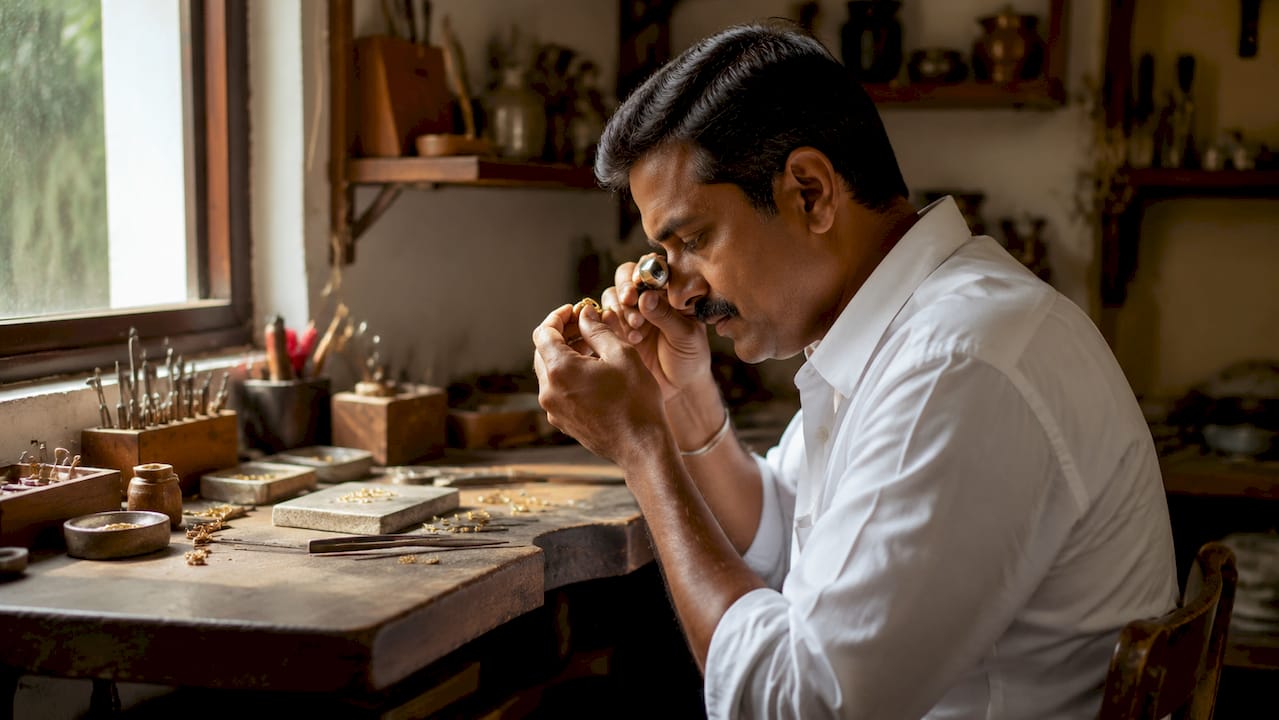
Gemstones follow a different logic. Natural, untreated stones from premium origins, such as Burmese rubies or Colombian emeralds, retain value far better than lab-grown or treated alternatives. 18K gold and rare stones like Burmese rubies fetch 20–50% premiums over pieces using stones from newer or less prestigious sources. That premium reflects scarcity, not just aesthetics.
Craftsmanship matters beyond the materials themselves. Hand-set stones, hand-engraved details, and signed pieces from established houses signal quality that machines cannot replicate. A well-executed piece holds its structure over decades, which directly supports resale value. Poorly constructed settings loosen stones and reduce buyer confidence at auction.
| Material | Long-Term Value Characteristics |
|---|---|
| 18K+ Gold | High purity, tarnish-resistant, strong resale demand globally |
| Platinum | Rarer than gold, durable, commands estate premiums |
| Natural Diamonds (GIA-certified) | Stable demand, liquid in secondary markets |
| Colored Gemstones (untreated) | 5–15% annual appreciation potential for premium origins |
| Lab-Grown Stones | Depreciating rapidly; limited resale market |
| Natural Saltwater Pearls | Extremely scarce, rising prices due to limited supply |
Pro Tip: Always request a GIA certificate or equivalent lab report before purchasing any colored gemstone above $1,000. Untreated status is the single biggest driver of long-term appreciation for rubies, sapphires, and emeralds.
How do market trends and provenance influence jewelry’s long-term value?
The global jewelry market is projected to grow at a CAGR of 5.5% from 2026 to 2033, with gold jewelry holding 55% of market share in 2025. That growth rate signals sustained demand, which directly supports the long-term appreciation potential of well-chosen pieces. A rising market does not lift all jewelry equally. It rewards pieces with documented provenance and brand prestige most.
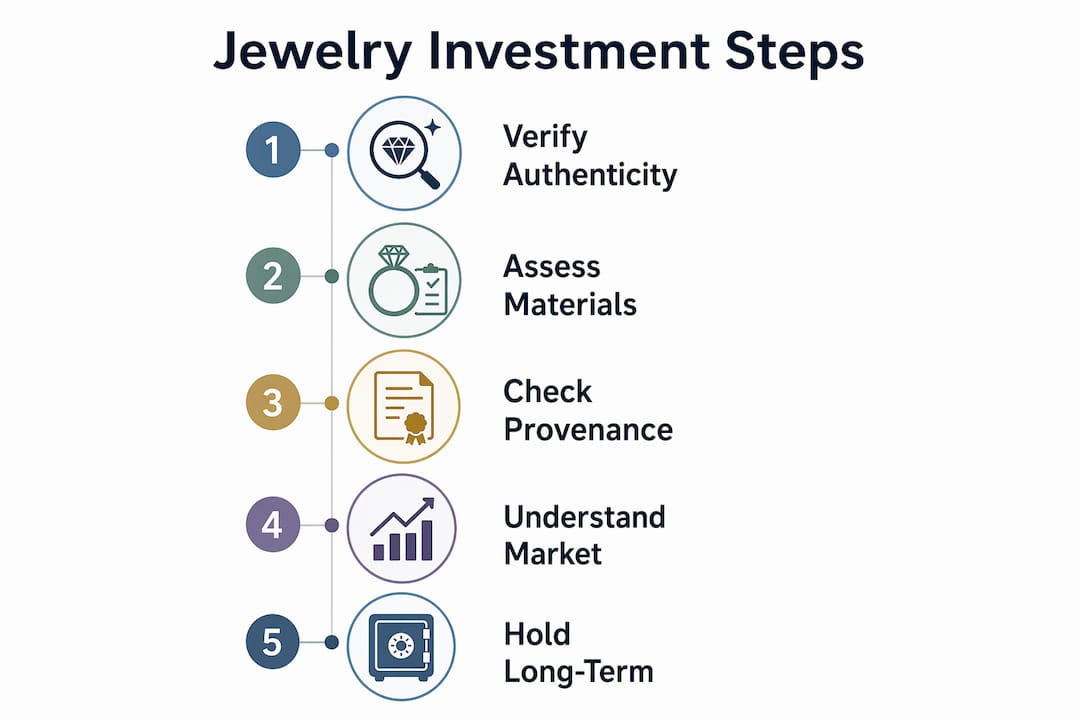
Provenance is the paper trail behind a piece. Receipts, original certificates, auction records, and prior ownership history all add measurable value. A ruby ring with GIA certification and a Christie’s auction record sells for more than an identical ring with no documentation. The documentation proves authenticity and origin, two factors buyers in secondary markets pay a premium to confirm.
Brand prestige compounds this effect. Signed pieces from houses like Van Cleef & Arpels, Bulgari, or Cartier consistently outperform unsigned equivalents at auction. Consumers increasingly see jewelry as a “hard luxury” investment asset, shifting from mere ownership to valuing iconic provenance. That shift is showing up in auction results and private sale prices across all major markets.
Current jewelry market trends shaping value in 2026 include:
- Gold demand surge: Central bank gold buying and inflation concerns are pushing gold jewelry prices higher across retail and secondary markets.
- Colored gemstone premiums: Untreated rubies, sapphires, and emeralds from premium origins are seeing accelerating demand from collectors in Asia and the Middle East.
- Vintage and signed pieces: Auction houses report growing appetite for pre-owned pieces from iconic houses, with some lots exceeding estimates by 30–40%.
- Natural pearl scarcity: Natural saltwater pearls are nearly impossible to source now, and prices are expected to rise as existing supply dwindles.
- Sustainability focus: Buyers are prioritizing traceable, ethically sourced materials, which is adding a premium to certified conflict-free stones and recycled precious metals.
Understanding these 2026 gold jewelry trends helps you time purchases and identify categories with the strongest appreciation outlook.
How does jewelry compare to other investment assets?
Jewelry offers benefits that stocks and real estate cannot. It is tangible, portable, and inflation-hedging, with durability and legacy appeal built into the asset itself. You can wear it, store it in a safe, or pass it to the next generation. No brokerage account required.
The trade-offs are real, though. Jewelry is illiquid. Selling a piece quickly almost always means accepting a lower price. Auction houses charge buyer and seller premiums that can total 25–30% of the sale price. Dealer margins on resale are similarly high. These transaction costs mean short-term flipping rarely works.
Here is a direct comparison of jewelry against other common investment types:
- Stocks: Highly liquid, generate dividends, but subject to market volatility and no physical ownership.
- Real estate: Appreciates over time and generates income, but requires significant capital and management.
- Gold bullion: Tracks gold spot price directly, but has no craftsmanship premium and no aesthetic value.
- Investment-grade jewelry: Tangible, portable, inflation-resistant, and potentially appreciating. No passive income. High transaction costs on exit.
- Collectibles (art, watches): Similar profile to jewelry. Value depends heavily on provenance and condition.
Investment-grade colored gemstones yield 5–15% annual appreciation when certified, untreated, and from a verified premium origin. That range is competitive with many equity returns, but it assumes you hold the piece long enough for the market to recognize its value.
Jewelry should be held for at least 5 years to avoid loss, since resale prices are often much lower than retail and transaction costs erode short-term gains. Patience is not optional. It is the strategy.
Pro Tip: Limit jewelry to 5–10% of your total investment portfolio. It generates no passive income and carries high exit costs. Treat it as a long-term hold and a legacy asset, not a liquid position.
Practical steps to evaluate and purchase jewelry for long-term value
Knowing how to evaluate jewelry before you buy is as important as knowing what to buy. The wrong purchase, even at the right price, can cost you significantly on resale if documentation is missing or condition is poor.
Documentation and provenance dramatically affect resale value. Undocumented pieces lose significant value in secondary markets, and insurance should be arranged within 30 days of purchase to protect your asset. Keep every receipt, certificate, and appraisal in a dedicated file.
Use this checklist when evaluating any piece for long-term value:
- Hallmarks and karat stamps: Verify metal purity directly on the piece. Look for stamps like “750” (18K gold) or “950” (platinum).
- Lab certification: Request a GIA, AGL, or Gübelin report for any significant gemstone. Confirm untreated status explicitly.
- Provenance records: Ask for original purchase receipts, prior appraisals, or auction records if buying vintage.
- Condition assessment: Examine prong integrity, surface wear, and stone security. Damage reduces value and signals poor storage.
- Return policy: Confirm the seller offers a return window. This gives you time to get an independent appraisal before committing.
- Professional appraisal: For pieces above $2,000, hire a certified appraiser from the American Society of Jewelry Appraisers before finalizing the purchase.
Understanding jewelry authenticity is the foundation of every smart buying decision. A piece that cannot be verified cannot be confidently resold.
Pro Tip: Balance emotional resonance with financial logic. A piece you love and would wear regularly is far easier to hold for 10+ years than one you bought purely for speculation. The best jewelry investments are ones you genuinely want to own.
What types of jewelry are most likely to appreciate over time?
Certain jewelry categories have a consistent track record of holding or growing in value. These are not guaranteed returns, but they represent the categories where market demand, scarcity, and collector interest align most reliably.
Natural diamonds with GIA certification remain the most liquid category in fine jewelry. Colored stones from premium origins, including Burmese rubies, Kashmir sapphires, and Colombian emeralds, carry the highest appreciation potential among gemstones. Successful buyers prioritize emotional resonance and durability, viewing these pieces as legacy assets rather than trendy accessories. That mindset is what separates collectors who profit from those who break even.
Vintage and signed pieces from renowned houses consistently outperform unsigned equivalents. A Cartier Panthère bracelet or a Van Cleef & Arpels Alhambra necklace carries brand equity that transcends the value of its materials alone. You can explore investment-grade jewelry fundamentals to understand how these premiums are calculated and what drives them in practice.
| Jewelry Type | Expected Appreciation | Liquidity |
|---|---|---|
| Natural diamonds (GIA-certified) | Moderate, stable | High |
| Colored gemstones (untreated, premium origin) | 5–15% annually | Moderate |
| Signed vintage pieces (Cartier, Bulgari) | High, brand-driven | Moderate |
| Natural saltwater pearls | Rising, supply-constrained | Low to moderate |
| Plain gold jewelry (18K+) | Tracks gold spot price | High |
| Trend-driven fashion jewelry | Depreciating | Low |
Timeless designs outperform trend-driven pieces in every time horizon above five years. A classic gold chain in 18K yellow gold will find a buyer in 2035. A piece designed around a 2024 fashion moment likely will not.
Key takeaways
Investment-grade jewelry holds long-term value when it combines certified natural materials, documented provenance, and timeless craftsmanship held for a minimum of five years.
| Point | Details |
|---|---|
| Materials define the floor | 18K+ gold and certified natural gemstones set the baseline for lasting value. |
| Documentation protects value | Receipts, lab reports, and provenance records are required for strong resale outcomes. |
| Hold for at least five years | Transaction costs make short-term resale unprofitable; patience is the core strategy. |
| Market trends favor gold and colored stones | Gold holds 55% of global jewelry market share, with colored gemstones showing 5–15% annual appreciation. |
| Diversify carefully | Limit jewelry to 5–10% of your portfolio; it generates no income and carries high exit costs. |
What i have learned about buying jewelry as a long-term asset
By Blayne
After years of watching buyers make the same mistakes, the pattern is clear. Most people who lose money on jewelry investment do not lose it because the market failed them. They lose it because they skipped the documentation, bought based on trend, or expected to sell within two years.
The pieces that genuinely appreciate share one quality: they were bought with patience already built into the decision. A Burmese ruby with a GIA “no heat” certificate, purchased from a reputable dealer with full provenance, does not need a hot market to hold its value. The scarcity does the work over time.
Most jewelry purchased is a luxury good, not an investment. Only pieces meeting strict criteria become true investment assets. That distinction is not discouraging. It is clarifying. It means you do not need to buy more. You need to buy better.
The other thing I would tell any buyer: do not ignore the emotional side. A piece you love wearing is a piece you will hold through market cycles without panic-selling. That patience is what makes the financial return possible. The best jewelry investments are the ones that feel right on both levels.
— Blayne
Build a lasting collection with Bakergoldchains
If you are ready to put these principles into practice, Bakergoldchains offers a curated selection of authentic solid gold pieces made from 10K, 14K, and 18K gold, sourced from reputable U.S. suppliers. Every piece comes with full transparency on materials and craftsmanship, backed by a lifetime craftsmanship guarantee.
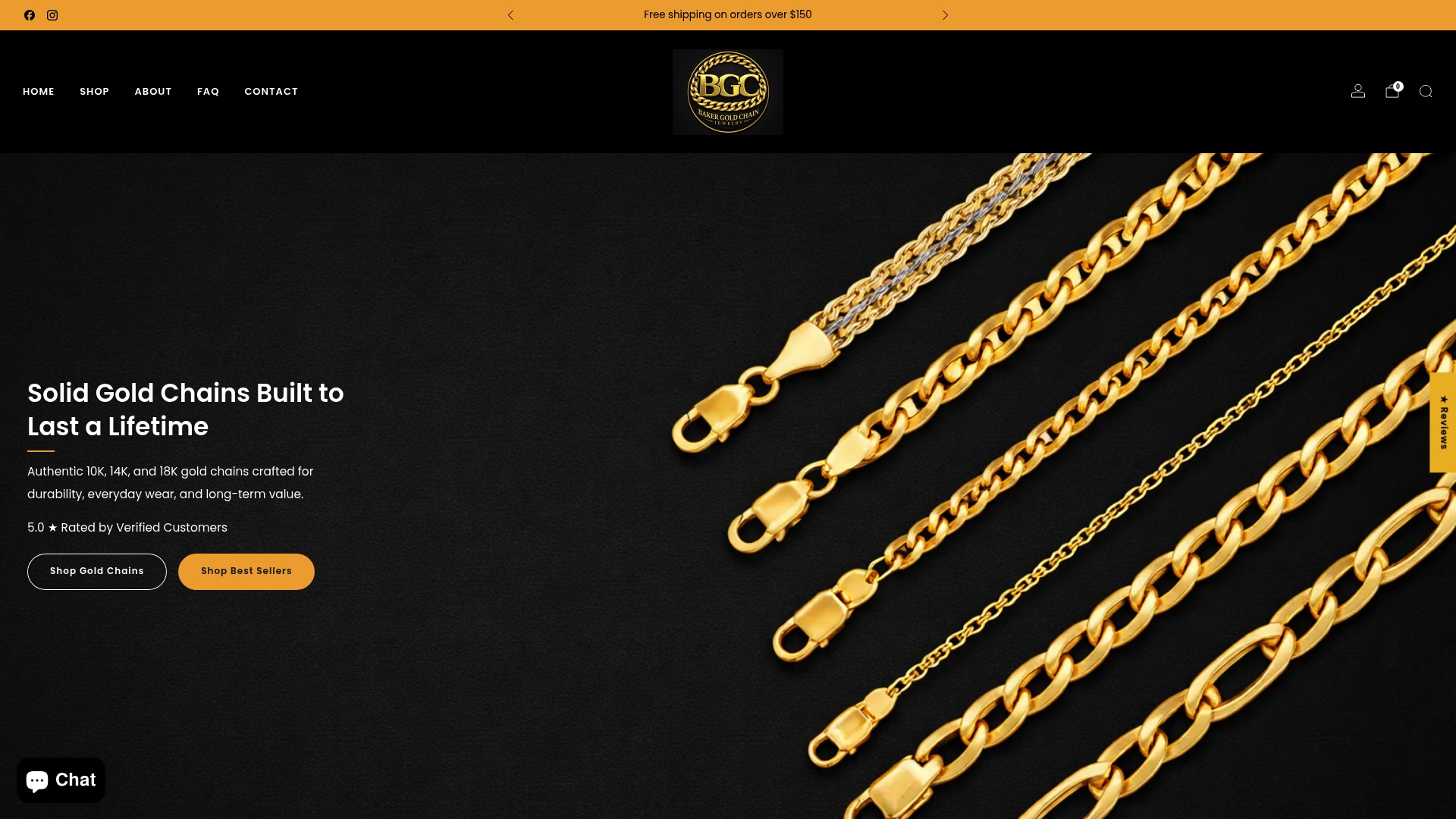
The 14K yellow gold graduated bead necklace is a strong example of timeless design in high-purity gold, the exact combination that supports long-term value. Bakergoldchains also offers free insured shipping on orders over $150 and flexible financing options, so you can invest in quality without compromising your budget. Browse the full collection at Bakergoldchains and start building a collection that lasts.
FAQ
What is jewelry long-term value, exactly?
Jewelry long-term value is the sustained or growing financial worth of a piece over time, driven by material quality, craftsmanship, provenance, and market demand. Only pieces meeting investment-grade criteria, such as certified natural stones and high-purity metals, reliably hold or grow in value.
Does gold jewelry hold its value better than gemstone jewelry?
Gold jewelry tracks the gold spot price and offers high liquidity, making it one of the most reliable value-holders in fine jewelry. Certified natural colored gemstones from premium origins can outperform gold with 5–15% annual appreciation, but they carry lower liquidity and higher verification requirements.
How long should you hold jewelry as an investment?
Jewelry should be held for a minimum of five years to offset high transaction costs and allow market appreciation to materialize. Short-term resale almost always results in a loss due to dealer margins and auction fees.
What documentation do i need to protect jewelry’s resale value?
You need the original purchase receipt, a lab certification (such as a GIA report) for any significant gemstone, and a professional appraisal. Insure the piece within 30 days of purchase to protect your asset against loss or damage.
What percentage of my portfolio should be in jewelry?
Financial advisors recommend limiting jewelry to 5–10% of your total investment portfolio. Jewelry generates no passive income and carries high exit costs, so it works best as a long-term hold within a diversified asset strategy.

