

What is classic gold jewelry: timeless elegance explained
Most people assume classic gold jewelry just means old-fashioned or traditional. That assumption misses the point entirely. What is classic gold jewelry, at its core, is a category defined by enduring design rather than current trends. A piece earns the label “classic” not because of its age but because of its simplicity, balance, and ability to look just as relevant today as it did 30 years ago. This guide walks you through everything you need to know, from design principles and gold purity to gift significance and how to verify authenticity before you buy.
Table of Contents
- Defining classic gold jewelry: style and design that lasts
- Understanding gold purity and authenticity: karats and hallmarks
- Solid gold versus plated: choosing lasting quality
- Choosing the right karat for daily wear and longevity
- Classic gold jewelry: symbolism and gifting significance
- The enduring truth: why classic gold jewelry transcends trends
- Explore classic gold jewelry collections at Baker Gold Chains
- Frequently asked questions
Defining classic gold jewelry: style and design that lasts
Classic gold jewelry meaning comes down to one idea: pieces that never need to be updated. As one fine jewelry reference puts it, “classic jewelry stays in style” decade after decade, defined by simple traits, clean lines, balanced shapes, and versatile wearability. That is the standard. If a design requires a specific trend to make sense, it is not classic.
The characteristics of classic gold jewelry are consistent across cultures and time periods. You will notice:
- Simple geometric shapes such as circles, ovals, and smooth curves
- Clean lines with no excessive ornamentation or busy detailing
- Balanced proportions that complement the body rather than compete with it
- Neutral materials like yellow gold, white gold, diamonds, and pearls that pair with almost anything
Popular classic gold jewelry styles include diamond stud earrings, hoop earrings in yellow or white gold, tennis bracelets, single-strand pearl necklaces, and fine pendant necklaces. Each of these pieces has remained in steady demand for generations. They also share something important: they work for casual daily wear and formal occasions alike.
“The most enduring jewelry designs are not the most complicated ones. They are the ones that know when to stop.”
Gold and platinum resist tarnish and maintain their finish far longer than silver or base metals. That physical durability reinforces the design durability. When you invest in timeless gold chains, you are getting a piece that holds its look and its structure over decades of real wear.
Understanding gold purity and authenticity: karats and hallmarks
Knowing what a piece looks like is one thing. Knowing what it is made of is what protects your investment. Gold purity is measured in karats, and every genuine piece carries a stamp that tells you exactly what you are buying.
Here is a quick breakdown of common karat levels and their gold content:
| Karat | Gold content | Common use |
|---|---|---|
| 10K | 41.7% pure gold | Budget-friendly everyday wear |
| 14K | 58.5% pure gold | Most popular for classic jewelry |
| 18K | 75% pure gold | Fine jewelry, richer color |
| 24K | 99.9% pure gold | Bullion, ceremonial use |
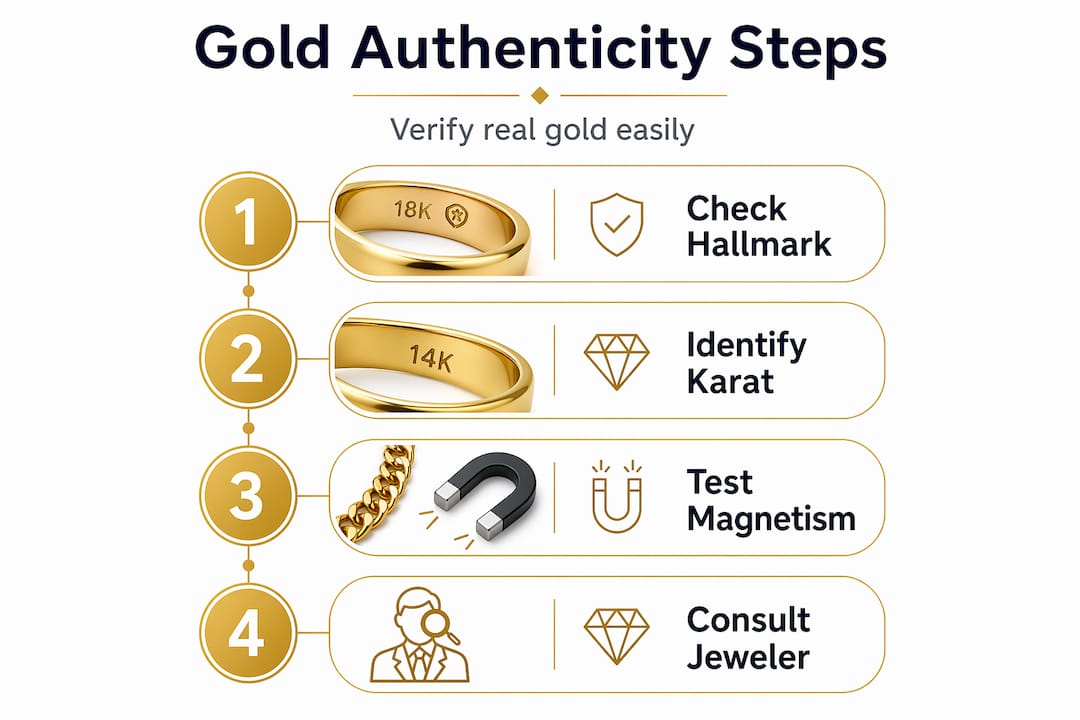
Classic gold quality is tied directly to these purity marks, called hallmarks, which are stamped onto the metal to certify authenticity. You will typically find them inside a ring band, on a bracelet clasp, or near the jump ring of a necklace.
When verifying a piece, check for:
- A karat stamp (10K, 14K, 18K, or the European millesimal equivalents: 417, 585, 750)
- A maker’s mark or manufacturer’s identifier
- Signs of wear at high-friction points, which can indicate plating over base metal
Pro Tip: If a piece has no hallmark at all, treat that as a red flag. Authentic solid gold jewelry sold in the U.S. is legally required to carry an accurate karat stamp if one is present. No stamp does not always mean fake, but it does mean you should ask questions before purchasing.
Understanding gold purity and hallmarks is the single most practical skill you can develop as a jewelry buyer. It takes less than 30 seconds to check, and it tells you everything about what you are actually paying for. For those interested in the richer, warmer look of higher-karat pieces, 18K gold is worth understanding in detail before you commit.
Solid gold versus plated: choosing lasting quality
The types of classic gold jewelry available today range from solid gold to gold-plated options, and the difference matters far more than most buyers realize. Not all gold-colored jewelry is equal, and classic gold jewelry meaning depends heavily on the material construction underneath the surface.
Here is a clear comparison of the most common gold jewelry types:
| Type | Construction | Durability | Best for |
|---|---|---|---|
| Solid gold | Gold alloy throughout | Excellent, lasts generations | Heirlooms, daily wear |
| Gold filled | Thick gold layer bonded to base metal | Good, several years | Everyday accessories |
| Gold vermeil | Thick gold over sterling silver | Moderate, with care | Fashion pieces |
| Gold plated | Thin gold surface over base metal | Poor, wears off quickly | Short-term use |
Classic gold collections are built around solid gold rather than plating because solid gold is gold throughout, while plating is just a thin surface layer that fades. This matters enormously for pieces you plan to wear daily, pass down as gifts, or keep for decades.
Key points to remember:
- Solid gold never fades, tarnishes, or reveals a different metal underneath
- Gold vermeil can last years if cared for but will eventually show the silver beneath
- Gold filled holds up better than plated but still has a base metal core
- Gold plated pieces often look identical at the point of sale but degrade within months of regular wear
Pro Tip: When comparing prices, ask directly whether a piece is solid gold or plated. A classic gold chain vs gold plated comparison will almost always show solid gold holding more value over time, both financially and in terms of appearance.
Choosing the right karat for daily wear and longevity
Once you understand material construction, the next decision is which karat level suits your lifestyle. The history of classic gold jewelry shows that 14K and 18K have been the standard for fine pieces because they strike the right balance between beauty and practicality.
Here is how to think through your options:
- 14K gold contains 58.5% pure gold, which makes it harder and more scratch-resistant than higher karats. It is the most popular choice for rings and bracelets worn every day. It also tends to be more affordable.
- 18K gold contains 75% pure gold and produces a noticeably richer yellow tone. It is softer than 14K, so it picks up surface scratches more easily, but many collectors prefer its depth of color for necklaces and earrings.
- 24K gold is nearly pure but far too soft for practical jewelry. It bends, scratches, and deforms with routine contact. Most everyday jewelry is never made in 24K for this reason.
14K and 18K gold are the mainstream standard for classic jewelry because they combine real gold content with structural durability. That is not a compromise; it is an engineering decision that makes the pieces actually wearable.
For anyone wondering whether solid gold is worth wearing every day, the answer is yes, provided you choose the right karat for your activity level. A 14K bracelet handles daily wear far better than an 18K version if you work with your hands.
Classic gold jewelry: symbolism and gifting significance
Understanding the classic gold jewelry meaning goes beyond aesthetics. Gold has carried symbolic weight across nearly every culture for thousands of years. That symbolism is one reason classic gold pieces make such powerful gifts.
Gold symbolizes enduring bonds, purity, and prosperity, and it is used in ceremonies and bridal jewelry specifically to reflect the expectation of a long-lasting relationship. When you give someone a gold necklace or bracelet, you are not just giving them an accessory. You are giving them something that carries meaning.
Classic gold pieces are most commonly chosen for:
- Weddings and engagements, where gold bands and jewelry reflect commitment
- Anniversaries, where the durability of gold mirrors the durability of the relationship
- Graduations and milestones, where gold marks achievement and new beginnings
- Heirlooms, where a piece is bought with the intention of passing it to the next generation
“Gold is one of the few gifts that appreciates in meaning over time. The longer someone wears it, the more history it carries.”
The emotional value and resale value of gold both increase with quality. A solid 14K or 18K piece from a reputable source holds its market value better than fashion jewelry, which means the gift you give today could be worth more in 20 years. Staying current on top gold jewelry trends can help you find pieces that honor classic design while feeling fresh.
The enduring truth: why classic gold jewelry transcends trends
Here is something the fast fashion industry does not want you to think about too carefully: the cost-per-wear of a $30 gold-plated necklace that you replace every eight months is higher than the cost-per-wear of a $300 solid 14K piece you wear for 15 years. Classic gold jewelry is not the expensive choice. Disposable jewelry is.
The classic gold jewelry vs modern debate often frames classic as “boring” and modern as “exciting.” That framing is backwards. Modern trend pieces require constant context, a specific season, a specific look, a specific moment. Classic pieces need none of that. A simple 14K gold hoop works on a Monday morning and a Saturday evening without any mental effort. That versatility is not boring. It is freedom.
We also think there is something worth saying about sustainability. Every solid gold piece you buy is one that does not end up in a landfill in 18 months. The timeless style and value of classic gold jewelry is partly an environmental argument, even if it rarely gets framed that way. Buying less and buying better is one of the most responsible choices a jewelry buyer can make.
Building a collection around classic gold pieces also means your collection grows in coherence over time. Each piece works with the others. Nothing becomes awkward or dated. You end up with jewelry that tells a story instead of a drawer full of pieces that no longer make sense together.
Explore classic gold jewelry collections at Baker Gold Chains
You now have a clear picture of what makes classic gold jewelry worth your attention and your investment. At Baker Gold Chains, every piece in our collection is made from solid 10K, 14K, or 18K gold, each stamped and verified for authenticity.
Whether you are shopping for yourself or searching for a meaningful gift, our catalog covers the full range of classic styles. Browse the refined 10K yellow gold Singapore chain for a lightweight everyday option, the elegant 14K yellow gold wedding hoops for a gift that carries real meaning, or the polished 14K yellow gold graduated bead necklace for a timeless statement piece. Every order over $150 ships free with insurance, and all pieces are backed by our lifetime craftsmanship guarantee.
Frequently asked questions
What makes gold jewelry “classic”?
Classic gold jewelry features timeless designs with simple shapes and clean lines that remain stylish across decades, often made with gold and precious stones or pearls. The defining trait is versatility: a classic piece looks right in virtually any setting without relying on current trends.
How can I verify if gold jewelry is authentic?
Look for karat hallmarks stamped directly on the piece, which indicate the gold purity percentage. Gold hallmarks certify metal purity and authenticity, such as 14K (58.5%) and 18K (75%) gold, confirming you have solid gold rather than plated or imitation metal.
Is 24K gold good for everyday jewelry?
No. 24K is 99.9% gold but too soft for daily wear since it bends and scratches easily. For everyday jewelry, 14K and 18K are better choices because they balance purity with the durability needed for real-world use.
What is the difference between solid gold and gold plated jewelry?
Solid gold is gold all the way through, meaning it maintains its appearance indefinitely, while gold plated jewelry has only a thin surface layer that wears off with regular use and reveals base metal underneath.
Why is classic gold jewelry a meaningful gift?
Gold symbolizes enduring bonds, purity, and prosperity, making it a natural choice for celebrating life events. Its lasting material quality matches its emotional significance, giving the recipient something they can wear and value for decades.

