

How to Match Gold Jewelry: Your Complete Style Guide
Matching gold jewelry means harmonizing gold tones with your outfit colors, skin undertones, and layering choices to create a polished, intentional look. The five colors that pair best with gold are black, emerald green, white, burgundy, and navy blue. Each creates contrast or warmth that makes gold pop without competing with it. Beyond color, the right gold tone for your skin and a few simple layering rules separate a thoughtful look from a random one. This guide covers all of it, step by step.
What colors pair best with gold jewelry?
The five colors that complement gold most reliably are black, emerald green, white, burgundy, and navy blue. These shades either contrast sharply with gold’s warm tone or share enough richness to amplify it.
Black is the most versatile backdrop for gold. A black blazer or dress makes even a simple gold chain look intentional and polished. Black absorbs light while gold reflects it, so the contrast is immediate and striking.
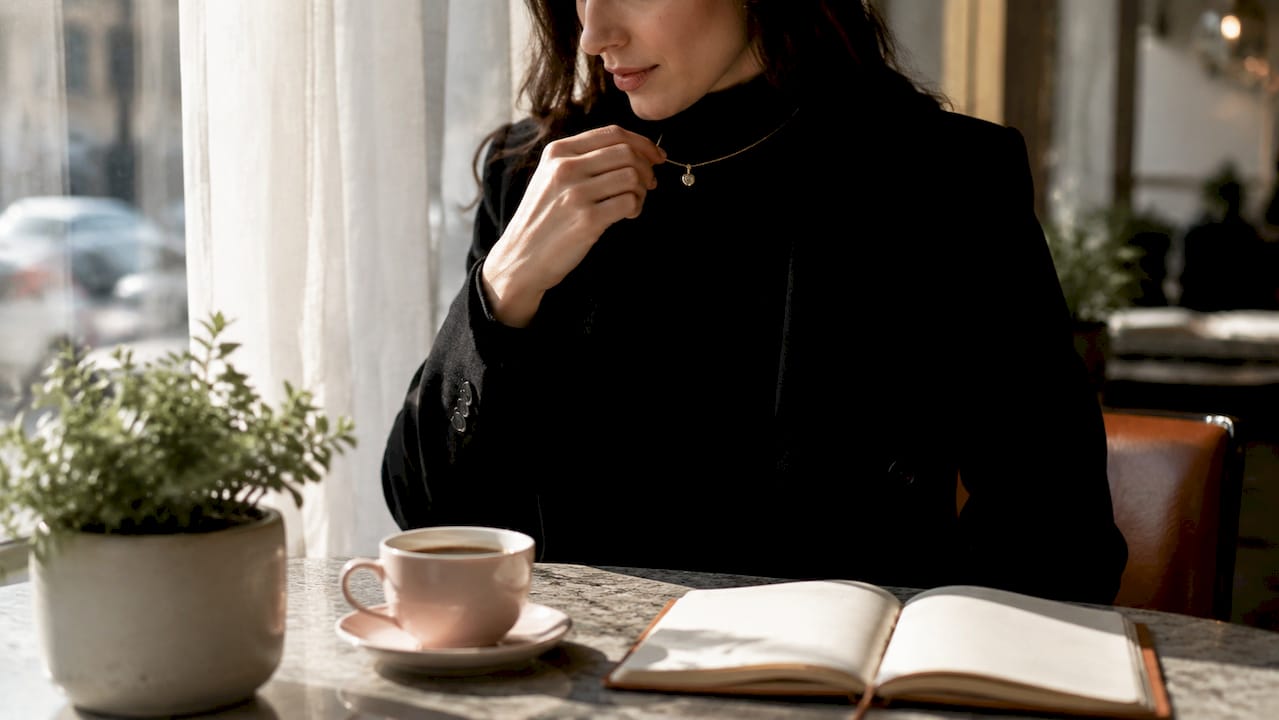
Emerald green shares gold’s richness without competing with it. A deep green wrap dress with a layered gold necklace reads as sophisticated and deliberate. This combination works especially well for evening events.
White and ivory create a clean, bright contrast that lets gold jewelry stand on its own. A white linen shirt with small gold hoops is a classic casual look that never feels overdone.
Burgundy and deep red warm up gold’s yellow tones and create a luxurious feel. This pairing suits fall and winter outfits, from wool coats to velvet blazers.
Navy blue sits on the cool side of the color wheel, which makes gold’s warmth stand out clearly. A navy suit with a gold chain or cufflinks is a reliable choice for professional settings.
| Color | Visual Effect | Best Occasion | Style Note |
|---|---|---|---|
| Black | High contrast, bold | Any occasion | Works with all gold tones |
| Emerald Green | Rich, sophisticated | Evening, formal | Best with yellow gold |
| White/Ivory | Clean, bright | Casual, daytime | Highlights delicate pieces |
| Burgundy/Deep Red | Warm, luxurious | Fall, winter | Enhances yellow and rose gold |
| Navy Blue | Cool contrast | Professional, smart casual | Pairs well with yellow gold |
Pro Tip: If you wear rose gold, lean toward burgundy and blush tones. If you wear yellow gold, black and emerald green give you the strongest contrast.
How does skin tone affect which gold you should wear?
Yellow gold flatters warm and olive skin tones best. Rose gold performs well on cool and neutral tones. White gold suits very fair or pink complexions most naturally. Choosing the right gold tone based on your undertone creates harmony between your skin and your jewelry.
Skin undertones fall into three categories: warm, cool, and neutral. Warm undertones show yellow, peachy, or golden hues in the skin. Cool undertones lean toward pink, red, or bluish tones. Neutral undertones sit between the two and can carry either direction.
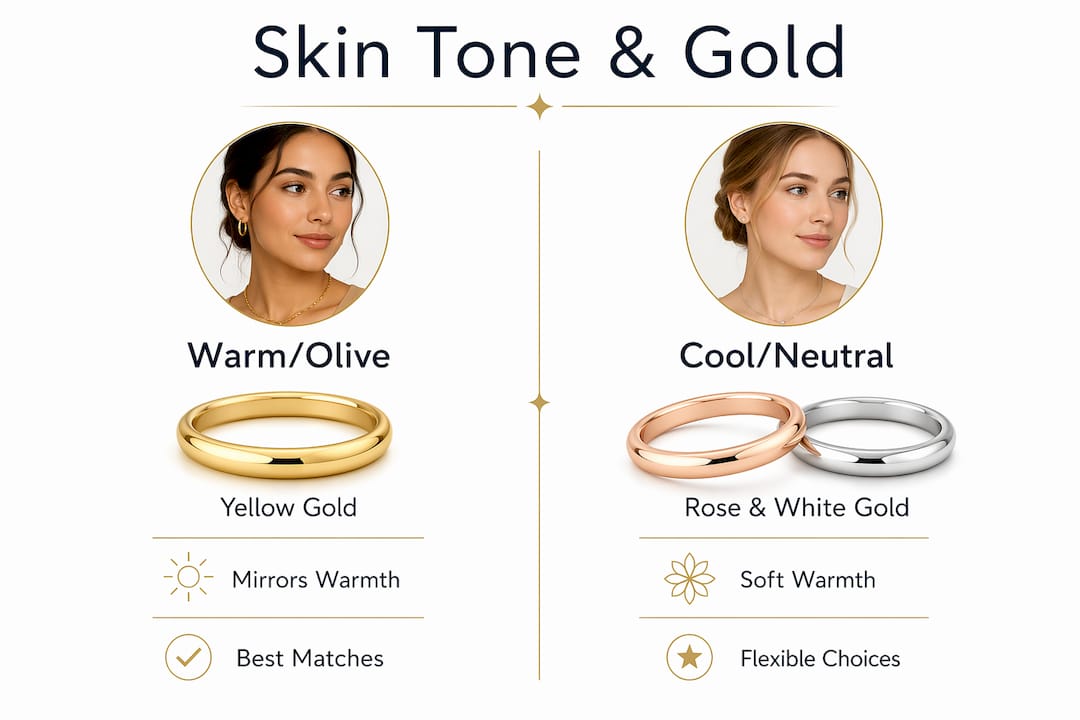
Warm and olive undertones look most natural with yellow gold. The metal mirrors the golden warmth already in the skin, creating a glow rather than a contrast. A 14K or 18K yellow gold chain on warm skin reads as effortless and natural.
Cool undertones respond well to rose gold and white gold. Rose gold adds a soft warmth that flatters pink-toned skin without clashing. White gold, which has a silver-like finish, suits very fair complexions that might find yellow gold too intense.
Neutral undertones have the most flexibility. You can wear yellow, rose, or white gold without a strong mismatch. This is also the best undertone for mixing gold tones intentionally.
| Skin Undertone | Best Gold Tone | Why It Works |
|---|---|---|
| Warm/Olive | Yellow Gold | Mirrors natural warmth in skin |
| Cool/Pink | Rose Gold or White Gold | Complements without clashing |
| Fair/Very Light | White Gold | Avoids overwhelming the complexion |
| Neutral | Any tone | Flexible; mixing tones works well |
Pro Tip: If you have a neutral undertone, try wearing a yellow gold necklace with a rose gold ring. The contrast is subtle and intentional, not accidental.
How to layer and stack gold jewelry without looking cluttered
Layering gold necklaces works best when you follow the three-chain rule: use three necklaces at different lengths and mix chain textures for dimension. Recommended lengths are 14–16 inches for a choker-style fit, 18–20 inches for a mid-chest drop, and 24–28 inches for a longer statement layer. Mixing chain types, such as a box chain with a cable chain, adds visual depth without looking over-styled.
For wrist stacking, odd numbers work best. Three bracelets look more balanced and intentional than two or four. Styling professionals consistently recommend this rule to avoid a cluttered appearance on the wrist.
Layering with varying chain styles and lengths creates depth and visual interest. Adding a charm or pendant to one of the layers gives the look a personal, collected-over-time feel rather than a matching-set appearance.
Here is a step-by-step approach to building a layered necklace look:
- Start with the shortest chain, worn close to the collarbone (14–16 inches).
- Add a mid-length chain with a different texture (18–20 inches).
- Finish with a longer chain or pendant layer (24–28 inches).
- Check that no two chains are the same style or width.
- Adjust so chains sit flat and do not cross each other at rest.
For a guide on keeping layered necklaces tangle-free, Bakergoldchains has a detailed resource on layering gold necklaces that covers chain spacing and clasp placement.
| Layering Approach | Number of Pieces | Best For | Key Rule |
|---|---|---|---|
| Necklace stack | 3 chains | Casual to formal | Vary length and texture |
| Wrist stack | 3 bracelets | Everyday wear | Odd numbers only |
| Ring stack | 2–3 rings | Any occasion | Mix widths, not all bold |
| Mixed stack | Necklace + bracelet | Statement looks | Keep one area minimal |
The most common mistake in layering is using pieces that are too similar in length or style. When chains sit at the same level, they tangle and the layers disappear visually. Give each piece at least two inches of separation.
How to style gold jewelry for different occasions
Styling gold jewelry for different occasions comes down to one principle: match the weight of your jewelry to the weight of the event. A casual brunch calls for different choices than a formal dinner.
Casual wear works best with one or two understated gold pieces worn close to the body. Thin chain necklaces, small hoop earrings, or delicate bangles add a refined touch without overwhelming a relaxed outfit. A simple 14K yellow gold chain with a white T-shirt and jeans is a reliable everyday look.
- For casual outfits: one thin chain necklace plus small gold hoops
- For workwear: a polished layered necklace or a single statement piece, kept to the neckline
- For formal events: a statement necklace or bold earrings, not both at full volume
- For mixed-metal looks: pair gold with copper or rose gold rather than silver for a warmer overall tone
Professional settings call for polished but not distracting choices. A single layered necklace or a structured gold cuff reads as confident and put-together. Avoid pieces that move or make noise in a meeting environment.
Formal events give you room to go bolder. A statement necklace with simple stud earrings, or large textured hoops with a minimal necklace, both work well. The rule here is to let one area of jewelry lead and keep the rest quieter.
When mixing metals with gold, choose metals with similar color temperatures. Gold pairs naturally with copper and rose gold. Pairing yellow gold with cool-toned silver requires more care. A two-tone piece, like an 18K yellow gold and sterling silver pendant, can bridge the gap without looking mismatched.
Key takeaways
Coordinating gold jewelry well requires three things: the right color pairing, the correct gold tone for your skin, and a clear layering structure.
| Point | Details |
|---|---|
| Color pairing | Black, emerald green, white, burgundy, and navy blue complement gold most reliably. |
| Skin tone matching | Yellow gold suits warm skin; rose gold suits cool tones; white gold suits fair complexions. |
| Layering rule | Use three necklaces at different lengths and mix chain textures for a polished stack. |
| Occasion balance | Match jewelry weight to the occasion: minimal for casual, bolder for formal. |
| Gift matching | Match the recipient’s dominant metal preference to increase the chance the piece gets worn. |
What i’ve learned about wearing gold that most guides skip
I’ve spent years looking at how people actually wear gold jewelry versus how style guides say they should. The biggest gap is this: most people treat the rules as a checklist rather than a starting point.
The skin tone guidance is real and useful, but it is not a hard limit. I have seen warm-toned people wear rose gold beautifully because they chose the right outfit color to bridge the gap. Rules give you a framework. Your existing collection and your instincts refine it.
The layering advice that changed how I think about it: look at what you already own before buying anything new. If your collection is 80% yellow gold, adding a single rose gold piece will feel out of place unless you build around it deliberately. The same logic applies to gifting gold jewelry. If someone’s everyday jewelry is 80% one metal, giving a different tone is a high-risk move. Observe what they actually wear, not just what they own.
The other thing most guides miss: layering is not a one-time decision. It evolves. Start with two pieces and add a third when the first two feel settled. The best layered looks I have seen were built over months, not assembled in one shopping session. That collected quality is what makes a layered look feel personal rather than styled.
— Blayne
Build your gold jewelry collection with Bakergoldchains
Ready to put these styling principles into practice? Bakergoldchains carries a curated selection of solid gold pieces built for layering, everyday wear, and special occasions alike.
Start with a versatile base layer like the Graduated Bead Necklace in 14K Yellow Gold, which pairs with warm and neutral skin tones and works across casual and formal looks. Add a classic finishing touch with the Small Wedding Hoops in 14K Yellow Gold, a reliable everyday piece that complements nearly any outfit. Every piece at Bakergoldchains is made from authentic 10K, 14K, or 18K gold, backed by a lifetime craftsmanship guarantee and free insured shipping on orders over $150.
FAQ
What colors go best with gold jewelry?
Black, emerald green, white, burgundy, and navy blue are the strongest color matches for gold jewelry. These shades either contrast sharply with gold or share enough richness to enhance it.
Which gold tone suits warm skin tones?
Yellow gold is the best match for warm and olive skin tones. It mirrors the natural warmth in the skin and creates a cohesive, glowing effect rather than a contrast.
How many necklaces should you layer at once?
Three necklaces at different lengths is the recommended maximum for a sophisticated layered look. Use lengths of 14–16 inches, 18–20 inches, and 24–28 inches, and vary the chain style for each layer.
Can you mix gold and silver jewelry?
Yes, but it requires care. Pairing yellow gold with silver works best when you use a two-tone piece as a connector or keep the metals in separate zones, such as gold at the neck and silver at the wrist.
How do you choose gold jewelry as a gift?
Match the recipient’s dominant metal preference based on what they wear every day, not just on special occasions. If most of their collection is yellow gold, gifting a different tone carries a high risk of the piece going unworn.

