

The Role of Gold in Fine Jewelry: A 2026 Buyer's Guide
Gold is not just a material. It’s a choice that carries centuries of meaning, and understanding the role of gold in fine jewelry changes how you shop, what you buy, and how much you value what you own. Most buyers focus on price or appearance. The smarter approach goes deeper: knowing why gold behaves the way it does, what its purity grade actually tells you, and how cultural history and market trends shape the pieces available today. This guide covers all of it, so you can buy with confidence rather than guesswork.
Table of Contents
- Key Takeaways
- Why gold works so well in fine jewelry
- Cultural and historical significance of gold
- Gold purity, the karat system, and hallmarking
- Choosing gold jewelry for durability and design
- Gold jewelry as adornment and asset
- My take on buying gold jewelry in 2026
- Shop gold pieces built to last
- FAQ
Key Takeaways
| Point | Details |
|---|---|
| Gold’s physical properties are unique | Malleability, tarnish resistance, and natural luster make gold irreplaceable in fine jewelry design. |
| Karat grade affects durability, not just value | Lower karat gold alloys like 14K often outperform higher karat pieces in everyday wear. |
| Hallmarking protects your purchase | Verified marks including purity grade and HUID codes confirm authenticity and support resale value. |
| Jewelry is not the same as bullion | Retail markups and craftsmanship costs mean gold jewelry’s resale value differs from its intrinsic metal value. |
| Balance purity with lifestyle needs | The best piece combines the right karat, construction quality, and intended use for your situation. |
Why gold works so well in fine jewelry
No other metal combines gold’s specific set of properties. That combination is why gold has been used in jewelry for over 5,000 years, and why no modern alternative has displaced it in the fine jewelry market.
Malleability and design freedom. Gold is one of the most workable metals in existence. A single gram can be beaten into nearly one square meter in area, which means artisans can shape it into forms that would crack or shatter in harder metals. Filigree work, detailed engravings, and thin wire settings are all possible because of this property.
Resistance to tarnish and corrosion. Gold does not react with oxygen, moisture, or most chemicals under normal conditions. That means a well-made gold piece retains its appearance over decades without the surface darkening or flaking the way silver or base metals do. This chemical stability is a core reason why gold’s significance in accessories goes well beyond fashion trends.

Natural color and light reflection. Gold’s warm yellow tone comes from its atomic structure, not a coating or treatment. It reflects light in a way that other metals do not replicate naturally. Rose gold and white gold exist, but they require alloying to achieve those colors. Pure gold’s hue is entirely its own.
Density and perceived quality. Gold is dense. When you hold a solid gold piece, it has a weight that signals quality immediately. Hollow or gold-plated pieces feel noticeably lighter, which is one way experienced buyers assess construction before checking any markings.
Pro Tip: If a piece feels unusually light for its size, ask whether it’s hollow or solid construction. The difference affects both durability and long-term value.
Cultural and historical significance of gold
Gold’s place in human culture is not an accident of aesthetics. It runs through some of the world’s oldest traditions, and that history actively shapes demand today.
In India, gold jewelry is woven into weddings, religious ceremonies, and family inheritance in ways that go far beyond decoration. A bride’s gold is often her personal wealth, passed through generations. In China, gold symbolizes prosperity and good fortune, making it the default gift material for births, weddings, and New Year celebrations. These are not niche customs. Gold jewelry demand tied to ceremonial traditions in India and China represents a substantial portion of global consumption each year.
“Gold jewelry functions as a ‘dual-identity’ asset, serving both decorative purposes and portable wealth preservation, with enduring cultural ties in major markets.”
In Western cultures, the symbolism is different but equally persistent. Wedding bands in gold represent permanence and commitment. Heirloom pieces connect wearers to family history. The role of gold in luxury accessories has always carried connotations of status and taste that consumers across income levels respond to, whether they articulate it or not.
That cultural weight matters when you buy. A piece of gold jewelry carries meaning that a stainless steel or silver piece simply does not carry in the same way. Understanding this helps you recognize why gold commands its price, and why that price is unlikely to disappear.
Gold purity, the karat system, and hallmarking
Understanding the karat system is non-negotiable if you want to buy gold jewelry with confidence. The role of gold purity in jewelry affects appearance, durability, and price simultaneously.
Common purity grades break down as follows:
| Karat | Gold Content | Best For |
|---|---|---|
| 24K | 99.9% pure gold | Bullion, ceremonial pieces, not ideal for daily wear |
| 18K | 75% gold | Fine jewelry, balance of richness and strength |
| 14K | 58.3% gold | Everyday fine jewelry, excellent durability |
| 10K | 41.7% gold | Budget-conscious buyers, very wear-resistant |
Higher karat gold is softer because it contains less alloy metal. A 24K piece scratches more easily than a 14K piece. That trade-off between color richness and scratch resistance is one of the most practical considerations when choosing a piece for regular use versus a special occasion.
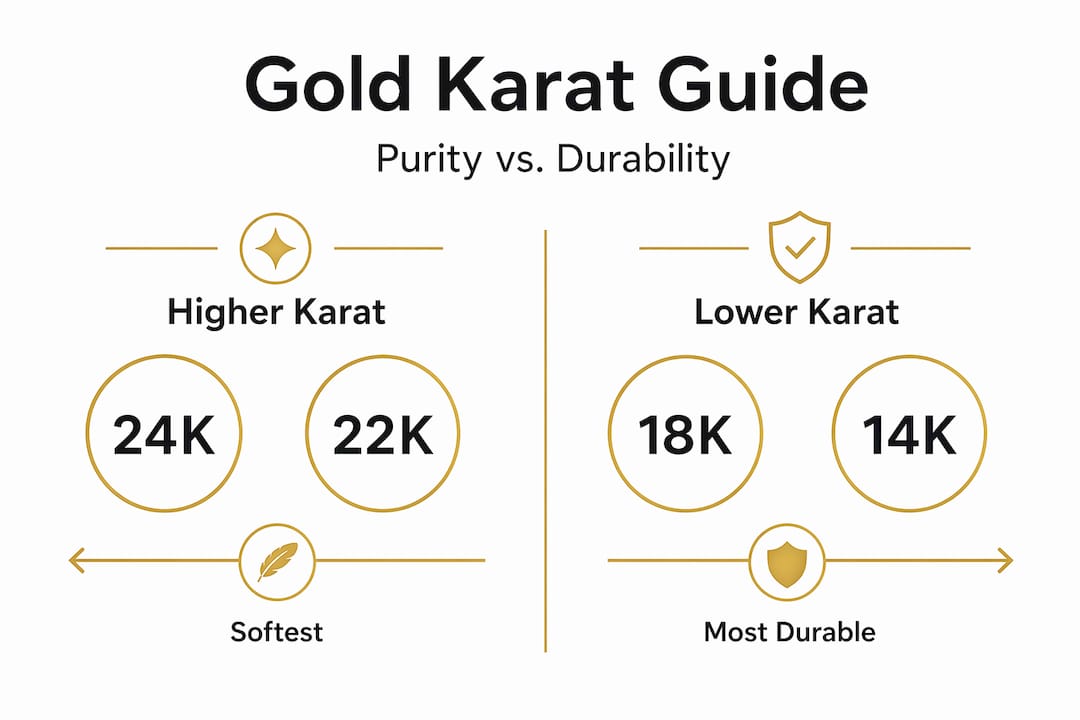
Millesimal fineness is the European parallel system, where 18K is marked as 750 and 14K as 585. You will see both systems on jewelry depending on where it was made.
Hallmarking is your guarantee. In regulated markets, hallmarks confirm that a piece meets its stated purity grade. In India, the Bureau of Indian Standards expanded mandatory hallmarking requirements as of 2026, covering gold jewelry above 14 karats. The BIS hallmark system includes a BIS logo, purity grade, and a unique six-digit HUID code. That HUID code ties each piece to a licensed testing center, making counterfeiting traceable and giving buyers a way to verify authenticity using the BIS Care app.
Penalties for selling non-compliant jewelry under the BIS system can reach five times the value of the item plus additional fines. That level of enforcement matters because it tells you why hallmarking exists: not as paperwork, but as consumer protection with real teeth.
In the U.S., karat stamps like “14K” or “585” on jewelry serve a similar function. When buying solid gold online, always verify the karat stamp is present and that the seller can confirm the sourcing of their pieces.
Pro Tip: Verify any gold piece with a magnet test before purchase. Real gold is not magnetic. If a piece sticks to a magnet, it contains significant base metal content regardless of what the stamp says.
Choosing gold jewelry for durability and design
Purity is one factor. Construction and alloy composition are equally important when you want a piece that lasts.
The role of alloys in gold jewelry goes beyond color. Alloying gold with copper, silver, nickel, or palladium changes its hardness, color, and performance over time. 14K alloys often outperform higher karat pieces in daily wear because the added metals increase scratch resistance without sacrificing the gold appearance that makes the piece desirable.
Here is what to evaluate when assessing any gold jewelry piece:
- Yellow, white, or rose gold: Yellow gold uses copper and silver alloys, keeping the classic tone. White gold uses palladium or nickel and often has a rhodium plating for brightness. Rose gold’s warm pink comes from higher copper content. Each requires different care over time, especially white gold, which may need re-plating.
- Solid vs. hollow construction: Solid pieces cost more but maintain their structure under daily use. Hollow pieces, including many chain styles, are lighter and more affordable but can dent more easily if subjected to impact.
- Clasp and solder quality: A piece is only as reliable as its weakest point. Poorly soldered joins or lightweight clasps are where jewelry fails first. Look for pieces with reinforced clasps and clean, smooth solder points.
- Finish types: Polished finishes show scratches more visibly over time. Brushed or matte finishes hide minor wear better. Textured finishes, like hammered gold, can mask small dings while adding visual interest.
The types of gold finishes in jewelry matter practically, not just aesthetically. If you want a piece for daily wear, a polished high-sheen finish may show wear faster than a textured or satin surface. Matching your finish choice to your lifestyle is just as important as matching your karat grade.
Gold jewelry as adornment and asset
Gold jewelry carries both personal and financial weight, but those two functions are not equal, and treating them as equal leads to poor decisions.
Here is how to think about the value layers in any gold piece:
- Metal value is the intrinsic worth of the gold content at current spot price. A 14K piece contains 58.3% gold, so you calculate that fraction of the piece’s weight against the gold price.
- Craftsmanship and design premium represents the labor, artistry, and brand that went into making it. This portion does not convert back to metal value when you resell.
- Retail markup covers the retailer’s margin, certification, and distribution costs. When you buy at retail, some of what you pay does not come back at resale.
- Cultural or sentimental premium is the personal value you assign based on meaning, occasion, or aesthetics.
Retail prices often exceed intrinsic metal value considerably, with craftsmanship and brand identity as the primary drivers. This is not a flaw in the market. It reflects what fine jewelry actually is: a designed object, not a commodity.
Gold prices in 2026 have risen above $5,100 per ounce, pushing designers toward lighter constructions and more geometric forms that use metal more efficiently. Investment-minded buyers are paying closer attention to metal content, and some retailers are responding with greater transparency about weight and purity.
If wealth preservation through gold is your primary goal, bullion coins and bars offer lower premiums and higher liquidity than jewelry. Serious investors use bullion because resale involves no craftsmanship cost conversation. Jewelry, on the other hand, is where gold’s beauty and cultural meaning meet its material value. The best approach is to buy jewelry you genuinely want to wear, with the understanding that its secondary resale value is a bonus rather than the primary reason for purchase.
My take on buying gold jewelry in 2026
I’ve watched the gold jewelry market from multiple angles, and the pattern I keep seeing is buyers fixating on the highest karat they can afford without asking whether that purity actually serves them.
In my experience, 18K gold is genuinely beautiful. It has a richness of color that 14K cannot fully match. But for someone wearing a chain or bracelet every single day, the slightly softer composition of 18K means it will show wear faster than a well-constructed 14K piece. The best purchases balance karat with craftsmanship and how you actually live.
What I think buyers consistently undervalue is the hallmarking verification step. I’ve seen pieces sold without proper karat stamps that turn out to be gold-plated or heavily alloyed. Taking two minutes to confirm a karat stamp and, in regulated markets, check the HUID code protects you from a mistake that is difficult to reverse.
The 2026 trend toward lighter, more geometric gold designs is actually good news for buyers. Jewelers are getting more creative with how they use gold, meaning you get more visual impact per gram. That creativity is driving some of the most interesting fine jewelry released in years.
My honest advice: ignore marketing language and look at the karat stamp, the construction weight, the finish quality, and whether the seller stands behind their product. Those four things tell you more about a piece’s value than any label ever will.
— Blayne
Shop gold pieces built to last
At Bakergoldchains, every piece is sourced from reputable U.S. suppliers, stamped with verified karat markings, and backed by a lifetime craftsmanship guarantee. If you’ve spent time understanding why gold’s purity and construction matter, you’ll recognize the quality in pieces like the 14K yellow gold bead necklace, which delivers the ideal balance of richness and durability for everyday wear. For earrings, the small 14K wedding hoops and the large 10K textured hoops give you distinct style options across two purity grades, each with solid construction and free insured shipping on orders over $150. Browse the full collection to find a piece that matches what you’ve learned.
FAQ
What makes gold better than silver for fine jewelry?
Gold does not tarnish or corrode under normal conditions, while silver oxidizes and requires regular polishing. Gold’s chemical stability and natural luster make it the preferred metal for pieces meant to last decades without significant maintenance.
What does 14K mean on a gold piece?
14K means the piece contains 58.3% pure gold, with the remainder made up of alloy metals like copper or silver. This purity grade offers strong durability for everyday wear while retaining the warm color associated with gold.
How do I verify a gold piece is authentic?
Check for a karat stamp (such as “14K” or “585”) and test with a magnet since real gold is not magnetic. In markets with hallmarking systems like India’s BIS, you can use the HUID code and the BIS Care app to verify authenticity directly.
Is gold jewelry a good investment?
Gold jewelry holds value over time, but serious wealth preservation is better served by bullion coins or bars, which carry lower premiums and sell closer to spot price. Jewelry is best purchased for its aesthetic and personal value, with resale potential as a secondary consideration.
What karat gold is best for daily wear?
14K gold is generally the best choice for daily wear because its alloy composition makes it harder and more scratch-resistant than 18K or 22K. It still carries sufficient gold content for rich color while holding up well to the friction and impact of regular use.

