

What Is Jewelry Style? Your 2026 Style Guide
Jewelry style is defined as the intentional, deliberate way you select and combine jewelry pieces to express your personality, reinforce your aesthetic, and complement your wardrobe. In the fashion world, this concept goes by a more precise term: personal adornment aesthetic. Understanding what is jewelry style means recognizing that every piece you wear sends a signal about who you are. This guide covers the main types of jewelry, the most popular styles shaping 2026, and exactly how to build a look that feels like yours.
What are the main types of jewelry styles?
Jewelry is classified into over 37 recognized functional types, organized by body placement and design. That number matters because it shows how much variety exists before you even factor in personal taste. The major placement categories are earrings, necklaces, rings, bracelets, brooches, and body jewelry. Within each category, design variations like studs, hoops, chains, bangles, and statement pieces create entirely different visual effects.
Silhouette and scale are the two factors that determine style impact more than any specific type name. A delicate 14K gold chain necklace reads as minimalist. A thick Cuban link in the same metal reads as bold and confident. The piece is technically the same category, but the scale changes the entire message. Silhouette and scale affect an outfit’s focal point more than the jewelry’s category label alone.
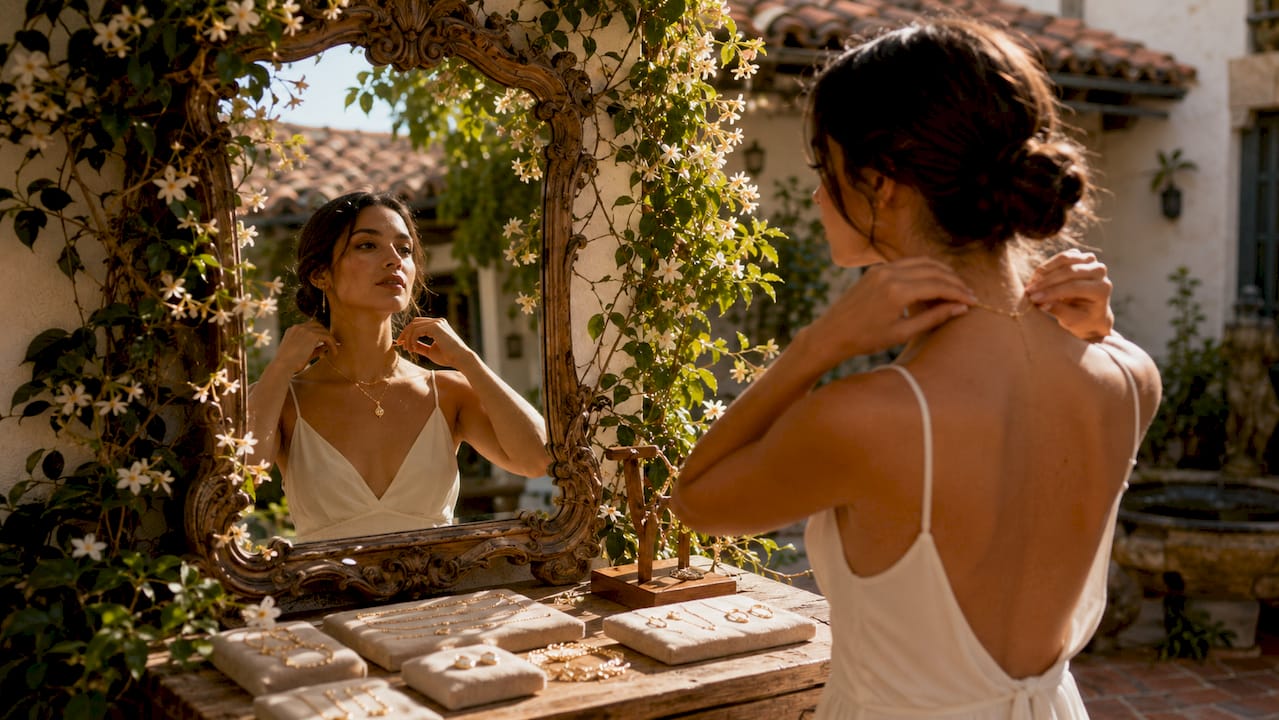
Here is a quick reference for the core jewelry types and how they function within different personal styles:
| Jewelry Type | Design Variations | Typical Style Use |
|---|---|---|
| Earrings | Studs, hoops, drops, chandeliers | Minimalist to statement; frames the face |
| Necklaces | Chains, pendants, chokers, layered | Sets tone for entire outfit; layering anchor |
| Rings | Bands, cocktail, stacking, signet | Adds detail to hands; signals personality |
| Bracelets | Bangles, cuffs, tennis, charm | Wrist accent; works well stacked or solo |
| Brooches | Pins, floral, geometric | Vintage and modern styling; adds focal point |
| Body Jewelry | Anklets, belly rings, ear cuffs | Bohemian and contemporary aesthetics |
What are the popular jewelry styles right now?
Jewelry styles range from classic and minimalist to vintage, bohemian, statement, and modern geometric, each with its own visual cues and mood. Knowing these categories helps you shop with purpose instead of impulse. The style you gravitate toward reflects your values, your wardrobe, and how you want to show up in the world.
Here is how the most recognized styles break down:
- Classic: Timeless silhouettes like pearl strands, gold hoops, and tennis bracelets. Clean, polished, and appropriate for any occasion. Classic gold jewelry never reads as dated.
- Minimalist: Clean lines, negative space, and single-material pieces. Projects an intentional, edited aesthetic. Think thin gold bands, small studs, and simple chain necklaces.
- Statement: Bold, high-contrast pieces designed to be the focal point of an outfit. Statement jewelry signals confidence and works best when the rest of the outfit stays simple.
- Vintage: Inspired by specific eras like Art Deco, Victorian, or 1970s retro. Characterized by intricate detail, filigree work, and antique finishes.
- Bohemian: Layered, mixed-material, and nature-inspired. Combines metals, stones, leather, and beads for an organic, free-spirited look.
- Modern Geometric: Angular shapes, asymmetry, and architectural forms. Appeals to readers who want jewelry that feels like wearable art.
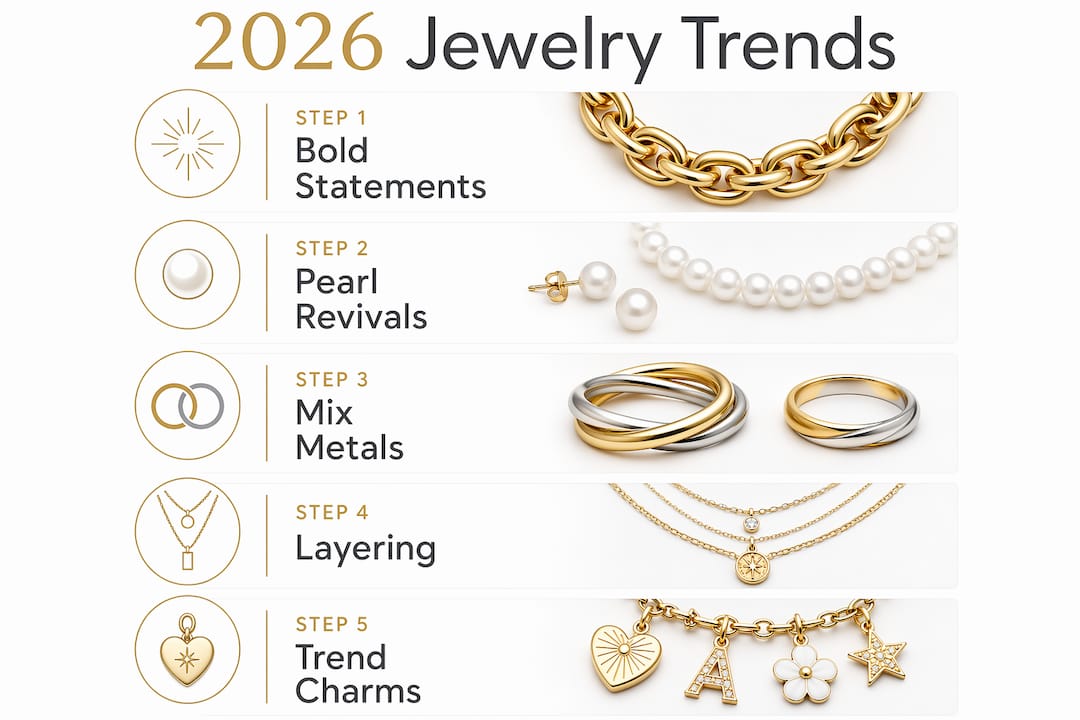
2026 jewelry trends are shifting away from dainty minimalism toward bolder, more expressive choices. Pearls, cocktail rings, chunky chains, nature motifs, charms, and brooches are all dominant this season. Mixed metals are no longer a style mistake. Wearing yellow gold alongside white gold or silver is now a deliberate, recognized technique. This shift gives you more freedom to layer pieces from different eras and price points without the look feeling accidental.
Pro Tip: If you want to follow 2026 trends without overhauling your collection, add one trend-driven charm or brooch to a base of classic gold pieces. The classic pieces anchor the look; the trend piece keeps it current.
How do you choose and mix jewelry styles effectively?
Choosing your jewelry style starts with identifying the aesthetic you return to most often in your wardrobe. If your closet is full of clean, neutral basics, minimalist or classic jewelry will feel natural. If you wear bold prints and rich textures, statement or bohemian pieces will complement rather than compete. The goal is coherence, not matching.
Mixing metals and textures strategically is the defining technique of 2026 styling. The key word is “strategically.” Mixing works when you repeat a metal at least twice across your look. For example, if you wear a yellow gold necklace and yellow gold earrings, adding a silver ring feels intentional rather than mismatched. Repeating an element creates visual rhythm.
Layering necklaces is one of the most effective ways to build a personal jewelry style. The standard approach uses three lengths: a choker or short chain at 14–16 inches, a mid-length pendant at 18–20 inches, and a longer statement chain at 24–28 inches. Each layer stays visible and distinct. For a detailed breakdown of this technique, Bakergoldchains covers necklace layering methods that keep pieces tangle-free and visually balanced.
Common pitfalls to avoid when mixing styles:
- Wearing statement pieces in more than one placement at the same time. Bold earrings plus a bold necklace plus a bold ring creates visual noise, not style.
- Mixing too many textures without a unifying element like a shared metal color or stone.
- Ignoring scale. Pairing a very delicate ring with a chunky bracelet on the same hand creates imbalance.
- Choosing trend pieces without considering whether they fit your existing wardrobe.
The 16th Avenue accessory layering guide also offers practical frameworks for mixing jewelry confidently across different outfit types in 2026.
How do you build a curated jewelry collection?
Curation beats collection every time. Owning 3–5 high-quality, versatile pieces creates a more refined personal style than owning 30 low-quality items that rarely work together. This is the single most important principle for anyone building a jewelry wardrobe from scratch or editing an existing one.
Follow these steps to build a collection that reflects your style and lasts:
- Start with base pieces. Choose two or three classic items that work with everything: a simple gold chain, small hoop earrings, and a clean band ring. These become your daily foundation.
- Invest in quality metals. Low-quality plated jewelry tarnishes and causes skin irritation, which undermines any style. Pieces in 10K, 14K, or 18K gold hold their finish and their value over time.
- Add one statement piece. Once your base is set, choose one bold item that reflects your personality. A statement chain necklace, a cocktail ring, or a pair of textured hoops can define your entire look.
- Layer in trend pieces selectively. Charms, beads, and brooches are strong 2026 trends. Buy one or two trend items per season, but only if they work with your existing base pieces.
- Audit regularly. Every six months, review what you actually wear. Pieces that never leave the drawer are not part of your style. Sell, gift, or repurpose them.
Solid gold chains as base pieces combined with trend-driven charms or pendants maintain relevance across multiple seasons. This approach protects your investment while keeping your look current. A 14K rope chain, for example, works with a minimalist pendant today and a charm cluster next season without losing its appeal.
Pro Tip: Before buying a new piece, hold it against your three most-worn outfits. If it works with at least two of them, it earns a place in your collection. If it only works with one specific look, it is a costume piece, not a style piece.
Key takeaways
Jewelry style is the deliberate practice of selecting and combining pieces to express identity, and quality, coherence, and curation are the three factors that make it work.
| Point | Details |
|---|---|
| Define your aesthetic first | Identify the style category you return to most often before buying new pieces. |
| Silhouette and scale drive impact | The size and shape of a piece changes its style message more than its category name. |
| Quality metals last longer | Pieces in 10K, 14K, or 18K gold resist tarnish and maintain their look over time. |
| Curate, do not collect | Own 3–5 versatile core pieces and build outward from there for a refined look. |
| Mix metals with intention | Repeat a metal at least twice in a look to make mixing feel deliberate, not accidental. |
Why i think most people approach jewelry style backwards
Most people buy jewelry reactively. They see a piece they love, buy it, and then wonder why it never quite fits into their wardrobe. I have seen this pattern repeatedly, and the fix is always the same: start with your wardrobe, not with the jewelry.
The pieces that get worn every day are almost never the most expensive or the most beautiful in isolation. They are the ones that connect. A simple 14K gold chain works because it does not demand anything from the outfit. It adds without competing. That is the quality worth prioritizing above all else.
There is also a confidence dimension that most jewelry guides skip. When your jewelry style is coherent, you stop second-guessing your look. You put on your base pieces, add one intentional accent, and you are done. That kind of clarity is worth more than a drawer full of pieces you are not sure how to wear.
My honest advice: resist the pull of trends until your base is solid. Pearls and cocktail rings are having a strong 2026 moment, and they are genuinely worth exploring. But a pearl pendant on a 14K chain reads as polished and intentional. The same pearl pendant on a tangled pile of mismatched pieces reads as an afterthought. The base makes the trend work.
Trust your instincts on what you are drawn to, but test every new piece against your existing wardrobe before committing. Style is not about having the right pieces. It is about having the right pieces for you.
— Blayne
Build your personal style with Bakergoldchains
If you are ready to put these principles into practice, Bakergoldchains offers a curated selection of solid gold pieces built for exactly this kind of intentional styling. Whether you are starting with a classic base or adding a statement accent, every piece is crafted in 10K, 14K, or 18K gold and backed by a lifetime craftsmanship guarantee.
Start with a versatile everyday piece like the 14K graduated bead necklace, which layers beautifully with pendants and chains. For a minimalist foundation, the small 14K gold hoops work with every outfit and every style category. If you are ready for a statement piece, the large textured gold hoops deliver bold presence without overwhelming your look. Free insured shipping applies to all orders over $150.
FAQ
What is jewelry style in simple terms?
Jewelry style is the deliberate way you choose and combine jewelry pieces to express your personality and complement your outfits. It reflects your aesthetic identity through decisions about type, scale, metal, and occasion.
How many jewelry styles are there?
There are at least eight widely recognized jewelry style categories: classic, minimalist, statement, vintage, bohemian, modern geometric, personalized, and symbolic. Each has distinct visual characteristics suited to different personalities and occasions.
How do i find my personal jewelry style?
Start by identifying the aesthetic you return to most often in your clothing choices. Your jewelry style should complement your wardrobe, not contradict it. Begin with two or three versatile base pieces and build from there.
Is it okay to mix different jewelry styles?
Mixing styles works well when you use a unifying element like a shared metal color or a consistent scale. Repeat one metal at least twice in your look to make the combination feel intentional rather than random.
What jewelry styles are trending in 2026?
Pearls, bold cocktail rings, chunky chains, nature motifs, charms, and brooches are the dominant trends in 2026. Mixed metals and layered looks are also widely accepted, replacing the single-metal minimalist approach of recent years.

