

Rope Chain Cultural Significance: History and Meaning
The rope chain is defined as one of jewelry’s most culturally loaded designs, recognized across civilizations as a symbol of strength, unity, and social standing. Its interwoven links mirror the physical properties of rope itself: individual strands that become unbreakable when twisted together. That structural metaphor has given the rope chain cultural significance far beyond aesthetics, making it a wearable statement of identity, heritage, and power from ancient Egypt to modern hip-hop. Understanding what rope chains represent means tracing a story that spans thousands of years and dozens of cultures.
1. Historical significance of rope chains across civilizations
Gold rope chains have a multi-millennial legacy, evolving from ancient Egyptian symbols of divine power and authority into status markers worn by European monarchs and clergy. That span of continuous use across radically different societies tells you something important: the rope chain’s symbolic power is not accidental. It is built into the design.
In ancient Egypt, gold chains were reserved for pharaohs and high priests. Wearing one signaled a direct connection to the gods, not just wealth. Ancient Greek and Roman cultures extended that logic, awarding chains to soldiers and statesmen as tokens of valor and civic honor. The chain was not decorative. It was documentary, a record of what you had earned.
“The rope chain exemplifies how jewelry can embody both utility and high cultural symbolism, linking artisanal craftsmanship with deep societal meanings.” — Park Magazine NY
During the Middle Ages, European monarchies and the Catholic Church used rope-style chains to denote rank and royal favor. Kings gifted chains to loyal nobles. Bishops wore them as marks of ecclesiastical authority. By the Renaissance, goldsmiths in Florence and Venice began adding intricate twisting patterns that amplified both the artistry and the social prestige of the piece. The chain became a canvas for craftsmanship, not just a badge of rank.
Key historical milestones:
- Ancient Egypt (3000 BCE onward): Chains worn by pharaohs as divine authority symbols
- Ancient Greece and Rome: Awarded to soldiers and officials as marks of valor
- Medieval Europe: Used by monarchs and clergy to signal rank and loyalty
- Renaissance Italy: Florentine and Venetian goldsmiths elevated chain design into fine art
2. How rope chains symbolize strength, unity, and connection
The symbolism of rope chains balances two opposing values: the rugged durability of maritime rope and the refined prestige of precious gold. That combination is not a contradiction. It is the point. The chain communicates that strength and elegance are not mutually exclusive.
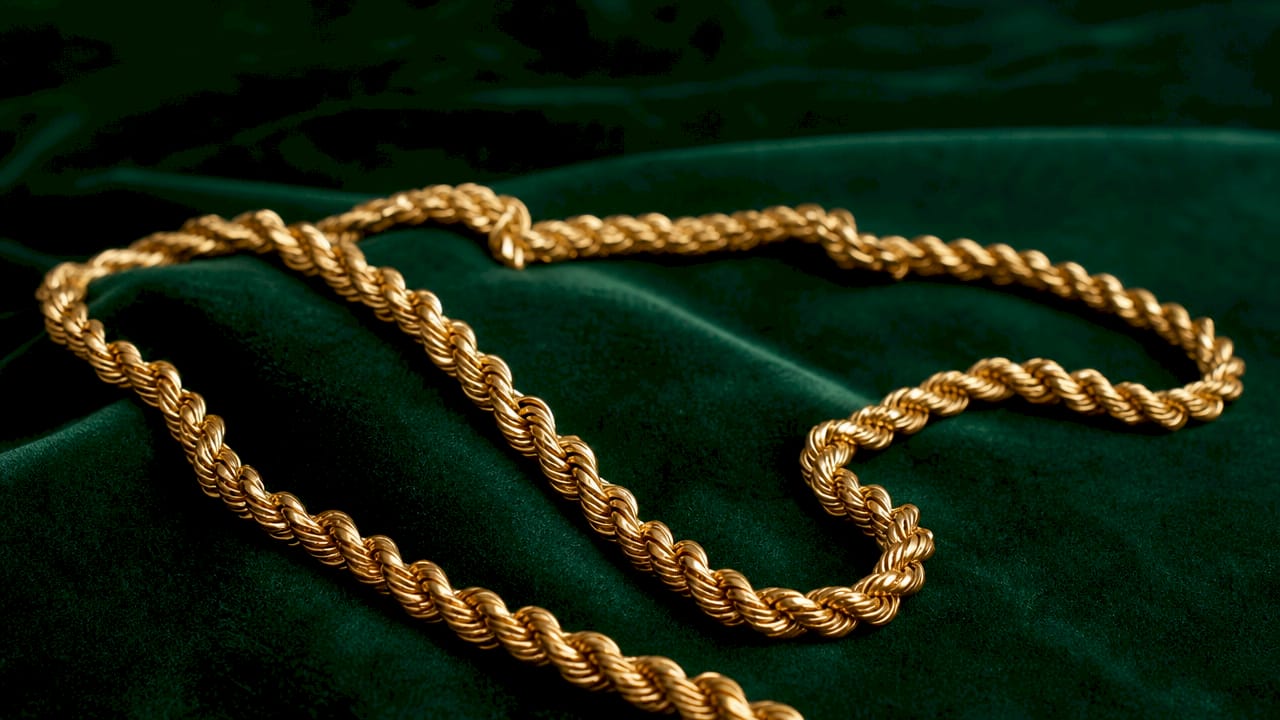
The interwoven design functions as a direct metaphor for unbreakable bonds. Each link depends on the ones beside it. Remove one strand and the structure weakens. That physical reality maps onto human relationships, community ties, and personal resilience in ways that cultures across the world have recognized independently. You see this symbolism in religious art, where chains represent divine connection, and in secular contexts, where they mark loyalty between people.
Pro Tip: When choosing a rope chain as a gift, consider the symbolic weight of the design. A gold rope chain communicates permanence and connection in a way that a simple bar necklace does not.
Cultural examples of this symbolism appear in:
- Religious iconography: Byzantine Christian art frequently depicted saints wearing rope-style chains as symbols of their bond to God
- Maritime communities: Sailors in Portugal and coastal West Africa wore rope chains as protective talismans, linking the chain’s structure to the ropes that kept ships together
- West African traditions: Twisted gold chains were exchanged during ceremonies marking community bonds and rites of passage
The versatility in meaning across maritime toughness and elite prestige illustrates why the rope chain has outlasted nearly every other jewelry trend. It speaks to multiple audiences simultaneously without losing coherence.
3. Rope chains in modern culture and fashion
By the post-WWII era, rope chains were adopted by jazz musicians and civil rights leaders as a signifier of empowerment and self-determination. That shift was deliberate. Wearing gold in mid-20th century America carried a political charge for Black Americans, connecting personal adornment to broader assertions of dignity and cultural pride.
The transition into hip-hop culture during the 1970s and 1980s deepened that meaning. Hip-hop culture adopted rope chains as powerful symbols of success, identity, and defiant style, reflecting social narratives that went far beyond fashion. Artists like Run-DMC and LL Cool J wore thick gold rope chains as visual declarations of achievement in a society that had historically denied Black Americans access to wealth and status. The chain was not just jewelry. It was a statement.
Today, rope chains appear across fashion contexts that would have seemed incompatible a generation ago:
- Minimalist styling: Thin 1.5mm to 2mm rope chains worn alone as everyday pieces
- Bold layering: Multiple chains of varying widths stacked for visual impact
- Pendant pairings: Rope chains as the preferred base for religious pendants, initials, and custom charms
- High fashion: Designers including Versace and Bottega Veneta have incorporated rope chain motifs into runway collections
- Gender-neutral wear: Rope chains are now worn across all gender expressions, removing the gendered associations that once limited chain jewelry
The cultural meaning of rope chains continues to expand as globalization spreads their symbolism into new communities. What started as an Egyptian royal ornament is now a universal language of personal identity.
4. Craftsmanship and design features that underpin rope chain durability
Precision CNC winding reduces porosity and produces stronger, longer-lasting rope chains compared to older hand-twisting methods. That manufacturing improvement matters because it directly affects how well the chain holds its symbolic weight over time. A chain that breaks or deforms loses its meaning along with its structure.
Material choice shapes both durability and symbolism. Pure 24K gold is too soft for daily wear, which is why most quality rope chains use 14K or 18K gold alloys. The alloy adds strength without sacrificing the warm color that carries the chain’s cultural associations. At Bakergoldchains, the gold chain buying guide explains how karat selection affects both longevity and appearance.
| Feature | Recommendation | Why it matters |
|---|---|---|
| Karat | 14K or 18K gold | Balances durability with authentic gold color |
| Width | 3mm to 5mm for daily wear | Maintains structural integrity under regular use |
| Pendant weight | No more than 15% of chain mass | Prevents sagging and link deformation |
| Jump rings | Match inter-link pattern | Prevents friction damage and prolongs chain life |
Pro Tip: Before attaching a pendant to your rope chain, weigh both pieces. If the pendant exceeds 15% of the chain’s total mass, size up to a wider chain to protect the links.
The craftsmanship behind a quality rope chain is inseparable from its cultural resonance. A well-made chain that lasts decades becomes an heirloom. A poorly made one becomes a disappointment. The timeless value of gold chains comes from the intersection of material quality and skilled construction, not from either factor alone.
5. Rope chain cultural meanings across global regions
The cultural significance of rope chains is not uniform. Different communities have developed distinct but sometimes overlapping meanings for the same design, shaped by local history, values, and social structures.
In Latin American and Caribbean communities, gold chains known as cadena de oro carry profound familial and cultural meanings, symbolizing heritage and generational connection. A grandmother passing her gold chain to a granddaughter is not just transferring jewelry. She is transferring identity, memory, and belonging. The chain becomes a physical link between generations.
| Community | Primary symbolism | Design preference |
|---|---|---|
| Latin American and Caribbean | Family heritage, cultural identity | Medium weight, yellow gold, often with religious pendants |
| African diaspora and hip-hop | Empowerment, success, defiant pride | Thick, heavy chains, high-karat yellow gold |
| Mediterranean (Greek, Italian) | Status, craftsmanship tradition | Intricate patterns, white or yellow gold |
| Urban U.S. (cross-cultural) | Personal identity, style versatility | Variable widths, mixed metals, layered styling |
Globalization has created a productive exchange of these meanings. A young person in Seoul wearing a thick gold rope chain may be drawing on hip-hop aesthetics. A buyer in Lagos may be connecting to both West African gold traditions and contemporary fashion simultaneously. The rope chain absorbs new meanings without losing its older ones. That capacity for layered symbolism is what makes it genuinely cross-cultural rather than simply popular.
Key factors driving this global spread:
- Social media platforms including Instagram and TikTok accelerating visual trend exchange
- Hip-hop’s global reach carrying the chain’s empowerment symbolism into new markets
- Increased access to gold jewelry through e-commerce reducing geographic barriers to purchase
Key takeaways
The rope chain’s cultural significance is rooted in its interwoven design, which has represented strength, unity, and status across ancient Egypt, Renaissance Europe, and modern hip-hop with consistent symbolic logic.
| Point | Details |
|---|---|
| Ancient origins | Rope chains originated as Egyptian symbols of divine authority and spread through Greek, Roman, and medieval European cultures. |
| Core symbolism | The interwoven design represents unbreakable bonds, community connection, and the union of strength with prestige. |
| Modern identity | Hip-hop culture transformed rope chains into global symbols of empowerment and self-determined success. |
| Craftsmanship matters | CNC winding and correct pendant weight ratios preserve both the chain’s structure and its long-term symbolic value. |
| Cross-cultural reach | From Latin American cadena de oro traditions to urban U.S. fashion, rope chains carry distinct but overlapping meanings across communities. |
Why rope chains still matter more than people realize
I have spent years looking at gold jewelry from a craft and culture perspective, and the rope chain is the piece that consistently surprises people when they learn its full history. Most buyers see it as a style choice. It is actually a cultural document.
What strikes me most is how the chain’s symbolism has never been reset. Every new community that adopted it added meaning without erasing what came before. The Egyptian priest, the Renaissance nobleman, the jazz musician, and the hip-hop artist are all part of the same unbroken chain of meaning. That is genuinely rare in material culture.
The part that gets overlooked in most fashion coverage is the craftsmanship dimension. A rope chain made with precision CNC winding and the right karat gold is not just more durable. It is more honest. It delivers on the symbolic promise of strength that the design makes. A cheap chain that breaks in six months contradicts everything the design is supposed to say.
My honest recommendation: if you are drawn to rope chains, learn where yours comes from. Understand the karat, the manufacturing method, and the cultural tradition you are participating in. That knowledge does not make the chain heavier. It makes wearing it more meaningful. You can find guidance on styling rope chains that respects both the aesthetic and the heritage behind the design.
— Blayne
Explore authentic rope chains at Bakergoldchains
If the history and symbolism behind rope chains have deepened your appreciation for the design, Bakergoldchains offers a curated selection of solid gold chains built to carry that legacy. Every piece is sourced from reputable U.S. suppliers and made from 10K, 14K, or 18K gold, so the craftsmanship matches the cultural weight of the design.
From classic rope chains to complementary pieces like the 14K yellow gold bead necklace and diamond halo pendants, Bakergoldchains pairs heritage artistry with modern styling options. Free insured shipping applies to orders over $150, and a lifetime craftsmanship guarantee backs every purchase. Browse the full collection and use the smart buyer’s guide to find the right chain for your style and budget.
FAQ
What does a rope chain symbolize culturally?
A rope chain symbolizes strength, unity, and social status. Its interwoven design represents unbreakable bonds, and across cultures from ancient Egypt to modern hip-hop, it has served as a marker of authority, empowerment, and identity.
Why are rope chains significant in hip-hop culture?
Hip-hop culture adopted rope chains in the 1970s and 1980s as symbols of success and defiant pride, reflecting social narratives about achievement and self-determination for Black Americans who had historically been excluded from mainstream wealth.
What is a cadena de oro?
A cadena de oro is a gold chain with deep familial and cultural significance in Latin American and Caribbean communities. It functions as a cultural heirloom, passed between generations as a symbol of heritage, identity, and family connection.
How does craftsmanship affect a rope chain’s cultural value?
A rope chain made with precision CNC winding and quality gold alloys lasts long enough to become an heirloom, which is central to its cultural role. A chain that breaks quickly cannot carry the symbolic weight of strength and continuity that the design represents.
Are rope chains gender-specific in their cultural meaning?
Rope chains are not gender-specific. While historical use varied by culture, contemporary wear spans all gender expressions, and the chain’s core symbolism of strength and identity applies universally across communities worldwide.

