

What Is Gold Karat? Your Complete Buying Guide
Gold karat is defined as a measurement of gold purity expressed on a 24-part scale, where each karat represents one part out of 24 that is pure gold. Understanding gold karats is the single most important skill you can develop before buying any gold jewelry or investment piece. The gold karat definition applies specifically to gold alloys, not gemstones. In the U.S. jewelry market, karat measures gold purity on a 24-point scale, while carat refers to gemstone weight equal to 0.2 grams. Whether you are shopping for a 14K chain, an 18K ring, or a 24K bullion bar, knowing what gold karat means puts you in control of every purchase.
What is gold karat and how does it measure purity?
Gold karat measures the proportion of pure gold in a metal alloy. The scale runs from 1 to 24, with 24K representing the highest purity. The formula for gold purity is straightforward: divide the karat number by 24, then multiply by 100 to get the percentage. So 14K gold contains (14 ÷ 24) × 100 = 58.33% pure gold. The remaining 41.67% consists of other metals added to improve strength and color.
Pure gold on its own is too soft for most jewelry applications. Jewelers combine it with alloy metals like copper, silver, and palladium to create a material that holds its shape, resists scratches, and survives daily wear. Copper adds warmth and redness to the final color. Silver and palladium push the tone toward white or pale yellow. The alloy composition directly determines both the karat value and the visual character of the finished piece.

Here is a quick reference table for the most common karat values:
| Karat | Gold Content | Fineness Mark | Typical Use |
|---|---|---|---|
| 24K | 99.9% | 999 | Bullion, investment bars |
| 22K | 91.7% | 916 | Coins, some fine jewelry |
| 18K | 75.0% | 750 | Fine jewelry, engagement rings |
| 14K | 58.3% | 585 | Everyday jewelry, chains |
| 10K | 41.7% | 417 | Affordable jewelry, fashion pieces |
| 9K | 37.5% | 375 | Budget jewelry (common in Europe) |
Pro Tip: If you see a three-digit number stamped inside a ring or on a chain clasp, that is the fineness mark. It tells you the same thing as the karat stamp, just in parts per thousand instead of parts per 24.
How do different gold karats compare for jewelry and investment?
Not every karat level suits every purpose, and understanding the trade-offs saves you money and frustration. 24K gold is 99.9% pure, which makes it the standard for investment-grade bullion bars and coins. However, that same purity makes it extremely soft. A 24K chain would bend, scratch, and deform under normal daily handling. This is why you rarely see 24K used in wearable jewelry with intricate links or settings.
18K gold strikes the balance most fine jewelers prefer. At 75% gold content, it carries a rich, warm color and holds its value well. Engagement rings, high-end earrings, and statement pendants frequently use 18K because it combines visual appeal with enough durability for regular wear. The fineness mark 750 stamped on a piece confirms 18K purity, and you will find this mark on certified pieces from reputable retailers worldwide.
14K gold is the most popular choice in the American market for a clear reason: it delivers durability, affordability, and a genuine gold content that holds long-term value. At 58.3% gold, it resists scratches and bending far better than 18K or 22K. Chains, bracelets, and everyday rings in 14K can handle the physical demands of daily life without requiring constant professional maintenance. For buyers who want solid gold for everyday wear, 14K is the practical standard.
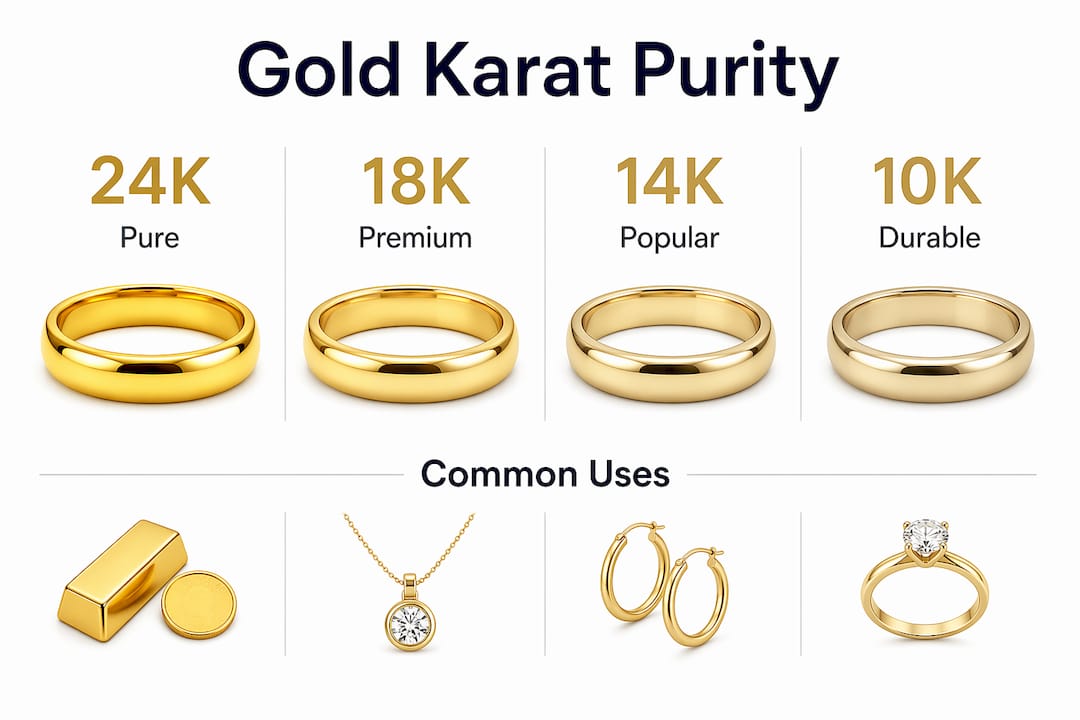
10K gold contains 41.7% pure gold and is the minimum legal standard for gold jewelry in the United States. It is the hardest of the common karat levels because it contains the highest proportion of alloy metals. The trade-off is a slightly paler color and lower intrinsic gold value. 10K suits buyers who prioritize budget and durability over maximum gold content.
Pro Tip: When comparing pieces across karat levels, check the weight as well as the karat. A heavier 10K chain may contain more total gold by mass than a lighter 18K pendant, even though the 18K has a higher purity percentage.
Common misconceptions about gold karat
The most widespread misconception is that higher karat always means better jewelry. Higher karat means higher purity, but not necessarily better performance or value for a wearable piece. Higher karat gold above 22K is softer and requires professional maintenance, making it less practical for complex jewelry worn daily. A well-crafted 14K Cuban link chain will outlast a poorly made 22K piece in every practical sense.
A second common confusion involves the words karat and carat. These are two entirely different measurements. Karat (abbreviated K or KT) measures gold purity. Carat (abbreviated ct) measures the weight of gemstones, where one carat equals 0.2 grams. Mixing them up leads to real misunderstandings when reading jewelry descriptions or appraisals.
Many buyers also assume that karat alone determines a piece’s price. Jewelry value depends on gold content plus design, craftsmanship, and labor, not purity alone. A 10K piece with intricate hand-engraving can cost more than a plain 24K band. The karat value measures the gold-alloy ratio, not the piece’s size or craftsmanship, both of which are significant factors in the overall price.
Buying gold without checking for a hallmark is the single easiest way to overpay for an underperforming piece. Authorized hallmarks like 10K, 14K, 18K, or fineness numbers 417, 585, and 750 confirm gold purity and help prevent fraud. If a piece carries no stamp, treat it as unverified until a professional jeweler tests it.
Finally, some buyers believe that karat stamps are always accurate. Reputable retailers stamp their pieces correctly, but counterfeit or misrepresented gold does exist. For high-value purchases, ask for a certificate of authenticity or request an independent acid test or X-ray fluorescence (XRF) test from a certified jeweler.
How to choose the right gold karat for your needs
Choosing the right karat comes down to four factors: how you plan to wear the piece, your budget, your skin sensitivity, and whether you are buying for investment or aesthetics. Work through each one before you commit to a purchase.
-
Define your use case. Professional jewelers recommend 24K for investment and 14K to 18K for jewelry you plan to wear regularly. If you want a chain you can put on every morning and forget about, 14K is the right call. If you are buying a piece to store as a long-term asset, 22K or 24K gives you the highest gold content per gram.
-
Set a realistic budget. Higher karat gold costs more per gram because it contains more pure gold. A 14K chain gives you genuine gold value at a price point that does not require compromising on length, weight, or style. You get more jewelry for your money without sacrificing authenticity.
-
Check for skin sensitivities. Some people react to the alloy metals in lower karat gold, particularly nickel, which is sometimes used in white gold alloys. If you have sensitive skin, 18K gold contains fewer alloy metals and is less likely to cause irritation. Ask your retailer specifically which alloy metals are used in the piece you are considering.
-
Verify the hallmark before you buy. Look for the karat stamp (10K, 14K, 18K) or the corresponding fineness mark (417, 585, 750) on every piece. Buying from a retailer that sources from reputable U.S. suppliers and provides documentation gives you a clear chain of authenticity. You can also learn more about gold carat and jewelry value to understand how these factors interact before making a final decision.
Pro Tip: High-karat pieces above 18K need more careful storage. Keep them in a soft-lined box away from other jewelry to prevent scratching, since the higher gold content makes the metal more susceptible to surface damage.
Key takeaways
Gold karat is a 24-part purity scale where 14K and 18K deliver the best balance of durability, value, and wearability for most jewelry buyers.
| Point | Details |
|---|---|
| Karat measures purity | Each karat equals one part gold out of 24; 14K = 58.3% pure gold. |
| Higher karat is not always better | 24K is too soft for daily wear; 14K and 18K suit most jewelry uses. |
| Karat and carat are different | Karat measures gold purity; carat measures gemstone weight in 0.2-gram units. |
| Hallmarks confirm authenticity | Look for stamps like 14K, 18K, 585, or 750 to verify gold purity. |
| Value includes craftsmanship | A well-made 10K piece can cost more than a plain 24K item due to labor and design. |
Why I think most buyers overthink the karat decision
After years of working closely with gold jewelry, I have noticed that most buyers spend too much time chasing the highest karat number and not enough time thinking about how the piece will actually perform in their life. The obsession with 24K purity makes sense on paper. Pure gold sounds better. But in practice, the pieces that people wear every day and pass down through generations are almost always 14K or 18K.
The mistake I see most often is buying a high-karat piece for daily wear because it feels like a smarter investment, then watching it scratch, bend, or lose its finish within months. That is not a failure of gold. That is a mismatch between purity and purpose. A well-chosen 18K piece worn thoughtfully will hold its beauty and structure for decades.
I also think buyers underestimate how much hallmarks matter. Not because fraud is everywhere, but because a stamped, documented piece from a reputable source is simply easier to resell, insure, and appraise. That documentation is part of the value you are paying for. Skipping it to save a few dollars on an unstamped piece is rarely worth it.
My honest recommendation: match the karat to the job. Buy 14K for chains and bracelets you wear daily. Choose 18K for rings and pieces you want to feel luxurious. Reserve 22K and 24K for investment holdings or ceremonial pieces you store carefully. That framework covers 95% of buying decisions without any guesswork.
— Blayne
Shop verified gold jewelry at Bakergoldchains
Bakergoldchains carries a curated selection of 10K, 14K, and 18K solid gold jewelry, each piece stamped and sourced from reputable U.S. suppliers. Every item comes with a lifetime craftsmanship guarantee, so you are not just buying a piece of jewelry. You are buying documented, verified gold you can wear, gift, or hold as a long-term asset. If you are looking for a practical starting point, the 14K graduated bead necklace is a strong example of what 14K gold looks and feels like at its best. Browse the full collection at Bakergoldchains and shop with the confidence that every karat stamp is backed by real quality.
FAQ
What does gold karat mean exactly?
Gold karat measures the proportion of pure gold in a metal alloy on a scale of 1 to 24. A piece marked 18K contains 18 parts pure gold and 6 parts other metals, equal to 75% gold content.
What is the difference between karats and carats?
Karat (K) measures gold purity on a 24-point scale, while carat (ct) measures the weight of gemstones, where one carat equals 0.2 grams. The two terms are completely unrelated despite sounding similar.
Is 24K gold good for jewelry?
24K gold is 99.9% pure but too soft for most jewelry worn daily. Its softness makes it prone to scratching and bending, which is why jewelers recommend 14K or 18K for rings, chains, and bracelets.
How do I verify the karat of a gold piece?
Look for a hallmark stamp such as 10K, 14K, or 18K, or the corresponding fineness numbers 417, 585, or 750. For high-value purchases, a certified jeweler can confirm purity through acid testing or XRF analysis.
Which gold karat is best for everyday wear?
14K gold is the most practical choice for daily wear because it balances durability, gold content, and cost. 18K is a strong alternative if you prefer higher purity and are willing to handle the piece with slightly more care.

