

Gold chain buying guide: Choose authentic, durable jewelry
Buying a gold chain should be straightforward, but the market makes it anything but. Counterfeits, misleading labels, and confusing karat numbers turn what should be a satisfying purchase into a stressful guessing game. This gold chain buying guide cuts through the noise. You will learn exactly how to evaluate metal types, spot fake chains before you buy, choose styles that actually hold up, and care for your jewelry so it stays beautiful for years. Whether you are shopping for yourself or searching for the right gifting gold jewelry guide for someone special, every answer you need is here.
Table of Contents
- Understanding gold chain metal types and purity
- How to spot authentic gold chains: Hallmarks and simple tests
- Choosing the right gold chain style for durability and fashion
- Caring for your gold chain: Maintenance and common mistakes to avoid
- Where and how to buy gold chains with confidence
- The overlooked truths in buying gold chains: What jewelry sellers won’t always tell you
- Shop premium gold chains you can trust
- Frequently asked questions
Key Takeaways
| Point | Details |
|---|---|
| Gold purity matters | Choosing between 18K, 14K, and 10K gold affects chain durability, price, and appearance. |
| Check authenticity | Look for hallmark stamps and perform simple tests to ensure your chain is real gold. |
| Style impacts durability | Opt for chain designs like Singapore or Figaro for everyday strength and wear resistance. |
| Proper care preserves shine | Avoid chemicals, clean gently, and store your gold chain carefully for lasting beauty. |
| Buy from trusted sellers | Purchase gold chains from reputable jewelers who provide certification and clear return policies. |
Understanding gold chain metal types and purity
Before you shop, you need to understand what you are actually buying. Gold jewelry is not pure gold. It is an alloy, meaning gold mixed with other metals to make it harder and more wearable. The karat (abbreviated as K) tells you what percentage of the metal is gold.
Here is how the three most common karat levels break down:
| Karat | Gold content | Best for |
|---|---|---|
| 18K | 75% gold | Richer color, special occasions |
| 14K | 58.5% gold | Everyday wear, best balance |
| 10K | 41.7% gold | Budget-friendly, highly durable |
As noted in this metal options for jewelry chains overview, 18K gold offers rich color with great durability, 14K strikes the best balance for everyday wear, and 10K is the most economical yet still genuinely durable option. Understanding these levels is the first item on any solid gold chain buying checklist.
Beyond karat, you need to know the difference between these four types of gold chain construction:
- Solid gold: The entire chain is the same gold alloy throughout. This is the standard for investment-quality jewelry.
- Gold-filled: A thick layer of gold is mechanically bonded to a base metal core. More durable than plated, but not solid gold.
- Vermeil (pronounced “ver-may”): Sterling silver base coated with at least 2.5 microns of gold. Looks like gold but will wear away over time.
- Gold-plated: A very thin gold layer over any base metal. The most affordable, but least durable, option.
You can learn more about how these gold purity and karat levels affect long-term value before you decide which type fits your budget and lifestyle. Understanding the gold chain vs gold plated differences is especially important if you plan to wear the chain daily.
Color also plays a role. Yellow gold is the classic choice. White gold is yellow gold alloyed with metals like nickel or palladium, then typically rhodium-plated for its bright finish. Rose gold gets its warm pink tone from a higher copper content. Each alloy behaves slightly differently in terms of scratch resistance and maintenance needs.
Pro Tip: If you have sensitive skin, stick with 14K or 18K solid gold. Lower karat gold and plated chains contain more base metals that can cause reactions.
Now that you understand the metal options and purity levels, let’s move on to how to assess authenticity to avoid counterfeits.
How to spot authentic gold chains: Hallmarks and simple tests
A legitimate gold chain will always have a karat stamp, also called a hallmark. This is a small engraving on the clasp or chain itself. Common hallmarks include:
- 750 for 18K gold
- 585 for 14K gold
- 417 for 10K gold
As confirmed in this gold chain authenticity guide, genuine gold bears official hallmarks, and a few simple physical tests can confirm what you are seeing. Here is your quick at-home toolkit:
- Magnet test: Real gold is not magnetic. Hold a strong magnet near the chain. If it pulls toward the magnet, there is a significant base metal presence.
- Ceramic streak test: Drag the chain lightly across unglazed ceramic, like the underside of a tile. Real gold leaves a gold-colored streak. A black streak signals a fake.
- Water density test: Solid gold is very dense and sinks quickly in water. A chain that floats or drifts is a red flag.
- Skin reaction test: Wear the chain for a few hours. Green or black discoloration on your skin typically means copper or nickel is the dominant metal underneath a thin coating.
Red flags to watch for before you even buy:
- No hallmark stamp anywhere on the chain or clasp
- Price that seems far below market value for the karat claimed
- Seller who cannot provide a written invoice or certificate of authenticity
For high-value purchases, always request a professional appraisal. A certified gemologist can test metal content with tools like an XRF analyzer, which gives you a precise read of exactly what metals are present. These gold chain authenticity tips can also help you avoid the most common mistakes buyers make.
Pro Tip: Never rely on a single test. Combine the hallmark check with at least one physical test. A plated chain can have a real hallmark stamped on it if a small gold element, like the clasp, was sourced separately.
With authenticity checks mastered, we can now explore different gold chain styles and how they influence durability and look.
Choosing the right gold chain style for durability and fashion
Not all chain styles are created equal. Some are built to last through daily wear. Others are delicate by design and meant for occasional use. Your choice should match your lifestyle, not just your taste.
Here is a quick breakdown of popular styles and their key traits:
| Style | Durability | Best occasion |
|---|---|---|
| Rope | Very high | Everyday, layering |
| Figaro | High | Everyday, casual |
| Cuban link | Very high | Statement, everyday |
| Box chain | Medium-high | Pendant wear, daily |
| Singapore | High | Everyday, gifts |
| Cable | Medium | Occasional, delicate looks |
As covered in this gold chain necklace types resource, Singapore and Figaro chains offer better durability and resist daily wear effectively. Their interlocking link designs distribute stress more evenly than simpler styles.
This gold chain thickness guide is another dimension worth understanding. Thickness is measured in millimeters. A chain between 1.5mm and 2.5mm works well for most people as a standalone piece. Going under 1mm gives you a delicate, barely-there look great for layering. Anything over 3mm makes a bolder statement and carries more weight, which some people find uncomfortable for all-day wear.
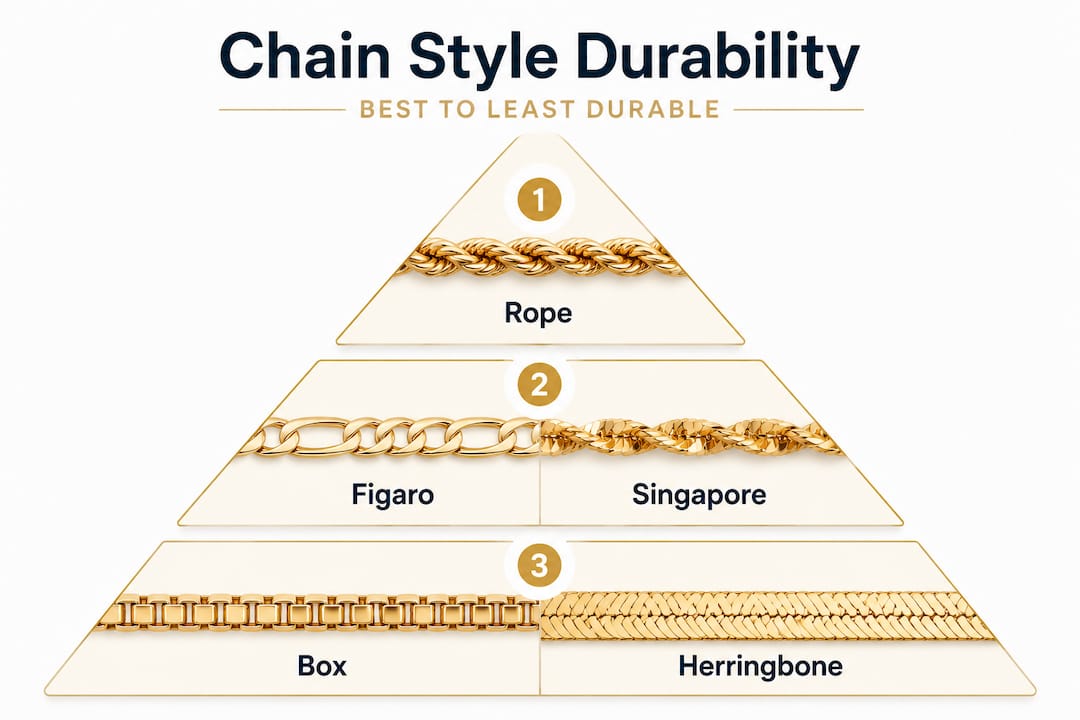
Choosing style also matters for how the chain impacts durability, quality, and design. A tight-link style like a Cuban or rope chain resists kinking far better than an open-link cable chain.
Here is a simple numbered framework for narrowing down your choice:
- Decide on your primary use: daily wear, special occasions, or layering.
- Set your thickness preference based on how visible you want the chain to be.
- Match the clasp style to ease of use, especially if you plan to put it on alone.
- Consider whether you will attach a pendant, which may require a sturdier style like a box or rope chain.
- Factor in the timeless value and craft of the style you choose, since some styles hold their visual appeal across decades.
Pro Tip: Buy a sturdier style for everyday wear and reserve a more delicate chain for special events. This simple decision alone will dramatically extend the life of both pieces.
Now that you know which style suits your needs, let’s cover how to properly care for your gold chain to maintain its shine and durability.
Caring for your gold chain: Maintenance and common mistakes to avoid
Owning a quality gold chain is only half the equation. How you care for it determines how long it stays looking its best. This gold chain care guide covers the essentials every owner should know.
Daily habits to build:
- Remove your chain before showering, swimming, or applying lotions, perfumes, and hair products. Chemicals like chlorine accelerate tarnishing and weaken certain alloys.
- Store chains separately in a soft-lined compartment or individual pouch to prevent scratching and tangling.
- Avoid wearing chains during contact sports, weightlifting, or heavy manual work. Sudden force is one of the most common causes of link breakage.
For cleaning, use lukewarm water and a small drop of mild dish soap. Soak the chain for a few minutes, then gently scrub with a soft-bristle toothbrush. Rinse thoroughly and pat dry with a lint-free cloth. Never use abrasive materials or ultrasonic cleaners on lower karat gold or gold-filled chains.
Mistakes that quietly damage your chain:
- Tugging at knots instead of gently working them out with a pin
- Leaving chains coiled in a jewelry box where they catch on other pieces
- Skipping periodic professional cleaning for solid gold chains worn daily
Detailed gold chain care advice is worth reviewing once you have made your purchase, especially if you are new to wearing fine jewelry regularly.
Pro Tip: Keep a soft polishing cloth in your jewelry drawer. A quick buff every week or two removes skin oils and light buildup before they dull the surface. It takes thirty seconds and makes a noticeable difference.
Finally, let’s wrap up with how and where to make confident gold chain purchases to ensure value and authenticity.
Where and how to buy gold chains with confidence
Knowing what to buy means nothing if you cannot find a trustworthy seller. These steps protect you whether you are buying in person or online.
- Verify the return and authentication policy before purchasing. A reputable seller will clearly state their karat guarantee and accept returns if the chain does not match its description.
- Request a written invoice that includes the karat purity, metal weight in grams, and chain dimensions. This document matters for insurance and future resale.
- Compare prices across sellers using current gold spot prices as your baseline. If a chain is priced dramatically below what the gold content alone would cost, treat that as a warning sign, not a deal.
- Read customer reviews with an eye for mentions of tarnishing, broken links, or misrepresented metal quality. These details tell you more than any product description.
- Ask about professional appraisal options for purchases above a certain value. Some reputable sellers include this as part of the buying process.
When buying as a gift, apply the same standards but add a few extra considerations from any solid gifting gold jewelry guide. Think about the recipient’s lifestyle first. A Cuban link chain is a bold choice for someone who loves statement jewelry, while a delicate Singapore chain suits someone who prefers understated elegance. Always confirm whether a gift certificate or exchange option is available, since sizing and style are personal.
This overview of trusted gold chain retailers can help you identify what separates quality sources from unreliable ones. And if you are still deciding between solid and plated options for a gift or everyday piece, this breakdown of buying solid gold vs plated will give you a clear answer.
Having learned how to buy with confidence, let’s share some unique insights and lessons often overlooked in gold chain buying.
The overlooked truths in buying gold chains: What jewelry sellers won’t always tell you
Most gold chain buying tips focus on karat and price. Those things matter, but they are not the whole story.
Craftsmanship is the variable most buyers ignore. Two chains can share the same karat and weight but feel completely different in hand. The quality of soldering at each link, the smoothness of the clasp mechanism, and the consistency of link sizing all reflect how a chain will hold up under real wear. A well-crafted 14K chain will outperform a poorly made 18K chain every time.
Here is something sellers rarely volunteer: even a properly hallmarked chain can have sections that were repaired with lower-quality materials. A clasp replaced by an inexperienced jeweler, for example, might be gold-plated brass while the rest of the chain is solid 14K. This is why combining hallmark checks with a physical test at the clasp specifically is worth doing before any purchase.
The emotional value of gold chains also deserves honest attention. Gold jewelry passed down through generations carries meaning that metal purity alone cannot create. That value comes from trusted provenance, careful maintenance, and knowing the piece was purchased from a source you can stand behind. A chain bought from a seller who cannot tell you where it was made or verify its authenticity is not a foundation for heirloom jewelry, regardless of the karat stamp.
Finally, durability is often quietly sacrificed in cheaper chains for the sake of visual appeal. Extremely thin links, hollow interiors, and overly flexible designs look striking on a display but are engineering trade-offs. If you are buying for daily wear, prioritize chain structure and link integrity over how it photographs. Your timeless gold chain investment should still look excellent in ten years without a single repair.
Shop premium gold chains you can trust
Now that you know how to choose and care for your gold chains, here are trusted options to start your collection or find the perfect gift.
Baker Gold Chains offers a curated selection of solid 10K and 14K gold chains built for real life. The 10K yellow gold Singapore chain is an excellent everyday option with proven durability and clean style. For something with more presence, the 14K yellow gold graduated bead necklace delivers classic elegance that works as both a personal piece and a meaningful gift. If you prefer white gold, the 14K white gold pendant chain combines a textured link design with solid construction perfect for pairing with any pendant. Every piece is hallmarked, sourced from reputable U.S. suppliers, and backed by a lifetime craftsmanship guarantee.
Frequently asked questions
What karat gold is best for everyday gold chain wear?
14K gold is generally best for everyday wear because it balances durability, affordability, and a beautiful appearance. As noted in this guide on metal options for chains, 14K gold resists scratching well and holds up to daily use better than softer, higher-karat alternatives.
How can I tell if a gold chain is real at home?
Check for hallmarks indicating karat purity, perform a magnet test (real gold is not magnetic), and observe if the chain leaves a gold-colored streak on unglazed ceramic. This complete authentication guide confirms that authentic gold is not magnetic and leaves a distinctive gold streak during ceramic testing.
What gold chain style is most durable?
Chains like Singapore, Figaro, and rope have stronger link structures that resist kinking and breakage, making them ideal for daily wear. These durable chain styles are recommended specifically because their link designs withstand daily wear better than open-link alternatives.
Is gold-plated jewelry a good alternative to solid gold chains?
Gold-plated chains offer the look of gold at a lower cost, but the gold layer is very thin and will wear away with regular use. According to this overview of metal construction types, plated chains are less durable than solid gold or gold-filled options and are better suited for occasional wear.

