

Gold Jewelry Value: What Every Buyer Needs to Know
You might assume that a gold chain is worth exactly what the gold spot price says it is. That assumption is one of the most common and costly mistakes jewelry buyers make. The real value of a gold piece is shaped by a combination of factors: karat purity, weight, craftsmanship, taxes, branding, and even design. Understanding all of these elements gives you the knowledge to shop confidently, avoid overpaying, and recognize a truly worthwhile investment when you see one.
Table of Contents
- What does ‘value’ mean in gold jewelry?
- How karat, weight, and purity determine gold content
- Why retailer charges, taxes, and brand affect the final price
- How craftsmanship, design, and authenticity impact value
- A jeweler’s perspective: What most people misunderstand about gold jewelry value
- Ready to invest in lasting value? Shop real gold jewelry favorites
- Frequently asked questions
Key Takeaways
| Point | Details |
|---|---|
| Gold value is multifaceted | Gold jewelry’s worth includes metal price, craftsmanship, design, and market factors. |
| Karat and weight matter | Both the gold’s purity and weight directly influence the piece’s intrinsic value. |
| Retail price factors | Taxes, retailer charges, and branding can significantly increase the price you pay. |
| Craftsmanship pays off | Quality design and proper certificates boost both enjoyment and resale value. |
What does ‘value’ mean in gold jewelry?
Let’s start with the foundation. When someone says a piece of jewelry is “valuable,” that word can mean several very different things depending on the context. There are four distinct types of value you need to know as a buyer.
Melt value (also called spot value) refers to what the gold in a piece is worth if it were melted down and sold as raw metal at current market rates. This is the baseline number, calculated by taking the weight of the piece, multiplying it by the percentage of gold it contains based on karat, and then multiplying that by the current gold spot price per gram or per ounce.
Retail value is what you actually pay in a jewelry store or on a reputable website. This figure is always higher than melt value because it also reflects the cost of design, production labor, retailer overhead, profit margins, and applicable taxes. For example, retail jewelry rates in India are often reported as per-gram prices by karat (such as 18K, 22K, or 24K) and differ from melt value due to taxes and retailer charges.
Appraisal value is an independent professional assessment, often used for insurance or resale purposes. An appraiser considers not just the metal content but also the design rarity, brand, condition, and current replacement cost. Appraisal value can be higher or lower than retail depending on market conditions.
Sentimental value is personal and not tied to any market price. A piece passed down through generations or given as a meaningful gift carries significance that no calculation can capture.
“The price you pay for a piece of gold jewelry is almost never just about the gold inside it. Smart buyers understand that retail pricing reflects a layered cost structure, and knowing those layers helps you evaluate whether you’re getting a fair deal.”
Here’s how these value types compare:
| Value type | What it measures | Calculation basis |
|---|---|---|
| Melt/spot value | Raw gold content only | Weight x gold purity x spot price |
| Retail value | Full purchase price | Melt value + labor + taxes + markup |
| Appraisal value | Insurance or resale worth | Design, condition, rarity, replacement cost |
| Sentimental value | Personal meaning | Not market-driven |
What drives the gap between these values?
- Making charges (the labor and artisan cost of producing the piece)
- Retailer profit margins and overhead
- Regional taxes like sales tax or goods and services tax
- Brand recognition and reputation
- Design complexity and exclusivity
Knowing how to identify premium gold jewelry starts with understanding these distinctions so you can evaluate what you are actually paying for.
How karat, weight, and purity determine gold content
Understanding the different types of value means unraveling what actually makes your gold jewelry worth more or less. Karat (abbreviated as K) is the standard unit for measuring how much pure gold is present in a piece of jewelry. The scale runs from 10K at the low end up to 24K, which is pure gold.
Here is how the math works: 24K gold is 100% pure gold. 18K gold contains 18 parts gold out of 24, which equals 75% pure gold. 14K gold is 58.3% gold. 10K gold is 41.7% gold, the minimum allowed to be sold as “gold” in the United States.
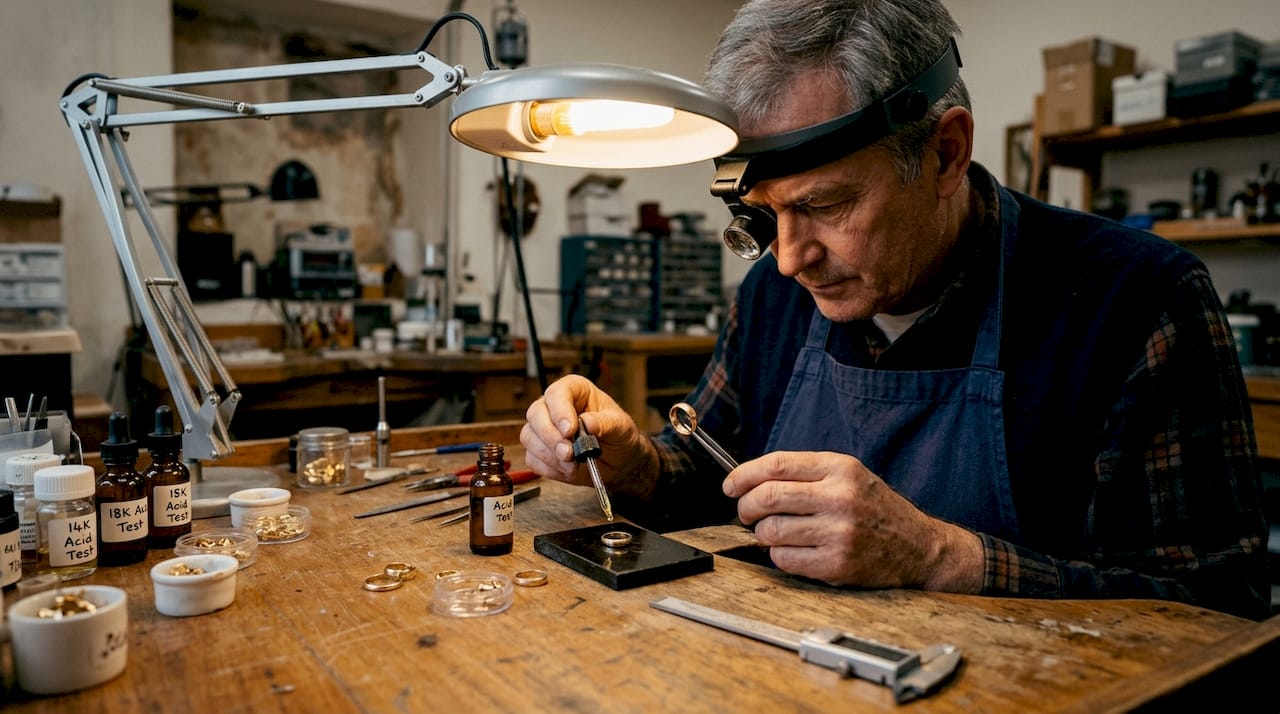
The more gold a piece contains, the higher its intrinsic value at any given market price. This means two chains of identical weight will have very different melt values if one is 10K and the other is 18K. For example, Tanishq 22K gold jewellery is priced at approximately Rs 13,915 per gram while Tanishq 24K gold jewellery runs around Rs 15,180 per gram, with IBJA indicative retail selling prices also reported by purity level.
Weight matters just as much as karat. A heavier piece at the same karat rating holds more gold and therefore more intrinsic value. A thick, solid 18K rope chain weighing 30 grams is worth substantially more in gold content than a thin 18K pendant weighing 3 grams, even though both are the same purity. If you want a deeper understanding of a specific purity level, an 18K gold guide breaks down everything about that popular grade, and if you are considering more everyday-wear options, 10K gold insights explain why lower karat can actually be a smart, durable choice.
Here is a quick karat comparison:
| Karat | Gold percentage | Approximate gold value per gram (USD equivalent) |
|---|---|---|
| 10K | 41.7% | Lower intrinsic value |
| 14K | 58.3% | Moderate intrinsic value |
| 18K | 75.0% | Higher intrinsic value |
| 22K | 91.7% | Very high intrinsic value |
| 24K | 99.9% | Highest intrinsic value |
Follow these steps to verify your jewelry’s karat and weight:
- Look for a small karat stamp on the clasp, inner band, or back of a pendant. Common marks include “10K,” “14K,” “18K,” or “750” (which means 18K in European notation).
- Use a digital jewelry scale (accurate to 0.01 grams) to weigh the piece.
- Calculate gold content by multiplying total weight by the karat percentage. For example, a 10-gram 14K chain contains about 5.83 grams of pure gold.
- Multiply the pure gold weight by the current spot price per gram to get the melt value.
- Compare this to the retail price to understand how much you are paying for craftsmanship and other factors.
Pro Tip: Always verify both the karat stamp and the actual weight of a piece before buying. Many buyers focus only on the karat stamp and forget that weight is equally important for calculating true gold content. Even a well-stamped piece needs to be weighed to confirm its gold value.
Why retailer charges, taxes, and brand affect the final price
Once you have calculated the gold content, it is vital to recognize the extra charges that build the price you actually see in stores. Gold content is the starting point of any jewelry price, not the final number. Multiple layers of cost are added on top before the piece reaches you.
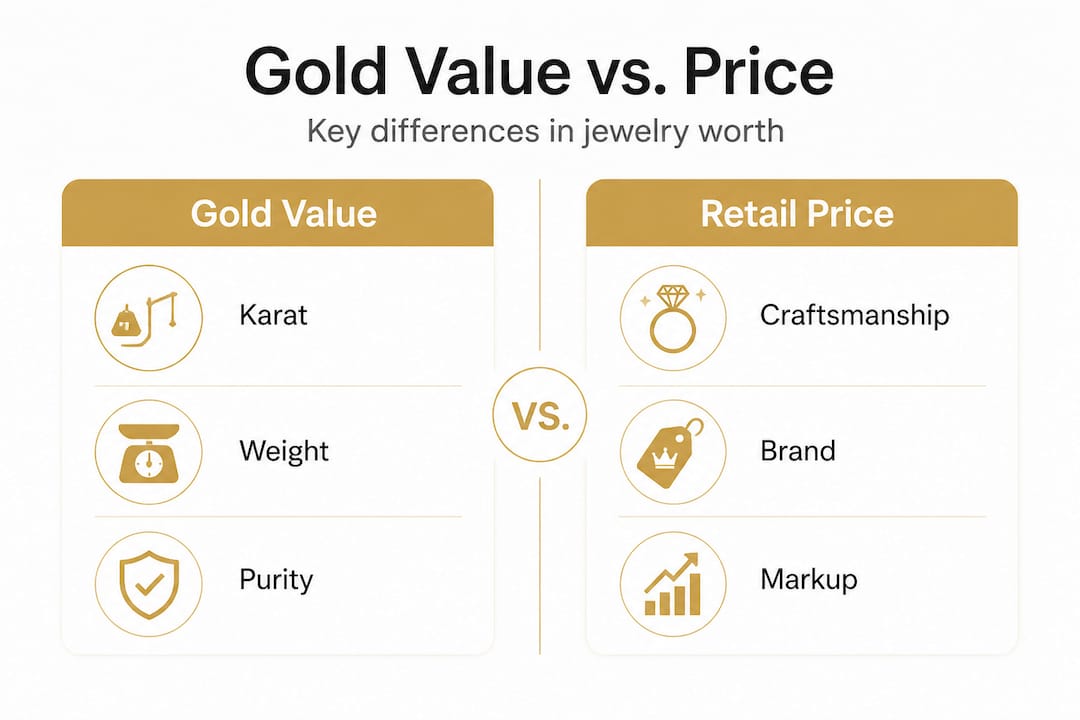
The primary add-ons include making charges, which cover the labor costs of designing and manufacturing the piece, sometimes ranging from 5% to 25% or more of the gold value depending on complexity. Then come taxes, whether that is sales tax in the United States or goods and services tax in other markets. Retail pricing can be region and tax dependent, with per-gram rates quoted by jeweler brands and by IBJA, which can include making charges and GST on top of metal value.
Branding is another significant factor. A piece from a well-known, heritage jewelry house commands a premium purely because of the name attached to it, even when the gold content and design are comparable to an unbranded alternative. This is not necessarily wrong, because reputable brands often provide better quality control, authenticity guarantees, and aftersale service. But it does mean you are paying for more than metal.
Here is a typical breakdown of what goes into a retail price:
- Raw gold content (varies by karat and weight)
- Making or fabrication charges
- Stone or embellishment costs (if applicable)
- Regional sales tax or VAT/GST
- Retailer profit margin
- Brand premium (if buying from a recognized name)
- Shipping and insurance costs
Understanding what solid gold really means in terms of construction and authenticity also helps you separate genuinely valuable pieces from those that look similar but cost less because they contain far less actual gold.
Pro Tip: Before completing any significant jewelry purchase, ask the retailer to provide a written price breakdown. A transparent seller should be able to show you the gold rate used, the making charge percentage, and any applicable taxes. If they cannot or will not, that is a red flag worth paying attention to.
How craftsmanship, design, and authenticity impact value
With the numbers aside, intangible qualities often separate a good investment from a truly standout piece. Two chains can be identical in karat and weight but differ dramatically in how they look, how they wear, and what they are worth on the resale market.
Superior craftsmanship shows in specific, measurable ways. Well-made links lie flat and move smoothly without snagging. The color is uniform throughout, with no patches or discoloration suggesting a lower-quality alloy. Clasps are solid and click into place with a reassuring snap. The finish, whether polished, brushed, or textured, is consistent across the entire surface. These details are not just cosmetic. They reflect the skill and care that went into making the piece, which directly affects how long it will last and how well it will retain its appearance over years of wear.
Proper hallmarking and certification also play a major role. A piece with a clear, legible karat stamp and an authentication certificate is easier to insure, easier to resell, and more trusted by independent appraisers. Retail jewelry rates often differ due to taxes and retailer charges but can also be influenced by design and craftsmanship quality, which means a beautifully crafted, certified piece may hold its value better than a comparable uncertified one.
Signs of superior craftsmanship to look for:
- Smooth, evenly formed links with no rough edges or sharp points
- Secure and properly functioning clasp mechanisms
- Uniform gold color with no visible discoloration or patchiness
- Consistent finish across the entire piece
- Clean solder points (where links are joined) with no visible gaps or excess material
- Clear, legible karat stamp in a consistent location
For everyday wear, durability and quality matter as much as aesthetics, and understanding those details helps you make choices you will be happy with for years. It also pays to know the common gold chain mistakes buyers make so you can avoid them from the start.
Pro Tip: Always request an authentication certificate for any piece you plan to give as a gift or purchase as a meaningful investment. A certificate documents the karat, weight, and origin, adding a layer of protection and credibility that benefits you well beyond the moment of purchase.
A jeweler’s perspective: What most people misunderstand about gold jewelry value
After all the factors and figures, let’s step back and examine what really determines the lasting value of gold jewelry from a jeweler’s viewpoint.
Here is the honest truth: buyers who shop purely on the basis of price per gram tend to end up disappointed. They may find a piece with competitive gold content but poor construction, weak clasps, or a finish that dulls within months. They save money upfront and spend it replacing or repairing the piece later.
The real measure of value in gold jewelry is the combination of three things: authenticity, artistry, and wearability. A piece that is genuinely what it claims to be, crafted with real skill, and built to last decades is worth more than the sum of its gold content. This is not a sentimental idea. It is a practical financial reality. Well-made, authenticated jewelry retains resale value, photographs better if you ever need to list it for insurance, and simply brings more satisfaction over time.
One thing we see consistently is that buyers who pay close attention to finishing quality, not just gold percentage, make better long-term decisions. The smoothness of the links, the weight and security of the clasp, the way a chain drapes and moves, these are signs of real investment in production. They are also indicators that the piece will still look great in 10 or 20 years.
Understanding the difference between solid gold and gold plated is one of the most important steps in this process. Many buyers do not realize how dramatically different these two categories are in terms of long-term value and daily performance.
Our advice is straightforward: do not buy blind. Ask questions. Request documentation. Examine the piece closely or ask for close-up photos if shopping online. A retailer with nothing to hide will welcome your scrutiny and have clear answers ready. That transparency is itself a sign of value.
Ready to invest in lasting value? Shop real gold jewelry favorites
Feeling confident about how gold jewelry is valued? Here’s how to put that knowledge to work with pieces crafted for lifelong enjoyment.
At Baker Gold Chains, every piece we carry is solid gold, sourced from reputable U.S. suppliers, and backed by a lifetime craftsmanship guarantee. That means you can apply everything you have learned in this guide directly to your shopping experience. Take a look at our 10K yellow gold Singapore chain for a beautifully finished, everyday-ready option at a smart price point, or explore the refined elegance of our 14K yellow gold puffed graduated open oval earrings. When you are ready to browse the full collection, shop our gold jewelry with the confidence of knowing exactly what you are looking for and why it matters.
Frequently asked questions
What is the difference between gold jewelry’s melt value and retail price?
Melt value is the raw gold’s market price based solely on weight and purity, while retail price includes design, craftsmanship, taxes, and retailer markup. As noted, retail jewelry rates are often higher due to making charges and taxes.
How do I check a gold jewelry’s purity and authenticity?
Look for a karat stamp on the clasp or back of the piece, and always request an authentication certificate from a reputable jeweler. Jewelry rates are quoted by karat, and retail buyers should confirm authenticity and karat before completing any purchase.
Why does the price per gram differ between jewelers?
Prices can vary because each retailer applies different making charges, tax rates, and brand premiums on top of the base gold value. Retail pricing can be region and tax dependent, with per-gram rates quoted by brands and IBJA reflecting different cost structures.
Is higher karat always better for jewelry value?
Higher karat means more gold content and higher intrinsic value, but it also means softer metal and less durability for daily wear. Karat ratings and retail pricing are linked, but factors like wearability and construction quality are equally important in determining real-world value.
Recommended
- What Is 18K Gold? A Complete Guide for Jewelry Buyers – Baker Gold Chains
- Solid gold jewelry: what it really means and why it matters – Baker Gold Chains
- How to identify and buy premium gold jewelry – Baker Gold Chains
- Gold chain vs gold plated: How to choose quality jewelry – Baker Gold Chains
- Why Invest in Fine Jewelry: Ethical, Valuable & Lasting – Bel Viaggio Designs, LLC

