

How to Transition Chain Styles Seasonally Without Buying New
The fastest way to move your gold chains from one season to the next is to change what surrounds them, not the chains themselves. Swap the fabric underneath, adjust the length you wear on top, and add one new texture piece, and a chain that read as “summer” in July reads as “fall” by October. This is the whole game. You already own most of what you need.
Three moves cover almost every seasonal shift. First, adjust the length: shorter chains in the range typical for warm weather sit close and bare, while longer chains suitable for cooler weather layer over collars and knits once the temperature drops. Second, add one mid-length “anchor” chain in the 18"–20" range, ideally with some texture, since it does more seasonal work than any other single purchase. Third, layer over fabric instead of skin once the weather turns, which instantly changes the mood of even a delicate rope or paperclip chain. Bakergoldchains builds its collection around this idea, offering 14K and 18K gold pieces designed to move between seasons rather than get retired after Labor Day. For the actual stacking math, the 2:1:1 layering reference (short, medium, long, with real space between each) keeps things from bunching under a sweater.
- Change the outfit context first (fabric, neckline, layers) before you buy anything new
- Add one textured mid-length chain (18"–20", 3–5 mm) as your seasonal pivot piece
- Layer over knits and collars in cooler months; wear the same chains bare and close in warm ones
Pro Tip: When the weather turns, buy or grab one textured chain in the 18"–20" range before anything else. It’s the single piece that makes every other chain you own look intentional for fall instead of leftover from summer.
Key Takeaways
Transitioning chain styles seasonally works because changing the outfit context around your existing gold chains, not replacing the chains, is what actually shifts how they read from summer to winter and back.
| Point | Details |
|---|---|
| Change context, not collection | Adjust fabric, layers, and length before assuming you need a new chain. |
| Use measured layering | Follow the 2:1:1 rule with at least 2 inches of length separation between chains. |
| Build a small capsule | Five to seven versatile chains, from 16" delicate to 24" statement, cover every season. |
| Rotate and inspect twice a year | Check clasps, store separately, and use anti-tarnish strips during the off season. |
| Choose solid gold for daily rotation | Bakergoldchains’ 10K to 18K solid gold chains carry a lifetime craftsmanship guarantee built for repeated seasonal wear. |
Table of Contents
- Seasonal Chain Style Trends: A Quick Cheat Sheet
- What Are the Layering Rules That Actually Prevent a Tangled Mess?
- How Do You Match Chains to Necklines, Knits, and Coats?
- Should You Match Metals or Mix Them by Season?
- What Belongs in a Year-Round Chain Capsule?
- How Should You Store and Rotate Chains Between Seasons?
- Why Karat and Construction Matter for Seasonal Wear
- Incorporating Current Seasonal Fashion Trends Into Chain Styling
- Adapting Chain Styles for Casual, Work, and Formal Occasions
- A Stylist’s Take: The One Chain That Fixes Every Fall Wardrobe
- Build Your Capsule With Bakergoldchains
- Sources
Seasonal Chain Style Trends: A Quick Cheat Sheet
Chain styling shifts along four dimensions each season: scale, finish, color, and the context it’s worn in, according to seasonal jewelry trend coverage. Spring favors lighter layers, summer favors bold pieces worn close to bare skin, fall calls for warmth and texture, and winter rewards polish and occasion dressing. Here’s what that means chain by chain.
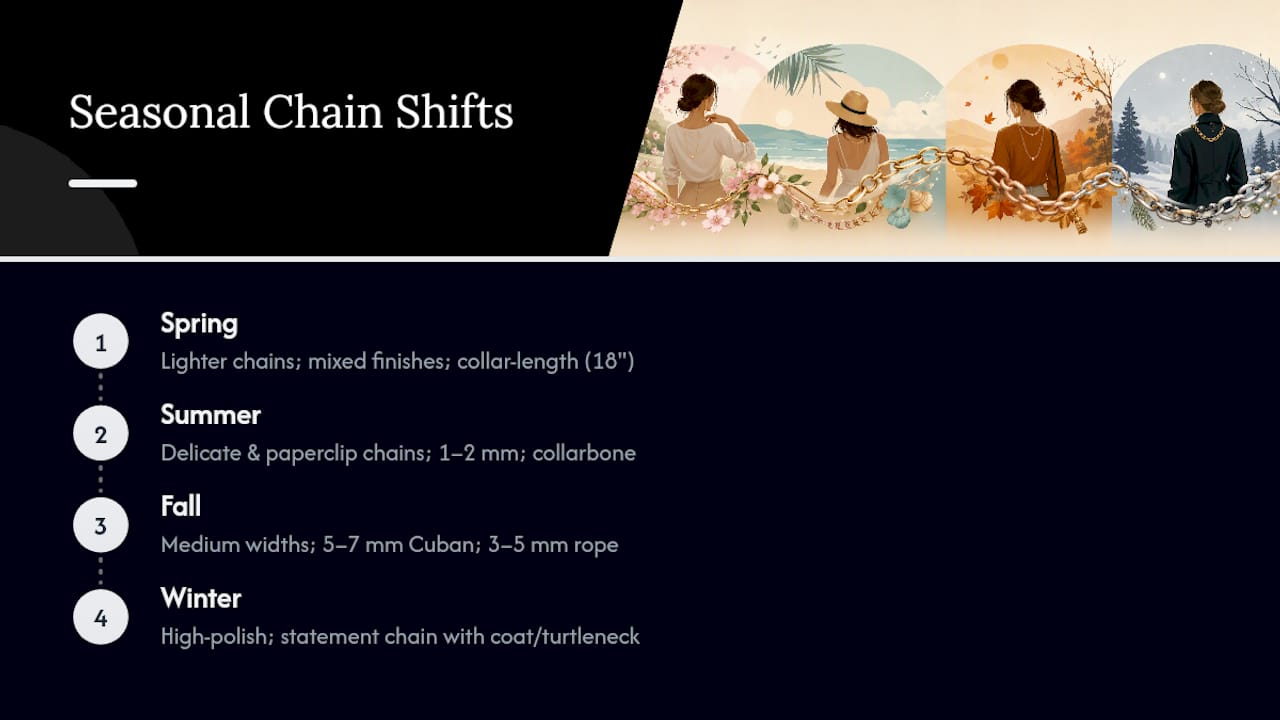
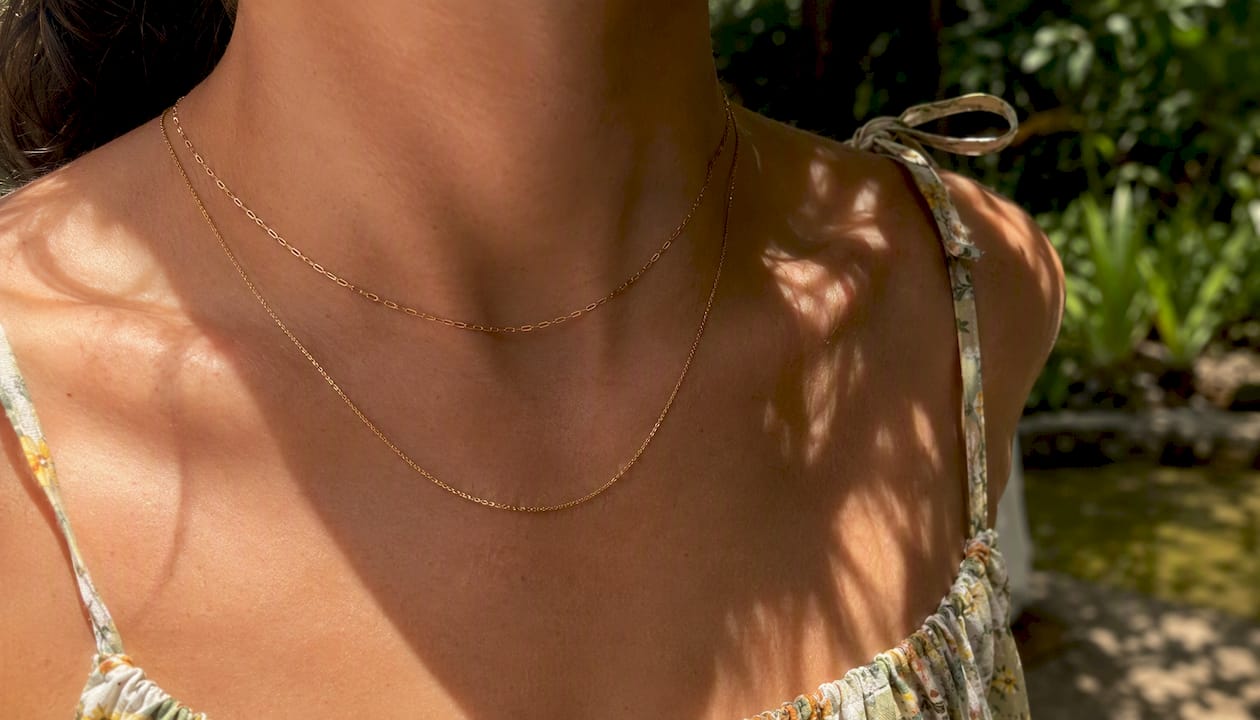
Summer is about visibility. Skin is bare, fabric is minimal, and a chain has nowhere to hide, so this is when delicate pendant chains, paperclip chains, and thin rope chains earn their keep. Stick to lengths that position the chain at the collarbone rather than disappearing into low necklines or swimsuit straps. A delicate 1–2 mm chain reads as intentional against tan skin; anything much heavier can look out of place with light fabrics.
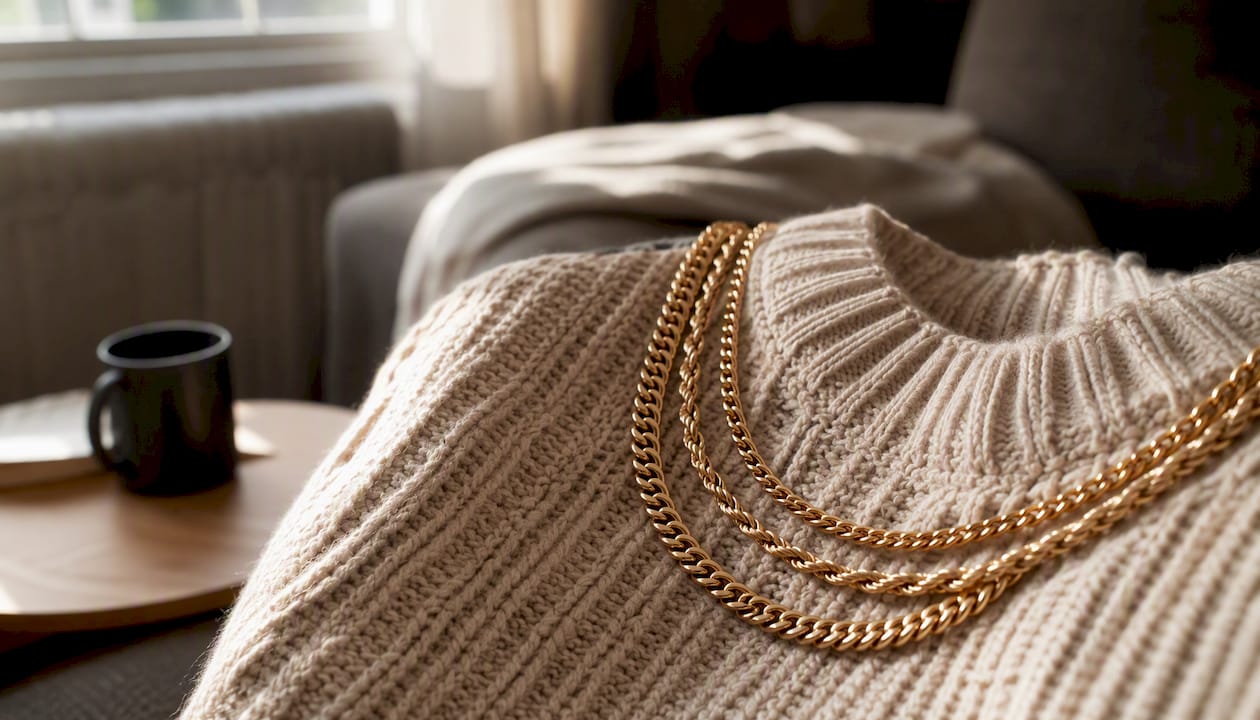
Fall wants substance. Once you’re layering knits, denim jackets, and button-downs, a thin chain gets lost. Move up to medium widths and lengths appropriate for layering, and bring in a Cuban or curb chain as your anchor piece, layered under or over a fine-gauge sweater. Fall layering guides point to 5–7 mm Cuban chains and 3–5 mm rope chains as the pieces with enough presence to compete with heavier fall fabrics instead of getting swallowed by them.
Winter rewards polish. This is coat-and-collar season, so a high-polish finish catches light against wool and cashmere in a way matte pieces can’t. A statement chain works well tucked under a coat and revealed at the collar, or layered over a turtleneck where a single strong piece does more than three thin ones stacked together.
Spring is the reset. Lighter chains and mixed finishes come back out, delicate pendants return to daily rotation, and collar-length pieces (18") feel right again as sleeves get shorter and necklines open up.
Most wardrobes make the fall shift typically in early to mid-September, when summer fabrics give way to knits and jackets. That’s your cue to pull out the textured anchor chain, not a signal to overhaul the whole jewelry box.
Pro Tip: Keep one “transition day” outfit in mind for each season change, a single go-to look you can style in under two minutes. It takes the guesswork out of the first cold morning or the first bare-shoulder day.
What Are the Layering Rules That Actually Prevent a Tangled Mess?
Most tangled necklace stacks come down to one mistake: not enough length separation between chains. A workable standard, sometimes called the 2:1:1 rule, means one shorter “base” chain, one medium chain roughly double that gap, and one longer statement piece, each separated by at least 2 inches so they fall at distinct points on the chest instead of piling on top of each other.
A dependable combination is 16" + 18" + 22", which gives each chain its own resting point: choker height, collarbone, and mid-chest, according to gold chain sizing guidance. Width matters just as much as length. If two chains sit close in size, they blur into one blob of gold. Pair a 1–2 mm delicate chain with something 2–3 mm wider or narrower than its neighbor, and the contrast reads as a deliberate stack rather than an accident.
Layering isn’t about owning more chains. It’s about making sure the ones you already own never sit at the exact same length or width, because that’s the only thing that actually causes a tangle.
Three stack formulas cover most situations:
- Casual: 16" delicate pendant chain + 18" paperclip chain, both light enough to move with a t-shirt or sundress
- Work: 16" chain + 20" Figaro or curb, kept simple enough not to clang against a desk or distract on a call
- Dressy: 16" chain + 18" chain + 22" statement piece, using the full three-length spread for a night-out look
Clasp choice affects how well any of this actually works day to day. Lobster clasps are secure but slower to fasten solo; spring rings work fine on lighter chains but can slip open on heavier pieces if worn daily. If you’re layering three chains regularly, look for slightly larger, easy-grip clasps on at least the shortest chain, since that’s the one you’ll be fastening last and closest to your neck.
Pro Tip: Fasten your shortest chain last, after the longer ones are already in place. It keeps the shorter chain from sliding under the others and lets everything fall in its natural order.
How Do You Match Chains to Necklines, Knits, and Coats?
The neckline you’re wearing decides more about chain length than the season does. A crew neck wants a chain that sits just below or right at the collar, usually 18"–20", since anything shorter competes with the fabric line. A V-neck opens things up: an 18" chain can sit right in the V, drawing the eye down cleanly. A scoop neck handles a slightly longer 20"–22" chain well, while a button-down collar works best with a chain short enough (16"–18") to stay visible above the buttons instead of sliding underneath them.
Layering over knitwear changes the math again. A fine-gauge sweater or turtleneck adds bulk at the neck, so a chain worn over the top usually needs to run 1"–2" longer than you’d wear the same piece against bare skin, or it ends up choking against the collar instead of resting naturally. If you’re wearing a pendant, check where it lands: over a crew neck sweater, a pendant chain shorter than 18" often gets swallowed by the fabric bunching at the neckline.
Coats and scarves are where a lot of good jewelry disappears entirely. A scarf wrapped high on the neck hides anything under 20", so either size up or move the piece outside the scarf, resting against the lapel. A structured coat with a notched collar actually flatters a longer statement chain (22"–24") worn outside the coat, since the collar frames it rather than covering it.
Hair matters more than people expect. With hair up, a necklace becomes the visual focal point, so this is the moment for a statement piece or a bold pendant. With hair down, especially layered around the shoulders, subtler pieces read better since hair naturally competes for attention at the same height as a chain.
Pro Tip: If you’re not sure whether a chain will show under a specific coat or scarf, try it on with the outerwear before deciding the length. What looks perfect against bare skin can vanish completely under a wrapped scarf.
Should You Match Metals or Mix Them by Season?
Warm gold tones read naturally with fall and winter, when they play off deeper clothing colors like burgundy, forest green, and camel. Brighter yellow gold and mixed-metal combinations feel more at home in spring and summer, against lighter, brighter fabrics. This doesn’t mean cool tones are off limits in winter or warm tones look wrong in July. Scale and context do most of the work: a delicate neutral chain against a summer tan reads just as seasonal as a chunky gold piece under a wool coat.
Finish shifts the seasonal read too. High polish catches light in a way that suits winter’s structured, dressier fabrics, while matte or hammered finishes feel more relaxed against the textured knits and canvas jackets of fall. Against thin summer fabrics, high polish tends to look sharper; against chunky cable knits, a hammered or textured finish blends in better.
Mixing metals works when it looks intentional rather than like you grabbed whatever was untangled fastest. The simplest rule: anchor the stack in one metal, then use a second metal only as an accent, maybe one bracelet or a single mixed-metal chain in an otherwise all-gold layer. A three-chain stack that’s two yellow gold pieces and one white gold or rose gold accent reads as a deliberate choice. Three chains in three different metals usually reads as clutter.
Karat matters here too, not just for value but for how a piece holds its finish over years of seasonal wear. According to gold chain construction and sizing standards, 14K gold balances durability and color well for daily rotation, while 18K offers a richer, warmer tone that some people prefer for statement or occasion pieces. Both hold up to repeated on-and-off wear far better than plated alternatives, which matters if you’re layering the same chains three or four times a week across changing seasons.
What Belongs in a Year-Round Chain Capsule?
You don’t need twenty chains to handle four seasons. A tight capsule of five to seven pieces, similar to the compact strategy outlined for seasonal jewelry rotation, covers almost every outfit and every month of the year if you choose the right mix.
- Delicate pendant chain (16"–18", 1–2 mm): your everyday base layer, worn alone in summer or as the shortest piece in any stack the rest of the year. A 14K gold pendant chain in this range works for nearly every neckline.
- Paperclip chain (18", 3–4 mm): flat-link and modern, this style bridges casual and dressed-up looks and layers cleanly against both bare skin and light knits.
- Rope chain (18"–20", 2–3 mm): textured enough to add interest without heavy visual weight, and a natural layering piece for any occasion from beach days to office wear.
- Figaro or curb chain (18"–20", 3–6 mm): the workhorse middle chain in most three-piece stacks, substantial enough to anchor a look without overpowering thinner pieces around it.
- Mid-weight Cuban or curb (20", 5–7 mm): your fall and winter anchor, the piece with enough presence to hold its own under a coat or sweater.
- Longer pendant chain (20"–24"): the statement length for dressed-up winter looks or for wearing a single bold piece outside a coat collar.
For each of these, Bakergoldchains carries options across 10K, 14K, and 18K gold, so the same capsule can scale from an everyday budget piece to an investment-grade one without changing the actual styling plan.
Pro Tip: Buy your mid-weight anchor chain (the Cuban or curb) before anything else on this list. It’s the piece that makes summer chains look intentional in fall instead of thin and out of place.
How Should You Store and Rotate Chains Between Seasons?
A seasonal swap doesn’t need a full jewelry-box overhaul, just a short checklist done twice a year. Before you pack anything away, inspect each clasp and any solder points where a pendant attaches to its chain, since these are the first spots to weaken with regular wear.
- Wipe down every chain with a soft cloth to remove skin oils, sunscreen, or product buildup before storage.
- Separate chains individually into soft pouches or a jewelry roll with divided compartments, since two chains tossed into one bag are how tangles and scratches happen.
- Add anti-tarnish strips to any drawer or box where gold sits for more than a few weeks at a time.
- Keep your current-season pieces (the anchor chain and one or two accents) in easy daily reach, and box the rest.
Bakergoldchains has a detailed storage guide that walks through exactly this kind of compartment and anti-tarnish setup for readers building out a full seasonal rotation.
Watch for wear on any plated pieces in your rotation. If you see the base metal starting to show through at the clasp or along high-friction points, retire that piece from regular layering. Plated chains that keep going into daily stacks past that point wear faster and can irritate skin once the plating thins.
Pro Tip: When layering multiple chains, fasten the shortest one last so it doesn’t slide beneath the longer chains while you’re getting dressed.
Why Karat and Construction Matter for Seasonal Wear
Karat isn’t just a price marker. It changes how a chain performs across a full year of on-and-off wear. Higher karat gold (18K) has a richer color and slightly softer feel, while 14K trades a touch of that warmth for meaningfully better scratch resistance, which matters if a chain is getting layered, unhooked, and re-clasped several times a week. Bakergoldchains offers both 10K and 14K options specifically because daily wearers usually want the added durability those karats provide.
Vermeil and gold-plated pieces have a place, mainly for trend-driven or low-cost seasonal accents you’re not planning to wear year after year. Their limitation shows up with regular seasonal rotation: plating wears through at contact points, and both sunscreen and sweat can accelerate that breakdown, especially on pieces worn through a full summer against bare skin.
Solid gold construction is what actually lets a chain survive years of seasonal layering, not just one good season. That’s the entire reason a lifetime craftsmanship guarantee is meaningful on a chain and not on a plated piece.
Bakergoldchains backs its solid gold pieces with a lifetime craftsmanship guarantee, which matters more than it might seem for anyone building a capsule meant to move through several seasons a year without replacement.
Pro Tip: If you do keep a vermeil or plated piece in seasonal rotation, remove it before swimming or applying sunscreen directly to the skin under it, and store it separately from solid gold chains to avoid scratching the plating.
Incorporating Current Seasonal Fashion Trends Into Chain Styling
Trend coverage for 2026 shows two directions at once: chunky beaded necklaces and bold statement pendants on one side, and steady demand for delicate chains on the other. That split is useful information, not a contradiction to resolve. It means you don’t have to pick a side. A statement piece from summer can become a fall editorial moment simply by adding fabric and a second, textured chain underneath it, turning a beachy standalone pendant into a layered look with actual depth.
The practical move is converting rather than replacing. If you bought into the chunky-necklace trend for summer, keep that piece as your statement layer through fall and winter, just add a mid-weight anchor chain beneath it and swap the outfit context from a sundress to a sweater. If you leaned delicate all summer, spring is when that same chain gets to shine again on its own, without needing a fall detour into heavier layering at all.
Adapting Chain Styles for Casual, Work, and Formal Occasions
Every season carries its own range of casual, work, and formal moments, and the right chain shifts with the occasion as much as the temperature. In summer, casual means a single delicate chain with a swimsuit or sundress; work means the same chain, maybe with a thin paperclip layered in for a slightly more finished desk look; formal means a longer statement chain (20"–22") worn with bare shoulders.
In fall and winter, casual opens the door to a two-chain stack over a sweater. Work calls for restraint, one clean Figaro or curb chain rather than a full three-piece stack that might catch on a blazer or distract on a video call. Formal winter dressing is where the longer statement pendant chain (22"–24") earns its place, worn outside a coat collar or over a fitted turtleneck for an evening event.
Spring loosens things back up across all three categories. Casual returns to delicate chains and paperclip pieces; work stays simple with one or two clean pieces; formal spring events tend to favor lighter statement pieces rather than winter’s heavier metal presence, matching the season’s lighter fabrics overall.
A Stylist’s Take: The One Chain That Fixes Every Fall Wardrobe
The most common styling mistake isn’t wearing the wrong chain. It’s wearing the right chain in the wrong context and assuming it needs to be replaced. A delicate summer pendant chain doesn’t stop working in October, it just needs backup. Adding a single 20" textured chain underneath that same pendant, then putting a sweater over the whole stack, turns a “summer leftover” into a look that reads intentionally fall. The pendant chain didn’t change. The context around it did.
If you’re only going to make one small investment per year to keep your existing chains working across every season, make it a textured mid-length chain in the 18"–20" range. It’s the piece that does the most seasonal translation work for the least money, and it pairs with almost everything else already in your jewelry box.
Pro Tip: Before buying anything new for a season change, try layering what you already own with a different top or a scarf first. Half the time, the “new chain” you think you need is really just a context problem.
Build Your Capsule With Bakergoldchains
If you’re putting together the capsule described above, two pieces do a lot of the heavy lifting. The graduated bead necklace in 14K yellow gold works as your everyday pendant-length base layer, light enough for summer and long enough to anchor a fall stack once you add texture on top. The 14K yellow gold pendant chain with textured links at 3.3 mm is close to the ideal fall anchor piece described earlier, textured enough to read as seasonal, substantial enough to hold its own under a sweater.
Both pieces are solid 14K gold, backed by a lifetime craftsmanship guarantee, so neither one is a one-season purchase you’ll be replacing once the plating wears thin. That’s the whole point of building a capsule instead of a drawer full of trend pieces: fewer chains, worn more ways, for longer. Free insured shipping applies on qualifying orders, and flexible financing is available if you’re building out the full capsule at once rather than piece by piece. Browse the full chain collection to see which lengths and widths fill the gaps in what you already own.
Sources
- Jewelry Trends by Season: Spring to Winter
- Best Chains for Fall | Men’s Layering Jewelry Guide – DayChainz
- Summer necklace trends 2026

