

How to Store Fine Jewelry: Tips That Last
Proper fine jewelry storage is defined as controlling four variables: humidity, temperature, light exposure, and physical separation between pieces. Get those four right, and your gold chains, diamond pendants, and gemstone rings will look as good in ten years as they do today. Get them wrong, and you face tarnish, scratches, faded stones, and stretched settings that cost real money to repair. Knowing how to store fine jewelry correctly is the single most effective thing you can do to protect your investment at home, without any special equipment or professional help.
What environmental conditions are ideal for storing fine jewelry?
The ideal storage environment for fine jewelry is cool, dark, dry, and stable. Fluctuating temperatures cause metals to expand and contract repeatedly, which loosens prong settings over time and stresses delicate gemstones. A bedroom drawer or a closet shelf away from exterior walls works well. The bathroom vanity does not.
Humidity is the biggest threat most people overlook. Bathrooms and kitchens are poor storage locations because humidity spikes, temperature swings, and chemical exposure from sprays and cleaning products all accelerate tarnish and surface damage. A simple fix is placing silica gel packets inside your jewelry box or storage container. These passive desiccants absorb ambient moisture without any maintenance beyond periodic replacement.
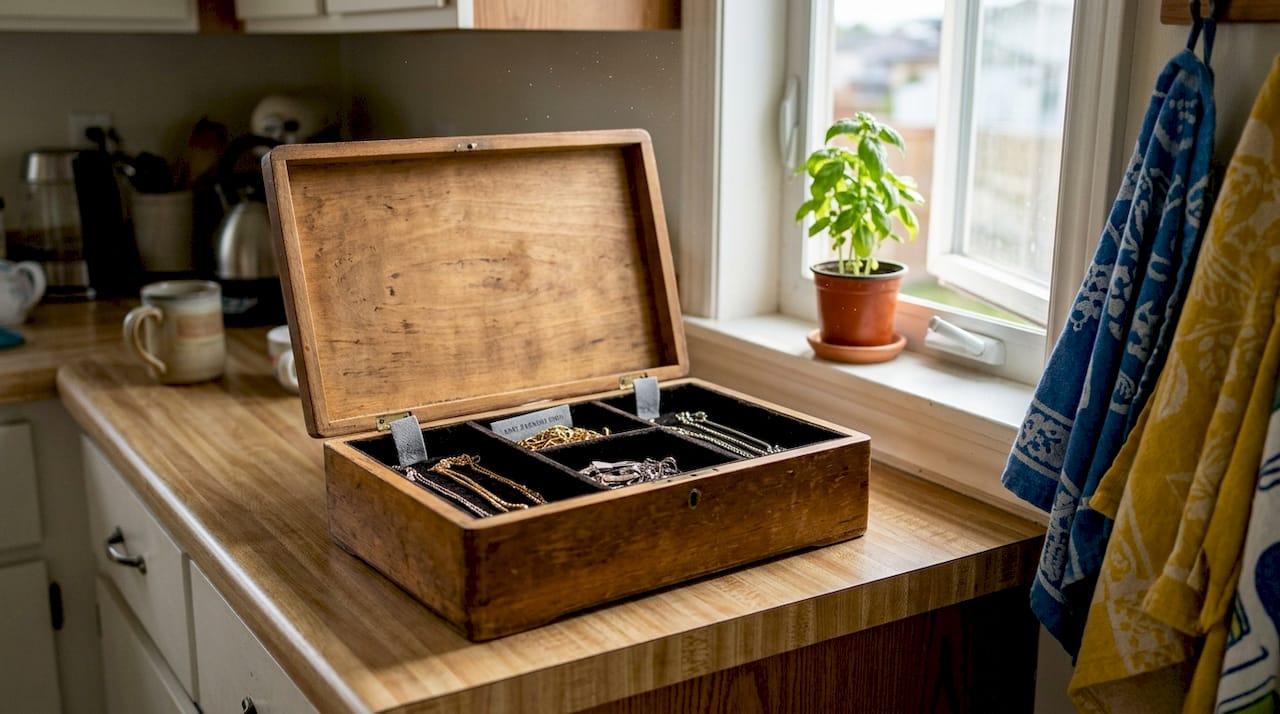
Direct sunlight and UV exposure cause color fading and material degradation in many gemstones, including amethyst, kunzite, topaz, pearls, and coral. Even indirect light through a window adds up over months. Store pieces in a drawer, a lined box with a lid, or a fabric pouch inside a cabinet.
Key environmental conditions to maintain:
- Temperature: Room temperature between 60°F and 75°F, away from heating vents and radiators
- Humidity: Below 55% relative humidity; use silica gel packets to control moisture
- Light: No direct sunlight; UV-protected or opaque storage containers preferred
- Air exposure: Airtight containers with anti-tarnish linings slow oxidation significantly for silver and mixed-metal pieces
- Chemical proximity: Keep jewelry away from perfumes, hairsprays, and cleaning products
Pro Tip: Anti-tarnish strips placed inside a sealed container must be replaced every 3–6 months to stay effective. Mark the replacement date on a small label inside the box so you never forget.
How to organize and separate jewelry types to avoid damage
Physical separation is not optional. It is the most direct way to prevent scratches, tangling, and chemical reactions between pieces. The Mohs hardness scale, which rates minerals from 1 to 10, explains why this matters: a diamond (rated 10) will scratch a pearl (rated 2.5–4.5) on contact. Storing them together guarantees damage.
Here is a practical system for organizing fine jewelry by type:
- Gold pieces: Store 10K, 14K, and 18K gold in individual soft compartments or anti-tarnish pouches. Gold is relatively resistant to tarnish, but it scratches easily against other metals and hard gemstones.
- Silver pieces: Silver requires airtight anti-tarnish bags or boxes lined with chemically treated fabric. Silver oxidizes quickly in open air, especially in humid conditions.
- Gold and silver together: Never store them in direct contact. Silver tarnish transfers to gold and can discolor its surface. Individual sealed pouches prevent this entirely.
- Diamonds and hard gemstones: Store separately from softer stones and metals. Diamonds scratch almost everything they touch.
- Pearls and organic gems: Store pearls flat in breathable fabric pouches within a larger box and maintain moderate humidity around 55–60% to prevent cracking. Opals and coral need similar treatment.
- Beaded necklaces: Lay them flat. Hanging pearls and beaded necklaces causes silk thread stretching and eventual breakage.
The right container makes all of this easier. Jewelry boxes with velvet, felt, or anti-tarnish fabric linings with individual compartments reduce scratches, tangles, and chemical reactions between pieces. Look for boxes with ring rolls, chain hooks for sturdy necklaces, and flat trays for bracelets and earrings.
| Jewelry type | Best storage method |
|---|---|
| Gold chains and pendants | Individual soft compartments or anti-tarnish pouches |
| Silver rings and earrings | Airtight anti-tarnish bags or treated-fabric boxes |
| Pearls and coral | Flat in breathable pouches at 55–60% humidity |
| Diamond pieces | Separate hard-sided compartments away from softer gems |
| Beaded necklaces | Flat storage, never hanging |
Pro Tip: If you travel with fine jewelry, use a small fabric roll organizer with individual pockets. It keeps pieces separated and prevents the chain-knotting that happens when multiple necklaces share a pouch.
What routine cleaning and inspection should you do before storing jewelry?
Cleaning jewelry before storage is not about aesthetics. Skin oils, lotions, and sweat left on metal surfaces accelerate tarnish and can etch softer gemstones over time. A quick wipe with a soft, lint-free cloth before putting a piece away removes the residue that causes the most common storage damage.
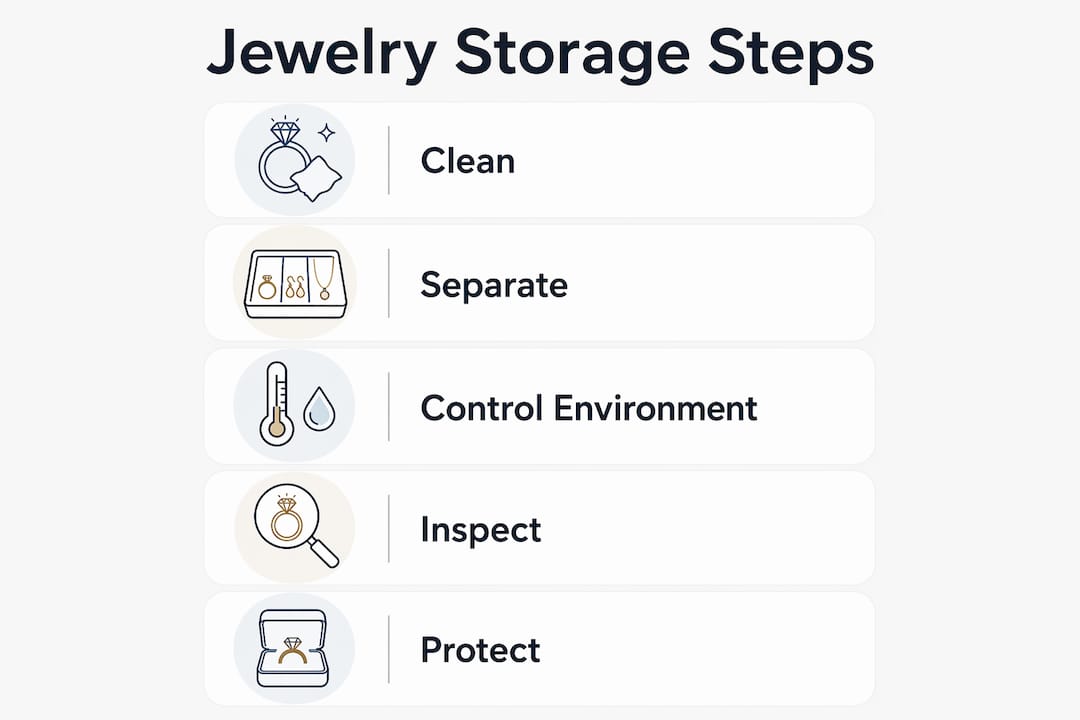
Professional jewelers recommend cleaning jewelry before storing to remove oils and residues, and inspecting settings every 3–6 months to confirm stone security. That inspection interval is practical for most people. Set a reminder twice a year, pull out your pieces, and check each one under good light.
Safe cleaning methods by material:
- Gold (10K, 14K, 18K): Warm water with a drop of mild dish soap, soft toothbrush for chains, pat dry completely before storing. Read the full process in this gold jewelry care guide from Bakergoldchains.
- Silver: Polishing cloth designed for silver, or a silver-specific cleaning solution. Avoid abrasive cloths that leave micro-scratches.
- Diamonds: Warm soapy water and a soft brush. Diamonds attract grease, so they cloud faster than most people expect.
- Pearls: Wipe with a damp cloth only. Never soak pearls or use ultrasonic cleaners. Their nacre surface is porous and absorbs chemicals.
- Opals and emeralds: Dry cloth only. Both are sensitive to temperature changes and moisture.
Annual professional cleaning is worth the cost for valuable pieces. A jeweler can also check prong integrity, re-tip worn prongs, and catch hairline fractures in settings before they become losses. For a detailed walkthrough of preparing gold for storage, Bakergoldchains has a step-by-step guide worth bookmarking.
Pro Tip: Always let jewelry dry completely before sealing it in a pouch or airtight container. Trapping moisture inside accelerates tarnish faster than open-air storage would.
What are common jewelry storage mistakes and how to avoid them?
Most jewelry damage at home comes from a handful of repeated mistakes, not freak accidents. Recognizing them is the fastest way to improve your storage habits.
- Storing in the bathroom: Humidity and chemical exposure from sprays make bathrooms one of the worst locations for fine jewelry. Move your pieces to a bedroom instead.
- Mixing metals and gemstones: Tossing everything into one dish or drawer causes scratches, tangling, and chemical transfer between metals. Separate compartments cost very little and prevent a lot of damage.
- Using cardboard or untreated wood: Cardboard and untreated wood emit acids that accelerate tarnish and surface degradation. Rubber bands and cotton balls can also chemically react with or physically damage delicate pieces.
- Hanging delicate necklaces: Hanging is fine for sturdy gold chains. For pearls, beaded strands, and lightweight chains, flat storage preserves thread and metal integrity far longer.
- Storing unwashed pieces: Oils and residues left on jewelry during storage are a slow form of damage. Clean before you store, every time.
- Open display near windows: Decorative trays and open stands look appealing but expose pieces to dust, light, and air. Reserve open display for pieces you wear daily and store everything else properly.
“The most common storage mistake is treating jewelry like a decorative object rather than a material that reacts to its environment. Humidity, acids from wood and cardboard, and UV light all degrade fine jewelry steadily. The fix is simple: sealed, lined, and separated storage in a cool, dark location.”
For a broader look at why fine jewelry care matters beyond storage alone, Bakergoldchains covers the full picture of long-term maintenance.
Key Takeaways
Proper fine jewelry storage requires controlling humidity, temperature, and light while keeping each piece physically separated by metal type and gemstone hardness.
| Point | Details |
|---|---|
| Control the environment | Store in a cool, dark, dry location away from bathrooms and direct sunlight. |
| Separate by material | Keep gold, silver, pearls, and hard gemstones in individual compartments or pouches. |
| Use anti-tarnish materials | Lined boxes and anti-tarnish strips slow oxidation; replace strips every 3–6 months. |
| Clean before storing | Remove skin oils and residues with a soft cloth before sealing any piece away. |
| Inspect every 3–6 months | Check settings, prongs, and thread integrity twice a year to catch damage early. |
What I have learned from years of watching jewelry age
The advice that gets skipped most often is also the simplest: clean the piece before you put it away. People focus on buying the right box or the right pouch, which matters, but they store pieces still coated in hand lotion from the day. That residue does more cumulative damage than a slightly imperfect storage container.
The second thing I have noticed is that people underestimate how much the container material matters. A beautiful wooden jewelry box with no lining is actively harmful to silver. The acids from unfinished wood work slowly, but they work. Velvet or felt-lined boxes with individual compartments are not a luxury upgrade. They are the baseline.
My honest recommendation is to treat storage as part of your jewelry routine, not a separate task. When you take a piece off, wipe it, check it briefly, and put it in its designated spot. That habit, done consistently, prevents the kind of damage that requires a jeweler to fix. Fine jewelry from Bakergoldchains is built to last, but even the best craftsmanship needs a clean, stable environment to hold up over decades. The care practices outlined here from Bel Viaggio Designs reinforce the same fundamentals and are worth reading alongside this guide.
— Blayne
Fine jewelry worth protecting: Bakergoldchains
Bakergoldchains specializes in solid gold jewelry crafted from 10K, 14K, and 18K gold, sourced from reputable U.S. suppliers. Every piece is built for long-term wear, which means it responds well to the storage practices covered here. A 14K yellow gold necklace stored correctly in an anti-tarnish lined box will look the same in fifteen years as it does on day one. The same goes for a graduated bead necklace in 14K gold, which benefits directly from flat, separated storage. Bakergoldchains offers free insured shipping on orders over $150 and a lifetime craftsmanship guarantee, so the investment is protected from both ends.
FAQ
Where is the best place to store fine jewelry at home?
A bedroom drawer or closet shelf away from humidity and direct light is the best location. Bathrooms and kitchens accelerate tarnish and damage due to moisture and chemical exposure.
How do I prevent silver jewelry from tarnishing in storage?
Store silver in airtight anti-tarnish bags or boxes lined with chemically treated fabric, and add silica gel packets to absorb moisture. Replace anti-tarnish strips every 3–6 months for continued protection.
Can I store gold and silver jewelry together?
No. Silver tarnish transfers to gold and can discolor its surface. Keep each metal type in its own sealed pouch or compartment to prevent chemical contact.
How often should I inspect fine jewelry in storage?
Inspect settings and prongs every 3–6 months to check for loose stones or wear. Annual professional cleaning is also recommended for valuable pieces.
Is it safe to hang necklaces for storage?
Hanging works for sturdy gold chains but damages pearls and beaded necklaces. Hanging causes silk thread stretching and eventual breakage, so store those pieces flat in breathable pouches.

