

What Is Luxury Jewelry? Meaning, Features, and Tips
Most people assume luxury jewelry is simply expensive jewelry. That assumption misses most of the story. What is luxury jewelry, really? It sits at the intersection of precious materials, master-level craftsmanship, cultural history, and emotional significance. A piece can cost thousands and still not qualify as luxury. Conversely, some sought-after luxury pieces hold their value for generations precisely because of what went into making them, not just what was paid for them. This guide breaks down exactly what separates luxury jewelry from everything else.
Table of Contents
- Key Takeaways
- What is luxury jewelry: defining the real standard
- History and cultural significance of luxury jewelry
- Certification, grading, and authenticity
- How to choose luxury jewelry
- My perspective on what luxury actually means
- Luxury gold jewelry from Bakergoldchains
- FAQ
Key Takeaways
| Point | Details |
|---|---|
| Price alone is not the definition | Luxury jewelry is defined by materials, craftsmanship, and heritage, not price tags alone. |
| Certification builds buyer confidence | Independent grading reports from organizations like GIA provide transparency and reduce purchasing risk. |
| Emotional value matters as much as financial value | Luxury pieces often carry personal and cultural stories that increase their significance over time. |
| Craftsmanship goes beyond what grades reveal | Stone curation, design intent, and finishing quality distinguish true luxury from expensive imitations. |
| Reputable sellers are non-negotiable | Buying from transparent, certified sources protects your investment and guarantees authenticity. |
What is luxury jewelry: defining the real standard
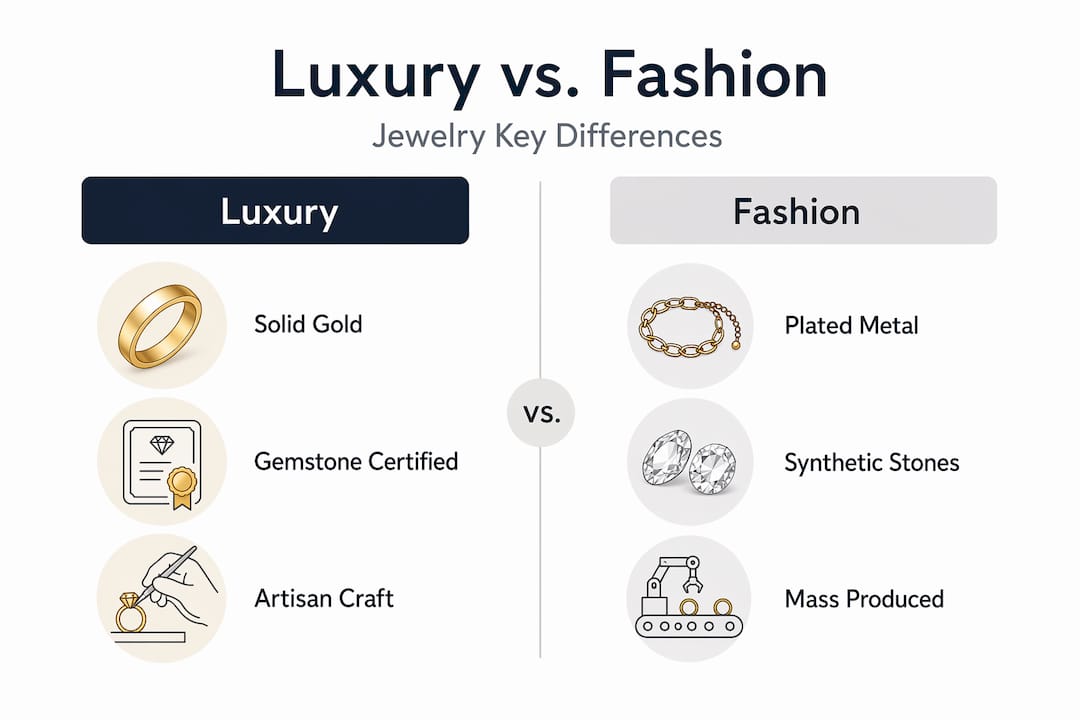
Luxury jewelry is characterized by its use of precious metals such as solid gold or platinum, genuine gemstones, and production methods that prioritize hand finishing and design precision over speed. According to industry classification, jewelry broadly falls into fashion, semi-fine, and fine or high jewelry categories, with luxury pieces sitting firmly in the fine and high jewelry tiers.
The clearest way to understand the difference between luxury and fashion jewelry is to look at the materials. Fashion or costume pieces use plated metals and simulated stones. Luxury pieces use real gold, platinum, diamonds, rubies, sapphires, and other genuine stones set and finished by skilled artisans. That is not a minor distinction. It determines durability, wearability, and long-term value.
Here is a quick comparison to make this concrete:
| Category | Materials | Craftsmanship | Longevity | Price Range |
|---|---|---|---|---|
| Fashion jewelry | Plated metals, synthetic stones | Mass-produced | Months to a few years | Under $100 |
| Fine jewelry | Sterling silver, gold-filled, real stones | Moderate hand finishing | Years to decades | $100 to $2,000 |
| Luxury jewelry | Solid gold, platinum, certified gemstones | Expert hand-crafted | Decades to heirloom | $2,000 and above |
Beyond materials, brand heritage plays a significant role in the luxury jewelry definition. Houses like Cartier, Tiffany and Co., and Van Cleef & Arpels carry design philosophies and production standards that have been refined over generations. Their reputation is part of the product.
Key characteristics you will consistently find in luxury jewelry include:
- Solid precious metals stamped with verified karat marks (10K, 14K, 18K, or platinum)
- Natural or certified lab-grown gemstones with documentation
- Hand finishing, prong setting, and quality control at every production stage
- Limited production runs or fully custom pieces
- Brand traceability and authenticity guarantees
Pro Tip: When evaluating any piece as luxury, ask to see both the karat stamp and any gemstone documentation. No legitimate luxury seller will hesitate to provide either.
History and cultural significance of luxury jewelry
Luxury jewelry has never been purely decorative. For most of recorded history, it served as portable wealth, a marker of social rank, and a carrier of cultural meaning. Ancient Egyptian pharaohs wore gold and lapis lazuli not just for beauty but to signal divine authority. Roman senators used signet rings as legal instruments. Renaissance-era European courts exchanged jeweled pieces as diplomatic gifts that carried political weight.
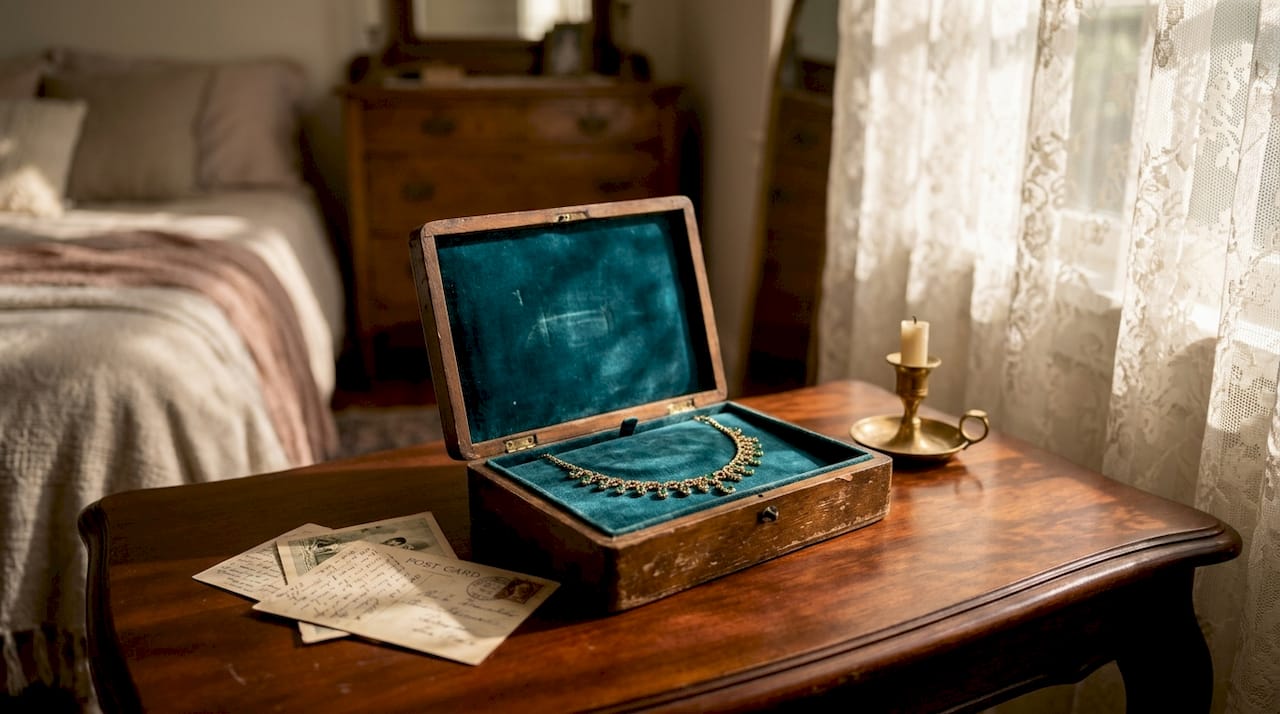
The evolution of luxury jewelry through the 19th and 20th centuries gave rise to the distinct design movements we still recognize today. Art Nouveau pieces from the early 1900s featured flowing natural forms and enamel work. Art Deco designs of the 1920s and 1930s brought bold geometry, platinum settings, and a new emphasis on diamond brilliance. Each era left a distinct design vocabulary that top luxury houses still reference.
Some iconic luxury jewelry pieces tell their own stories:
- The Cartier Panthère collection, introduced in 1914, became one of the most recognized symbols in high jewelry, representing the brand’s design identity for over a century.
- The Tiffany Setting engagement ring, introduced in 1886, transformed how diamonds were displayed, raising them above the band to maximize light exposure and brilliance.
- Van Cleef & Arpels’ Mystery Setting, patented in 1933, hides all metal prongs from view, making gemstones appear to float with no visible support.
“Timeless designs help maintain style relevance and emotional connection over decades.” Luxury Travel Magazine
The heirloom dimension of luxury jewelry is worth taking seriously. A well-made piece in solid gold or platinum does not degrade. It can be resized, repaired, and passed down. That longevity transforms a purchase into a family legacy. The emotional and narrative dimension tied to luxury pieces is something no fashion accessory can replicate.
Certification, grading, and authenticity
Understanding how luxury jewelry is certified is one of the most practical skills a buyer can develop. For diamonds specifically, the GIA Diamond Grading Report is the gold standard. A GIA report covers cut, color, clarity, carat weight, fluorescence, and any known treatments, giving buyers a detailed, unbiased assessment of what they are actually purchasing.
Here is a breakdown of what major certification factors mean for your purchase:
| Factor | What it measures | Why it matters to you |
|---|---|---|
| Cut | Proportions and light performance | Directly affects how much a diamond sparkles |
| Color | Presence of yellow or brown tones | Influences visual appeal and resale value |
| Clarity | Internal and surface inclusions | Affects visual purity and structural integrity |
| Carat | Weight of the stone | Sets baseline pricing alongside other grades |
| Fluorescence | Response to UV light | Can enhance or slightly affect stone appearance |
One thing buyers frequently misunderstand: a GIA report does not guarantee superior quality on its own. As GIA explains, it provides transparency and an unbiased evaluation, which builds consumer trust. The report tells you exactly what you are buying. What it cannot tell you is whether that stone was selected for its visual magic, which is where true luxury expertise enters the picture.
Here is a simple step-by-step approach to verifying authenticity before any luxury purchase:
- Request the gemstone certificate and match the report number to the stone’s laser inscription (most certified diamonds carry this).
- Check for karat stamps on all metal components. In the U.S., gold pieces must be stamped with their actual gold content.
- Ask for documentation of any treatments such as heat, fracture filling, or coating, since these affect durability and value.
- Verify the seller’s credentials, whether that is brand authorization, membership in the Jewelers of America, or a verifiable return and authentication policy.
- For high-value pieces, consider an independent appraisal from a GIA-trained gemologist.
Pro Tip: The GIA cut grade is the single most important factor in a diamond’s visual beauty. An Excellent cut grade in a lower-clarity stone will often outperform a Very Good cut in a technically cleaner stone. Prioritize cut.
Transparency through independent grading has genuinely shifted how consumers buy jewelry. The market has moved from trusting salespeople to trusting documentation, and that is a healthy change for buyers.
How to choose luxury jewelry
Choosing luxury jewelry thoughtfully means balancing several factors at once. Style, occasion, longevity, and budget all play a role, but the best purchases also account for something less quantifiable: whether the piece resonates with the person who will wear it every day.
Start by thinking about wearability. A piece you genuinely love and wear regularly offers far more value than one sitting in a box. Solid gold, for example, works across casual and formal settings and does not tarnish or fade with time. A diamond tennis bracelet or a classic gold chain can move from workday to wedding without missing a beat.
Consider these practical factors when evaluating any luxury piece:
- Metal type: 14K gold is the most popular choice for everyday luxury jewelry because it balances purity, durability, and price. 18K gold is softer but richer in color. Platinum is the densest and most durable for gemstone settings.
- Occasion and versatility: A statement necklace works for special events. A simple gold chain or hoop earring holds up as a daily piece that never feels dated.
- Budget and resale potential: Luxury jewelry in precious metals and certified stones generally holds value better than fashion pieces. Think of it less as spending and more as acquiring an asset you also get to enjoy wearing.
- Craftsmanship details: Look at prong setting quality, clasp construction, and how the piece feels in your hand. Heft, finish, and the tightness of stone settings all signal production quality.
Reputable sellers are genuinely non-negotiable here. A trusted jeweler should disclose metal content, provide gemstone documentation, and stand behind their product with a warranty or guarantee. If any of those things are missing, that is a clear signal to keep looking.
Pro Tip: When shopping for luxury jewelry online, prioritize retailers that offer lifetime craftsmanship guarantees and independent supplier verification. These policies are not marketing language. They are commitments that protect your purchase.
It is also worth knowing that luxury jewelry’s appeal includes its lasting value. Pieces bought for special occasions often become the items people are most grateful they invested in years later, not just financially, but personally.
My perspective on what luxury actually means
I have spent years looking closely at what separates a genuinely luxurious piece from one that simply costs a lot of money. My honest take: luxury is mostly about intention. Pieces built with care, from materials chosen for quality rather than cost efficiency, and designed to last beyond the current trend cycle are the real definition.
What I find most overlooked is the emotional narrative dimension. Luxury houses like Cartier select stones for emotional resonance, pairing colors and volumes to create a story. Two diamonds with identical GIA grades can feel completely different in a finished piece depending on how they were selected and set. That curatorial judgment is what you are actually paying for at the top end of the market.
I also think buyers underestimate how much the heirloom potential changes the economics. A $3,000 piece in solid 14K gold that your daughter or son can wear 40 years from now is not an expense. It is an object that holds meaning across time. Fashion jewelry at $50 cannot do that, no matter how good it looks on the day you buy it.
The one shift I have seen lately that genuinely excites me: lab-grown diamonds and other lab-grown stones are making luxury more accessible without compromising material quality. A certified lab-grown diamond set in solid gold is luxury by every real definition. The criteria have not changed. The price of admission has simply come down, and that is worth paying attention to.
— Blayne
Luxury gold jewelry from Bakergoldchains
If you are ready to own jewelry that checks every real box for luxury, Bakergoldchains makes that straightforward. Every piece is crafted in solid 10K, 14K, or 18K gold sourced from reputable U.S. suppliers, with full transparency on materials and construction. The 14K yellow gold bead necklace is a clear example: classic design, genuine gold, and craftsmanship built to last for decades. For something with added elegance, the small wedding hoops in 14K gold offer the kind of understated quality that works for both daily wear and special occasions. Bakergoldchains backs every purchase with a lifetime craftsmanship guarantee and free insured shipping on orders over $150.
FAQ
What makes jewelry qualify as luxury?
Luxury jewelry is defined by its use of solid precious metals, genuine certified gemstones, superior craftsmanship, and brand or production standards that prioritize quality over volume. Price is a byproduct of those factors, not the defining criterion.
How is luxury jewelry different from fine jewelry?
Fine jewelry uses real metals and stones, but luxury jewelry adds brand heritage, limited or custom production, expert stone curation, and design intent that elevates a piece beyond standard fine jewelry. The distinction is as much about creative and production standards as it is about materials.
Do I need a GIA certificate to buy luxury jewelry?
A GIA report is the most trusted independent grading document for diamonds and significantly reduces buyer risk, but not all luxury pieces include one. For any significant diamond purchase, requesting a GIA or equivalent grading report is a smart practice that gives you an unbiased account of what you are buying.
Can lab-grown stones be part of luxury jewelry?
Yes. Lab-grown diamonds and gemstones set in solid gold or platinum meet all the material and craftsmanship standards of luxury jewelry. Independent certification, such as a GIA report for lab-grown diamonds, confirms their quality just as it does for natural stones.
How do I spot a counterfeit luxury piece?
Check for karat stamps on all metal components, request gemstone certification, and verify the seller’s authenticity credentials. A reputable retailer will always provide documentation and stand behind their products with a verifiable guarantee.

