

10K vs 14K Gold: Key Differences Buyers Should Know
Not all gold jewelry is created equal, and the difference between 10K and 14K gold goes far deeper than the number stamped inside your ring or chain. Many buyers assume that anything labeled “gold” delivers the same purity, color, and value. That assumption can cost you money and lead to disappointment. This article breaks down exactly how 10K and 14K gold compare across purity, durability, color, price, and long-term value so you can walk into your next jewelry purchase with confidence.
Table of Contents
- Key takeaways
- Understanding the difference between 10K and 14K gold
- Durability and everyday wearability
- Price, resale value, and what you actually get
- Choosing between 10K and 14K gold for your needs
- My honest take on the 10K vs 14K decision
- Find your gold at Bakergoldchains
- FAQ
Key takeaways
| Point | Details |
|---|---|
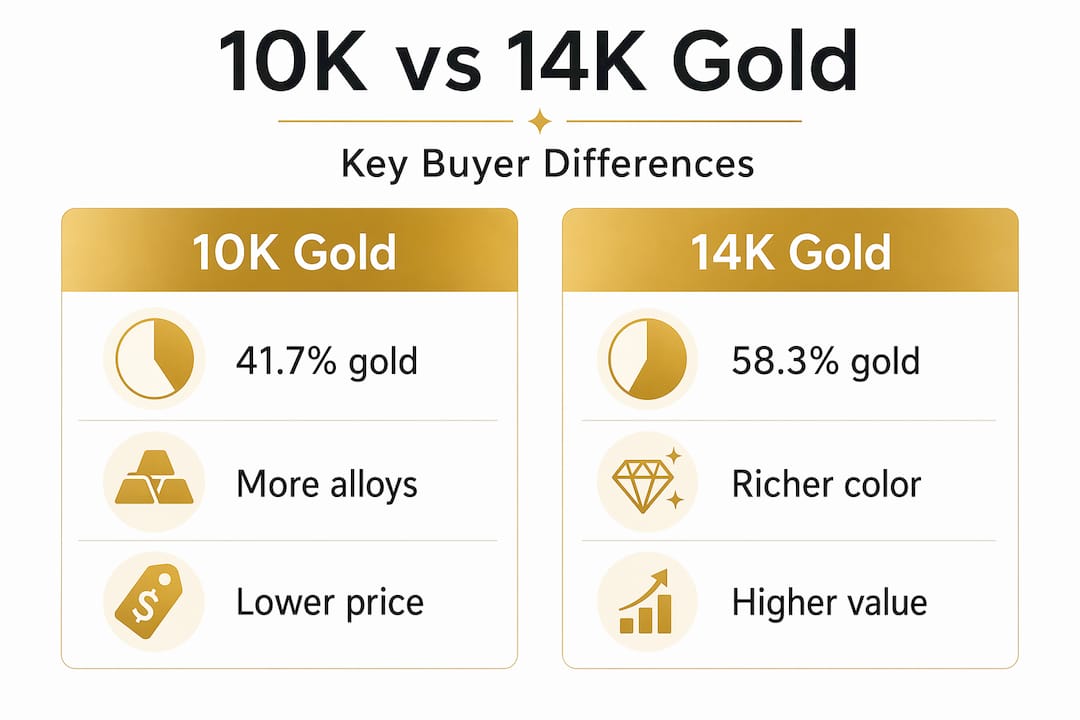
| Purity is the core difference | 10K gold is 41.7% pure gold while 14K gold is 58.3% pure gold. |
| Durability favors 10K slightly | Higher alloy content makes 10K harder and more scratch-resistant for active wear. |
| 14K costs more but holds more value | 14K gold is approximately 30% more expensive per gram and carries a higher resale value. |
| Color and appearance differ noticeably | 14K gold shows a richer, warmer yellow tone compared to the paler appearance of 10K. |
| Skin sensitivity matters | Sensitive skin types fare better with 14K due to its lower alloy and nickel content. |
Understanding the difference between 10K and 14K gold
Gold jewelry is measured in karats, a unit that tells you how much of the metal is actually pure gold. Pure gold is 24 karats. Every other karat rating is a mix of gold and other metals called alloys, which are added to increase hardness and reduce cost.
10K gold is 41.7% pure gold, meaning the remaining 58.3% is made up of metals like copper, silver, zinc, and sometimes nickel. The hallmark stamp you will find inside a 10K piece reads either “10K” or “417,” where 417 represents the 41.7% gold content. 14K gold, by contrast, is 58.3% pure gold with 41.7% alloy metals. Its hallmark stamp reads “14K” or “585.”
That gap in gold content has a real effect on everything from color to price to how your skin reacts. The alloy composition varies by jeweler and can include copper for warmth, silver for brightness, zinc for hardness, or nickel for added strength. Knowing which metals are present matters, especially if you have sensitivities.
Here is a quick reference table to put the numbers in perspective:
| Feature | 10K Gold | 14K Gold |
|---|---|---|
| Pure gold content | 41.7% | 58.3% |
| Alloy content | 58.3% | 41.7% |
| Hallmark stamp | 10K or 417 | 14K or 585 |
| Color tone | Pale yellow | Rich yellow |
| Best for | Budget and active wear | Everyday elegance |
Pro Tip: When you buy gold jewelry online, always check the product listing for the hallmark stamp information. If a listing doesn’t clearly state the karat rating, ask the seller before purchasing.
For a deeper look at what makes 14K gold tick on its own, the 14K gold quality guide at Bakergoldchains covers the finer details well.
Durability and everyday wearability
One of the most practical considerations when choosing between 10K and 14K gold is how each holds up over time. Because 10K gold contains more alloy metals, it is physically harder than 14K gold. 10K’s durability advantage makes it a popular option for people who wear jewelry during physical activity, manual work, or sports. It resists scratching and bending better under stress.

14K gold is slightly softer, but it is still more than durable enough for daily wear. The difference in hardness between 10K and 14K is modest in practical terms. Unless you are putting your jewelry through genuinely demanding conditions, a 14K piece worn every day will hold up for years without issue.
Color is where 14K makes a visible statement. 14K gold’s warmer, richer tone comes from its higher pure gold content. Place a 10K and 14K piece side by side, and you will notice the 14K piece looks more deeply yellow and vibrant. The 10K piece appears slightly paler or more muted. Under direct lighting, that difference becomes even more apparent.
Skin reactions are another factor worth knowing about before you buy:
- Allergy risk in 10K gold. Because 10K contains more alloy metals, skin irritation risk increases for sensitive individuals. Nickel is a common culprit, and its presence is more likely in higher-alloy gold.
- 14K gold is generally safer for sensitive skin. Lower alloy content means lower exposure to reactive metals like nickel, making 14K the better choice if you have experienced reactions to gold jewelry before.
- Individual alloy blends vary. Two pieces of 10K gold from different manufacturers may contain different alloys. Always ask your jeweler for the specific metal composition if allergies are a concern.
- White gold carries additional risks. Whether you are comparing yellow, white, or rose gold, the alloy mix changes significantly. White gold in any karat often contains nickel as part of its whitening process.
Pro Tip: If you have sensitive skin, ask specifically whether the piece contains nickel before you buy. Some jewelers use nickel-free alloys even in 10K gold, which reduces the allergy risk considerably.
Price, resale value, and what you actually get
Price is often the deciding factor in a gold jewelry purchase, and understanding exactly why prices differ between 10K and 14K helps you make a smarter call.
10K gold is typically around 30% cheaper than 14K gold for the same design and weight. That is a meaningful difference, especially when you are buying chains, bracelets, or larger pieces where the price gap grows with the weight. As a rough reference point from 2025 market data, 10K gold runs approximately $25.30 per gram while 14K gold runs around $35.42 per gram.
The reason is straightforward. 14K contains about 40% more pure gold by weight compared to 10K for the same design and size. Since gold is the most valuable material in the piece, more gold directly means a higher price. When you pay more for 14K, you are not just paying for aesthetics. You are paying for more actual gold.
| Metric | 10K Gold | 14K Gold |
|---|---|---|
| Approximate price per gram (2025) | ~$25.30 | ~$35.42 |
| Pure gold by weight | 41.7% | 58.3% |
| Resale/melt value potential | Lower | Higher |
| Typical use case | Fashion jewelry, budget pieces | Engagement rings, fine jewelry |
Resale and melt value follow the same logic. 14K gold carries a higher fine-gold resale value than 10K because it simply contains more actual gold per gram. If you ever sell a gold chain or piece to a refiner, they pay based on the weight of pure gold present. A 14K piece will always return more per gram than a 10K piece of the same total weight.
Beyond karat, other factors affect what you pay. Design complexity, stone settings, labor, and brand reputation all add to the final price. A simple 10K chain from a reputable source may outperform a heavily designed 14K piece in terms of resale value purely because less value is locked in labor costs. The hallmark stamps on any piece you buy are your fastest and most reliable way to verify what karat you actually received. Never skip that check.
Choosing between 10K and 14K gold for your needs
Now that you understand the core differences, the right choice depends on your specific situation. Here is a straightforward way to think through it:
-
Choose 10K gold if you prioritize affordability. If budget is the main concern and you want maximum jewelry for your money, 10K delivers real gold at a lower entry price. It is a practical option for fashion chains, everyday pieces, or gifts where cost matters more than gold content.
-
Choose 10K if you lead an active lifestyle. Its higher alloy content makes it harder and more resistant to the physical stress of daily activity. If your jewelry takes a beating, 10K holds up well.
-
Choose 14K gold if you want richer color and better long-term value. The warmer tone of 14K is noticeable, and its higher gold content gives it better resale potential. Most fine jewelry, including engagement rings and heirloom pieces, is made in 14K for exactly this reason.
-
Choose 14K if you have metal sensitivities. Lower alloy content means less exposure to potentially reactive metals, making it the more comfortable long-term choice for sensitive skin types.
-
Verify before you buy. Whether you choose 10K or 14K, always confirm the hallmark stamp on the piece. Legitimate gold jewelry will be stamped clearly. A useful starting point for avoiding misrepresented pieces is this guide on spotting fake gold chains.
Pro Tip: For engagement rings and high-visibility fine jewelry, 14K is the industry standard choice. For chains, bracelets, and fashion pieces you plan to wear hard and often, 10K is a smart, durable option that saves you money without sacrificing authenticity.
For a focused breakdown of the 10K side of the equation, the 10K gold insights guide at Bakergoldchains is worth a read before you decide.
My honest take on the 10K vs 14K decision
I’ve spent years handling gold jewelry questions from buyers at every budget level, and the pattern I keep seeing is this: people overcomplicate the 10K vs 14K decision.
In my experience, 14K gold is the right choice for most buyers most of the time. The color is noticeably better, the resale value holds stronger, and the allergy risk is lower. When someone wears a 14K chain daily for five years and decides to upgrade or sell, they get meaningfully more back than they would from a 10K piece of similar weight. That gap compounds over time.
That said, 10K gold surprises people. I have watched buyers dismiss it as lesser and then come back after years of daily wear saying their 10K chain looks as good as the day they bought it. The toughness is real. For someone who wants a gold chain they can wear through a gym session, a camping trip, or a construction shift without overthinking it, 10K is genuinely the better call.
The mistake I see most often is buying based on karat alone without factoring in total gold weight. A lighter 14K chain may contain less pure gold than a heavier 10K chain. Two similar-looking rings of equal weight tell very different stories when you compare fine gold content. Always look at the weight and the karat together, not the karat alone.
My bottom line: know what you are buying, verify the hallmark, and match the karat to your life, not just your budget.
— Blayne
Find your gold at Bakergoldchains
At Bakergoldchains, every piece is solid gold, sourced from reputable U.S. suppliers, and stamped with its hallmark so you always know exactly what you are getting. Whether you are drawn to the durability and affordability of 10K or the richer color and higher gold content of 14K, there is something here for every buyer. The 14K yellow gold bead necklace is a standout example of how 14K gold looks and feels in a finished piece. For a durable and stylish 10K option, the 10K yellow gold hoop earrings deliver real gold quality at a budget-friendly price. Every order over $150 ships free with insurance, and every piece carries a lifetime craftsmanship guarantee.
FAQ
What is the main difference between 10K and 14K gold?
The main difference is gold purity. 10K gold is 41.7% pure gold and 14K gold is 58.3% pure gold, which affects color, price, durability, and resale value.
Is 14K gold better than 10K for everyday wear?
14K gold offers a better balance of appearance and durability for most daily wear, though 10K is harder and more scratch-resistant, making it a solid choice for physically demanding lifestyles.
Why is 14K gold more expensive than 10K?
14K gold costs approximately 30% more per gram because it contains significantly more pure gold by weight. More gold content directly raises both the production cost and the resale value.
Can 10K gold cause skin reactions?
Yes, 10K gold has a higher alloy content including potential nickel, which can trigger reactions in sensitive skin. 14K gold is generally safer for people with metal allergies due to its lower alloy percentage.
How do I verify if my gold jewelry is real 10K or 14K?
Check for a hallmark stamp inside the piece. A 10K piece will be stamped “10K” or “417,” and a 14K piece will read “14K” or “585.” Missing or unclear stamps are a reason to request documentation from the seller.

