

The Role of Design in Fine Jewelry: Craft and Value
Design is the creative and structural foundation of fine jewelry, shaping every decision from the first sketch to the final polish. The role of design in fine jewelry extends far beyond aesthetics. It determines how a piece holds together, how it catches light, how it feels on your wrist or finger, and whether it retains value for decades. Understanding design gives you a sharper eye for quality and a clearer sense of what separates a truly exceptional piece from one that merely looks good in a display case.
What are the two fundamental approaches to fine jewelry design?
Fine jewelry design follows two distinct starting points, and knowing the difference changes how you evaluate any piece you consider buying. Two core design approaches exist: stone-first and design-first. Each produces a different creative outcome and a different set of trade-offs.
The stone-first approach begins with the gemstone. The designer selects a specific diamond, sapphire, or other stone, then builds the setting, silhouette, and metalwork around it. The gem’s cut, proportions, and color dictate what the surrounding design can and cannot do. This approach is common in engagement rings, where a client brings a specific stone and asks a designer to honor it.
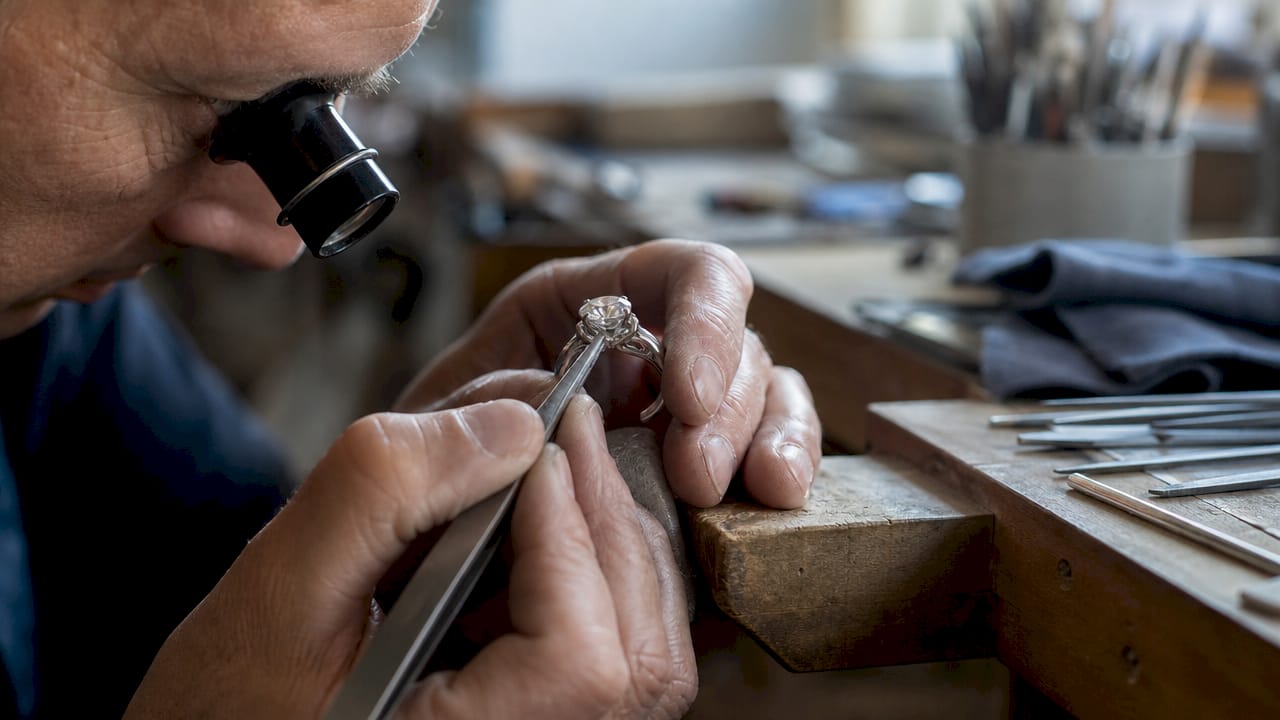
The design-first approach works in reverse. The designer commits to a concept, a silhouette, a structural idea, before any stone is chosen. Proportions, negative space, and metal geometry come first. Stones are selected afterward to fit the vision. This method gives designers more creative freedom and often produces pieces with a stronger artistic identity.
Many successful pieces blend both approaches. A designer might sketch a rough concept, then let an exceptional stone refine the final proportions. Understanding which approach was used helps you appreciate why a piece looks the way it does. It also helps you ask better questions when commissioning custom work.
- Stone-first: best when a specific gem is the centerpiece and the setting should serve it
- Design-first: best when artistic expression and overall form take priority
- Blended: most common in high-end custom work, where concept and stone evolve together
- Knowing the approach helps you evaluate whether a piece’s design feels intentional or reactive
What are the core elements and principles of fine jewelry design?
The elements of jewelry design are the visual building blocks every designer works with: line, shape, form, color, texture, size, and space. These are not abstract concepts. They show up in every physical decision a designer makes, from the width of a band to the depth of an engraved pattern.
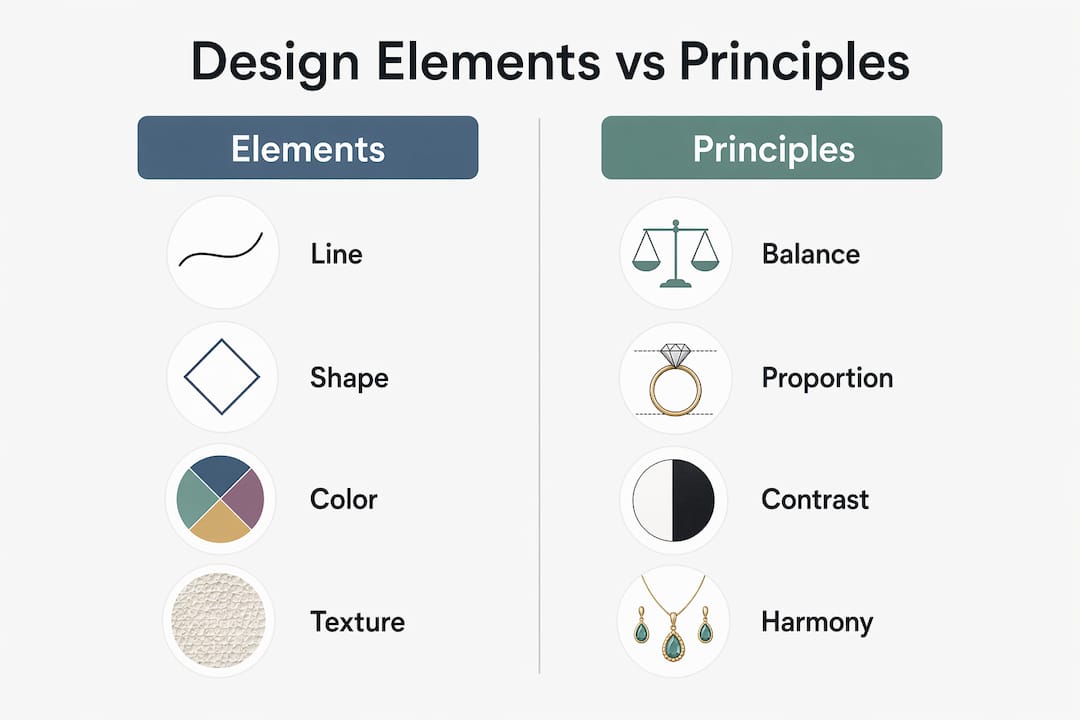
Principles govern how those elements combine. Balance, proportion, contrast, and harmony determine whether a design feels resolved or unfinished. A pendant with a heavy stone and a thin bail looks unbalanced. A ring with a wide band and a small stone feels proportionally off. When these principles are applied well, the piece looks right without you being able to explain exactly why.
Here is how the core elements apply in practice:
- Line controls visual direction. Straight lines read as modern and structured. Curved lines feel organic and soft. A Franco chain uses straight, angular links to project strength. A rope chain uses twisted, curved links to suggest fluidity.
- Form is the three-dimensional shape of the piece. A domed ring has a different visual weight than a flat band, even if both use the same amount of gold.
- Texture changes how light interacts with a surface. A brushed finish scatters light for a matte look. A high-polish finish reflects it sharply. Design translates into tangible techniques like filigree, engraving, and enameling, each of which manipulates texture deliberately.
- Color in gold jewelry comes from karat and alloy composition. 18K yellow gold reads warmer than 14K. Two-tone designs use color contrast as a design tool.
- Space is the area around and between design elements. Negative space in an open-work pendant is as intentional as the metal itself.
- Proportion ties everything together. A piece where every element is sized relative to the others reads as refined. A piece where one element dominates without reason reads as clumsy.
Pro Tip: When evaluating a piece, cover the gemstone with your thumb and look at the metalwork alone. If the design still holds together visually, the designer understood proportion. If it falls apart, the stone was doing all the work.
How does craftsmanship shape fine jewelry durability and value?
Design intent means nothing without the skill to execute it. The role of craftsmanship in fine jewelry is to translate a design from concept into a physical object that holds together under real-world conditions. Craftsmanship affects structural integrity, not just surface appearance.
Metal weight distribution is one of the clearest markers of quality. A well-crafted ring has consistent metal thickness at stress points, particularly at the shank and where prongs meet the setting. Experienced artisans evaluate metal thickness at these stress points as a direct indicator of how long a piece will last. A thin shank may look elegant but will bend or crack under daily wear.
Stone settings are equally critical. A prong that is too thin will eventually catch on fabric and loosen. A bezel that is not fully burnished leaves a gap where moisture and debris collect. Secure stone settings and proper metal weight are what separate a piece that lasts a lifetime from one that needs repair within a few years.
The complexity of high-end craftsmanship is often invisible to the untrained eye. A single high-end piece can require 6–7 months of production, involving 12 specialists and 9 distinct crafts, including guilloché engraving and grand feu enamel fired multiple times at 800°C. That level of production is not about decoration. It is about building layers of quality that hold up over time.
“Fine jewelry craftsmanship involves continuous human evaluation and adjustment, impossible to replicate via automation.” — Luca Ponzone Jewels
- Consistent metal thickness at stress points signals structural quality
- Fully burnished bezels and tight prongs protect stones from loosening
- Hand-finishing allows artisans to catch and correct flaws that machines miss
- Craftsmanship is what makes a design wearable every day, not just beautiful in a case
How do design and craftsmanship choices affect uniqueness and long-term value?
Design and craftsmanship together determine whether a piece appreciates, holds, or loses value over time. A piece with a strong design identity and exceptional execution is harder to replicate and easier to recognize. That combination creates the conditions for lasting worth. You can read more about this in Bakergoldchains’ guide to jewelry long-term value.
Artistic jewelry sets qualitative benchmarks for the entire industry, pushing boundaries in narrative and technique beyond commercial purposes. Pieces that reflect a clear design vision, whether a Byzantine chain’s interlocking geometry or a graduated bead necklace’s careful sizing progression, carry an identity that mass-produced pieces cannot replicate.
| Factor | Impact on value |
|---|---|
| Strong design identity | Creates rarity and recognition, supporting resale appeal |
| High craftsmanship quality | Reduces repair costs and extends wearable life |
| Precious metal content | Provides a floor value tied to gold spot price |
| Design-first approach | Often produces more collectible, artistically distinct pieces |
| Stone-first approach | Value tied closely to the gem’s quality and market demand |
When you evaluate a piece for long-term value, look at three things. First, check whether the design has a clear visual logic. Second, examine the finish quality at stress points and settings. Third, confirm the metal content with a karat stamp. A piece that scores well on all three is built to last and hold its worth. Bakergoldchains’ timeless design principles guide explains how these factors apply across different jewelry styles.
Key takeaways
Design and craftsmanship together determine whether fine jewelry is beautiful for a season or valuable for a lifetime.
| Point | Details |
|---|---|
| Two design approaches | Stone-first and design-first produce different results; knowing which was used helps you evaluate intent. |
| Six core design elements | Line, form, color, texture, size, and space are the building blocks of every fine jewelry piece. |
| Craftsmanship ensures durability | Metal thickness at stress points and secure stone settings determine how long a piece lasts. |
| Design identity drives value | Pieces with a clear visual concept and strong execution are harder to replicate and more collectible. |
| Artisan skill cannot be automated | Human evaluation and adjustment during production is what separates fine jewelry from mass-produced pieces. |
Why design mastery matters more than most buyers realize
Most buyers focus on the gemstone or the gold content and treat the design as a secondary concern. That is the wrong order of priority. I have seen beautifully cut diamonds set in poorly proportioned mountings that killed the stone’s light performance entirely. The design is not a frame for the gem. It is the system that determines whether the gem performs at all.
Jewelry design is a complex engineering challenge that balances light optimization and wearer comfort alongside aesthetics. Most buyers never think about how a ring’s profile affects comfort over a full day of wear, or how a pendant’s bail angle determines whether it sits flat or twists. These are design decisions, and they matter every time you put the piece on.
The elements that define truly extraordinary jewelry are often the ones you cannot see at first glance. The weight distribution that makes a bracelet drape correctly. The slight curvature of a band that makes it feel like it belongs on your hand. The finish on the inside of a setting that prevents skin irritation. None of these show up in a product photo. They show up in daily wear, and they are the direct result of design mastery applied with genuine craft.
My honest advice: before you buy any fine jewelry piece, hold it and wear it for a few minutes if you can. A well-designed piece feels right immediately. A poorly designed one, no matter how expensive the materials, will tell you something is off. Trust that signal.
— Blayne
Bakergoldchains pieces that show design and craft in action
Fine jewelry design principles are easiest to understand when you see them applied to real pieces. Bakergoldchains sources its collection from reputable U.S. suppliers, with every piece built to the standards described in this article: consistent metal weight, secure settings, and clear design identity.
The graduated bead necklace in 14K yellow gold is a direct example of proportion and progression applied in practice. Each bead is sized relative to the next, creating a visual rhythm that sits naturally on the neckline. The polished woven rope bracelet with diamond accents in 14K rose gold shows how texture and form work together, with the woven structure creating both visual depth and structural flexibility. Every piece ships with free insured shipping on orders over $150 and is backed by a lifetime craftsmanship guarantee.
FAQ
What is the role of design in fine jewelry?
Design is the creative and structural process that determines a jewelry piece’s aesthetics, proportions, and durability. It shapes how a piece looks, how it wears, and how well it holds its value over time.
What are the two main approaches to jewelry design?
The two approaches are stone-first, where the gemstone dictates the design, and design-first, where the overall concept and silhouette are established before a stone is chosen. Many custom pieces blend both methods.
How does craftsmanship affect jewelry value?
Craftsmanship determines structural integrity through metal weight distribution and secure stone settings, which directly affect how long a piece lasts and how well it retains its worth.
What design elements should I look for when buying fine jewelry?
Look for consistent proportion between the stone and setting, intentional use of texture and finish, and clean lines at stress points like prongs and bails. These signal that design decisions were made deliberately, not by default.
Why does fine jewelry design require specialized artisans?
Fine jewelry craftsmanship requires continuous human evaluation and adjustment that automation cannot replicate. Complex techniques like guilloché engraving and grand feu enameling involve multiple specialists and repeated production cycles to achieve the required quality.

