

What Is Fine Jewelry? Materials, Craft, and Buying Tips
When people search for what is fine jewelry, they often find vague definitions that skip the details that actually matter. Fine jewelry is not just expensive jewelry. It is a specific category defined by the materials used, the way it is built, and its ability to last decades without losing quality or value. Understanding that distinction changes how you shop, what you spend, and what you end up with. This article breaks down the fine jewelry definition from the ground up, covering metals, gemstones, craftsmanship, style, and how to buy confidently.
Table of Contents
- Key Takeaways
- What is fine jewelry and what sets it apart
- Craftsmanship and construction quality
- Styles and design in fine jewelry
- Buying smart: authenticity and value
- My honest take on fine jewelry’s lasting value
- Find authentic fine jewelry at Bakergoldchains
- FAQ
Key Takeaways
| Point | Details |
|---|---|
| Material standards matter | Fine jewelry uses solid precious metals like 10k+ gold, platinum, or sterling silver, never plated base metals. |
| Hallmarks are your proof | Look for stamps like 750, PT950, or 925 to verify metal purity before buying any piece. |
| Craftsmanship determines longevity | Soldered settings and hand-forged construction allow repairs and extend the life of a piece by decades. |
| Style should serve your lifestyle | Timeless, understated designs hold their appeal longer and complement more outfits than trend-driven pieces. |
| Fine jewelry holds real value | Quality metals and certified gemstones can appreciate over time, unlike costume or fashion jewelry. |
What is fine jewelry and what sets it apart
Fine jewelry is defined exclusively by two things: precious metals and genuine gemstones. That is the complete fine jewelry definition at its core. No exceptions, no gray areas.
Precious metals in this context means solid gold at 10 karats or higher, platinum, or sterling silver. Fashion jewelry uses base metals like brass, copper, or zinc, then coats them with a thin layer of gold or silver plating. That plating wears off. The metal underneath tarnishes, sometimes within months. Fine jewelry does not have that problem because the metal is solid all the way through.
Gemstones follow the same logic. Fine jewelry uses natural stones like diamonds, rubies, sapphires, and emeralds, or lab-grown versions of the same minerals. Lab-grown stones share the same chemical and physical properties as their natural counterparts. What fine jewelry does not use are simulants like cubic zirconia or acrylic, which are common in fashion and costume jewelry.
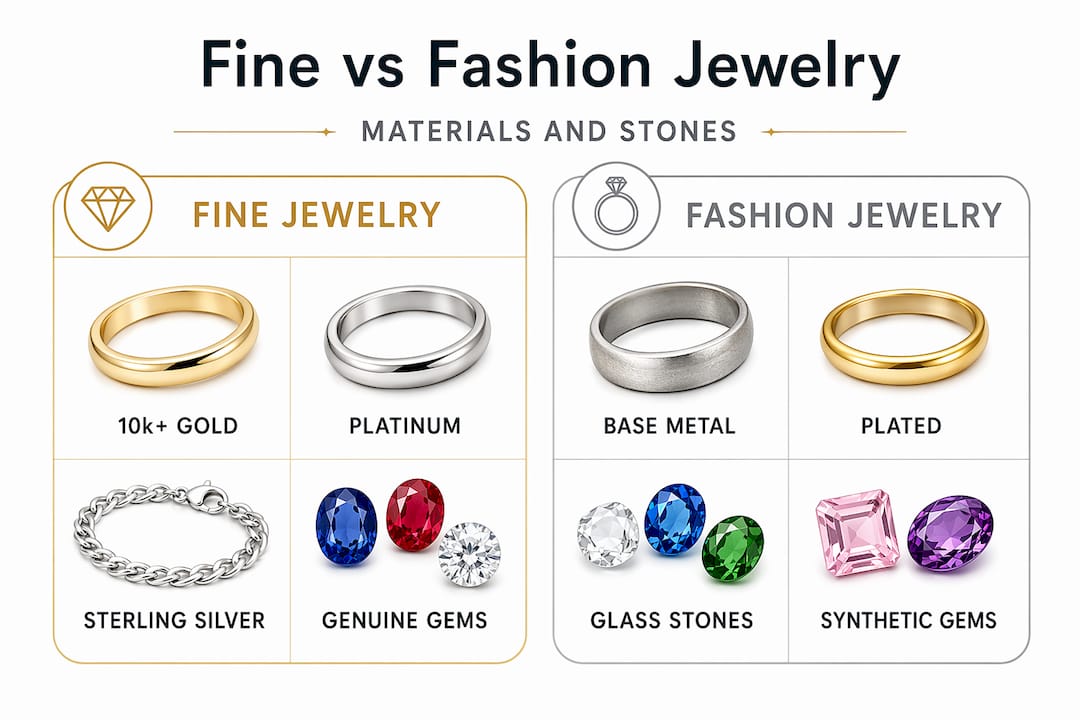
There is also a middle category worth knowing about. Semi-fine and demi-fine jewelry use materials like gold vermeil or gold-filled metals with semi-precious stones. These pieces balance quality with affordability but do not meet the full precious metal and gemstone standards that define true fine jewelry.
The metals you will actually encounter
Here is a quick breakdown of the precious metals most commonly found in fine jewelry:
- Solid gold (10k, 14k, 18k, 22k): The karat number tells you the percentage of pure gold. 18k gold contains 75% pure gold. 14k contains about 58%.
- Platinum (Pt950): Platinum is approximately 30 times rarer than gold, hypoallergenic, and extremely durable. The Pt950 stamp means 95% pure platinum.
- Sterling silver (925): Contains 92.5% pure silver, indicated by the 925 hallmark. More affordable than gold or platinum but still a genuine precious metal.
Pro Tip: If you see a karat stamp on a piece of gold jewelry that reads below 10k, U.S. law does not recognize it as genuine gold jewelry. Always check the stamp before you buy.
Craftsmanship and construction quality
Knowing the materials tells you half the story. How a piece is built tells you the other half. Fine jewelry uses hand-forged bands and soldered prongs rather than glued stones or machine-pressed settings. That difference in construction is what separates a piece you can pass down for generations from one you replace after two years.
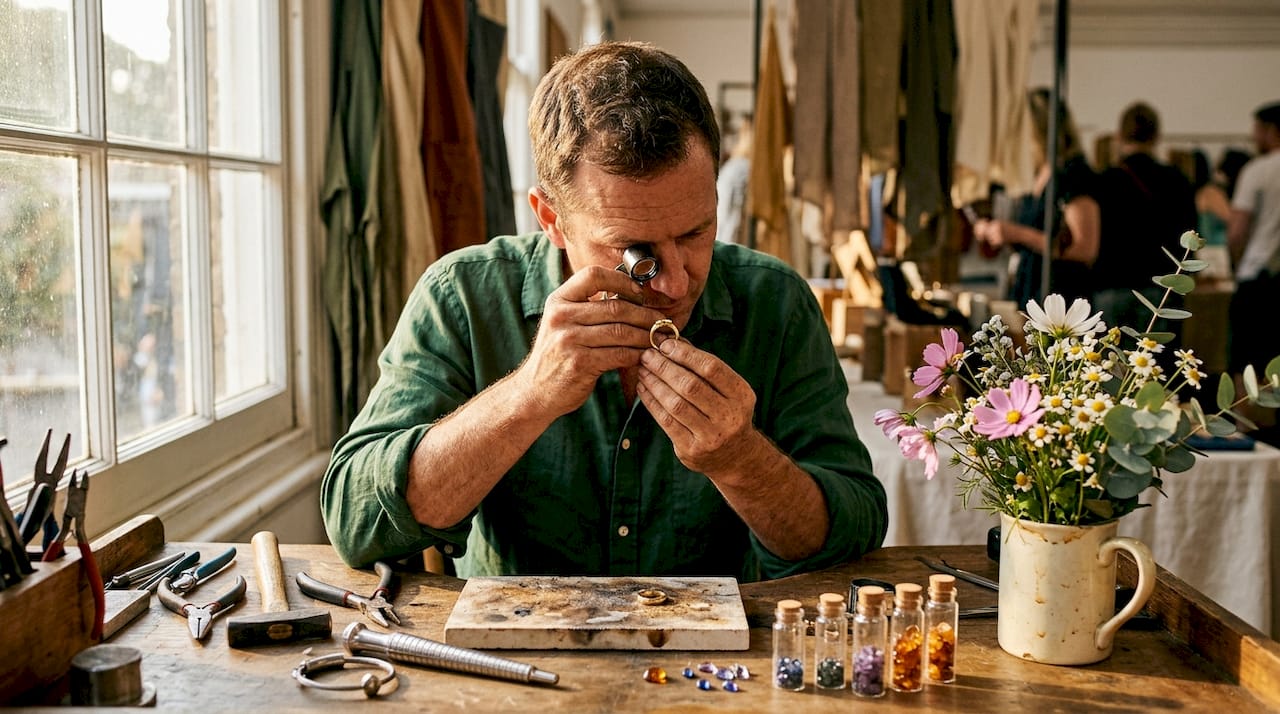
Soldered prongs hold stones securely and can be re-tightened or replaced by a jeweler if they wear down. Glued stones, which are standard in costume jewelry, cannot be repaired this way. Once the glue weakens, the stone falls out and that is usually the end of the piece.
Repairability is one of the most underrated qualities in fine jewelry. A well-made gold ring can be resized. A pendant can have its chain replaced. Earring backs can be soldered back on. This kind of long-term durability is built into fine jewelry by design, not by accident.
When it comes to gemstones, look for certification from reputable labs. The two most recognized are the Gemological Institute of America (GIA) and the International Gemological Institute (IGI). A GIA or IGI certificate tells you the stone’s cut, color, clarity, and carat weight, verified by independent experts. Without that paperwork, you are taking the seller’s word for it.
Pro Tip: Ask for the gemstone certificate before purchasing any piece with a center stone. A seller confident in their product will have it ready. Hesitation on that request is a warning sign.
Take Roberto Coin as a useful example of what fine craftsmanship looks like in practice. The brand is known for 18-karat gold pieces with diamond accents and a signature hidden ruby on every piece. That level of intentional detail, carried through every item in a collection, reflects the standard of care that separates fine jewelry from everything below it.
Styles and design in fine jewelry
Fine jewelry covers a wide range of styles, from bold statement pieces to the kind of delicate chain you barely notice until someone compliments it. Knowing the main categories helps you figure out which direction fits your taste and your life.
Common types of fine jewelry include:
- Classic chains: Cuban links, rope chains, and Franco chains in solid gold are among the most enduring examples of fine jewelry. They work with casual and formal outfits and hold their look for decades.
- Simple pendants: A small diamond solitaire, an initial pendant, or a meaningful symbol on a fine gold chain. These are personal and versatile.
- Huggie and hoop earrings: Huggie hoops are among the most wearable fine jewelry pieces. Small enough for everyday wear, polished enough for any occasion.
- Stacking rings and bracelets: Fine jewelry lends itself well to layering because the metals and finishes tend to coordinate naturally.
“Subtle, edited jewelry pieces create a polished and grown-up look compared to overly flashy or trend-heavy designs.” — Stylist Angela Moore, as noted in a Daily Mail feature on elegant jewelry styles
That observation holds true across most fine jewelry buying decisions. Understated pieces tend to photograph better, age better, and pair with more of your wardrobe over time. A simple 14k gold chain still looks current ten years after you buy it. A heavily styled trend piece rarely survives the season.
When you are choosing between styles, think about what you actually wear day to day. A piece you reach for every morning is a better purchase than one that stays in the box for special occasions that rarely come.
Buying smart: authenticity and value
Buying fine jewelry confidently comes down to four practical steps. Follow them and you protect yourself from overpaying, buying fakes, or ending up with something that does not hold its value.
-
Verify the hallmark. Every genuine piece of fine jewelry carries a stamp indicating metal purity. Look for 750 (18k gold), 585 (14k gold), 925 (sterling silver), or PT950 (platinum). U.S. law requires correct hallmarking for any gold jewelry sold as genuine. If the stamp is missing or unclear, walk away.
-
Request gemstone certification. For any piece featuring a significant stone, ask for a GIA or IGI certificate. This document verifies the stone’s identity, quality, and value independently of the seller.
-
Understand resale and heirloom potential. Fine jewelry can appreciate over time, especially pieces with high gold content or certified diamonds. Costume jewelry has essentially no resale value. When you buy fine jewelry, you are making a purchase that holds worth.
-
Buy from transparent sellers. A reputable seller tells you exactly what karat of gold you are getting, where the stones come from, and what certifications apply. Vague product descriptions are a red flag. If a listing describes a piece as “gold-tone” rather than specifying a karat, it is not fine jewelry.
Pro Tip: Use a magnet to do a quick field test at home. Genuine gold and platinum are not magnetic. If a piece is attracted to a magnet, the base metal is not precious. This does not replace hallmark verification, but it catches obvious fakes fast.
For deeper guidance on reading karat stamps and spotting genuine pieces, the gold purity guide at Bakergoldchains walks through hallmark reading step by step.
My honest take on fine jewelry’s lasting value
Fine jewelry is purchased to mark important life events because it carries lasting craftsmanship, emotional significance, and heirloom quality that cheaper alternatives simply cannot replicate. I have seen that firsthand working with buyers across a wide range of budgets.
What strikes me most is how often people underestimate the long-term math. A $60 fashion piece replaced every year costs $600 in a decade. A $300 solid 14k gold chain, properly cared for, still looks exactly the same in ten years and could be worth more than you paid. That is not a complicated calculation, but most shoppers do not think about it that way until they have already bought and lost a few fast-fashion pieces.
The other thing I want to be direct about: the line between fine and fashion jewelry is being blurred deliberately in marketing. Terms like “demi-fine” and “semi-fine” are useful categories, but they are also used to charge fine jewelry prices for pieces that do not meet fine jewelry standards. Read the metal content. Check the stamp. Do not let aesthetic photography substitute for material facts.
If you are buying for a milestone, a gift, or something you plan to wear for years, invest in the real thing. Understated and well-made will always outperform flashy and cheap. That is not just an aesthetic preference. It is what the evidence consistently shows.
— Blayne
Find authentic fine jewelry at Bakergoldchains
Bakergoldchains specializes in exactly what this article describes: solid gold jewelry built to last. Every piece on the site is made from 10k, 14k, or 18k gold sourced from reputable U.S. suppliers, with clear hallmarks and transparent product descriptions. Whether you are shopping for yourself or looking for a meaningful gift, you will find pieces that hold their value and their look over time.
The 14K gold graduated bead necklace is a strong example of understated fine jewelry done right. For earrings that work every day, the small 14K wedding hoops offer the kind of polished simplicity that never goes out of style. Bakergoldchains also offers free insured shipping on orders over $150 and a lifetime craftsmanship guarantee.
FAQ
What is the fine jewelry definition in simple terms?
Fine jewelry is any jewelry made from solid precious metals (10k+ gold, platinum, or sterling silver) and genuine or lab-grown gemstones. Plated metals and synthetic stones like cubic zirconia do not qualify.
What are common examples of fine vs fashion jewelry?
A 14k solid gold rope chain is fine jewelry. A gold-plated brass chain is fashion jewelry. The difference is in the metal itself, not the appearance.
What makes jewelry “fine” beyond just the price?
The material composition and construction method define fine jewelry. Solid precious metals, genuine gemstones, and soldered settings are the standard, regardless of price point.
How do I verify that a piece is genuine fine jewelry?
Check for a hallmark stamp (like 750 for 18k gold or 925 for silver), request gemstone certificates from GIA or IGI for any center stones, and buy from sellers who clearly disclose metal content.
Can fine jewelry be a good financial investment?
Yes. High-quality metals and certified gemstones retain their worth over time, unlike fashion or costume jewelry, which has minimal resale value. Gold content especially tends to hold or grow in value over the long term.

