

What Is a Gold Earring? Styles, Types, and How to Choose
A gold earring is any earring made wholly or partially of gold, defined by its gold content, manufacturing method, and design style. The term covers everything from a simple 10K stud to an elaborate 18K chandelier, and understanding the differences between solid gold, gold-filled, and gold-plated construction changes how you evaluate quality, price, and longevity. Whether you are buying for yourself or as a gift, knowing what “gold” actually means on a jewelry tag is the first step toward a purchase you will not regret.
What is a gold earring, exactly?
A gold earring is a piece of ear jewelry whose primary material is gold, categorized by karat purity, construction type, and design. The industry recognizes three distinct construction categories: solid gold, gold-filled, and gold-plated. Each carries a different gold content, price point, and expected lifespan, which is why two earrings labeled “gold” can differ dramatically in value.
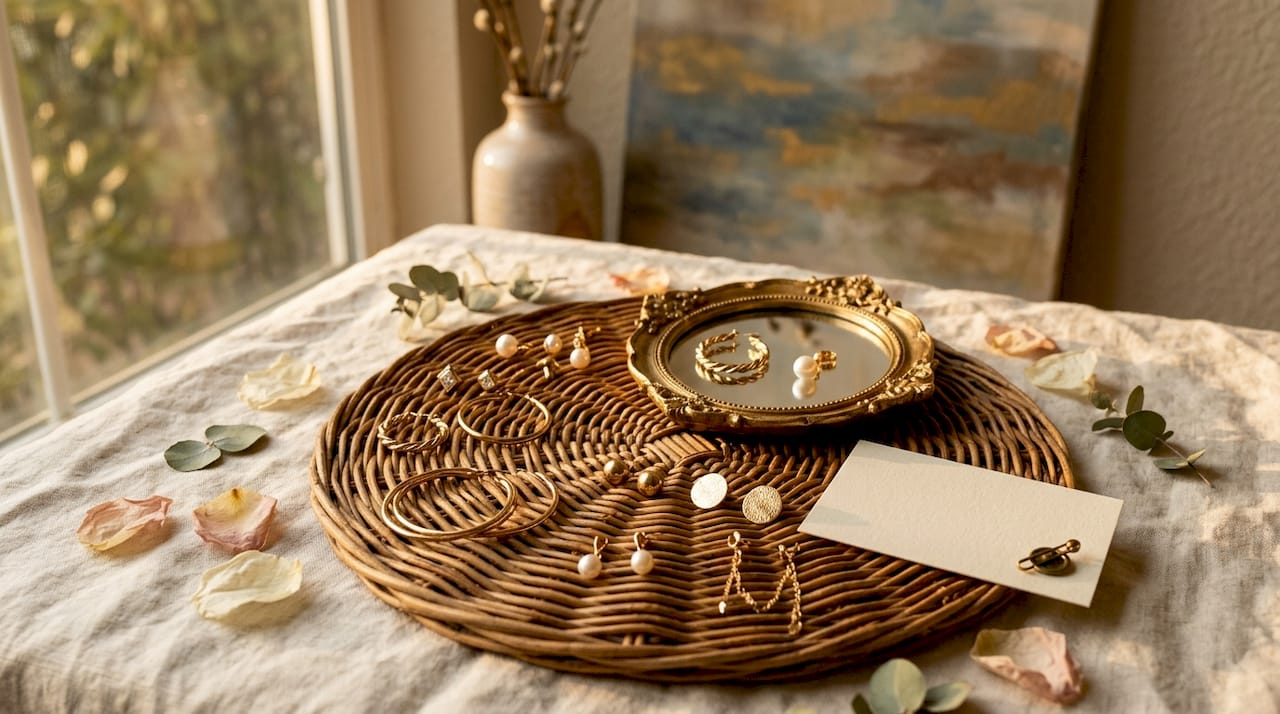
Karat grades measure gold purity on a scale of 24 parts. 14K gold contains 58.3% pure gold and is the most popular choice for everyday jewelry in the United States because it balances durability with cost. 18K gold contains 75% pure gold and offers a richer color but scratches more easily. 10K gold is the most affordable option, with 41.7% gold content, making it harder but less lustrous.
Gold earrings also differ by manufacturing process. Solid gold earrings are composed of the same gold alloy throughout the entire piece. Gold-filled earrings have a thick bonded gold layer mechanically fused to a base metal core. Gold-plated earrings carry only a thin electroplated gold coating over brass or copper. These distinctions matter far more than most buyers realize before their first purchase.
What are the different types of gold used in earrings?
The word “gold” on an earring tag does not guarantee the same material across all products. Solid gold, gold-filled, and gold-plated are three separate categories with real differences in durability, skin safety, and long-term value.
Solid gold earrings contain the same karat alloy from surface to core. They are the most durable, the most hypoallergenic, and the most valuable. Gold resists oxidation because surface gold atoms rearrange into protective patterns that suppress reactions by up to a trillion times compared to other metals. This atomic behavior is why a solid 14K pair of earrings can look identical after 20 years of wear.
Gold-filled earrings contain at least 5% gold by total weight, bonded to a base metal through heat and pressure. With proper care, gold-filled pieces can last 10 to 30 years. They look nearly identical to solid gold but cannot be resized or repaired the way solid gold can. For buyers who want the look of gold at a lower price, gold-filled is a credible middle ground.
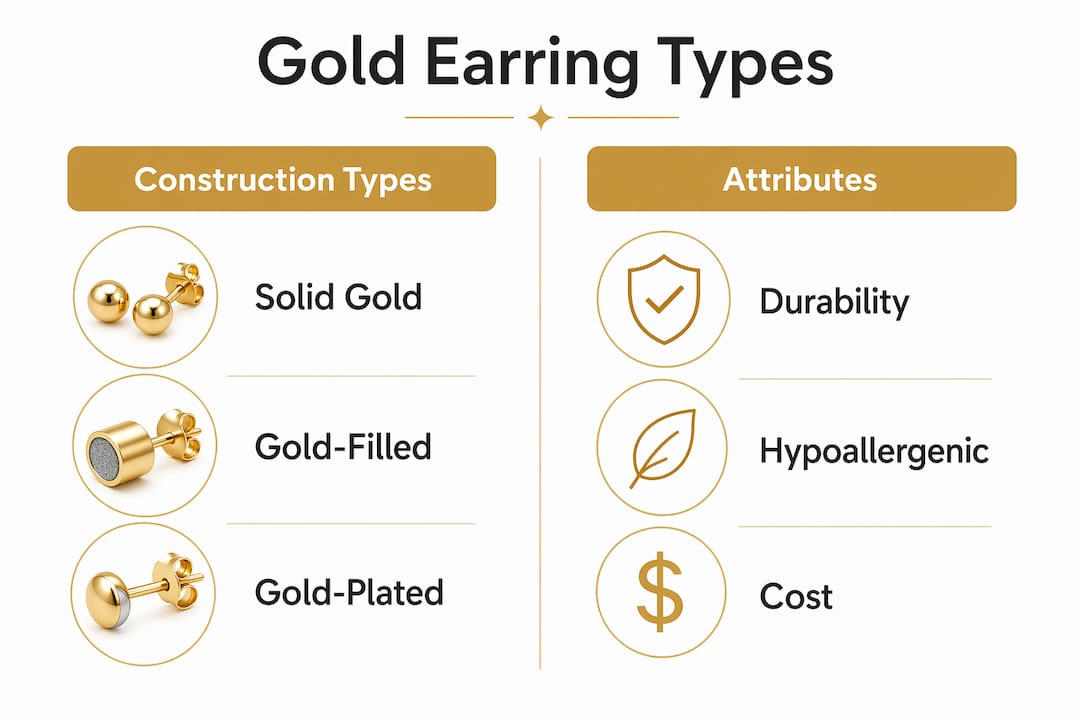
Gold-plated earrings carry only a thin gold coating over a base metal, typically brass or copper. That coating often lasts months to a few years before wearing through. Once the plating wears off, brass-based earrings can cause irritation for people with sensitive skin. Gold-plated pieces are best suited for fashion wear rather than daily or long-term use.
| Type | Gold content | Durability | Hypoallergenic | Cost |
|---|---|---|---|---|
| Solid gold | 41.7% to 75%+ | Decades | Yes | High |
| Gold-filled | Min. 5% by weight | 10 to 30 years | Generally yes | Medium |
| Gold-plated | Thin coating only | Months to a few years | No (once worn) | Low |
Pro Tip: If you have a new piercing or sensitive skin, choose solid gold at 14K or higher. The alloy is stable, non-reactive, and will not cause the irritation that worn-through plating often triggers.
What are the most popular gold earring styles?
Gold earring styles range from minimal studs to dramatic chandeliers, and each style suits different occasions, face shapes, and comfort preferences. Knowing the main categories helps you shop with confidence rather than guessing from product photos.
- Studs sit directly on the earlobe with a post and backing. They are the most versatile style for everyday wear and the safest choice for new piercings. A 14K gold ball stud or diamond-set stud works for the office, gym, and formal events without adjustment.
- Hoops are circular or semi-circular rings that pass through the piercing. Size ranges from small 10mm huggies to large 50mm statement hoops. Smaller hoops are practical for daily wear; larger hoops read as a deliberate style choice.
- Huggies are a subcategory of hoops that sit close to the earlobe with a hinge-back closure. The hinge-back construction makes them comfortable for all-day wear and popular for ear stacking because they do not swing or catch on clothing.
- Drops and dangles hang below the earlobe on a chain, wire, or bar. They range from a simple gold bar to a multi-strand design. These styles add movement and are a strong choice for evening wear or special occasions.
- Chandeliers are elaborate drop earrings with branching tiers. They are typically reserved for formal events because of their weight and visual impact.
- Threaders use a thin gold chain that threads directly through the piercing hole, with no backing required. They create a minimal, modern look and work best with smaller gauge piercings.
- Ear cuffs wrap around the outer ear cartilage without requiring a piercing. They are a low-commitment way to wear gold and have grown significantly in popularity as part of the ear-stacking trend.
Pro Tip: For gifting when you are unsure of the recipient’s style, a 14K gold huggie or small hoop is the safest choice. Both styles work across age groups, face shapes, and outfit types.
How to choose gold earrings that actually work for you
Choosing the right gold earrings comes down to five factors: gold type, karat, style, closure, and skin sensitivity. Working through each one before you buy prevents the most common mistakes.
- Decide on gold type first. If you plan to wear the earrings daily or have sensitive skin, solid gold is the only category worth considering. If you want variety at a lower price point, gold-filled is a reasonable option. Reserve gold-plated for occasional fashion wear only.
- Choose your karat based on lifestyle. 14K is the standard recommendation for everyday jewelry because it is hard enough to resist scratching during normal activity. 18K is better for special-occasion pieces you will handle carefully. 10K works for budget-conscious buyers who still want solid gold.
- Match the style to your routine. Studs and huggies are the most practical for daily wear because they stay secure and do not snag. Drops and chandeliers are better reserved for evenings or events. If you are building an ear stack, start with huggies and studs as your base.
- Check the closure type. Push backs and screw backs are the most secure for studs. Hinged closures on huggies are reliable for daily wear. French wire backs on drops are elegant but less secure for active wear.
- Confirm hypoallergenic status before buying. Solid gold at 14K or 18K is safe for most people, including those with metal sensitivities. Gold-filled is generally safe as long as the plating is intact. Gold-plated earrings on brass bases are not safe for sensitive ears once the coating wears. You can learn more about gold vs. plated differences before committing to a purchase.
How to read karat stamps and hallmarks on gold earrings
Every legitimate gold earring carries a stamp that tells you exactly what you are buying. Learning to read these marks takes two minutes and protects you from overpaying or buying misrepresented jewelry.
- Karat stamps appear as 10K, 14K, or 18K and indicate the proportion of gold in the alloy. These are the most common marks on American-made jewelry.
- Numeric purity marks express gold content in parts per thousand. 585 equals 14K gold (58.5% pure), 750 equals 18K (75% pure), and 417 equals 10K (41.7% pure). European jewelry often uses these numeric marks instead of karat stamps.
- Hallmarks are additional stamps from a manufacturer or assay office that verify the piece’s origin and authenticity. British hallmarks, for example, include a date letter, assay office symbol, and maker’s mark. American jewelry is not legally required to carry hallmarks beyond the karat stamp, but reputable manufacturers typically include them.
- GF and GP abbreviations indicate gold-filled and gold-plated respectively. A stamp reading “1/20 14K GF” means the piece is 14K gold-filled with gold comprising 1/20th of the total weight.
- No stamp at all is a red flag. Authentic gold earrings from reputable sources always carry a purity mark. If you cannot find one, ask the seller directly before purchasing.
Key takeaways
A gold earring’s real value comes from its construction type and karat grade, not just its appearance.
| Point | Details |
|---|---|
| Construction type defines quality | Solid gold, gold-filled, and gold-plated differ significantly in durability, skin safety, and long-term value. |
| 14K is the everyday standard | At 58.3% gold, 14K balances hardness and purity, making it the most practical choice for daily wear. |
| Style affects comfort as much as looks | Closure type and earring weight determine all-day wearability, not just karat grade. |
| Hallmarks confirm authenticity | Karat stamps, numeric marks like 585 or 750, and GF or GP abbreviations tell you exactly what you are buying. |
| Solid gold is safest for sensitive skin | Gold-plated earrings on brass bases can cause irritation once the coating wears through. |
Why I think most people buy the wrong gold earrings
Most buyers focus entirely on style and price, then wonder why their earrings tarnish, irritate their ears, or look dull after six months. The real mistake is treating gold type as a secondary consideration rather than the primary one.
I have seen this pattern repeatedly. Someone buys a beautiful pair of gold-plated drops at a low price, loves them for a few months, then finds the base metal showing through and their earlobes reacting. They conclude that gold earrings are overrated. The problem was never the style. It was the construction.
My honest recommendation is to buy solid gold once and wear it for years rather than cycling through plated pieces every season. A pair of 14K gold studs or huggies from a reputable source like Bakergoldchains will outlast a dozen plated alternatives and cost less per year of wear when you calculate it honestly. The 2026 gold jewelry trends also confirm that classic solid gold styles are not going anywhere, so you are not sacrificing fashion relevance for durability.
Gold-filled makes sense if you want variety at a lower entry price. It is a legitimate product with real longevity. But I would not recommend gold-plated for anything beyond occasional fashion wear, especially for anyone with a history of metal sensitivities.
The other mistake I see is ignoring closure type entirely. A beautiful pair of earrings that falls off during your commute or pulls on your lobe by 3pm is not a good purchase regardless of karat. Match the closure to your lifestyle, not just the aesthetic.
— Blayne
Find your next pair at Bakergoldchains

Bakergoldchains carries a curated selection of solid gold earrings in 10K, 14K, and 18K, sourced from reputable U.S. suppliers with a lifetime craftsmanship guarantee. Every piece carries a karat stamp, and the product descriptions clearly state construction type so you know exactly what you are buying before checkout.
If you are starting with hoops, the 14K yellow gold wedding hoops are a strong first choice. They are compact enough for daily wear, made from solid 14K gold, and versatile across casual and formal settings. For something with more visual presence, the 14K puffed oval earrings offer a sculptural design in the same trusted material. Free insured shipping applies to orders over $150, and flexible financing is available at checkout.
FAQ
What does “gold earring” actually mean?
A gold earring is any earring made wholly or partially of gold, categorized by karat purity (10K, 14K, 18K) and construction type (solid, filled, or plated). The term covers a wide range of products with very different gold content and durability.
Are gold earrings hypoallergenic?
Solid gold earrings at 14K or higher are hypoallergenic for most people, including those with metal sensitivities. Gold-plated earrings on brass bases are not hypoallergenic once the coating wears through, which can trigger skin reactions.
What is the difference between 14K and 18K gold earrings?
14K gold contains 58.3% pure gold and is harder, making it better for daily wear. 18K gold contains 75% pure gold, giving it a richer color but making it softer and more prone to scratching.
How do I know if my gold earrings are real?
Look for a karat stamp (10K, 14K, 18K) or a numeric purity mark (417, 585, 750) on the earring post or back. Legitimate gold earrings from reputable sources always carry one of these marks.
How should I care for gold earrings?
Clean solid gold earrings with warm water, mild dish soap, and a soft brush every few weeks. Store them separately to avoid scratching, and remove them before swimming in chlorinated water or applying lotions and perfumes.
Recommended
- Gold pendants: styles, quality, and how to choose – Baker Gold Chains
- 14k Two Tone Gold Earrings in Double Round Hoop Style – Baker Gold Chains
- Gold chain buying guide: Choose authentic, durable jewelry – Baker Gold Chains
- 14k Two-Tone Gold Hoop Earrings in a Hinged Style(2.5x20mm) – Baker Gold Chains

