

What Is Long-Term Wearability in Gold Jewelry?
Long-term wearability is a gold jewelry piece’s ability to hold its structure and finish through years of daily use. Three things determine it: material composition (karat, alloy, solid vs. plated), design and construction (thickness, link type, soldering quality, clasp and setting details), and use and care (wear intensity, chemical exposure, cleaning habits). Get all three right, and a piece can last decades. Miss one, and even an expensive chain can fail within months.
Before you buy, check for these at a glance:
- A karat stamp (10K, 14K, or 18K) hallmarked on the piece or clasp
- A product listing that states solid gold, not “gold-toned” or “gold-plated”
- A seller warranty, ideally a lifetime craftsmanship guarantee
- Third-party assay or certification confirming metal content
Pro Tip: A high price tag does not mean a piece will last. WRAP’s durability research found that price and brand are poor predictors of real-world durability. Construction quality and objective testing are what actually matter.
Table of Contents
- How karat and alloy choices affect everyday durability
- Which construction details actually determine how long a piece survives?
- How long do gold pieces realistically last, and what shortens them?
- How to verify durability before you buy
- Care and maintenance steps that extend a piece’s life
- What trust signals should you expect from a reputable seller?
- Key Takeaways
- What jewelers actually mean when they say a piece is “wearable for life”
- Durable everyday gold, backed by real guarantees
- Sources and further reading
How karat and alloy choices affect everyday durability
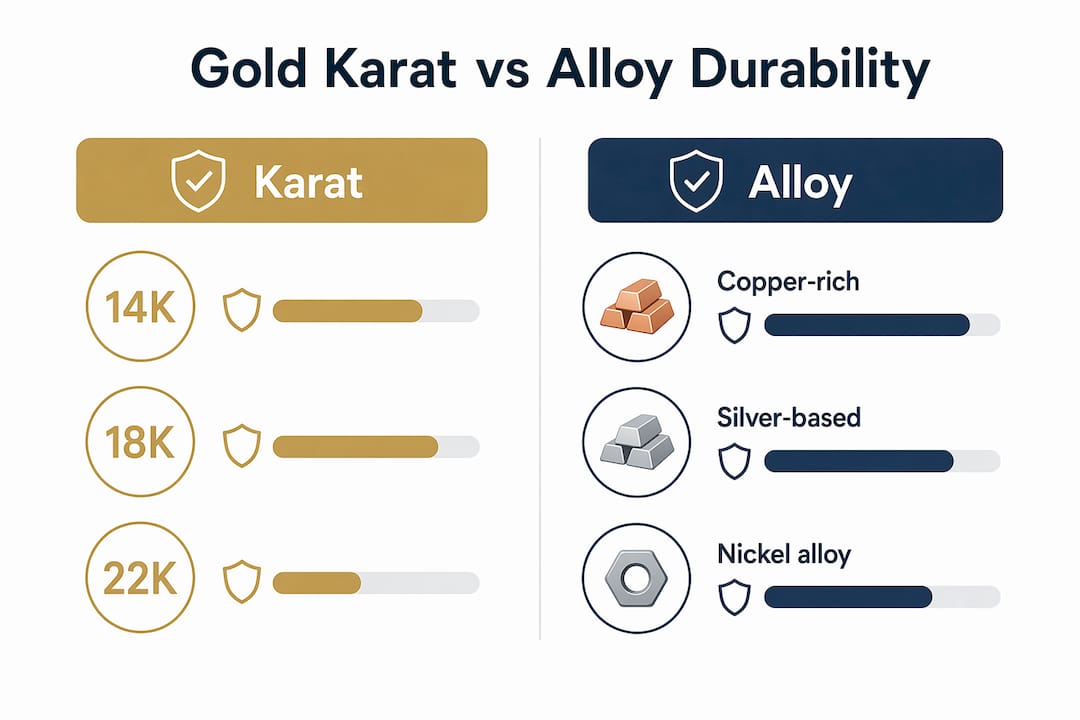
Long-term wearability combines two things: physical endurance (the piece doesn’t break or deform) and visual persistence (the finish stays intact). Karat directly affects both.
- 10K gold is the lowest common purity option that offers high hardness and scratch resistance, making it practical for daily-use rings and bracelets.
- 14K gold is a balanced choice combining hardness and desirable color, widely popular for everyday jewelry.
- 18K gold is a higher purity, softer and more prone to surface scratches, better suited for occasional wear rather than daily use.
The gap between solid gold and plated alternatives is where most buyers get surprised. Gold-filled pieces have a thicker gold layer bonded under heat and pressure, giving them years of reasonable wear. Vermeil is sterling silver with a thin gold coating, typically 2.5 microns or more. Standard gold-plated jewelry has the thinnest layer of all and can show base metal within months of regular wear. For everyday use, solid gold is the only category that holds its finish and value long-term.
Alloy metals matter too. Copper-heavy alloys (common in rose gold) add warmth but can oxidize over time. Silver-based alloys in white gold are harder and more stable, though white gold typically needs rhodium plating to maintain its bright finish.
Which construction details actually determine how long a piece survives?
Design that anticipates daily stress — not just raw material quality — is what separates a piece that lasts from one that fails prematurely. For gold chains and rings, that means paying attention to specifics most product pages gloss over.
Chain link style and thickness:
- Rope and Franco chains have tightly interlocked links that distribute tension well, making them among the most break-resistant styles for everyday wear.
- Box and figaro chains are more open in structure; thinner versions are vulnerable at the link joints under repeated pulling.
- Curb chains fall in the middle. A heavier gauge curb chain is durable; a lightweight one is not.
Hollow chains weigh less and cost less, but they dent and kink more easily than solid chains. For a piece you plan to wear daily, solid construction is worth the extra cost.
Soldering and joints are where most chain failures start. Well-soldered links show no visible gaps and resist lateral stress. Reinforced jump rings at pendant bails are a detail worth checking. Clasps should feel firm and spring back cleanly; a lobster clasp that feels loose when new will fail faster under daily use.
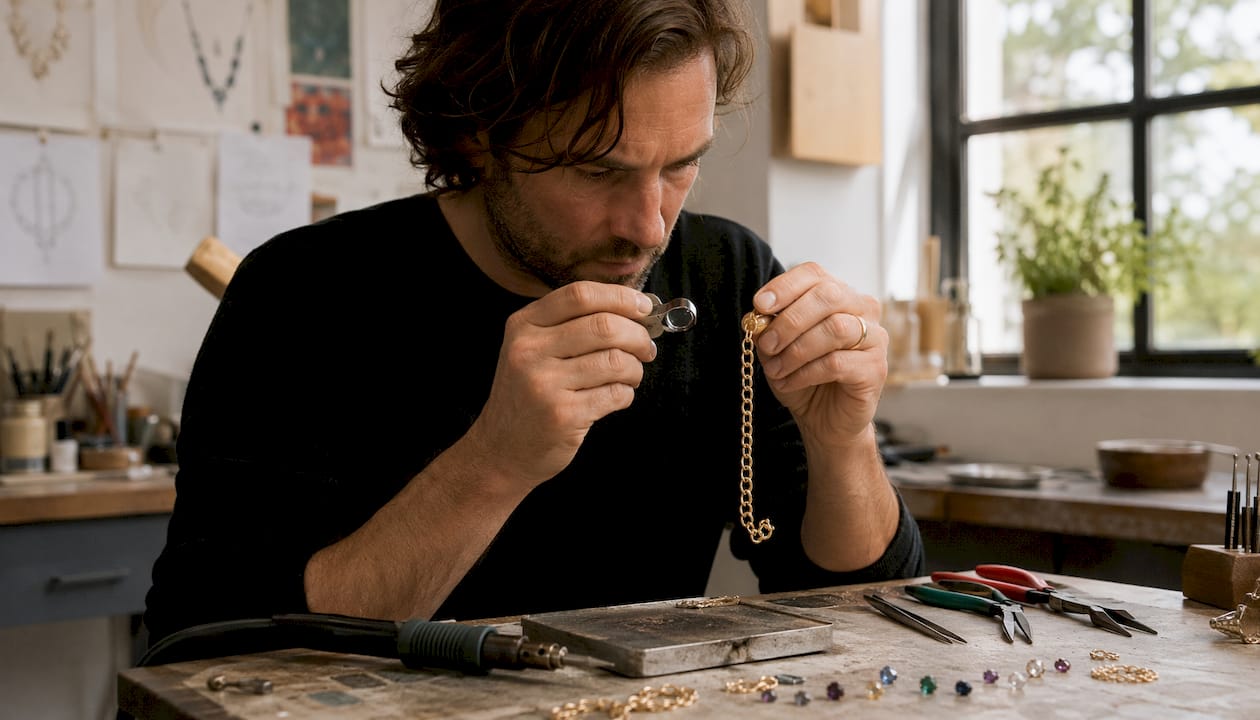
For rings with stones, prong and bezel settings differ in durability. Bezel settings enclose the stone fully and resist snagging. Prong settings expose more of the stone but allow more light in; they need periodic inspection to confirm prongs haven’t bent or thinned.
Pro Tip: Zoom into product photos and look for the clasp, bail, and any visible solder points. If a listing shows only glamour shots with no construction detail, ask the seller directly for gauge, weight, and whether the piece is hollow or solid before you buy.
How long do gold pieces realistically last, and what shortens them?
Use intensity is the single biggest variable in how long a piece lasts. A service-lifespan study confirmed that wear frequency and exposure conditions drive outcome variation far more than material alone.
| Piece type | Realistic lifespan category | Primary risk factor |
|---|---|---|
| Solid gold ring (14K, heavy band) | Can last many years with maintenance | Friction, resizing stress |
| Solid gold chain (14K, medium gauge) | Typically durable over multiple years | Clasp wear, link fatigue |
| Gold bracelet (solid, sturdy clasp) | Generally lasts several years | Repeated impact, clasp failure |
| Gold pendant (solid, reinforced bail) | Often endures a decade or more | Bail stress, surface scratches |
| Gold-plated piece (any style) | Usually wears out within a few years | Plating loss, base metal exposure |
The main accelerants of wear are chemicals (chlorine in pools, perfumes, hand lotions), sweat during physical activity, friction against hard surfaces, and improper storage where pieces rub together. Signs to watch for include thinning links that feel lighter or look stretched, loose stone settings, a clasp that no longer snaps firmly, and visible surface loss on high-contact areas.
When you notice those signs, act quickly:
- Remove the piece and stop wearing it until repaired
- Take it to a jeweler for link soldering or prong re-tipping
- Ask about rhodium replating if the finish on white gold has dulled
- Store it separately in a soft pouch while awaiting service
How to verify durability before you buy
A credible product page gives you enough information to judge construction quality without having to guess. Here’s what to confirm before you purchase:
- Karat stamp disclosed: 10K, 14K, or 18K stated explicitly, not “gold-colored” or “gold-tone”
- Material type stated: solid gold, gold-filled, vermeil, or plated — each has a different lifespan expectation
- Weight and gauge listed: heavier pieces in the same style are almost always more durable
- Construction photos available: clasp, bail, and link closeups, not just styled shots
- Solder and joint details: visible in photos or described in the product copy
- Warranty terms clear: a lifetime craftsmanship guarantee covers manufacturing defects; understand what it includes
- Return policy and insured shipping: both reduce your risk if a piece arrives damaged or misrepresented
WRAP’s benchmarking methodology established that standardized testing protocols — not price or brand reputation — are the reliable way to identify truly durable products. When a seller references third-party assay or certification, that’s a meaningful signal. When they don’t, ask.
Pro Tip: If a product page omits weight, gauge, or construction type, contact customer service and ask: “Is this piece solid gold or hollow? What is the wire gauge?” A seller confident in their product will answer directly. Vague responses are a red flag.
Care and maintenance steps that extend a piece’s life
Wearer practices — how you clean, store, and handle a piece — account for a large share of how long it lasts. The good news is that a simple routine makes a real difference.
Daily habits:
- Remove gold jewelry before swimming, showering with heavy products, or working out
- Put jewelry on after applying perfume, lotion, or hairspray — not before
- Wipe pieces with a soft, dry cloth after wearing to remove sweat and skin oils
At-home cleaning (step by step):
- Fill a small bowl with warm water and a drop of mild dish soap
- Soak the piece for 10–15 minutes
- Gently scrub with a soft-bristle toothbrush, focusing on link joints and clasp mechanisms
- Rinse thoroughly under clean running water
- Pat dry with a lint-free cloth and let air dry completely before storing
For a full guide on keeping chains looking their best, Bakergoldchains’s gold chain cleaning guide covers the process in detail.
Care intervals:
- Monthly: Quick clean as above; check clasp function
- Annually: Professional inspection for prong wear, link thinning, and clasp integrity
- Every 3–5 years: Polishing and, for white gold, rhodium replating if the finish has dulled
Store pieces individually in soft pouches or compartmentalized jewelry boxes. Chains left loose together tangle and scratch each other.
What trust signals should you expect from a reputable seller?
Objective trust signals reduce your buying risk. Manufacturing standards and construction quality — not marketing claims — are the reliable indicators of a piece that will last.
A credible seller’s product pages and policy sections should include:
- Karat hallmark and assay confirmation for every piece
- Documented product specs: weight in grams, gauge or thickness, construction type
- A lifetime craftsmanship guarantee covering manufacturing defects
- Insured shipping on orders above a stated threshold
- A clear return window with no ambiguous conditions
- Third-party certification or sourcing transparency
Transparency in product specifications — weight, gauge, karat, and construction type — is the clearest signal that a seller stands behind what they make. A lifetime craftsmanship guarantee only means something when the underlying specs are disclosed.
Bakergoldchains lists 10K, 14K, and 18K solid gold pieces across chains, rings, pendants, and bracelets. The brand offers a lifetime craftsmanship guarantee, free insured shipping on orders over $150, and sources from reputable U.S. suppliers. Those are the kinds of verifiable commitments that align with what objective durability research recommends buyers look for.
One honest note: trust signals reduce risk but don’t make a piece misuse-proof. A lifetime guarantee covers manufacturing defects, not damage from chlorine exposure or a piece worn through a gym session every day for five years. Maintenance and appropriate use still determine the final outcome.
Key Takeaways
Solid gold with verified construction details and consistent care is the most reliable path to long-term wearability in everyday jewelry.
| Point | Details |
|---|---|
| Solid gold outlasts plated | Gold-plated pieces usually wear out within a few years; solid 14K chains can last decades with proper maintenance. |
| 14K is the everyday sweet spot | It balances hardness and color better than 10K or 18K for daily-wear rings and chains. |
| Construction beats price | Gauge, solder quality, and clasp type predict durability more reliably than brand or cost. |
| Simple care extends lifespan | Monthly cleaning, annual inspection, and chemical avoidance add years to any solid gold piece. |
| Bakergoldchains | Offers solid 10K, 14K, and 18K pieces with a lifetime craftsmanship guarantee and insured shipping. |
What jewelers actually mean when they say a piece is “wearable for life”
The phrase “wearable for life” gets used loosely, but working jewelers mean something specific by it. They mean a piece built with enough metal mass and structural integrity that normal daily wear won’t cause failure within a reasonable timeframe — and that when it does show wear, it can be repaired rather than replaced.
The trade-off jewelers accept most often is between comfort and durability. A thinner band is more comfortable on the finger but wears through faster at the bottom, where it contacts surfaces constantly. A heavier gauge chain drapes better and resists kinking, but it costs more. Designers making pieces for daily wear tend to prioritize gauge and solder quality over decorative complexity, because a beautiful piece that breaks in two years serves no one.
The practical advice from the shop floor: match the piece to your lifestyle first. If you work with your hands, swim regularly, or rarely take jewelry off, choose a heavier-gauge solid 14K piece with a bezel setting over a delicate prong-set design. If you wear jewelry occasionally for events, 18K is fine and the softer finish is less of a concern.
Durable everyday gold, backed by real guarantees
If you’ve read through the checklist above and want pieces that actually meet it, Bakergoldchains is a direct place to start. The site carries solid 10K, 14K, and 18K gold chains, rings, pendants, and bracelets sourced from U.S. suppliers, with karat stamps, weight specs, and construction details listed on product pages.
For everyday wear, the 14K solid gold necklace is a practical starting point: solid construction, a karat you can verify, and a weight that holds up to daily use. For rings, the 14K horseshoe ring offers the heavier band profile that jewelers recommend for daily wear. Every order over $150 ships free with insurance, and the lifetime craftsmanship guarantee covers manufacturing defects. Browse the full collection at bakergoldchains.com and filter by karat and style to find pieces that fit your wear intensity.
Sources and further reading
The research behind this article draws on peer-reviewed durability studies, industry benchmarking reports, and design-for-wearability reviews. If you want to go deeper into testing protocols, lifespan data, or design standards, these are worth your time:
- WRAP: Durability Is Fashion’s Next Competitive Advantage — The foundational industry report establishing that price and brand don’t predict durability, and introducing standardized benchmarking protocols. Essential reading for anyone evaluating product claims.
- Unravelling the Service Lifespan of Garments — Empirical data on median use times and wear intensity across garment categories. The methodology for mapping use intensity to lifespan applies directly to jewelry.
- Design of Wearable Devices for ‘Wearability’: A Scoping Review — Confirms that design anticipating real-world human interaction determines long-term adherence and durability, not raw material quality alone.
- Understanding Garment Durability Through Local Lenses — Nature Scientific Reports study framing durability as an interaction between product and user context. Supports the lifestyle-matching advice throughout this article.
- Measuring Physical Garment Durability: An Assessment of 47 T-Shirts — The benchmarking study that demonstrated no correlation between price and durability across 47 tested garments. The testing framework it proposes is the model for objective product evaluation.
These sources are the basis for the durability claims and lifespan ranges in this article. Consult them directly for testing protocols, policy context, and detailed methodology.

