

How to Clean Gold Chains and Keep Them Shining
Cleaning gold chains correctly means using mild soap, warm water, and a soft brush or cloth to remove oils, dirt, and buildup without damaging the metal. The method you use depends on whether your chain is solid gold, gold-filled, or gold-plated. Get it wrong and you risk scratching the surface, wearing down a plating layer, or dulling the finish permanently. Get it right and your chain looks as good years from now as the day you bought it. This guide walks you through every step, from gathering the right tools to storing your chain properly after cleaning.
What tools do you need to clean gold chains safely at home?
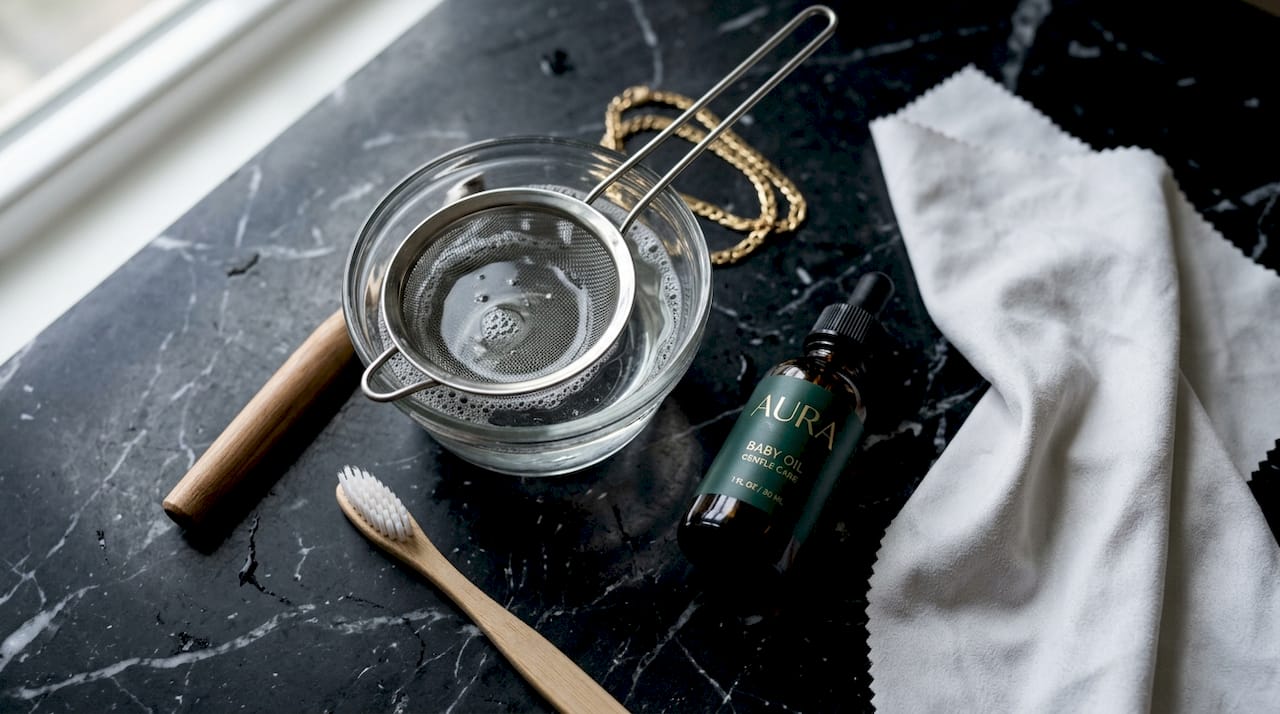
The right supplies make the difference between a safe clean and accidental damage. You do not need expensive products. What you need is the correct combination of gentle materials.
Here is what to gather before you start:
- Mild dish soap: Use an ammonia-free formula like Dawn Free & Clear or any fragrance-free dish soap. Ammonia and harsh detergents strip protective finishes and react badly with gold alloys.
- Warm water: Not hot. Hot water can loosen settings on chains with stones and cause thermal stress on plated layers.
- Soft-bristled brush: A baby toothbrush works perfectly. Its bristles are fine enough to reach inside chain links without scratching.
- Soft lint-free cloth or microfiber cloth: For wiping and drying. Paper towels are too abrasive for fine gold surfaces.
- A small bowl: To mix your cleaning solution and soak the chain.
- A fine mesh strainer: Optional but useful. Place it over the drain if you rinse in a sink so you do not lose a clasp or small pendant.
What to avoid entirely: toothpaste, baking soda, vinegar, bleach, and commercial abrasive polishes. Common DIY cleaning hacks like these are too abrasive or chemically aggressive and will harm both the gold and any gemstone settings. This is one of the most common mistakes people make when caring for fine gold chains.
Pro Tip: If your chain has a stubborn knot before cleaning, apply one small drop of baby oil to the knot and gently tease it apart with two fine pins or tweezers. Loosen the outermost loops first, working inward. Then clean the chain as normal to remove the oil residue.
How do cleaning methods differ between solid gold, gold-filled, and gold-plated chains?
Not all gold chains are the same, and scrubbing intensity should match the finish type. Treating a gold-plated chain the same way you treat a solid 14K gold chain is one of the fastest ways to ruin it.
| Chain type | Soak time | Cleaning method | What to avoid |
|---|---|---|---|
| Solid gold (10K, 14K, 18K) | 10 to 20 minutes | Soft brush inside links, rinse well | Bleach, abrasive pastes |
| Gold-filled | 10 minutes | Soft cloth wipe, light brushing | Prolonged soaking, harsh chemicals |
| Gold-plated or vermeil | 5 to 10 minutes | Damp cloth wipe only, no brushing | Brushing, extended soaking, ultrasonic cleaners |
Solid gold chains tolerate gentle brushing because the gold content runs all the way through the metal. A 10 to 20 minute soak in mild soapy water followed by soft brushing is safe and effective for 10K, 14K, and 18K pieces. Gold-filled chains have a thick bonded layer of gold over a base metal core, so they handle light brushing but benefit from shorter soaks.
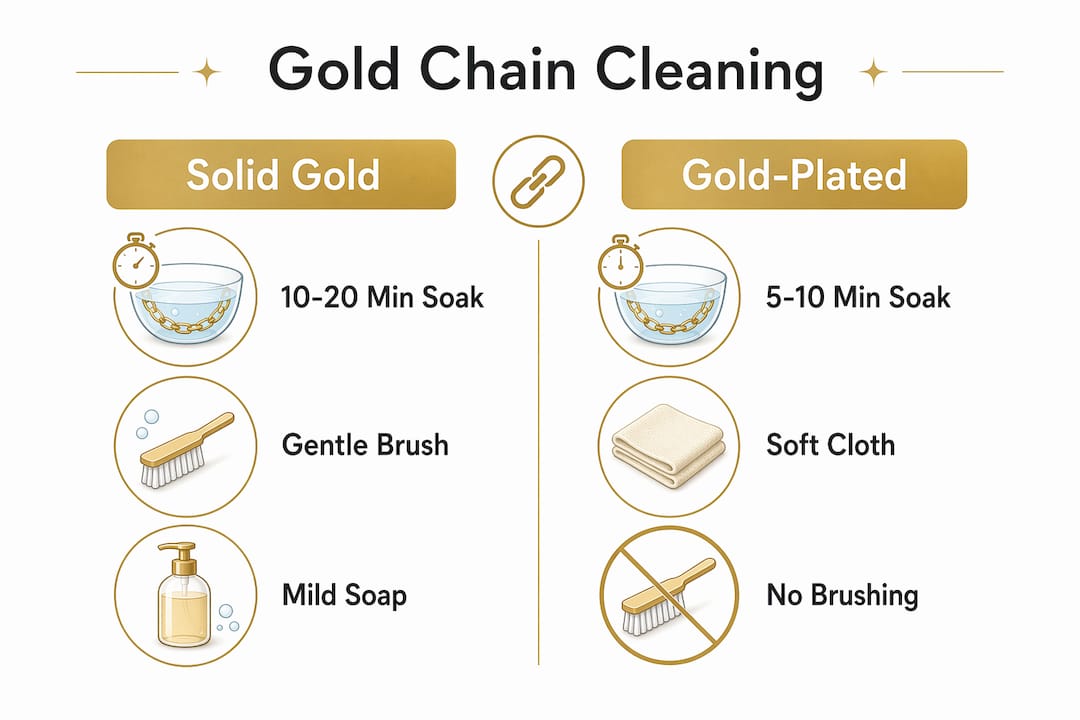
Gold-plated and vermeil chains are the most delicate. The gold layer is thin, and brushing accelerates wear. Gold-plated chains need a soak of just 5 to 10 minutes followed by gentle wiping with a damp cloth. Ultrasonic cleaners, which use high-frequency vibrations, are completely off-limits for plated pieces because the vibration strips the plating layer. If you are unsure which type of chain you own, check out this solid gold vs. plated comparison from Bakergoldchains before you start cleaning.
Pro Tip: When in doubt about your chain type, treat it as gold-plated and use the gentlest method. You can always clean more thoroughly later. You cannot undo plating damage.
Step-by-step instructions to clean your gold chain effectively
Follow these steps in order. Skipping steps, especially the drying phase, is where most people cause unintentional damage.
- Untangle the chain. Lay it flat on a clean surface. If there are knots, use the baby oil and pin method described above before adding any water.
- Mix your cleaning solution. Add 2 to 3 drops of mild dish soap to a small bowl of warm water. Stir gently until the soap disperses.
- Soak the chain. Place the chain in the bowl. For solid gold, soak 10 to 20 minutes. For gold-filled, soak 10 minutes. For gold-plated or vermeil, soak 5 to 10 minutes.
- Brush or wipe. For solid gold, use a soft-bristled baby toothbrush to gently scrub inside the links, around the clasp, and along any textured detailing. Use straight-line strokes, not circular ones. For plated chains, skip the brush entirely and use a damp soft cloth.
- Access the link interiors. Hold the chain taut with light tension to open up the spaces between links. This lets you clean buildup under clasps and inside links without twisting or stressing the metal.
- Rinse thoroughly. Hold the chain under warm running water or dip it in a clean bowl of plain warm water. Make sure no soap residue remains. Soap left on the chain will dull the finish as it dries.
- Pat dry immediately. Use a soft microfiber cloth to gently press the chain dry. Do not rub. Rubbing creates micro-scratches on the surface.
- Air dry completely. Lay the chain flat on a clean dry cloth and let it air dry for at least 30 minutes before storing or wearing. Trapped moisture accelerates tarnishing, especially on plated pieces.
Chains with pendants or stones: Remove pendants before cleaning if possible. If the pendant has porous or organic stones like pearls, turquoise, or opals, do not submerge it. Porous stones absorb water and can crack or discolor. Clean the chain separately with a damp cloth in that case.
Pro Tip: Place a fine mesh strainer over your sink drain before rinsing. Small clasps and jump rings can slip off during cleaning and disappear instantly.
Common mistakes that damage gold chains during cleaning and storage
The safest cleaning method combines mild soap, warm water, and soft brushing or cloth wiping. The most common damage does not come from neglect. It comes from well-meaning but incorrect cleaning habits.
Mistakes to stop making right now:
- Using toothpaste or baking soda. Both are abrasive enough to scratch gold and permanently dull the finish. They are not a shortcut. They are a liability.
- Soaking too long. Extended soaking weakens clasps over time and accelerates plating wear on non-solid pieces.
- Skipping the dry step. Putting a damp chain directly into a jewelry box traps moisture against the metal. This causes discoloration and, on plated chains, speeds up the breakdown of the gold layer.
- Storing chains loose together. Chains scratch each other and tangle when stored in a pile. Store each chain in its own soft pouch, clasped or hung, to prevent tangling and surface damage.
- Over-cleaning. Aggressive scrubbing and frequent polishing cause microscopic scratches that accumulate over time. Monthly gentle cleaning is the right frequency for daily-wear chains.
When your chain shows signs of broken links, a failing clasp, or significant plating loss, stop cleaning at home and take it to a professional jeweler. A trained jeweler can re-plate, re-polish, or repair damage that home cleaning cannot fix and may worsen.
For a broader look at habits that shorten a chain’s life, the Bakergoldchains guide on common gold chain mistakes covers both cleaning and everyday wear errors worth knowing.
How to maintain your gold chain between cleanings
Routine care between full cleanings is what keeps your chain looking sharp day to day. A few consistent habits protect the metal far better than any deep-cleaning session.
- Wipe after every wear. Use a dry microfiber cloth to remove skin oils, sweat, and product residue before storing. This one habit reduces how often you need a full soapy clean.
- Remove before chemical exposure. Take your chain off before swimming in chlorinated pools, applying perfume, using lotion, or cleaning with household products. Chlorine and bleach chemically attack the alloy metals in gold, causing discoloration and brittleness over time.
- Fasten the clasp before storing. An open clasp catches on other jewelry and stretches or bends links. Clasping the chain before placing it in storage prevents this.
- Check monthly for buildup and damage. Hold the chain under good light and look for dull patches, discoloration around the clasp, or any links that look stretched or misshapen. Catching these early prevents bigger problems.
- Rotate your chains. Wearing the same chain every day without rest accelerates wear. Rotating between pieces gives each one time to recover and reduces cumulative stress on links and clasps.
Pro Tip: Apply perfume and lotion before putting on your chain, not after. Let products dry fully on your skin first. This single habit significantly reduces chemical buildup on the metal.
Cleaning frequency and gentleness preserve shine longer than any aggressive quick fix. Consistency beats intensity every time when it comes to gold chain maintenance.
Key takeaways
The most effective way to clean gold chains is with mild soap, warm water, and a method matched to the specific gold type.
| Point | Details |
|---|---|
| Match method to chain type | Solid gold tolerates brushing; gold-plated and vermeil need cloth wiping only. |
| Soak time matters | Solid gold: 10 to 20 minutes. Gold-plated: 5 to 10 minutes. Longer soaks damage plated layers. |
| Always dry completely | Pat dry with a microfiber cloth, then air dry flat for 30 minutes to prevent tarnish. |
| Avoid common DIY hacks | Toothpaste, baking soda, vinegar, and bleach all damage gold and gemstone settings. |
| Store chains individually | Keep each chain in its own soft pouch, clasped, to prevent tangling and scratching. |
Why patience is the real secret to gold chain care
I have seen a lot of people reach for toothpaste or baking soda because they want fast results. I understand the impulse. But after working with gold jewelry for years, the clearest pattern I have noticed is this: the chains that hold up the best belong to people who clean gently and consistently, not aggressively and occasionally.
The mild soap and warm water method feels almost too simple to work. It does work, and it works precisely because it does not strip anything from the metal. Gold is durable, but the alloys mixed into 10K and 14K gold are more reactive than pure gold. Harsh chemicals attack those alloys first, and that is where you start seeing discoloration, brittleness, and dullness.
The other thing I would push back on is the idea that professional cleaning is only for damaged jewelry. I recommend taking a cherished piece to a jeweler once a year even when it looks fine. A professional ultrasonic clean on solid gold, done correctly by someone who knows what they are doing, removes buildup from inside link interiors that a toothbrush simply cannot reach. Think of it as a tune-up, not a repair. Your chain will thank you for it.
— Blayne
Keep your gold chain looking its best with Bakergoldchains
At Bakergoldchains, every chain is made from authentic 10K, 14K, or 18K solid gold sourced from reputable U.S. suppliers. That means the cleaning methods in this guide apply directly to every piece in the collection, and you never have to guess whether your chain can handle a proper soak. Browse the 14K yellow gold curb chain as a starting point, or explore the full range of rope, Franco, Cuban, and Byzantine styles. Every order over $150 ships free with insurance, and every piece carries a lifetime craftsmanship guarantee. When you buy solid gold, proper care is straightforward. Bakergoldchains makes both the jewelry and the guidance easy to trust.
FAQ
What is the safest way to clean a gold chain at home?
The safest method is a 10 to 20 minute soak in warm water with 2 to 3 drops of mild, ammonia-free dish soap, followed by gentle brushing with a soft baby toothbrush, a thorough rinse, and complete air drying. This approach works for solid gold chains without risking damage to the metal.
Can I use toothpaste to clean my gold chain?
No. Toothpaste is abrasive and will scratch the gold surface, dulling the finish over time. Use mild dish soap and warm water instead.
How often should I clean my gold chain?
Monthly gentle cleaning is the right frequency for chains worn daily. Over-cleaning or aggressive polishing causes microscopic scratches that accumulate and reduce the chain’s shine over time.
How do I clean a gold-plated chain without damaging it?
Soak the chain for no more than 5 to 10 minutes in mild soapy water, then wipe gently with a damp soft cloth. Skip the brush entirely. Brushing accelerates plating wear on gold-plated and vermeil pieces.
Should I remove my gold chain before swimming or showering?
Yes. Chlorine in pools chemically attacks the alloy metals in gold, causing discoloration and long-term brittleness. Remove your chain before swimming, showering, or applying any chemical products to your skin.

