

Why Invest in Premium Accessories: Value, Cost, and Resale
Some premium accessories are genuinely worth buying as investments — but only when three conditions are met: the piece has a timeless design or limited supply, its authenticity is documented, and it is kept in excellent condition. When those factors align, a well-chosen item can preserve or even appreciate in value on the secondary market while delivering daily utility that cheap alternatives simply cannot match.
The core principle: A premium accessory earns its price twice — once through years of reliable use, and again when you sell it. Cost-per-wear and resale value are the two numbers that determine whether a purchase is financially sound, not the sticker price alone.
Three quick conditions that separate a smart buy from an expensive mistake:
- Timeless design or limited supply: Trend pieces fade; classic silhouettes and limited runs hold collector interest.
- Documented authenticity and provenance: Receipts, serial numbers, and original packaging protect resale value and reduce authentication risk.
- Excellent condition through active maintenance: Neglect destroys value faster than any market downturn.
Bakergoldchains, which specializes in solid 10K, 14K, and 18K gold jewelry sourced from reputable U.S. suppliers, is a practical example of an investment-grade jeweler whose pieces check all three boxes.
Table of Contents
- Which accessory categories can actually hold or grow value?
- What actually makes a premium accessory keep or grow value?
- Does cost-per-wear math actually favor premium purchases?
- What are the real risks of treating accessories as investments?
- A practical pre-purchase checklist for buyers who care about resale
- Where can you sell premium accessories, and what does it cost?
- How to care for premium accessories to protect their value
- How Bakergoldchains approaches investment-grade gold jewelry
- Key Takeaways
- The case for buying with both your head and your heart
- Bakergoldchains solid gold jewelry worth considering
- Helpful sources for further research
Which accessory categories can actually hold or grow value?
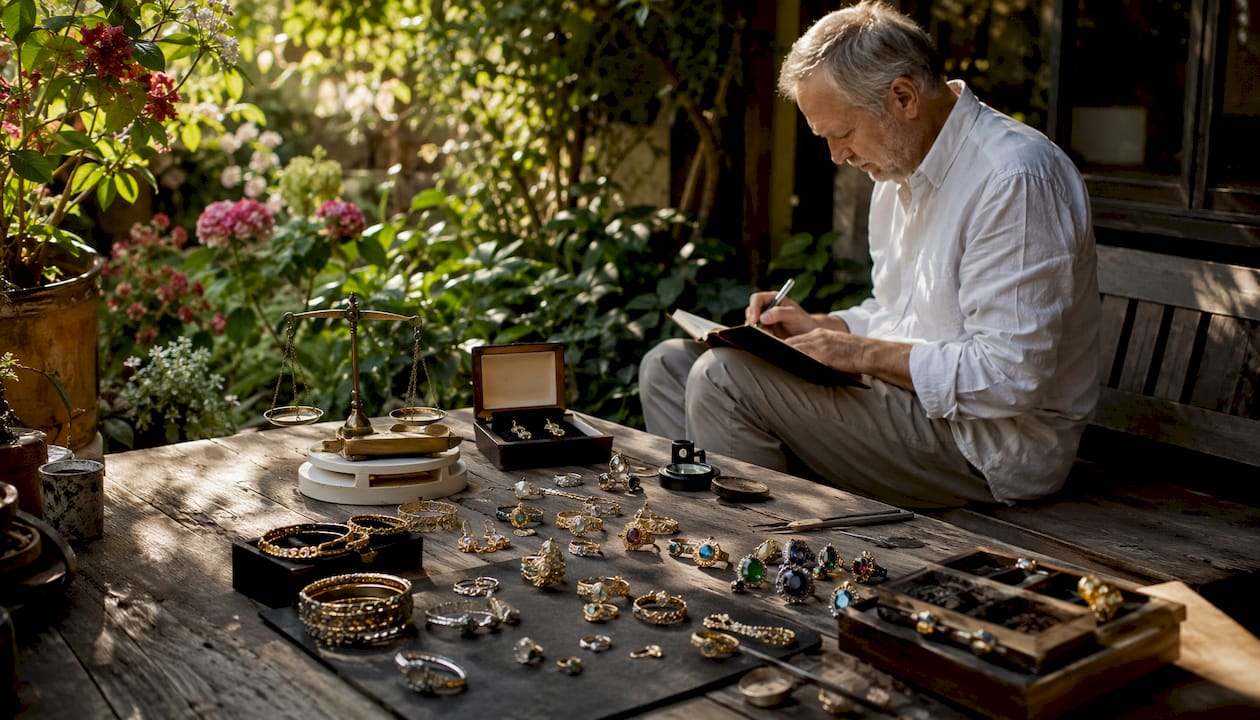
Not every premium purchase behaves like an asset. Category selection is the first filter.
Categories with genuine resale potential:
- Fine jewelry (solid gold, platinum, diamonds): Material value provides a floor. Gold chains with timeless designs tend to hold value because the metal itself is liquid.
- Select luxury watches: Heritage brands with limited production and documented service histories regularly trade above retail on secondary markets.
- Designer handbags: Certain models from heritage houses — particularly those with limited production runs — function as alternative financial assets because brand heritage and collector demand sustain prices.
- Rare collectible pieces: Limited-edition collaborations or discontinued models in pristine condition attract serious buyers.
Categories that rarely appreciate:
- Trend-driven costume jewelry and fast-fashion accessories lose value the moment they leave the store.
- Mass-market phone cases and generic device accessories depreciate quickly, though premium versions from reputable makers can justify their price through durability for heavy users.
- Items tied to a specific cultural moment rather than enduring design.
The underlying logic is straightforward: scarcity, material durability, and collector demand drive different outcomes across categories.
What actually makes a premium accessory keep or grow value?
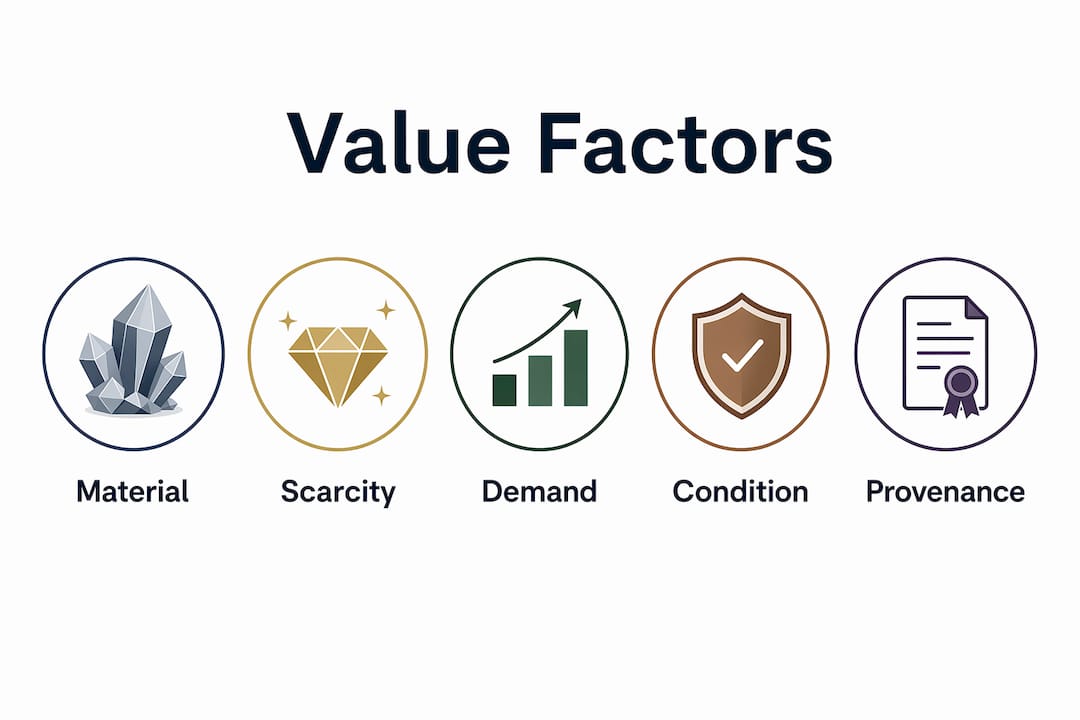
Five concrete drivers determine whether a piece holds up financially over time.
- Brand heritage and provenance: Long-established makers carry reputational weight that sustains secondary-market demand. Documented provenance — original receipts, certificates, purchase records — reduces buyer skepticism and supports higher resale prices.
- Rarity and production limits: Limited editions and discontinued models create scarcity. When supply is fixed and demand persists, prices tend to hold or climb.
- Material and craft quality: Karat weight in gold, full-grain leather construction, hand finishing, and precision hardware are measurable indicators of longevity. Timeless design principles compound this: a well-made piece in a classic form stays relevant across decades.
- Condition and maintenance: Untouched original packaging, service records, and minimal visible wear are the single biggest factors buyers evaluate at resale. A scratched, unserviced watch or a cracked leather wallet loses a disproportionate share of its value.
- Market dynamics: Collector interest, macro trends, and overall liquidity in a category affect how quickly you can sell and at what price. Fine jewelry benefits from a liquid underlying commodity; niche collectibles may take months to find the right buyer.
Pro Tip: Prioritize timeless function and materials over transient design details. A classic gold jewelry piece in a clean, enduring style will outlast any seasonal trend in both wearability and resale appeal.
Does cost-per-wear math actually favor premium purchases?
Cost-per-wear is the simplest financial tool for evaluating a premium purchase. Divide the total price by the number of times you use the item. The lower the number, the better the value.

Simple comparison: wallet over 10 years
| Item | Purchase price | Replacements | Total spent | Uses (est.) | Cost per use |
|---|---|---|---|---|---|
| Budget wallet | Budget-friendly replacements over time | Total spent over years | Estimated uses | Lower cost per use | |
| Premium leather wallet | — | No replacements needed with care | Total spent including upkeep | Estimated uses | Competitive cost per use |
The premium wallet wins on total cost over time — and that gap widens if you factor in the time spent shopping for replacements.
Buying quality upfront eliminates replacement cycles and the hidden time cost of researching, purchasing, and breaking in new items repeatedly. That time cost is real and rarely appears in budget comparisons.
How to run your own calculation:
- Estimate how many times per year you will use the item.
- Multiply by your expected hold period in years to get total uses.
- Add purchase price plus estimated maintenance costs (conditioning, cleaning, insurance).
- Divide total cost by total uses.
- Compare that figure to the equivalent budget option’s total cost over the same period.
Break-even typically arrives within two to three years for daily-use items like wallets, belts, and jewelry. For occasional-use pieces, the math is tighter — which is why resale value matters more for items you won’t wear constantly.
What are the real risks of treating accessories as investments?
Premium accessories are not stocks. Resale is not guaranteed, and several risks can erode returns.
- Liquidity: Selling a luxury item takes time. Unlike a stock, you cannot exit in seconds. Consignment can take weeks or months; auction timelines vary.
- Fees and commissions: Resale platforms and auction houses typically charge sellers meaningful commissions, which reduce net proceeds.
- Authentication and fakes: The secondary market for luxury goods carries counterfeiting risk. Buyers demand proof of authenticity, and items without documentation sell at a discount or not at all.
- Holding costs: Insurance, professional storage, and periodic servicing add to your total cost of ownership over a long hold period.
- Trend shifts: Even well-made pieces can fall out of collector favor if the brand loses relevance or a style becomes dated.
A realistic expectation: Most premium accessories will not outperform a diversified investment portfolio. The financial case rests on cost-per-wear efficiency and partial value recovery at resale — not on guaranteed appreciation. Buy what you will genuinely use and enjoy; treat any resale upside as a bonus.
Overpaying for brand name alone, without verifying condition and provenance, is the most common and costly mistake buyers make.
A practical pre-purchase checklist for buyers who care about resale
Run through these steps before committing to any significant purchase.
- Verify the material. For gold jewelry, check the karat stamp (10K, 14K, 18K). For leather, confirm full-grain construction, not bonded or corrected-grain. A buyer’s guide to premium gold accessories can walk you through authentication markers.
- Get receipts and serial numbers. Original purchase documentation is non-negotiable for resale. No receipt means a lower sale price or no sale at all.
- Check for limited-edition or discontinued status. Scarcity supports future demand; confirm production details before paying a premium for rarity.
- Inspect hardware, stitching, and finish. Loose clasps, uneven stitching, and surface scratches signal poor quality or prior damage — both hurt resale.
- Confirm the warranty or repair policy. A lifetime craftsmanship guarantee, like the one Bakergoldchains offers, reduces your long-term maintenance risk.
- Factor in your hold period. If you plan to sell within two years, condition and provenance matter even more. If you are buying for decades of use, material quality and repairability take priority.
Pro Tip: For high-value pre-owned pieces, always request service history or proof of professional repairs. A watch or leather bag with documented servicing commands a measurably higher resale price than an identical item with no records.
Where can you sell premium accessories, and what does it cost?
| Channel | Typical seller fee | Timeline | Best for |
|---|---|---|---|
| Consignment/resale marketplace | 20% of sale price | 2 weeks | Authenticated luxury goods with strong demand |
| Auction house | 10% seller’s premium | 4 weeks | Rare, high-value, or collectible pieces |
| Peer-to-peer platform | 5% transaction fee | 1–4 weeks | Mid-range items with broad buyer appeal |
| Trade-in / retail buyback | Below-market offer | Immediate | Speed over price; convenience-first sellers |
A few practices consistently improve resale outcomes:
- Sell with original packaging, dust bags, and receipts. Buyers pay more when the full set is present.
- Time sales to align with seasonal demand (holiday gifting periods tend to lift luxury resale prices).
- Photograph items in natural light and describe condition honestly. Accurate listings attract serious buyers and reduce disputes.
How to care for premium accessories to protect their value
Daily habits matter as much as the initial purchase decision.
- Clean regularly and correctly. Gold jewelry benefits from gentle soap and warm water; avoid harsh chemicals that strip finish. Leather needs conditioning, not just wiping down — premium leather requires regular conditioning to prevent cracking that destroys resale value.
- Avoid moisture and extreme heat. Both accelerate material degradation in leather and can affect metal finishes.
- Store properly. Use dust bags for leather goods, soft pouches for jewelry, and avoid stacking pieces that can scratch each other. Humidity control matters for leather stored long-term.
- Schedule professional servicing. Watches need periodic movement service; leather bags benefit from professional conditioning and hardware checks every few years.
- Keep all original materials. Boxes, dust bags, hang tags, and certificates of authenticity are part of the item’s value at resale. Store them with the piece, not separately. Guidance on storing fine jewelry correctly applies equally to other premium accessories.
Pro Tip: Keep original receipts, boxes, and service records together in one labeled folder or envelope. Condition plus provenance is the formula for maximum resale value — and having everything in one place makes selling faster and easier.
How Bakergoldchains approaches investment-grade gold jewelry
Bakergoldchains builds its pieces from solid 10K, 14K, and 18K gold sourced from reputable U.S. suppliers. Every piece carries a karat stamp, which is the baseline authentication marker any serious buyer or reseller will check first.
Key trust signals that support long-term value:
- Solid gold construction (not gold-filled or gold-plated): the metal content is real and verifiable, which gives pieces a material value floor.
- Lifetime craftsmanship guarantee: covers workmanship defects, reducing the risk that a repair need destroys your investment.
- Free insured shipping on orders over $150: protects the piece in transit, which matters for items you may eventually resell.
- Flexible financing options: allow buyers to acquire higher-karat pieces without compromising on quality to hit a budget.
These signals reduce authentication risk and support value retention over time. A 14K yellow gold necklace from Bakergoldchains, for example, carries documented material quality and a craftsmanship guarantee — two of the most important factors secondary-market buyers evaluate.
Key Takeaways
Premium accessories preserve value most reliably when material quality, documented provenance, and active maintenance work together — and cost-per-wear math often makes them cheaper than repeated budget replacements.
| Point | Details |
|---|---|
| Category selection matters | Fine jewelry, select watches, and heritage handbags have the strongest resale track records. |
| Cost-per-wear favors quality | Cost-per-wear regularly favors a premium wallet with maintenance over years of use compared to the accumulated cost of multiple budget replacements. |
| Provenance is non-negotiable | Receipts, serial numbers, and original packaging directly affect resale price and buyer confidence. |
| Resale is not guaranteed | Liquidity, fees of 5–20%, and condition all affect net proceeds — treat resale upside as a bonus, not a plan. |
| Bakergoldchains for gold jewelry | Solid 10K/14K/18K construction, a lifetime craftsmanship guarantee, and insured shipping make it a reliable starting point for investment-grade pieces. |
The case for buying with both your head and your heart
The financial argument for premium accessories is real, but it has limits that most buyers underestimate. The cost-per-wear calculation genuinely favors quality for daily-use items. The resale market genuinely rewards provenance and condition. And solid gold jewelry genuinely carries material value that costume pieces do not.
What gets lost in the investment framing, though, is that most people buy accessories because they love them — and that is a perfectly good reason. The financial case should inform the decision, not replace the enjoyment. A gold chain you wear every day and care for properly may return a fraction of its value at resale, but it will have delivered years of daily satisfaction that no spreadsheet captures.
The buyers who do best are the ones who set realistic expectations upfront: buy what you will actually use and maintain, document everything, and treat any resale return as a welcome outcome rather than the primary goal. That mindset keeps you from overpaying for speculative hype and from neglecting pieces that need care to hold their value.
Bakergoldchains solid gold jewelry worth considering
If you are looking for gold jewelry that meets investment-grade standards — solid karat gold, verified craftsmanship, and post-purchase support — Bakergoldchains offers a curated selection built around exactly those criteria.
The collection includes solid gold chains, necklaces, bracelets, and pendants in 10K, 14K, and 18K gold, all sourced from reputable U.S. suppliers. Every piece comes with a lifetime craftsmanship guarantee, free insured shipping on orders over $150, and flexible financing so you can prioritize the karat weight that fits your goals. Browse the 14K gold necklace collection or explore the full buyer’s guides on the Bakergoldchains site to find a piece that balances daily wearability with long-term value.
Helpful sources for further research
- Why Invest in Designer Accessories: Fashion and Financial Impact: Covers how brand heritage and collector demand affect resale performance for handbags and watches.
- Why investing in designer accessories pays off: Explains why timeless design outlasts trend pieces in both wearability and resale potential.
- Are Premium Leather Accessories Worth the Investment in 2026?: Practical guidance on leather conditioning, patina development, and how neglect accelerates value loss.
- Why you should invest in quality accessories that last: Breaks down replacement cycles and the hidden time cost of budget alternatives.
- Why quality matters in fashion accessories: Addresses the psychological and social value of well-made accessories alongside financial considerations.
- Do accessories make a difference?: Argues that functional accessories become daily infrastructure, delivering outsized value versus decorative-only items.
- Jewelry Long-Term Value: What Investors Need to Know: Bakergoldchains’ own guide to resale considerations and long-term value for retail gold jewelry buyers.
- Fine Jewelry Selection Workflow: A Confident Buyer’s Guide: Step-by-step pre-purchase workflow that maps directly to the checklist in this article.

