

Top features for long-lasting gold jewelry
Choosing gold jewelry that genuinely holds up over time is harder than it looks. The display case glitter can distract you from the real questions: What karat is this? How is it constructed? Will the clasp break after six months? These are not picky questions. They are the difference between a piece you wear daily for decades and one that sits in a drawer after a year. This article walks you through five key features, from gold purity and construction type to clasp design and hallmark verification, so you can buy with confidence and get real, lasting value from every piece.
Table of Contents
- Gold purity and karat: the first checkpoint for durability
- Jewelry construction types: solid, filled, plated, and vermeil
- Everyday wear factors: clasps, links, and chain design
- Spotting authentic durable gold: hallmarks and smart buying
- Our take: why most buyers overlook true durability in gold jewelry
- Find your next durable gold piece with Baker Gold Chains
- Frequently asked questions
Key Takeaways
| Point | Details |
|---|---|
| Karat impacts strength | Gold jewelry with lower karat is harder and more resistant to wear. |
| Construction is critical | Solid gold outlasts plated, filled, or vermeil jewelry in durability. |
| Hallmarks authenticate quality | Official marks like 375, 585, 750, 916, or 999 confirm genuine gold purity and value. |
| Everyday design features matter | Clasps, links, and chain structure play a key role in lasting performance for daily jewelry. |
| Smart buying protects investment | Checking for hallmarks and trusted construction labels ensures you get true durability. |
Gold purity and karat: the first checkpoint for durability
When people think about gold quality, they often focus on color or shine. But the number that actually tells you how durable a piece will be is the karat rating. Karat measures how much pure gold is in the alloy. Pure gold is 24 karats, meaning 24 out of 24 parts are gold. That sounds impressive, but pure gold is actually quite soft. It bends, scratches, and dents easily, which makes it a poor choice for everyday jewelry.
To solve this, jewelers mix gold with other metals like silver, copper, or zinc. These alloys create a harder, more durable material. The result is that lower karat ratings often produce stronger jewelry for daily wear, while higher karat ratings produce richer color and greater gold content.
Here is how the most common karat levels compare:
| Karat | Gold content | Fineness stamp | Best use |
|---|---|---|---|
| 10K | 41.7% gold | 417 | Everyday wear, high durability |
| 14K | 58.5% gold | 585 | Balance of value and durability |
| 18K | 75.0% gold | 750 | Special occasions, richer color |
| 24K | 99.9% gold | 999 | Investment bullion, not jewelry |
According to hallmarking standards, karat purity directly affects both durability and market value, which is why the stamped fineness number on your jewelry is one of the most important details to verify before buying.
For buyers focused on everyday wear, 10K and 14K are the practical sweet spots. You can read more about 10K gold durability insights to understand why 10K is so popular for chains and bracelets that take daily stress. If you prefer a warmer, richer look and wear your jewelry occasionally rather than daily, 18K gold jewelry offers a luxurious option with more gold content.
Key things to check when evaluating karat:
- Look for a stamped fineness number (417, 585, 750) on the inside of rings, on clasps, or near chain ends.
- Avoid pieces with no stamp at all. A missing hallmark is a red flag for authenticity.
- Understand that a higher karat number is not always better for wear resistance. It depends on how often you plan to wear the piece.
With purity in mind, let’s move to another critical construction factor.
Jewelry construction types: solid, filled, plated, and vermeil
Knowing the karat is important, but construction type tells you how gold is actually used throughout the piece. This is where many buyers get misled by marketing language. Words like “gold” or “gold tone” can appear on listings for pieces that contain almost no real gold at all.
There are four main construction types you need to know:
Solid gold means the entire piece is made of the same gold alloy throughout. There is no base metal hidden inside. This is the most durable option and the best long-term investment. Solid gold does not peel, fade, or expose a cheaper material underneath.

Gold filled pieces have a thick layer of solid gold bonded by heat and pressure to a base metal core. The gold layer must be at least 1/20th of the total metal weight by U.S. standards. Gold filled jewelry is more affordable than solid gold and can last for years with proper care. It is a reasonable middle option for buyers who want durability without the full price of solid gold.
Gold vermeil (pronounced ver-MAY) is sterling silver coated with a layer of gold at least 2.5 microns thick. It looks beautiful and is hypoallergenic, but the gold layer can wear off with heavy daily use over time, especially at contact points like clasps and links.
Gold plated pieces have the thinnest gold layer of all, often less than 0.5 microns thick. This layer wears away relatively quickly, especially with sweat, water, and friction. A gold plated chain may look identical in a photograph, but it is not a durable or investment-quality purchase.
| Construction | Gold layer | Lifespan | Best for |
|---|---|---|---|
| Solid gold | Throughout entire piece | Lifetime | Daily wear, investment |
| Gold filled | Thick bonded layer | 10 to 30 years | Regular wear |
| Gold vermeil | 2.5+ microns on silver | 1 to 5 years | Occasional wear |
| Gold plated | Under 0.5 microns | Months to 2 years | Fashion, short term |
As hallmarking and labeling guidelines confirm, proper labels and stamps are the primary tools consumers have to evaluate construction quality. This makes it critical to read listings carefully and look beyond surface appearance.
Pro Tip: When shopping online, search specifically for the word “solid” in the product description and check the hallmark. If a listing only says “gold” without clarifying solid, filled, or plated, ask the seller directly before purchasing.
Understanding the difference between a gold chain vs gold plated piece can save you from a disappointing purchase. And if you want a full breakdown of what solid gold jewelry really means in practice, that resource explains the details clearly.
“Not all gold jewelry is created equal. The construction method separates pieces that last a lifetime from those that fade in a season.”
Everyday wear factors: clasps, links, and chain design
Even a solid 14K gold chain can fail prematurely if the clasp is weak or the link design puts too much stress on small connection points. When you are buying jewelry for frequent use, mechanical details matter just as much as material quality.
Let’s focus on the functional features that directly affect how long your jewelry holds up in real life.
Clasp types and their durability:
- Lobster claw clasps are the most reliable for everyday use. They use a spring-loaded mechanism that is both secure and easy to operate. They are found on most high-quality chain necklaces and bracelets.
- Box clasps with safety tabs are common on bracelets and offer a secondary lock that reduces accidental opening.
- Spring ring clasps are simple and lightweight but tend to wear out faster under regular stress and should be avoided on heavier pieces.
- Toggle clasps are decorative and secure for low-movement jewelry but are not recommended for active daily wear.
Chain link designs and breakage resistance:
Tightly woven or interlocked link patterns distribute stress more evenly than simple open-link designs. This matters a lot if you wear your chain while working out, sleeping, or doing physical work.
- Curb chains have flattened, interlocking links that create a strong, flat surface. They are very resistant to kinking and breaking.
- Rope chains twist multiple strands together, creating a spiral that is highly resistant to pulling forces.
- Singapore chains use a diagonal weave that is both flexible and strong, making them a smart pick for daily wear.
- Franco chains are square-linked and extremely dense, built to resist breakage even in heavy gauges.
Pro Tip: Before buying, inspect or ask about solder points on the chain and clasp. Poorly soldered joints are the most common place chains break. A well-soldered joint should be nearly invisible and feel smooth when you run your finger across it.
For a deeper look at how specific materials and styles affect daily use, check out the guide on gold jewelry for daily wear. You can also review a full gold clasps guide to compare your options side by side. And to protect what you buy, it helps to read about common gold chain mistakes that shorten a piece’s lifespan.
As real-world durability assessments show, construction details and hallmarks are inseparable when it comes to evaluating how jewelry actually performs over time.
Spotting authentic durable gold: hallmarks and smart buying
Once you know the durability features to look for, the final step is confirming that what you are buying is genuine. Authentic gold jewelry carries specific marks that verify its quality. Knowing how to read these marks gives you a significant advantage as a buyer.
Visual cues for authentic gold:
- Consistent color throughout the piece, not just on the surface
- Weight that feels appropriate for the size (gold is dense, not light)
- No greenish tint or skin discoloration after wearing
- Smooth, even finish without flaking or bubbling at the surface
Understanding hallmarks:
Hallmarking verifies gold quality by linking laboratory assaying results directly to the marks stamped on the piece. These marks tell you the exact purity, the assay office that tested it, and sometimes the maker’s mark.
Here is what to look for on common hallmarked pieces:
| Mark | What it means | Example |
|---|---|---|
| Fineness mark | Gold purity in parts per thousand | 585 = 14K gold |
| Maker’s mark | Identifies the manufacturer | Initials or logo stamp |
| Assay office mark | Shows where the piece was tested | Varies by country |
| Date letter | Year the piece was hallmarked | Letter code system |
Questions to ask any retailer before buying:
- Is this piece solid gold, filled, or plated?
- What is the exact karat rating and fineness?
- Can you show or confirm the hallmark location on this piece?
- What is your return or authenticity policy?
Reputable sellers will answer these questions without hesitation. Vague or evasive answers are a warning sign. You can also learn more about the full picture of authentic gold buying to feel fully prepared before any purchase.
Our take: why most buyers overlook true durability in gold jewelry
Here is something few retailers will say plainly: most people buy gold jewelry based on how it looks in a photo, not on how it is built. That is understandable. Photography is designed to make everything look beautiful. But durability lives in the details that photos cannot show.
We see buyers focus heavily on gold color, sheen, and design style while completely ignoring construction type and hallmark verification. A stunning piece of gold plated jewelry and a solid 14K chain can look identical online. The difference only becomes obvious six months later when one piece starts showing a base metal underneath.
There is also a widespread assumption that a higher price tag automatically means better quality. It often does not. Some sellers charge premium prices for gold vermeil or even plated pieces with luxury-looking packaging. The hallmark is the only thing that cuts through marketing and tells you the truth.
Another overlooked factor is clasp and link quality. Even experienced buyers tend to evaluate the chain itself without examining the clasp construction. A chain is only as strong as its weakest connection point, and a spring ring clasp on a heavy chain will eventually fail.
What smart buyers actually do is treat durability as a checklist: karat confirmed, construction verified, hallmark located, clasp type assessed. Understanding what solid gold jewelry really means is a great starting point. When you approach a purchase with these criteria in mind, you stop buying jewelry and start making investments.
Find your next durable gold piece with Baker Gold Chains
Now that you know what makes gold jewelry last, finding the right piece becomes much simpler. At Baker Gold Chains, every item in our collection is made from authentic solid gold, sourced from reputable U.S. suppliers, and backed by a lifetime craftsmanship guarantee. We do not carry gold plated products. What you see is what you get.
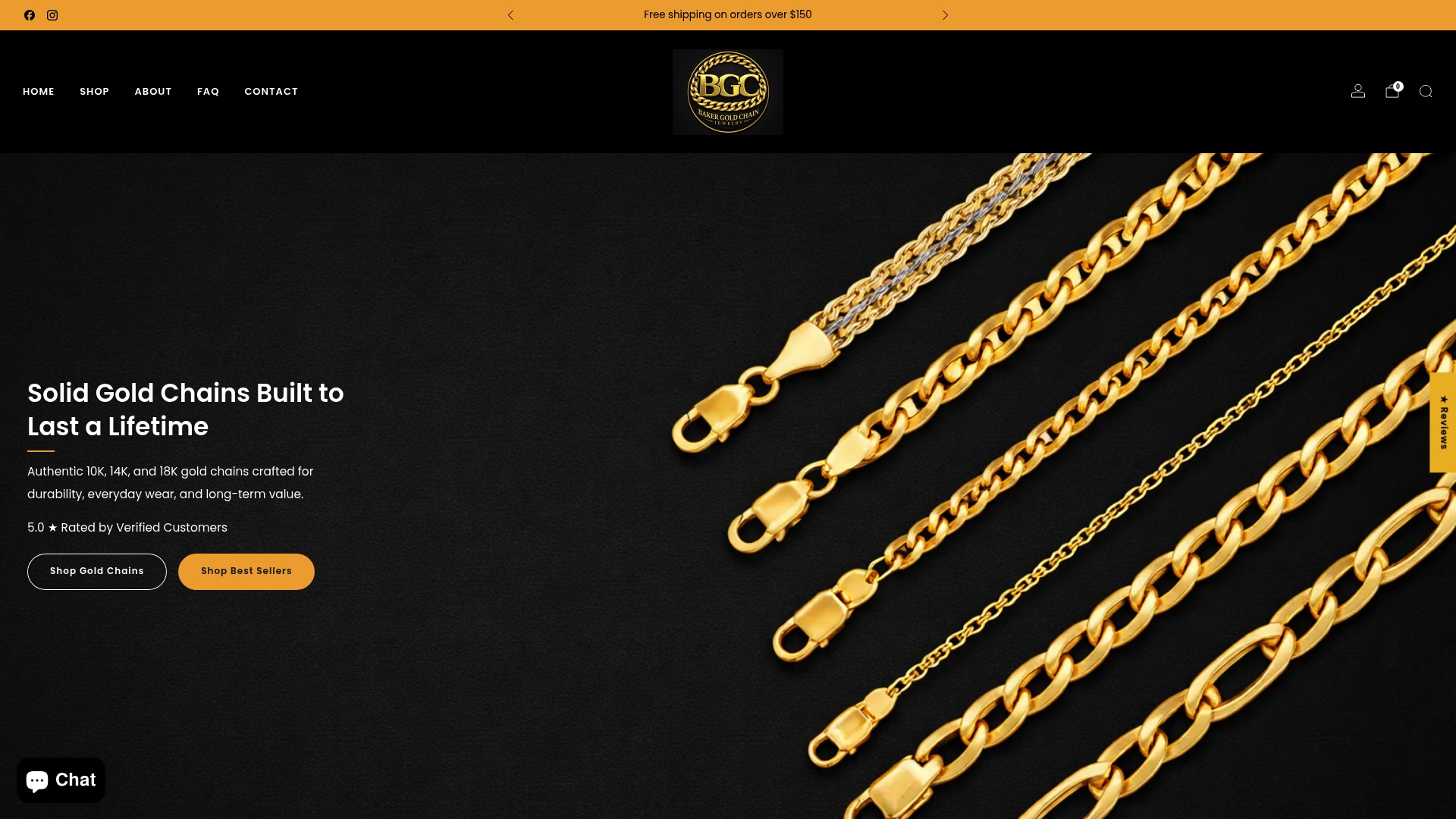
If you are looking for a durable everyday chain, the 10K Singapore chain is a perfect example of strength and elegance combined. For something with a classic, refined look, the 14K gold bead necklace offers timeless style in solid gold. And if you want earrings that hold up to daily wear, our 14K gold hoop earrings are built to last. All orders over $150 ship free with insurance, and flexible financing options make it easier to invest in quality on your terms.
Frequently asked questions
How does gold karat affect jewelry durability?
Lower karat gold like 10K or 14K is mixed with harder alloys, making it more resistant to scratches and daily wear, while higher karat gold is softer because it contains more pure gold. As karat purity standards confirm, karat rating directly affects both durability and long-term value.
What hallmarks should I look for to confirm durability in gold jewelry?
Look for a fineness or millesimal mark like 375, 585, or 750 stamped on the piece, which tells you the exact gold purity and confirms the piece meets recognized quality standards. Hallmarking links laboratory results directly to the marks stamped on the jewelry, making these numbers your most reliable verification tool.
Is solid gold always more durable than plated or filled jewelry?
Yes, solid gold is more durable because the gold content goes all the way through the piece, so there is no surface layer to wear away or expose a base metal beneath. Solid gold construction offers the best long-term performance compared to plated or filled alternatives.
Are certain chain designs more durable for everyday use?
Yes, chains with closely interlocked or tightly woven links, like Singapore, curb, and Franco chains, handle daily stress better than simpler open-link designs. A strong lobster claw clasp paired with these link styles gives you the most reliable combination for frequent wear.
Recommended
- Daily wear gold jewelry: style, durability, and quality – Baker Gold Chains
- Avoid these common gold chain mistakes for lasting shine – Baker Gold Chains
- Solid gold jewelry: what it really means and why it matters – Baker Gold Chains
- Gold chain vs gold plated: How to choose quality jewelry – Baker Gold Chains

