

Explaining Premium Gold Accessories: A Buyer's Guide
Premium gold accessories are defined by three measurable factors: verified gold content, precise craftsmanship, and durable construction. Explaining premium gold accessories means going beyond surface color or brand name to understand what actually makes a piece worth its price. The karat stamp, gold layer thickness, and base metal all determine whether you are buying a lasting asset or a fashion piece that fades in months. Bakergoldchains builds its entire catalog around this standard, sourcing solid 10K, 14K, and 18K gold pieces from reputable U.S. suppliers with full material transparency.
What does gold purity mean for premium gold accessories?
Gold purity is measured in karats, and the karat number tells you exactly how much of the metal is pure gold. Pure gold is 24 karats, meaning 24 out of 24 parts are gold. Every step down from 24K introduces other metals, called alloys, which change the hardness, color, and durability of the piece.
| Karat | Gold Content | Best Use |
|---|---|---|
| 10K | 41.7% gold | Everyday rings, bracelets |
| 14K | 58.3% gold | Daily chains, earrings, pendants |
| 18K | 75% gold | Special occasion pieces, investment jewelry |
| 24K | 99.9% gold | Bullion, not practical for accessories |
The most common misconception buyers carry is that higher karat always means better quality. Higher karat gold is softer and more prone to scratches, dents, and deformation under daily stress. That means an 18K chain worn every day will show wear faster than a 14K chain of identical design.
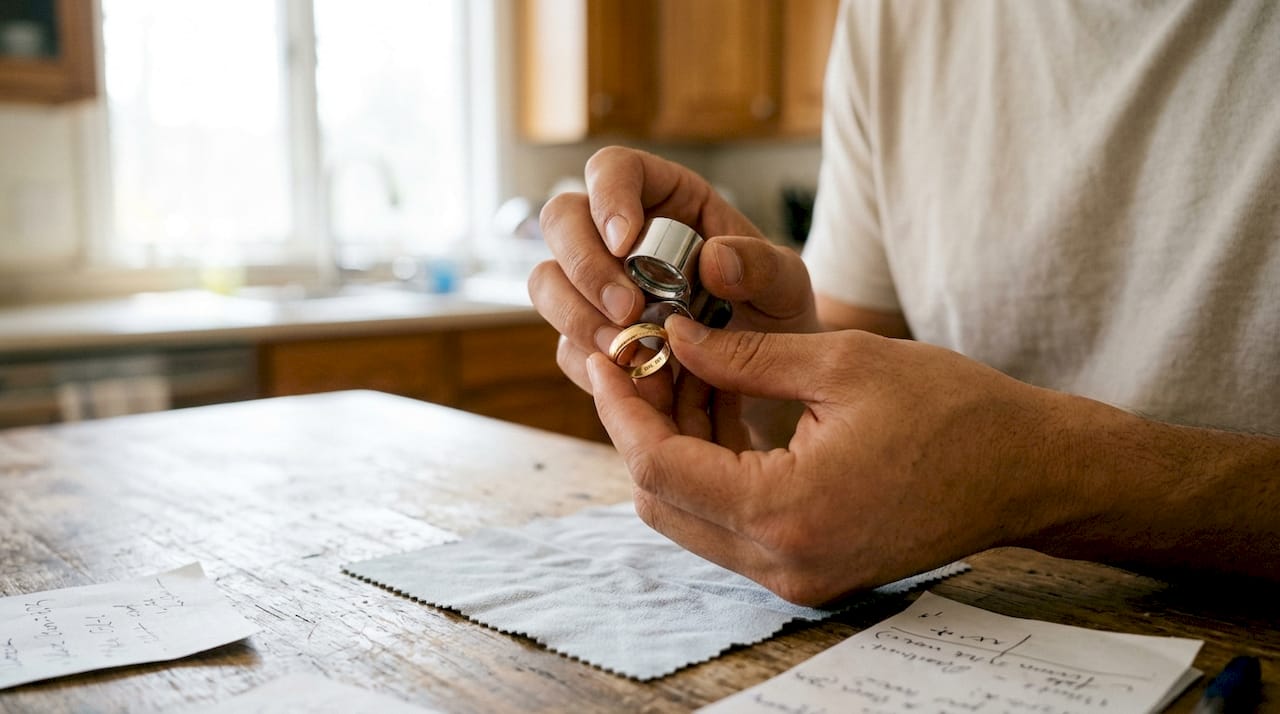
9K–10K gold offers maximum hardness and wear resistance, making it the practical choice for rings and bracelets that take constant contact. 14K sits in the best position for most buyers: it carries enough gold to hold rich color while staying hard enough for daily wear. 18K and above deliver visual depth and investment value, but they belong on pieces you wear with care, not pieces you forget you have on.
Pro Tip: Always check the karat stamp on any gold piece before buying. In the U.S., legitimate gold jewelry carries a hallmark like “14K,” “585,” or “750” stamped on a clasp, inner band, or tag. No stamp is a red flag.
What are the main types of gold accessories?
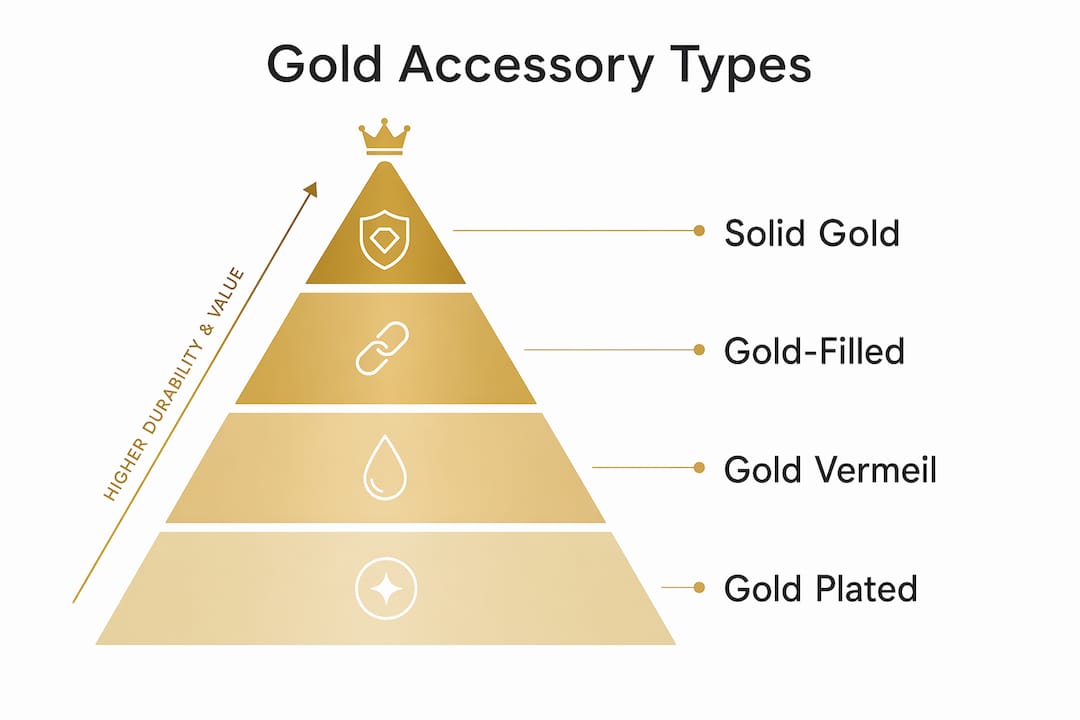
Not all gold accessories contain the same amount of gold, and the difference between types is significant. The four main categories are solid gold, gold-filled, gold vermeil, and gold plated. Each has a different gold content, lifespan, and price point.
Solid gold
Solid gold jewelry offers unmatched value retention and can last indefinitely with basic care. The metal is the same composition all the way through, so scratches can be polished away without exposing a different base metal underneath. Solid 14K chains are the most durable option for daily wear. Hollow solid gold pieces exist and cost less, but they dent and kink more easily than their solid counterparts. If longevity is your priority, solid and heavy construction wins every time. You can read more about why solid gold lasts in everyday conditions.
Gold-filled
Gold-filled jewelry carries a mechanically bonded gold layer that must constitute at least 5% of the total piece weight. That bonding process fuses the gold under heat and pressure, creating a layer far more durable than electroplating. Gold-filled pieces can last decades with proper care and handle water exposure far better than plated alternatives. They are the best non-solid option when budget is a constraint but longevity still matters.
Gold vermeil
Gold vermeil uses a sterling silver base with a minimum gold layer of 2.5 microns. That sterling silver base makes vermeil hypoallergenic compared to other non-solid options, which is a real benefit for buyers with sensitive skin. The typical lifespan of gold vermeil runs 2–5 years depending on wear frequency and care. It is a strong choice for earrings and necklaces that see moderate use.
Gold plated
Gold plated jewelry has no minimum thickness requirement under U.S. standards. That single fact explains why plated pieces vary so widely in quality and lifespan. A thin plating can wear through in weeks with daily contact. Gold plated pieces work well for occasional use, like gold accessories for special occasions, but they are not built for everyday wear. When buying plated items, always ask the seller for the micron thickness. Anything below 0.5 microns will not last.
- Solid gold: Lasts indefinitely, highest cost, best for daily wear and investment value
- Gold-filled: Lasts decades, mid-range cost, good water tolerance, best for long-term non-solid option
- Gold vermeil: Lasts 2–5 years, sterling silver base, hypoallergenic, best for moderate wear
- Gold plated: Variable lifespan, lowest cost, best for occasional fashion use only
How does craftsmanship affect the quality of luxury gold accessories?
Material purity sets the foundation, but craftsmanship determines whether a piece actually holds together over time. Premium feel in luxury gold accessories comes from material density, polishing consistency, and assembly precision, not color alone. A bright gold color can come from a thin plating on cheap brass. A truly premium piece feels substantial in your hand and shows no variation in its finish.
Weight is one of the clearest signals of quality. A heavier piece, relative to its size, indicates solid or densely constructed metal rather than hollow or thin-walled construction. Buyers should request weight information and construction details before purchasing, especially online. Reputable sellers list gram weight on product pages. If that information is missing, treat it as a warning.
Polishing quality shows up in the consistency of the finish across the entire piece. Premium pieces show no dull patches, no tool marks, and no variation between links or sections. Run your eye along the full length of a chain or the full surface of a pendant. Any inconsistency in shine points to rushed finishing.
Assembly precision matters most in functional parts. Clasps should close with a firm, clean click. Links in a chain should sit uniformly without gaps or misalignment. On earrings, the post and backing should feel secure without play. These details are not cosmetic. A clasp that fails loses you the piece entirely.
- Check gram weight before buying, especially for chains and bracelets
- Inspect the finish for uniform shine with no dull spots or tool marks
- Test clasps and closures for a firm, clean action
- Look for uniform link spacing on chains, with no gaps or misalignment
- Avoid hollow construction for pieces that will take daily physical contact
Pro Tip: When shopping online, zoom into product photos at the clasp and link joints. Premium pieces show clean, tight construction even in close-up images. Blurry or avoided close-ups often hide poor assembly.
How to choose and care for premium gold jewelry
Choosing the right gold accessory starts with matching the karat and construction to how you plan to wear it. The best gold for daily wear balances hardness and color, and that balance shifts depending on the accessory type.
- Rings and bracelets: Choose 10K or 14K solid gold. These pieces take the most physical contact and need the hardest alloy. Avoid hollow construction for rings entirely.
- Chains and necklaces: 14K solid gold is the standard for daily chains. It holds color well and resists kinking. A 14K pendant chain with textured links adds grip and structure that reduces tangling.
- Earrings: 14K or 18K works well since earrings face less mechanical stress. Vermeil is acceptable for earrings worn occasionally. For daily earrings, solid gold is the better long-term choice.
- Special occasion pieces: 18K gold delivers the richest color for pieces worn a few times a year. The softness is not a concern when wear is infrequent.
- Verify gold layer thickness: For vermeil or plated pieces, ask for the micron measurement in writing. Reputable sellers provide this. Gold layer thickness is the single most important number for non-solid accessories.
For care, keep gold accessories away from chlorine, harsh cleaning products, and saltwater. Store pieces separately to prevent scratching. Wipe solid gold with a soft cloth after wearing to remove skin oils. For vermeil and gold-filled pieces, avoid prolonged water exposure. These habits extend the life of any gold accessory significantly. You can find more gold accessory care tips and construction details in Bakergoldchains’ buying guides.
Key Takeaways
Premium gold accessories require verified gold content, solid construction, and precise craftsmanship to deliver lasting value and style.
| Point | Details |
|---|---|
| Karat affects durability | 10K–14K gold is hardest and best for daily wear; 18K suits special occasions. |
| Construction type matters | Solid gold lasts indefinitely; gold-filled lasts decades; vermeil lasts 2–5 years; plated is for occasional use only. |
| Craftsmanship signals quality | Check gram weight, uniform finish, and secure clasps before buying. |
| Gold layer thickness is critical | For non-solid pieces, always verify micron thickness. No minimum means no guarantee. |
| Match accessory to use | Rings and bracelets need harder alloys; earrings and pendants tolerate higher karats. |
What I’ve learned about premium gold after years of buying it
Most buyers walk into a gold purchase focused on color and price. I did the same thing early on. The shift that changed how I shop was learning to treat gold accessories the way a contractor treats building materials: by asking what it is made of, how it is put together, and how long it is designed to last.
The disconnect between perceived luxury and real durability is wider than most people expect. A piece can look expensive and feel light, hollow, and fragile. Another piece can look understated and last twenty years without a scratch. The difference lives in the gram weight, the karat stamp, and the quality of the clasp, not the packaging or the price tag.
Viewing gold accessories as investments rather than fashion purchases changes your entire evaluation process. You stop asking “does this look good?” and start asking “what is this actually worth, and will it hold that value?” That second question leads you to transparent pricing that separates gold content cost from craftsmanship premium, and it protects you from overpaying for a brand name on a hollow piece.
My honest recommendation: buy solid 14K for anything you plan to wear regularly. Spend more on construction than on karat. And always buy from a seller who lists gram weight, karat stamp, and construction type on the product page. Bakergoldchains does this consistently, which is why I trust their catalog for daily wear pieces.
— Blayne
Bakergoldchains: where craftsmanship meets transparency
Bakergoldchains carries solid 10K, 14K, and 18K gold pieces built to the standards covered in this guide. Every product listing includes material details, karat information, and construction type so you can buy with confidence rather than guesswork.
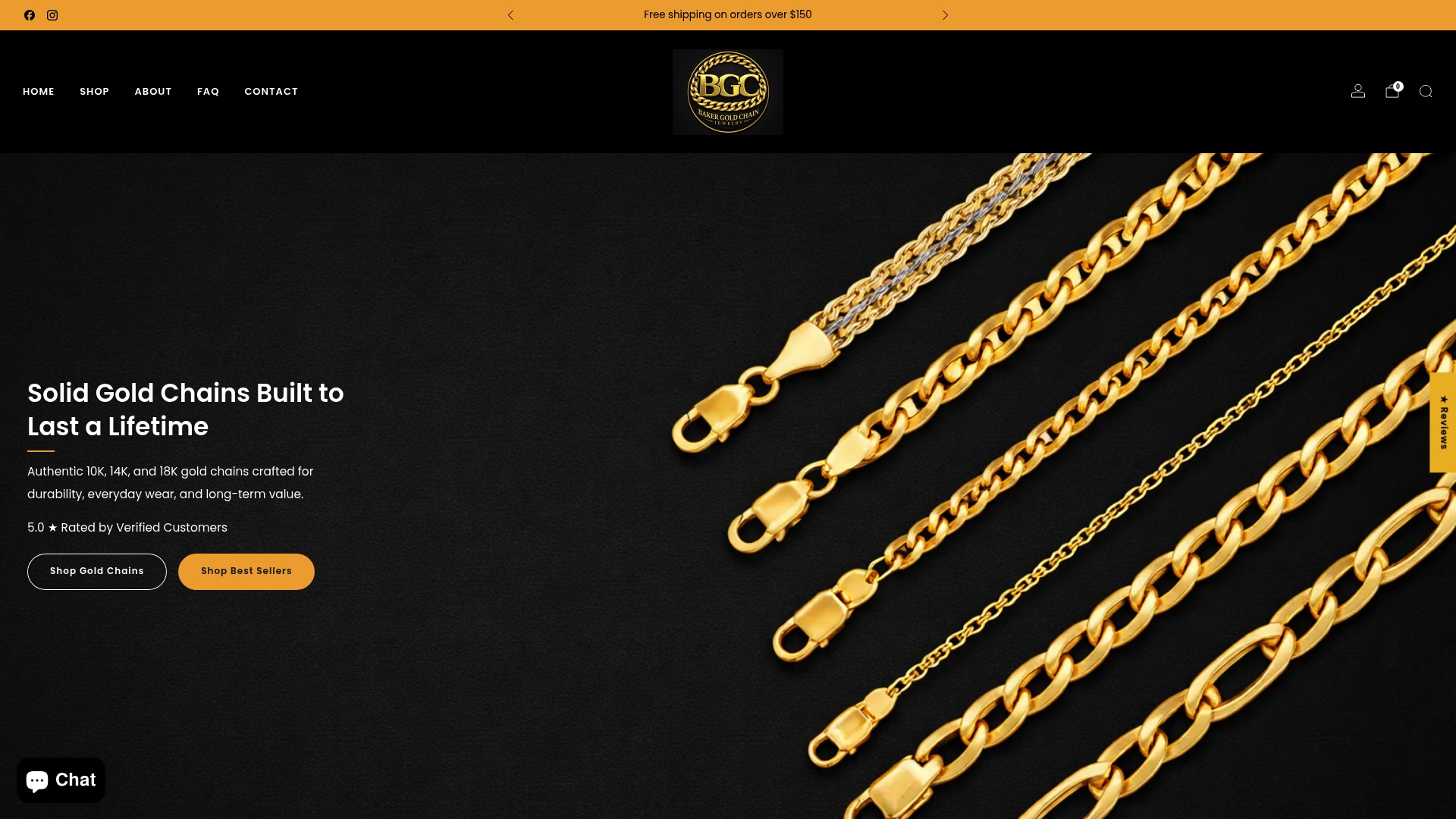
The Graduated Bead Necklace in 14K Yellow Gold is a strong example of what premium construction looks like in practice: solid gold, consistent finish, and a design that holds up to daily wear. For earrings, the Small Wedding Hoops in 14K Yellow Gold deliver the same solid build in a versatile everyday style. Bakergoldchains also offers free insured shipping on orders over $150 and a lifetime craftsmanship guarantee, so your purchase is protected from day one.
FAQ
What does “premium gold jewelry” actually mean?
Premium gold jewelry is defined by verified gold content, solid or high-quality construction, and consistent craftsmanship. It is not defined by price or brand name alone.
What karat is best for daily wear?
14K solid gold is the best choice for daily wear. It balances hardness and color, making it durable enough for rings, chains, and bracelets worn every day.
How is gold vermeil different from gold plated?
Gold vermeil requires a sterling silver base and a minimum 2.5-micron gold layer, while gold plated has no minimum thickness requirement. Vermeil lasts longer and is hypoallergenic.
How can I tell if a gold piece is solid or hollow?
Ask the seller for the gram weight and compare it to similar pieces of the same size. A hollow piece weighs noticeably less. Solid construction feels substantial for its size.
Does a higher karat mean higher quality?
Not always. Higher karat gold contains more pure gold but is softer and scratches more easily. The best karat depends on how and how often you plan to wear the piece.

