

Why solid gold jewelry is worth wearing every day
Most people assume that as long as jewelry looks gold, it performs like gold. That assumption costs them money, comfort, and eventually the piece itself. Gold plated and gold filled options flood the market at lower prices, making it genuinely hard to know what you’re buying and whether it will last past the first season. If you wear jewelry daily, the material underneath that shine matters more than most shoppers realize. This guide breaks down exactly what makes solid gold different, why it outperforms the alternatives, how it holds financial value over time, and what to look for when choosing pieces built for everyday use.
Table of Contents
- What makes solid gold different from gold plated or filled jewelry
- The durability and style benefits of solid gold for daily wear
- Investing in solid gold: Long-term value and resale advantages
- Why workmanship and karat matter for everyday gold accessories
- Our perspective: Why solid gold is worth the investment for everyday style
- Explore durable, authentic solid gold jewelry for daily wear
- Frequently asked questions
Key Takeaways
| Point | Details |
|---|---|
| Solid gold lasts longest | Solid gold jewelry is significantly more durable and resistant to everyday wear compared to plated or filled alternatives. |
| Best karat for daily use | 14K gold provides the ideal combination of strength, style, and authenticity for accessories worn every day. |
| Retains value over time | Unlike costume pieces, solid gold jewelry maintains resale value and can be a smart long-term investment. |
| Craftsmanship impacts comfort | High-quality workmanship and the right karat blend ensure your gold jewelry is comfortable and reliable for daily wear. |
| Upgrade your collection wisely | Choosing solid gold accessories from trusted retailers is the safest path to lasting style and value. |
What makes solid gold different from gold plated or filled jewelry
The terminology around gold jewelry creates a lot of confusion, and that confusion often leads buyers to settle for less than they intended. Let’s clarify the core differences so you can make informed choices.
Solid gold means the entire piece is made from a gold alloy throughout. There is no base metal underneath, no coating that can chip or flake, and no layer that thins over time. When you see a karat stamp like 10K, 14K, or 18K on a solid gold piece, that number tells you how much of the metal is actual gold.
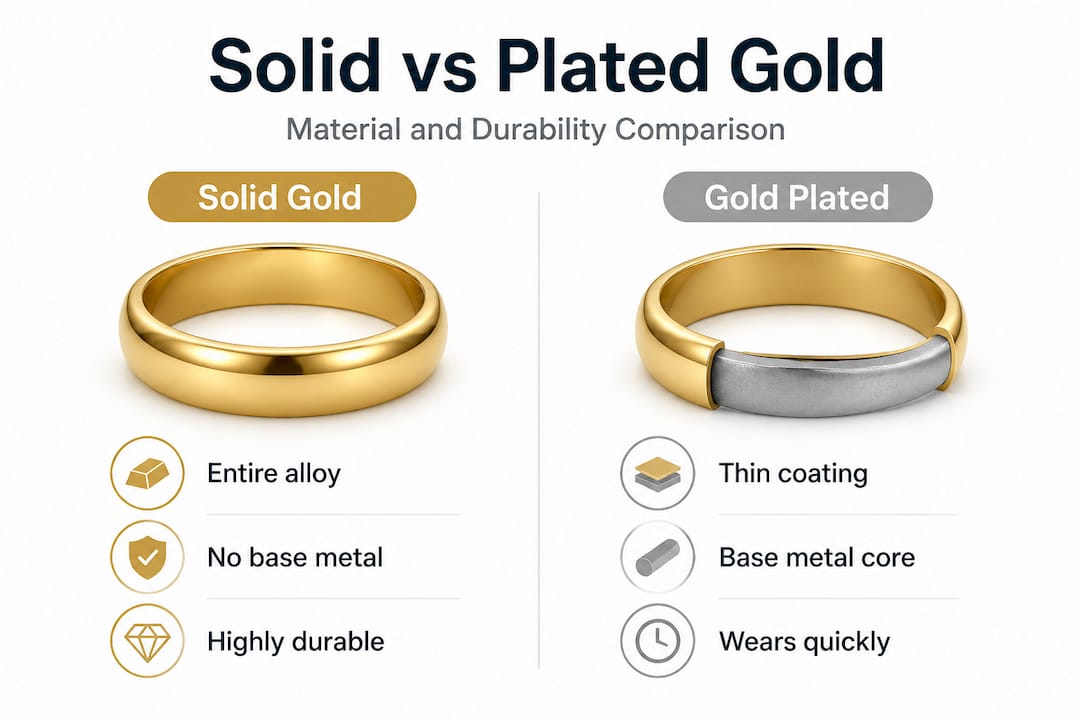
Gold plated jewelry is made from a base metal (usually brass or copper) with a very thin layer of gold applied to the surface through electroplating. That layer is typically 0.5 to 2.5 microns thick. It looks identical at first glance, but it wears away with friction, sweat, and exposure to moisture.
Gold filled is a step above plated. It has a thicker layer of gold bonded under heat and pressure to a base metal core. Gold filled pieces must contain at least 5% gold by weight. Still, they are not solid gold, and the surface can still degrade under heavy daily wear.
Understanding solid vs plated gold jewelry is the first step toward making a purchase you won’t regret within a year.
| Type | Construction | Gold content | Lifespan (daily wear) |
|---|---|---|---|
| Solid gold | All gold alloy throughout | 41.7% to 75% | Decades |
| Gold filled | Base metal with thick gold layer | Min. 5% by weight | 10 to 30 years |
| Gold plated | Base metal with electroplated coating | Less than 0.5% | 1 to 3 years |
Here is what else you need to know about karat levels in solid gold:
- 10K gold contains 41.7% pure gold and is alloyed with metals like silver and copper for added strength
- 14K gold contains 58.3% pure gold and is the most popular choice for everyday jewelry in the U.S.
- 18K gold contains 75% pure gold and offers a richer yellow color but is softer than 10K or 14K
As the meaning of solid gold reveals, the karat level affects color, durability, and price simultaneously. Lower karats are more durable but carry less gold content and a slightly paler color, while 14K sits as the sweet spot for balancing style, durability, and everyday wearability.
“Solid gold is an investment in both appearance and longevity. Unlike plated options, it does not require replacement every few years, making it the smarter financial and practical choice for anyone who wears jewelry consistently.”
The durability and style benefits of solid gold for daily wear
Now that you know the structural difference, here’s why solid gold is a top performer for both durability and style when you wear it every day.
Solid gold resists tarnish, discoloration, and corrosion naturally. Because gold itself does not react with oxygen or moisture the way copper or brass does, a solid gold piece retains its surface quality through workouts, showers, and even occasional exposure to chlorine. Plated pieces simply cannot say the same. Once the thin layer of gold wears through, the base metal oxidizes quickly, leaving green marks on skin and a dull appearance on the jewelry.

When it comes to gold jewelry durability, karat choice plays a significant role:
| Karat | Gold content | Hardness (Vickers) | Best use |
|---|---|---|---|
| 10K | 41.7% | Hardest | Heavy daily wear, active lifestyles |
| 14K | 58.3% | Medium | Everyday elegance, versatile wear |
| 18K | 75% | Softest | Special occasions, layering looks |
You can explore detailed 10K gold durability insights to understand why this karat is a strong choice for buyers who want strength without sacrificing style. The lower gold content in 10K means more alloyed metals, which actually makes the piece harder and more resistant to bending or scratching than 18K options.
Here are practical steps to maximize the longevity of your solid gold jewelry:
- Remove before swimming. Chlorine in pools and hot tubs can gradually weaken the alloy structure, especially in lower karat pieces.
- Store pieces separately. Gold is relatively soft and can scratch against harder metals or gemstone settings. Use a soft pouch or lined compartment.
- Clean regularly with mild soap and warm water. Avoid harsh chemicals and abrasive cloths that can affect the surface finish.
- Put on jewelry last. Apply perfume, lotions, and hairspray before putting on your gold pieces to reduce chemical buildup on the surface.
- Inspect clasps and links periodically. Catching a weakening clasp early prevents loss.
Pro Tip: If you’re buying solid gold for an active lifestyle, 10K is your best bet. Its higher alloy content makes it noticeably harder than 14K or 18K, meaning it holds up better against the daily friction of sleeves, gym equipment, and constant movement.
Investing in solid gold: Long-term value and resale advantages
In addition to durability, solid gold offers financial advantages most jewelry owners overlook.
Gold as a material has held intrinsic value for thousands of years. When you buy a solid gold chain or bracelet, you are not just purchasing a fashion accessory. You are holding a tangible asset that tracks the market price of gold. If you ever decide to sell, a solid gold piece can be weighed and appraised based on its gold content, giving you real resale value regardless of style trends.
Plated and filled jewelry has virtually no resale value because the gold layer is so thin it cannot be meaningfully recovered. The piece sells for its fashion value alone, which depreciates quickly.
Here is what makes solid gold a financially sound choice:
- Intrinsic material value. Every solid gold piece contains actual gold that can be weighed and valued at market rates.
- Resale flexibility. You can sell to jewelers, pawn shops, or gold buyers based on the weight and karat of the piece.
- Heirloom potential. Solid gold pieces passed down through generations retain both sentimental and monetary value.
- Portfolio diversity. Owning physical gold in any form provides a hedge against currency inflation over time.
- Low maintenance costs. Because the metal does not require re-plating or replacement, you avoid recurring expenses.
Solid gold is preferred by long-term jewelry wearers precisely because it combines daily aesthetic appeal with lasting financial worth. That combination is rare in most consumer goods.
Pro Tip: When buying solid gold as an investment piece, always ask for a certificate of authenticity or ensure the piece carries a clear karat hallmark. This protects your resale value and confirms what you paid for.
When learning how to buy solid gold jewelry online, look for retailers who disclose karat stamps, provide sourcing transparency, and offer guarantees on craftsmanship. These factors directly affect how well your piece holds its value over time.
Why workmanship and karat matter for everyday gold accessories
Knowing how gold’s value operates, let’s review what makes certain pieces stand out in daily wear and why construction quality is just as important as material.
Choosing the right karat is only part of the equation. The way a piece is built determines how comfortable it feels, how it moves on your body, and whether it survives years of daily use without breaking down. Even high-karat solid gold can fail prematurely if the chain links are poorly connected or the clasp uses an inferior mechanism.
Here is what to look for when evaluating craftsmanship in everyday gold jewelry:
- Link construction. Chain links should be evenly formed and securely closed. Poorly finished links snag on clothing and eventually pull apart.
- Clasp quality. Lobster clasps and box clasps should snap shut with resistance. A loose clasp is the most common cause of jewelry loss.
- Surface finish. Whether the piece is polished, brushed, or textured, the finish should be uniform with no rough edges.
- Weight and balance. Quality solid gold pieces feel substantial in your hand. Hollow constructions are lighter but more prone to denting under pressure.
- Solder points. Where links or components are joined, the solder should be clean and flush with the metal surface.
For buyers interested in the richer color and prestige of higher karat options, the 18K gold guide explains how to enjoy that soft yellow tone while taking steps to protect the piece from daily wear.
Common mistakes buyers make with gold jewelry include:
- Wearing solid gold in harsh chemical environments (cleaning products, pools)
- Choosing decorative clasps over functional ones for the sake of appearance
- Ignoring link thickness when selecting chains, which affects overall strength
- Skipping routine cleaning, which allows oils and residue to build up on the surface
You can avoid most of these with the right habits. The gold chain care tips we recommend focus on simple routines that take less than five minutes and keep your piece looking polished for years.
“14K delivers the ideal balance of gold content and everyday strength, making it the most practical choice for anyone who wants a piece that looks excellent and holds up under real-world conditions.”
Our perspective: Why solid gold is worth the investment for everyday style
Having covered all layers of solid gold’s advantages, we want to share something that most jewelry guides skip over entirely.
The real cost of plated jewelry is not the purchase price. It’s the replacement cycle. A plated chain purchased at a low price looks great for the first three to six months, then begins to fade unevenly. Within a year or two, most buyers are shopping again. Over five years, that cycle often costs more than a single solid gold piece would have from the start.
We see this pattern constantly in conversations with customers who come to us after cycling through multiple plated options. The frustration is consistent. They describe spending several hundred dollars across different plated and filled pieces, watching each one lose its color or leave marks on their skin, and eventually realizing the math did not work in their favor.
Solid gold changes that calculation entirely. Yes, the entry price is higher. But the piece you buy today can still look sharp a decade from now without any re-plating, significant maintenance, or replacement. That is not a luxury claim; it is simply the result of a material that does not react to oxygen, moisture, or daily friction the way base metals do.
We also want to address something buyers often feel but rarely say out loud: wearing solid gold feels different. The weight is noticeable in a satisfying way. The color does not shift. There is a consistency to it that plated jewelry simply cannot replicate, because the quality goes all the way through.
If you’re serious about everyday gold jewelry as a long-term part of your wardrobe, our recommendation is clear. Start with one well-made piece in 10K or 14K, wear it daily, and notice the difference yourself. That first piece tends to change how you think about jewelry purchases permanently.
Explore durable, authentic solid gold jewelry for daily wear
If this guide has helped clarify what to look for in everyday gold jewelry, the natural next step is finding pieces that deliver on all of it.
At Baker Gold Chains, every piece is made from authentic solid gold sourced from reputable U.S. suppliers. For an entry point that combines durability with everyday elegance, the 10K yellow gold Singapore chain is a strong choice for active wearers who want lasting shine without sacrificing strength. If you prefer something with a classic, refined feel, the 14K graduated bead necklace offers timeless style with the balance of gold content that suits daily wear. You can browse the full collection at Baker Gold Chains, where every purchase comes with free insured shipping on orders over $150, a lifetime craftsmanship guarantee, and flexible financing options.
Frequently asked questions
Is solid gold jewelry better for sensitive skin?
Yes, solid gold jewelry is hypoallergenic and less likely to cause skin irritation compared to plated pieces, since there is no base metal like copper or nickel exposed through wear.
How do I know if my gold jewelry is truly solid gold?
Check for hallmarks such as “10K,” “14K,” or “18K” stamped on the piece, and buy from reputable retailers who provide authenticity assurances and sourcing transparency.
Can solid gold jewelry tarnish or fade over time?
Solid gold does not tarnish or fade with normal daily wear, unlike gold plated or filled items where the base metal eventually shows through the surface layer.
Is 14K or 18K better for everyday jewelry?
14K is generally preferred for daily use because of its sweet spot for durability and gold content, while 18K offers a richer color but is softer and more susceptible to scratching under regular wear.
Does solid gold jewelry make a good investment?
Yes, solid gold retains value based on its gold content and can be resold, appraised, or passed down as a lasting asset, unlike plated jewelry which carries no meaningful resale worth.
Recommended
- Daily wear gold jewelry: style, durability, and quality – Baker Gold Chains
- Solid gold jewelry: what it really means and why it matters – Baker Gold Chains
- How to buy solid gold jewelry online safely and smartly – Baker Gold Chains
- What Is 18K Gold? A Complete Guide for Jewelry Buyers – Baker Gold Chains

