

Step by Step Gold Jewelry Storage: Your Care Guide
Proper gold jewelry storage is defined as the practice of cleaning, individually separating, and housing each piece in a controlled environment to prevent scratching, tarnishing, and tangling. This step by step gold jewelry storage guide covers every stage, from the supplies you need to the exact cleaning method and organization techniques that protect your pieces long term. Gold is a soft metal, especially at higher karat weights like 18K, and close contact with other pieces or harsh conditions causes surface damage that accumulates over time. Following a consistent care routine preserves both the appearance and the value of your collection.
What do you need before storing gold jewelry?
The right supplies make every other step easier and more effective. Gathering your materials before you start prevents shortcuts that lead to scratches or moisture damage.
Storage supplies:
- Soft-lined jewelry box with individual compartments (velvet or microfiber lining)
- Separate zip-lock bags or individual fabric pouches for pieces without dedicated compartments
- Anti-tarnish strips, replaced every 2–3 months
- Silica gel packets to absorb excess moisture inside storage containers
Cleaning supplies:
- Mild dish soap (fragrance-free)
- Soft-bristled toothbrush
- Lint-free cloth or microfiber towel
- Bowl of warm water
The ideal storage environment sits between 65°F and 75°F with 35–55% relative humidity. Those conditions slow oxidation and prevent the surface dullness that humidity accelerates. A bedroom dresser drawer meets these conditions far better than a bathroom cabinet.
| Supply | Purpose |
|---|---|
| Velvet or microfiber-lined box | Prevents scratching from hard surfaces |
| Anti-tarnish strips | Absorbs sulfur compounds in the air |
| Silica gel packets | Controls moisture inside the storage container |
| Individual pouches or zip-lock bags | Keeps pieces separated and dust-free |
| Lint-free cloth | Dries and buffs without leaving fibers |
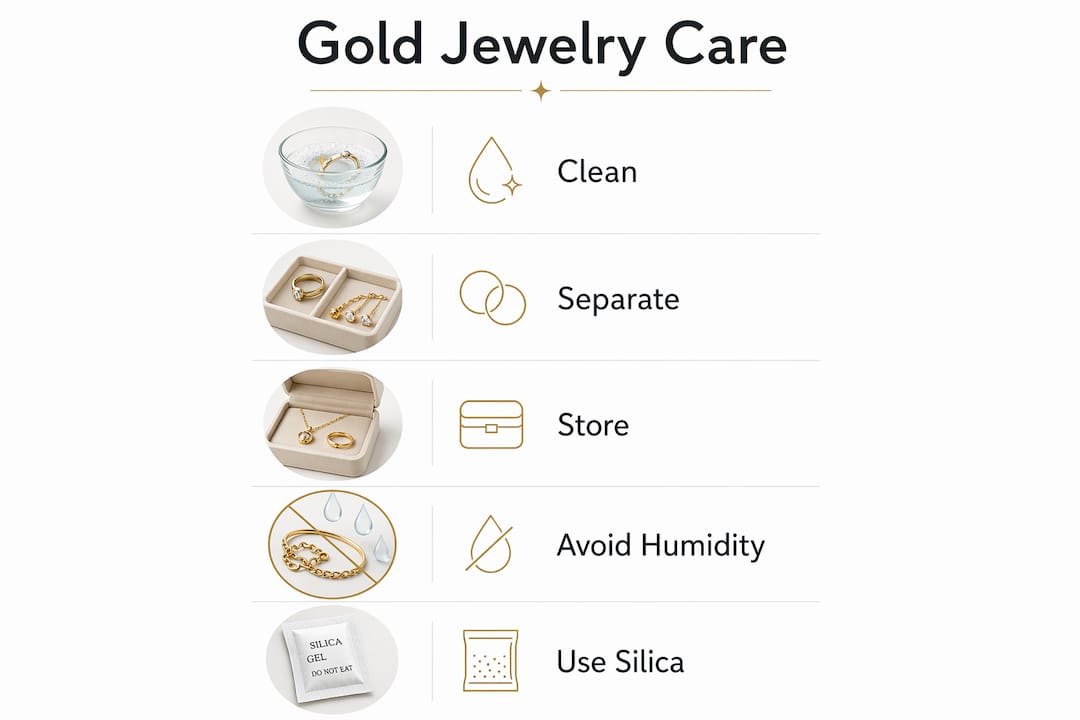
Pro Tip: Place one or two silica gel packets inside your jewelry box and replace them every few months. They absorb the ambient moisture that causes gold surfaces to dull between wearings.
How to clean gold jewelry before storing it
Cleaning before storage removes skin oils, lotions, and residues that cause dullness when left on the metal. Skipping this step means you are sealing contaminants against the surface, where they continue to degrade the finish.
Follow these steps every time before putting a piece away:
- Fill a bowl with warm water. Add a few drops of mild dish soap and stir gently. Avoid hot water, which can loosen settings on pieces with gemstones.
- Soak the jewelry for 10–20 minutes. This loosens oils and residue without requiring aggressive scrubbing. Delicate chains benefit from the full 20 minutes.
- Scrub gently with a soft-bristled toothbrush. Work around clasps, links, and any textured surfaces where buildup collects. Use light pressure only.
- Rinse under clean running water for at least 30 seconds. Hold the piece securely over a bowl or plug the drain. Soap residue left on the surface attracts dust.
- Lay the piece flat on a lint-free cloth and air dry completely. Never store jewelry while damp. Moisture trapped inside a closed box accelerates dullness and can affect metal over time.
Cleaning before storage also reduces how often you need to polish your pieces. Polishing removes a thin layer of metal each time, so minimizing the need for it protects the piece’s long-term integrity.
Pro Tip: For a gold chain care routine, hold the chain taut over the bowl while rinsing so water flows through every link. This clears soap from the interior of the chain where buildup is hardest to see.
How to organize and store gold jewelry to avoid damage
Organization is where most storage routines break down. Tossing pieces into a shared tray or drawer is the single fastest way to create scratches, kinks, and tangles.
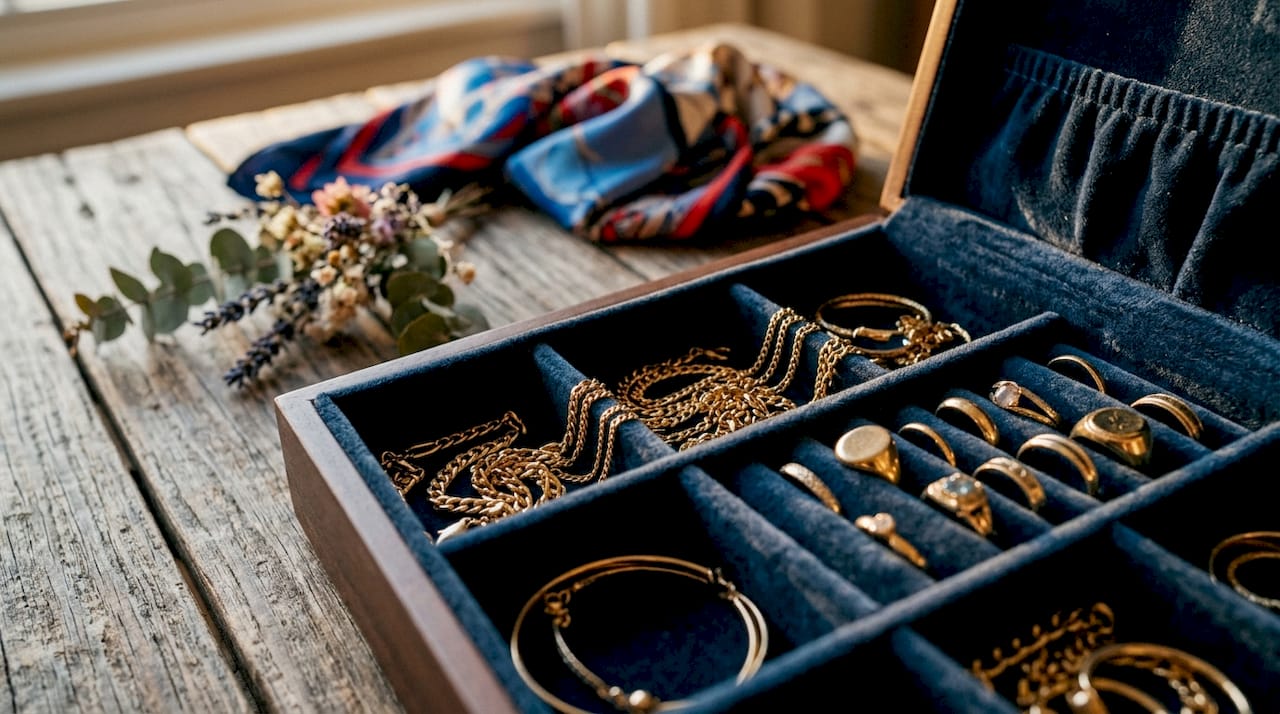
Separation is non-negotiable. Individual soft-lined compartments or pouches prevent pieces from contacting each other. Gold is soft, and even rubbing against another gold piece causes micro-scratches that dull the surface over time. Higher karat gold, like 18K or 22K, scratches more easily than lower karat alloys because it contains more pure gold and less hardening metal.
Never store gold with silver. Silver tarnishes, and that tarnish can transfer to gold surfaces when the two metals are in direct contact. Keep them in separate boxes or at minimum in separate pouches within the same box.
Fasten every clasp before storing. An open clasp on a necklace or bracelet is the main cause of tangling and kinking. Clasping the piece before storage keeps the chain straight and prevents the hook from snagging neighboring pieces.
For necklaces specifically, you have two reliable options:
- Hang them individually on a wall-mounted hook or a standing jewelry organizer. Gravity keeps the chain straight and prevents any contact with other pieces.
- Use the straw method. Thread the chain through a drinking straw before clasping it. The straw holds the chain straight inside a drawer or pouch and prevents tangles completely. This works especially well for delicate rope or Franco chains during travel.
Keep your storage location away from bathrooms and kitchens. Both rooms experience frequent humidity and temperature swings that accelerate surface dullness. A bedroom or closet shelf is the right location. For fine jewelry care that also considers long-term value, proper storage conditions matter as much as the pieces themselves. You can read more about that in Bakergoldchains’ guide on jewelry long-term value.
Pro Tip: If you own pieces with complex settings or delicate gemstone mountings, consult a jeweler about specific storage needs. Some settings require extra padding or a specific orientation to prevent stress on the prongs.
Caring for other fine jewelry follows similar principles. If you own opal pieces alongside your gold collection, opal care essentials require their own dedicated approach since opals are far more sensitive to temperature and moisture than gold.
What are the most common gold jewelry storage mistakes?
Most storage damage is preventable. These are the mistakes that cause the most harm, and how to fix them.
- Storing pieces together in a shared tray. Contact between pieces causes scratches and tangles. The fix is individual compartments or pouches for every single piece, no exceptions.
- Ignoring humidity and temperature. Bathrooms and kitchens expose jewelry to conditions outside the 65°F–75°F and 35–55% humidity range. Move your storage to a bedroom or closet immediately.
- Skipping the pre-storage cleaning step. Oils and residues sealed against the metal continue to dull the finish. Always clean before storing, even if the piece looks clean.
- Forgetting to replace anti-tarnish strips. Strips lose effectiveness after 2–3 months. Mark your calendar and replace them on schedule.
- Never inspecting stored pieces. Routine inspections every 3–6 months catch loose stones, weakened clasps, and early surface damage before they become serious problems. A loose stone found during inspection costs far less to fix than one lost entirely.
“Most damage to gold chains from storage results from open clasps and improper environmental conditions like humidity, which can dull the surface over time. Addressing both before you close the box is the most effective prevention.”
If you notice dullness on a stored piece, a quick soak in warm soapy water followed by a gentle brush usually restores the surface. For deeper dullness or scratches, a professional polish from a jeweler is the right call. Avoid home polishing cloths with abrasive compounds on high-karat pieces, since polishing removes metal with each use and should be reserved for when it is genuinely needed.
Key Takeaways
Proper gold jewelry storage requires cleaning each piece before putting it away, storing pieces individually in soft-lined compartments, and maintaining a stable environment between 65°F and 75°F with 35–55% relative humidity.
| Point | Details |
|---|---|
| Clean before storing | Soak in warm soapy water for 10–20 minutes and air dry completely before storage. |
| Separate every piece | Use individual soft-lined compartments or pouches to prevent scratching and tangling. |
| Control the environment | Store in 65°F–75°F conditions at 35–55% humidity, away from bathrooms and kitchens. |
| Fasten all clasps | Clasping necklaces and bracelets before storage prevents kinking and tangling. |
| Inspect regularly | Check pieces every 3–6 months for loose stones, clasp wear, and surface damage. |
Why storage is the most underrated part of gold jewelry care
I have seen collectors spend thousands on solid gold pieces and then drop them into a shared dish on the bathroom counter. The jewelry survives, technically, but the surface tells the story after a year. Fine scratches, a subtle dullness, a chain that takes ten minutes to untangle. None of that is dramatic damage, but it compounds.
The part that surprises most people is how little effort the right system actually takes. Spending five minutes cleaning a piece before you put it away and placing it in its own compartment is not a complicated ritual. It is just a habit. The difference between a piece that looks the same after five years and one that looks worn is almost entirely in that habit.
What I find most useful is treating the storage step as the final part of wearing a piece, not a separate chore. You take it off, you clean it, you put it away properly. That sequence becomes automatic quickly, and the payoff is that you never have to spend an afternoon trying to restore a piece that should have been fine.
The inspection routine matters more than most people realize. Catching a loose stone or a weakening clasp at the 3-month mark is a minor repair. Catching it after the stone is gone is a different conversation entirely. Set a reminder, open the box, and actually look at each piece. It takes less time than you think.
If you are building a collection worth protecting, the storage system should be part of the plan from the start. Choosing gold jewelry that lasts and then storing it correctly is how you get decades of wear from pieces that hold their look and their value.
— Blayne
Gold jewelry worth protecting deserves the right home
The care routine described in this guide works best when the pieces themselves are built to last. Bakergoldchains carries solid gold jewelry in 10K, 14K, and 18K gold, sourced from reputable U.S. suppliers with a lifetime craftsmanship guarantee on every piece.
A 14K yellow gold pendant chain with textured links is a strong example of a piece that rewards proper storage. The texture holds its detail when cleaned and stored correctly, and the 14K alloy balances durability with the warmth of high-gold content. For earrings, the graduated bead necklace in 14K yellow gold is another piece that benefits directly from individual compartment storage. Browse the full Bakergoldchains collection at bakergoldchains.com to find pieces worth adding to a well-organized collection.
FAQ
How often should I clean gold jewelry before storing it?
Clean gold jewelry every time before storing it, even after a single wearing. Skin oils and lotions left on the surface cause dullness over time.
What is the best way to store gold necklaces without tangling?
Fasten the clasp and either hang the necklace individually or use the straw method, threading the chain through a drinking straw before placing it in a pouch or drawer.
Can I store gold and silver jewelry together?
No. Silver tarnish transfers to gold surfaces when the two metals are in direct contact. Store them in separate compartments or separate boxes entirely.
What temperature and humidity are ideal for gold jewelry storage?
The ideal range is 65°F–75°F with 35–55% relative humidity. Avoid bathrooms and kitchens, which fluctuate outside these conditions regularly.
How do I know when to replace anti-tarnish strips?
Replace anti-tarnish strips every 2–3 months. Mark the replacement date on the strip or set a calendar reminder so you do not miss the window.

