

What Is Hypoallergenic Gold? A Guide for Sensitive Skin
Hypoallergenic gold is gold jewelry formulated to minimize the risk of allergic reactions, primarily by reducing or eliminating alloy metals that trigger skin sensitivity. The term is widely used in jewelry marketing, but what is hypoallergenic gold in practice depends on purity level and alloy composition, not just a label. Pure gold itself is not an allergen. The real culprits are the metals mixed into gold alloys, especially nickel. If you have sensitive skin and want to wear gold safely, understanding the difference between pure gold, alloy metals, and labeling standards is the most important step you can take.
What does the science say about hypoallergenic gold?
Pure metallic gold does not cause allergic reactions. A clinical study from Aalborg University tested 60 patients with known skin sensitivities and found zero reactions to pure gold micro-particles. That result is significant. It confirms that gold itself is biocompatible, meaning your body does not treat it as a foreign threat.
The same study found that 21.7% of participants reacted to gold thiosulphate, a gold salt compound. Gold salts are chemical compounds, not pure metal. They behave differently in the body and can trigger immune responses. This distinction matters because many people who believe they are “allergic to gold” are actually reacting to alloy metals or gold salt residues, not to gold itself.
“None of the 60 patients with known skin reactions showed any allergic response to pure gold micro-particles, while 13 of 60 reacted to gold thiosulphate. The allergy is to the compound, not the metal.” — Aalborg University epicutaneous study findings
Nickel allergy affects up to 15% of the global population and is the single most common cause of jewelry-related contact dermatitis. That statistic explains why most jewelry reactions happen with lower-karat or white gold pieces, where nickel is a common alloying agent. Gold alloys also have excellent biocompatibility and corrosion resistance, which is why high-purity gold remains the preferred material for sensitive-skin jewelry worldwide.
Which types of hypoallergenic gold alloys are used in jewelry?
Gold karat measures purity. The higher the karat, the more pure gold the piece contains and the fewer alloy metals are present to cause reactions.
| Karat | Gold purity | Common alloys | Allergy risk | Durability |
|---|---|---|---|---|
| 24K | 99.9% | None | Very low | Low (soft) |
| 18K | 75% | Silver, copper, palladium | Low | Good |
| 14K | 58.3% | Silver, copper, zinc, nickel (sometimes) | Moderate | Very good |
| 10K | 41.7% | Higher alloy content, may include nickel | Higher | Excellent |
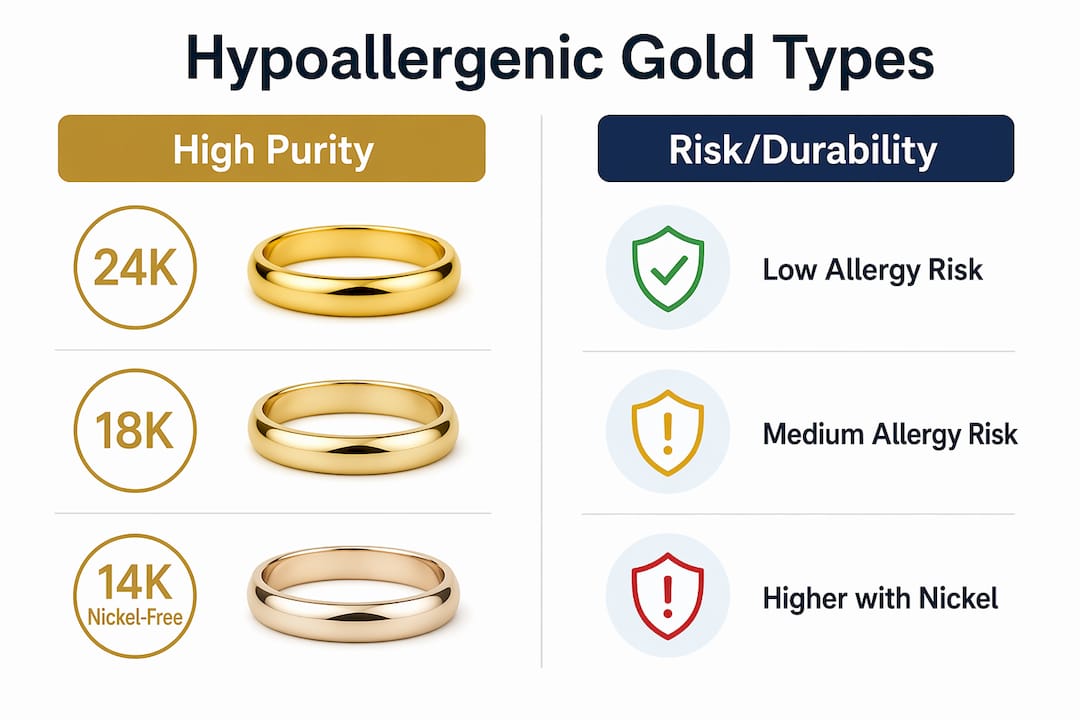
High-karat yellow gold at 18K or above is generally hypoallergenic because it contains less alloy metal overall. The alloys used in yellow gold, typically silver and copper, are far less likely to cause reactions than nickel. White gold is a different story. It often contains nickel to achieve its pale color, which raises allergy risk considerably. Palladium-based white gold is a safer alternative, but you need to confirm the alloy composition before buying.
Here is a quick breakdown of alloy types by gold color:
- Yellow gold: Alloyed with silver and copper. Naturally nickel-free in most cases. The best starting point for sensitive skin.
- White gold: Often alloyed with nickel or palladium. Nickel-based white gold carries higher allergy risk. Palladium-based white gold is safer.
- Rose gold: Alloyed with copper, which gives it a pink tone. Generally nickel-free, though copper can occasionally cause mild reactions in very sensitive individuals.
- Green gold: Alloyed with silver and sometimes copper. Rarely contains nickel. Low allergy risk.
Gold vermeil and gold-filled jewelry also carry hypoallergenic potential. Gold vermeil is a thick layer of gold (at least 2.5 microns) plated over sterling silver. Gold-filled pieces bond a solid gold layer to a base metal core. Both options are safer than standard gold-plated jewelry, provided the base metal is nickel-free. You can explore gold jewelry buying tips to understand how karat and construction affect long-term wearability.
Pro Tip: When shopping for yellow gold chains or pendants, look for pieces stamped 14K or 18K from a U.S.-sourced supplier. These stamps indicate regulated purity levels and give you a reliable baseline for alloy content.
Why “nickel-free” is more reliable than “hypoallergenic”
The word “hypoallergenic” sounds official. It is not. No U.S. regulatory standard defines “hypoallergenic” for jewelry. The Federal Trade Commission regulates the term for cosmetics but not for rings, chains, or earrings. Any brand can print “hypoallergenic” on a tag without meeting any specific threshold.
“Some pieces labeled hypoallergenic can still contain trace amounts of nickel and cause reactions in sensitive individuals. The FTC does not regulate hypoallergenic claims for jewelry the way it does for cosmetics.” — Consumer guidance on jewelry labeling standards
“Nickel-free” is a more meaningful claim, especially when it references a specific standard. The EU REACH Annex XVII EN 1811 standard restricts nickel release from jewelry to below 0.5 µg/cm²/week. That threshold was set to prevent contact dermatitis in sensitive wearers. In the U.S., compliance with EN 1811 is voluntary, but brands that disclose nickel release testing results are giving you real data, not just marketing language.
Watch for these allergens beyond nickel when reading jewelry descriptions:
- Cobalt: Found in some white metal alloys. A known contact allergen.
- Chromium: Occasionally present in stainless steel alloys. Can cause reactions in sensitive skin.
- Copper: Generally low risk, but high-copper alloys like rose gold can cause mild irritation in rare cases.
- Zinc: Common in lower-karat gold alloys. Usually tolerated well but worth noting.
The safest approach is to ask brands directly for their alloy composition or nickel release test results. Reputable sellers will provide this information without hesitation. If a brand cannot tell you what metals are in their jewelry, that is a red flag.
Is hypoallergenic gold safe for everyday wear?
For most people with sensitive skin, 18K yellow gold is the safest everyday option. It contains 75% pure gold, uses nickel-free alloys, and holds up well to daily wear. Here is a practical guide for choosing and wearing hypoallergenic gold safely:
- Choose 18K or higher for sensitive skin. The higher the karat, the less alloy metal touches your skin. 24K is the purest but too soft for most jewelry. 18K gives you the best balance of purity and durability.
- Favor yellow gold over white gold. Yellow gold alloys are mostly nickel-free by default. White gold requires you to confirm the alloy type before buying.
- Ask for nickel-free certification. In the U.S., this is voluntary, but trustworthy brands will provide it. Look for EN 1811 compliance or equivalent testing documentation.
- Patch test new pieces. Wear a new piece for a few hours on a less sensitive area of skin before committing to full-time wear. This is especially useful for earrings and rings.
- Consult a dermatologist for severe reactions. If you develop redness, swelling, or blistering from any jewelry, a dermatologist can perform patch testing to identify your specific allergens.
- Avoid gold-plated pieces over unknown base metals. Plating wears down over time and exposes the base metal beneath. A 14K yellow gold chain made from solid gold eliminates this risk entirely.
Care also matters. Clean your gold jewelry regularly with mild soap and warm water. Dry it thoroughly before storing. Sweat, lotions, and cleaning products can accelerate surface wear and increase skin contact with alloy metals. Storing pieces separately in soft pouches prevents scratching and keeps surfaces intact.
Pro Tip: If you react to a piece labeled “hypoallergenic,” remove it immediately and check the alloy composition. The reaction is almost always from a non-gold metal in the alloy, not from the gold itself.
Common hypoallergenic gold jewelry types for daily wear include solid gold chains, plain band rings, stud earrings, and simple pendants. These styles minimize surface area contact with alloy metals and are easier to clean thoroughly.
Key Takeaways
Hypoallergenic gold is defined by its purity and alloy composition, not by a label. The safest choices are high-karat yellow gold pieces with confirmed nickel-free alloys and transparent sourcing.
| Point | Details |
|---|---|
| Pure gold is not an allergen | Clinical testing shows zero reactions to pure gold micro-particles; reactions come from alloy metals. |
| Nickel is the main culprit | Nickel allergy affects up to 15% of people globally and drives most jewelry-related skin reactions. |
| “Hypoallergenic” is unregulated | The FTC does not define the term for jewelry; “nickel-free” with EN 1811 compliance is more reliable. |
| 18K yellow gold is the safest choice | It contains 75% pure gold and uses nickel-free alloys, making it ideal for sensitive skin. |
| Solid gold outlasts plated options | Gold plating wears away and exposes base metals; solid gold pieces maintain their hypoallergenic properties long-term. |
Why I always recommend starting with 18K yellow gold
I have spent years watching people with sensitive skin buy jewelry based on a “hypoallergenic” tag and then return it after a reaction. The label is almost meaningless without knowing the alloy. What I have found is that 18K yellow gold eliminates most of the guesswork. It is high enough in purity to keep alloy content low, and yellow gold alloys have historically avoided nickel as a component.
White gold is where things get complicated. Palladium-based white gold is genuinely safe for most sensitive skin types, but nickel-based white gold is not. The problem is that most jewelry tags do not specify which type you are getting. You have to ask. Brands that cannot answer that question clearly are not worth your trust or your money.
The other thing I want to flag is the gold-plated trap. A piece plated with 18K gold over a nickel-containing base metal will eventually expose that base metal. You might wear it for six months with no issues, then suddenly develop a rash. The gold did not cause the reaction. The base metal did. Solid gold pieces from a transparent supplier solve this problem permanently. Bakergoldchains sources its pieces from reputable U.S. suppliers and offers solid 10K, 14K, and 18K gold options, which is exactly the kind of transparency that matters when skin sensitivity is a real concern.
If you are buying gold jewelry for someone with known metal allergies, do not guess. Ask for alloy composition, look for nickel-free documentation, and choose solid yellow gold over plated alternatives every time.
— Blayne
Hypoallergenic gold jewelry from Bakergoldchains
Bakergoldchains carries a curated selection of solid 14K and 18K yellow gold jewelry built for everyday wear, including pieces well-suited for sensitive skin.

The collection includes necklaces, earrings, rings, and chains made from solid gold with no nickel-containing base metals to worry about. The graduated bead necklace in 14K yellow gold and the small wedding hoops in 14K yellow gold are two strong options for anyone prioritizing both style and skin safety. Every piece ships with a lifetime craftsmanship guarantee and free insured shipping on orders over $150. You can shop with confidence knowing exactly what metal you are wearing.
FAQ
What is hypoallergenic gold made of?
Hypoallergenic gold is typically high-karat gold (18K or higher) alloyed with nickel-free metals such as silver, copper, or palladium. The higher the gold purity, the fewer alloy metals are present to trigger a skin reaction.
Is 14K gold hypoallergenic?
14K yellow gold is generally safe for sensitive skin because it uses nickel-free alloys in most cases, but 14K white gold may contain nickel. Always confirm the alloy composition before purchasing 14K white gold pieces.
What metals are hypoallergenic besides gold?
Common hypoallergenic metals include titanium, platinum, niobium, surgical-grade stainless steel, and gold vermeil over sterling silver. These materials carry very low allergy risk for most people.
Can gold-plated jewelry be hypoallergenic?
Gold-plated jewelry can be hypoallergenic if the base metal is nickel-free, such as sterling silver. However, plating wears down over time and exposes the base metal, so solid gold is a more reliable long-term option for sensitive skin.
Why does “nickel-free” matter more than “hypoallergenic”?
“Hypoallergenic” has no legal definition in U.S. jewelry standards, while “nickel-free” can reference the EU EN 1811 standard, which sets a measurable nickel release limit of 0.5 µg/cm²/week. That specific threshold gives you a real safety benchmark that a marketing label cannot.
Recommended
- Explaining Premium Gold Accessories: A Buyer’s Guide – Baker Gold Chains
- How to Match Gold Jewelry: Your Complete Style Guide – Baker Gold Chains
- What Is Authentic Gold? Purity, Hallmarks, and Smart Buying – Baker Gold Chains
- The Role of Gold in Fine Jewelry: A 2026 Buyer’s Guide – Baker Gold Chains

