

Fine Jewelry Selection Workflow: A Confident Buyer's Guide
A fine jewelry selection workflow is a structured, step-by-step process that guides buyers through evaluating quality, verifying authenticity, and making confident purchasing decisions. Without a clear process, buyers risk overpaying, missing certification gaps, or choosing pieces that don’t suit their lifestyle. The right workflow covers everything from the 4Cs of diamond grading and GIA or IGI certification reports to metal purity stamps, craftsmanship inspection, and return policy review. Bakergoldchains sources its pieces from reputable U.S. suppliers and provides transparent specifications, making it easier to apply this kind of structured approach from the first click to the final purchase.
What are the essential criteria and documentation to evaluate when selecting fine jewelry?
Quality markers in fine jewelry fall into three categories: metal purity, gemstone grading, and documentation. Getting all three right protects your investment and removes guesswork from the buying process.
Metal purity and type
Metal purity is stamped directly on the piece. A 14K gold stamp means the metal is 58.3% pure gold. An 18K stamp means 75% purity. The role of gold in fine jewelry affects both durability and price. Higher karat gold is softer and richer in color. Lower karat gold, like 10K, holds up better to daily wear. Platinum is denser than gold and carries its own grading marks, typically “950” or “PT950,” indicating 95% purity.
Gemstone grading: the 4Cs
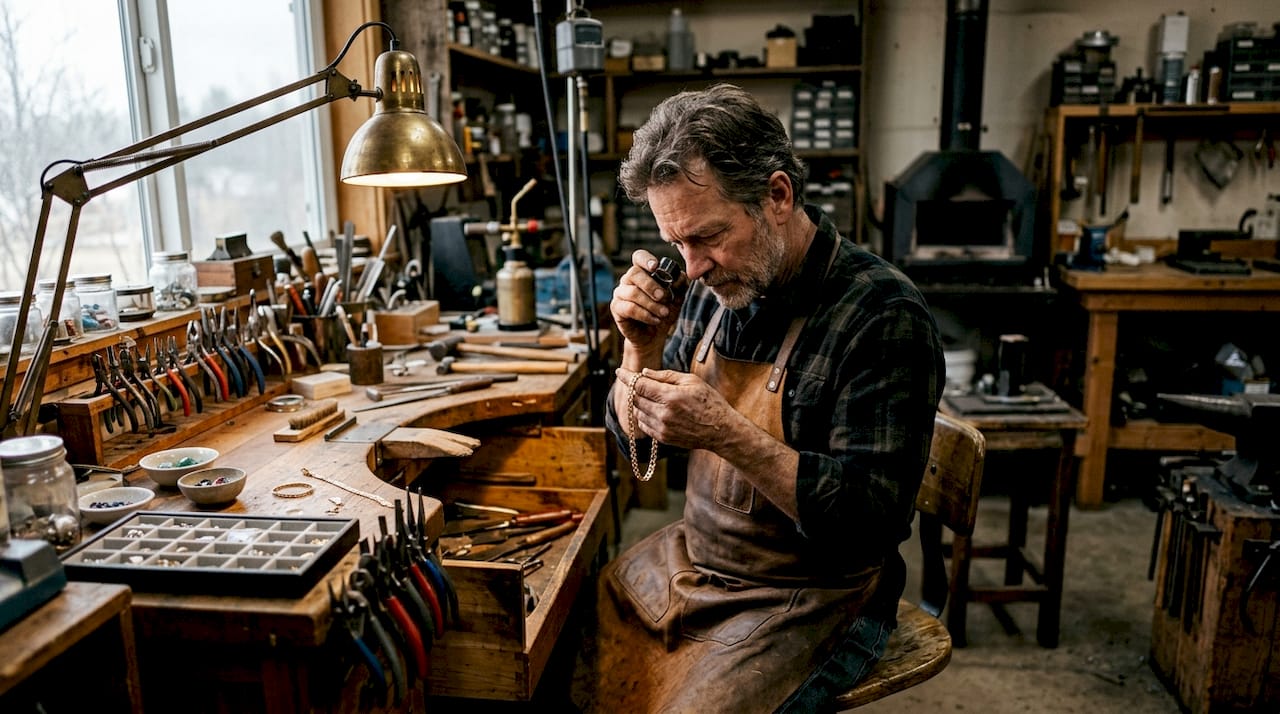
The 4Cs, carat, cut, color, and clarity, are the universal standard for evaluating diamonds and many other gemstones. Cut has the biggest impact on how a diamond looks. A well-cut stone reflects light evenly across its surface. Color grades run from D (colorless) to Z (noticeable yellow). Clarity grades range from Flawless to Included. Understanding these grades lets you compare stones objectively rather than relying on a seller’s description alone.
Certification and appraisals
Grading reports from GIA (Gemological Institute of America), IGI (International Gemological Institute), and GCAL (Gem Certification and Assurance Lab) are the most widely recognized in the industry. Each report ties a specific stone to a unique certificate number. Purchases over $3,000 for engagement rings or $5,000 for tennis bracelets should always include an independent appraisal. That threshold exists because the financial risk at those price points justifies a second, unbiased opinion on value.
- Confirm the certificate number on the report matches the number laser-inscribed on the stone’s girdle.
- Request a full appraisal document that lists metal type, stone grades, and replacement value.
- Ask whether the appraisal reflects current market conditions, not just the purchase price.
- Verify that the grading lab is independent, not affiliated with the seller.
Pro Tip: Ask for the GIA or IGI report number before you pay, then verify it directly on the lab’s website. This takes two minutes and confirms the certificate is real.
How to inspect jewelry craftsmanship and evaluate style fit during selection?
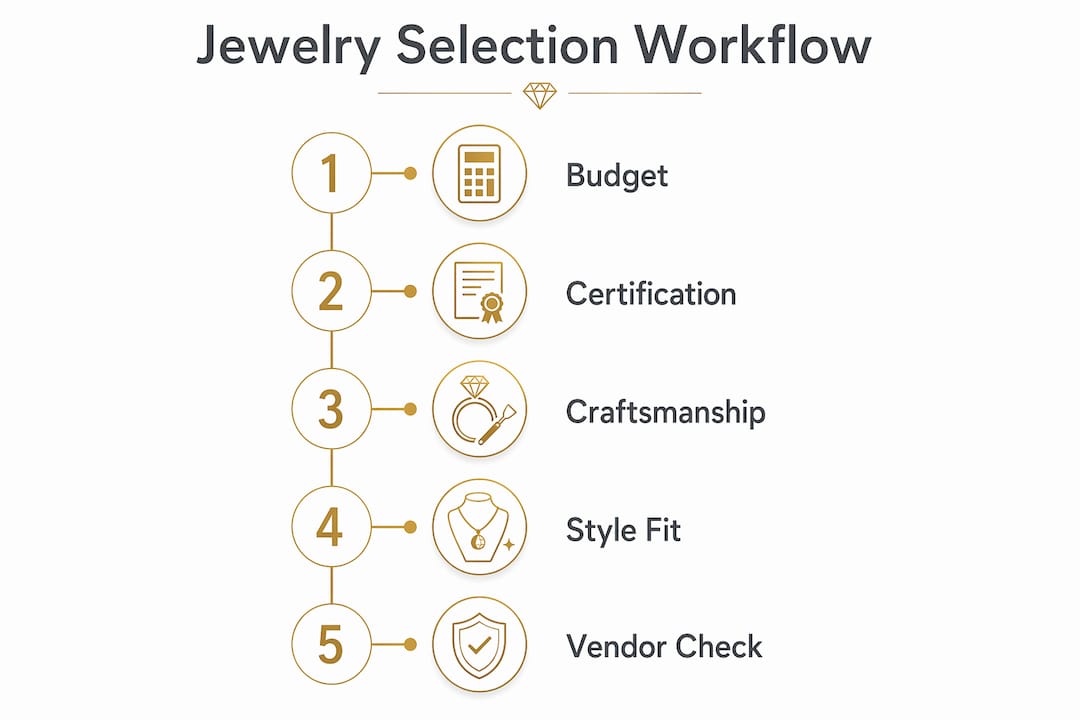
Craftsmanship determines how long a piece holds up and how good it looks over time. Style fit determines whether you’ll actually wear it. Both require a deliberate inspection process.
Hands-on craftsmanship checks
Strong craftsmanship signs include even prongs that cover the stone’s girdle, secure clasps with safety catches, straight pavé rows, and smooth edges without sharp seams. Run your fingernail along the inside of a ring or bracelet. Any roughness or sharp edge signals poor finishing. Test clasps by opening and closing them several times. A clasp that sticks or feels loose will fail under daily use. The role of design in fine jewelry directly affects both visual appeal and structural durability.
Matching metal color to your skin tone
The vein test is the most reliable method for choosing a metal color that flatters your skin. Look at the veins on the inside of your wrist in natural light. Blue veins indicate a cool undertone, which pairs well with white gold or platinum. Green veins indicate a warm undertone, which suits yellow or rose gold. Mixed veins suggest a neutral undertone that works with any metal. This matters because a metal that clashes with your undertone will look off no matter how well-made the piece is.
Selecting shapes and sizes for your proportions
- Match pendant size to your neckline and frame. A large statement pendant overwhelms a petite frame. A small pendant gets lost on a broader chest.
- Choose chain length based on where you want the piece to sit. A 16-inch chain sits at the collarbone. An 18-inch chain falls just below it.
- Select ring width based on finger length. Wide bands shorten the appearance of fingers. Thin bands elongate them.
- Consider face shape for earring selection. Angular faces balance well with round or hoop styles. Round faces benefit from longer, drop-style earrings.
- Factor in lifestyle. A high-set solitaire ring catches on fabric and is not practical for hands-on work. A bezel or flush setting protects the stone and suits active buyers.
Pro Tip: Before buying a necklace online, measure a piece of string to the listed chain length and hold it against your neck. This simple check prevents the most common sizing mistake buyers make.
What are the best practices for using imagery and vendor information in your jewelry workflow?
Visual information is your primary quality signal when buying online. Vendor communication fills the gaps that images cannot.
Image standards that protect buyers
Experts recommend at least 3–4 distinct product views for online jewelry selection: a hero shot, a macro close-up, a side profile, and an on-body scale reference. Five or more views are preferred for high-value items. Turntable videos add significant value because they show how a piece moves and reflects light from every angle. Galleries that use image swatches for metal variants let you see exactly what yellow gold, white gold, and rose gold versions look like side by side. This reduces confusion and the likelihood of returns. Well-structured online jewelry displays follow these standards to help buyers make accurate decisions before purchase.
Red flags in vendor listings
- Vague descriptions like “gold-tone” or “gold-filled” instead of a specific karat stamp.
- Missing or unverifiable certificate numbers for diamond pieces.
- No stated return window or a policy buried in fine print.
- Single-image listings for high-ticket items with no scale reference.
- Prices that seem unusually low for the stated metal and stone quality.
Questions to ask any vendor
Transparent seller communication covers metal purity, diamond certificate numbers, setting details, warranties, and resizing allowances. Ask specifically: “What is the exact karat and weight of the metal?” and “Can you provide the GIA or IGI report number for this stone?” A vendor who hesitates or deflects on either question is a vendor worth avoiding.
How to navigate vendor policies, pricing transparency, and aftercare?
Pricing and policy terms protect you after the purchase. Skipping this step is the most common reason buyers feel regret.
Understanding pricing breakdowns
Luxury jewelry prices are a sum of material value, craftsmanship, and brand premiums. Buyers who request clear breakdowns avoid paying inflated prices driven by marketing rather than material quality. Ask for a line-item breakdown that separates metal weight cost, stone value, and labor. This is standard practice for custom pieces and should be available for high-ticket ready-made items too. Understanding jewelry pricing transparency helps you focus on real value rather than perceived prestige.
Return policies and custom pieces
“Return policies vary widely. Many buyers overlook whether the return window starts from the purchase date or the delivery date. Custom pieces often carry a zero-return policy. Buyer approval of CAD renderings or concept sketches is the most critical stage to mitigate regret on any custom order.”
Standard return windows for fine jewelry typically run 14–30 days. Confirm whether the clock starts at purchase or delivery, because shipping delays can eat into your review time. For custom orders, CAD rendering approval is your only real checkpoint. Review every detail of the design before signing off.
Warranties, aftercare, and insurance
- Ask whether the warranty covers prong retipping, rhodium plating, and clasp repair.
- Confirm whether resizing is included or costs extra, and how many times it can be done.
- Request a written warranty document, not just a verbal assurance.
- Insurance replacement values rely on appraisals that reflect current market conditions. Update your appraisal every few years to maintain accurate coverage.
- Store your appraisal document separately from the piece itself, ideally in a fireproof location or digital backup.
What step-by-step workflow can buyers follow to confidently select fine jewelry?
A clear sequence removes emotion from the process and keeps your evaluation grounded in facts.
- Set your budget and non-negotiables. Decide your maximum spend and identify the one or two factors you will not compromise on, such as metal purity or a specific gemstone grade.
- Research certification standards. Familiarize yourself with GIA, IGI, and GCAL grading scales before you start browsing. This takes less than an hour and pays off immediately.
- Verify documentation before anything else. Pull the certificate number and confirm it on the issuing lab’s website. If no certificate exists, treat the piece as uncertified regardless of what the seller claims.
- Inspect craftsmanship. Check prong alignment, clasp function, finish quality, and setting security. For online purchases, request additional images or a video call with the vendor.
- Apply style and fit criteria. Use the vein test for metal color, match proportions to your frame, and factor in your daily lifestyle demands.
- Compare offers side by side. Use a spec-matched comparison across metal, stone grading, craftsmanship, and pricing. This separates genuine value from inflated brand premiums.
- Review all policies before paying. Confirm the return window start date, warranty scope, and resizing terms in writing.
| Step | Focus area | Key action |
|---|---|---|
| 1 | Budget and priorities | Set a firm ceiling and list non-negotiables |
| 2 | Certification | Verify report number on the lab’s website |
| 3 | Craftsmanship | Inspect prongs, clasps, finish, and settings |
| 4 | Style fit | Apply vein test and proportion matching |
| 5 | Policy review | Confirm return window, warranty, and resizing terms |
Key Takeaways
A fine jewelry selection workflow works because it separates emotional appeal from objective evaluation, covering certification, craftsmanship, style fit, pricing transparency, and vendor policy before any purchase decision is made.
| Point | Details |
|---|---|
| Verify certification first | Confirm GIA, IGI, or GCAL report numbers directly on the lab’s website before evaluating anything else. |
| Use the vein test | Match metal color to your skin undertone for long-term wearability and satisfaction. |
| Request pricing breakdowns | Ask for line-item costs covering metal, stone, and labor to avoid paying for brand premiums. |
| Check return policy terms | Confirm whether the return window starts at purchase or delivery, especially for high-value pieces. |
| Update appraisals regularly | Insurance replacement values depend on current market conditions, so appraisals need periodic updates. |
Why patience is the real skill in fine jewelry buying
Most buyers I’ve worked with who regret a purchase share one thing in common: they skipped a step because they were excited. The piece looked beautiful, the price felt right in the moment, and the vendor seemed trustworthy. Then the certificate didn’t check out, or the clasp broke within a month, or they realized the metal color looked wrong against their skin every single day.
The workflow exists precisely to slow that process down. Not because fine jewelry isn’t worth getting excited about. It absolutely is. But excitement is not a quality standard. A GIA report is. Even prongs are. A written return policy is.
What I’ve found is that buyers who treat the selection process as an investment of time, not just money, end up with pieces they wear for decades. They also spend less overall because they don’t replace poor purchases. The long-term value of fine jewelry is real, but only when the initial selection is done right.
One more thing worth saying: don’t let a vendor’s urgency become your urgency. “Only one left” and “sale ends tonight” are pressure tactics, not quality signals. A piece worth buying will still be worth buying after you’ve completed your checklist.
— Blayne
Bakergoldchains makes the selection process straightforward
Applying a structured jewelry selection process is much easier when the vendor gives you everything you need upfront. Bakergoldchains lists exact metal purity, karat stamps, and product specifications on every piece. The catalog includes 10K, 14K, and 18K gold options across chains, pendants, rings, and earrings, all sourced from reputable U.S. suppliers.
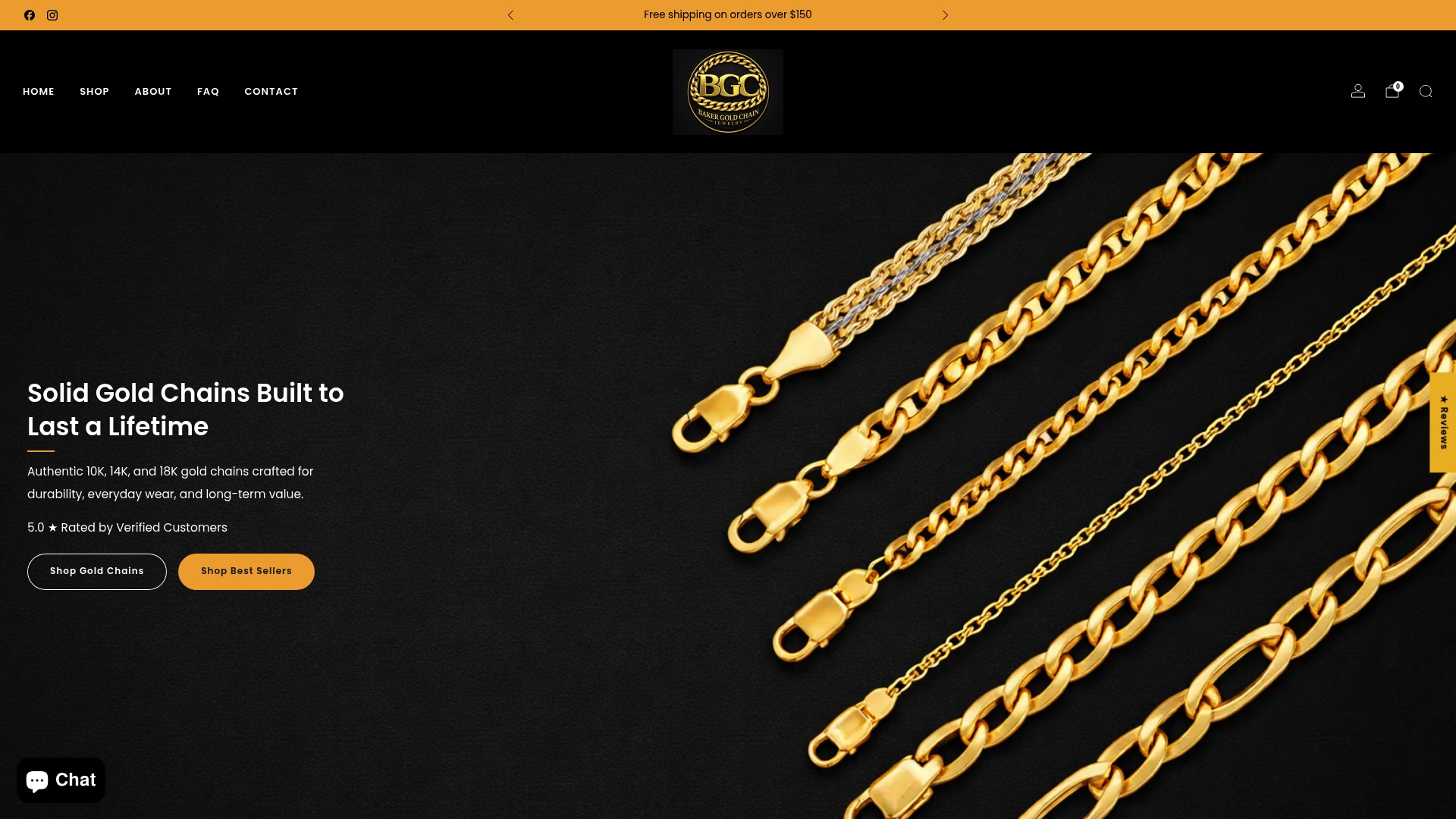
Every order over $150 ships free with insurance, and a lifetime craftsmanship guarantee backs every piece. If you want to see what transparent specifications look like in practice, the 14K yellow gold graduated bead necklace is a strong starting point. Full details, clear imagery, and documented quality make it easy to apply everything covered in this guide before you buy.
FAQ
What is a fine jewelry selection workflow?
A fine jewelry selection workflow is a structured process covering certification verification, craftsmanship inspection, style fit evaluation, and vendor policy review before purchase. It reduces impulsive mistakes and protects buyers from overpaying or receiving misrepresented pieces.
Which grading labs are most trusted for fine jewelry?
GIA, IGI, and GCAL are the most widely recognized independent grading labs. Always verify the certificate number directly on the issuing lab’s website to confirm authenticity.
When do I need an independent appraisal?
Engagement ring purchases over $3,000 and tennis bracelet purchases over $5,000 are standard thresholds for requiring a professional appraisal. Appraisals should also be updated periodically to reflect current market values for insurance purposes.
How do I choose between 14K and 18K gold?
14K gold is more durable and better suited for daily wear because its lower gold content makes it harder. 18K gold is softer and richer in color, making it a better choice for special-occasion pieces or lower-impact wear.
What should I do if a vendor won’t provide certification details?
Treat the absence of a verifiable certificate number as a disqualifying red flag. A reputable vendor will always provide the grading report number and support direct verification with the issuing lab.

