

Why Fine Jewelry Care Matters: A Practical Guide
Fine jewelry care is defined as the consistent practice of cleaning, storing, and inspecting precious metals and gemstones to preserve their structural integrity and appearance. The importance of fine jewelry care goes beyond aesthetics. A well-maintained piece holds its value, keeps its brilliance, and lasts for generations. Industry guidance from the Jewelers of America and the American Gem Society confirms that routine maintenance prevents the majority of damage owners encounter. The “last on, first off” rule prevents up to 90% of chemical damage from lotions, perfumes, and hair products. That single habit alone separates jewelry that ages beautifully from jewelry that deteriorates within years.
What is the importance of fine jewelry care for daily wear?
Fine jewelry maintenance is not a luxury habit. It is the baseline practice that keeps your pieces looking and functioning the way they were designed to. Skipping care does not just dull a stone’s sparkle. It leads to weakened prong settings, corroded metal, and costly repairs that could have been avoided entirely.
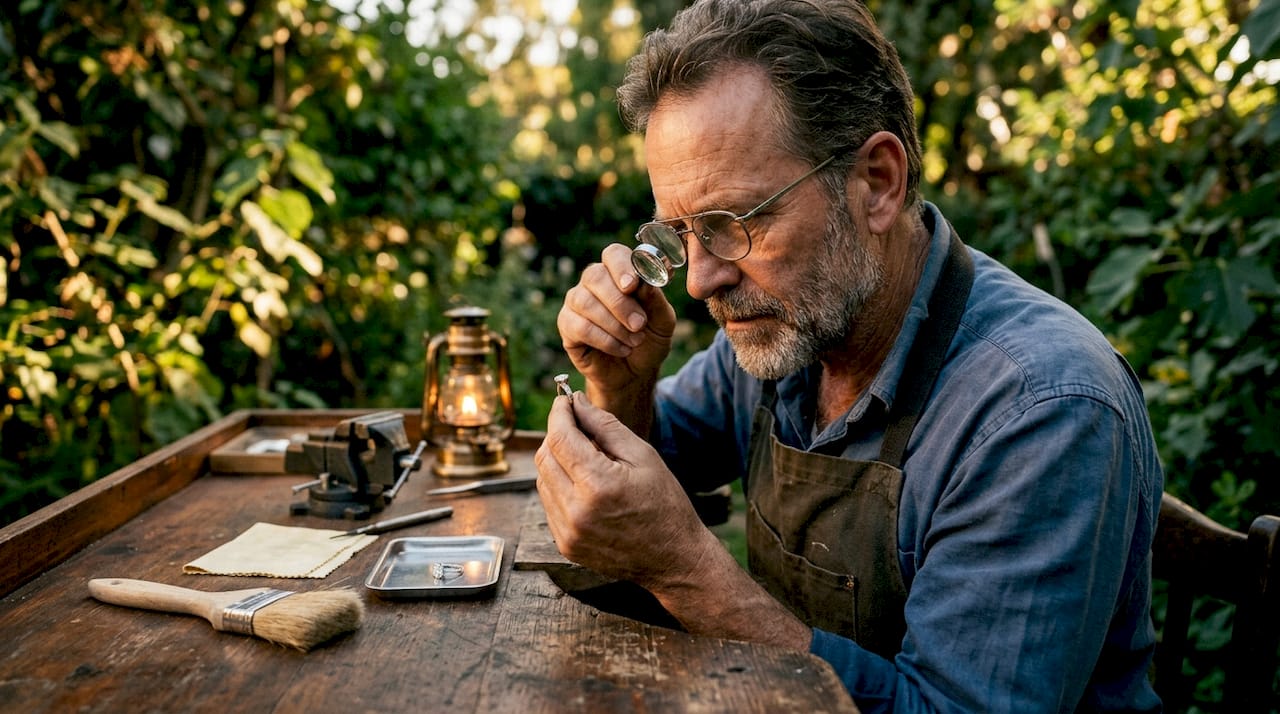
The most effective daily habit is the “last on, first off” rule. Put your jewelry on after applying makeup, lotion, perfume, and hair products. Remove it before washing dishes, exercising, or swimming. This single routine prevents chemical buildup that gradually erodes metal surfaces and dulls gemstone facets.
After wearing a piece, wipe it down with a soft, lint-free cloth. This removes skin oils, sweat, and residue before they have a chance to bond to the surface. A microfiber cloth works well for gold and platinum. For silver, a dedicated silver polishing cloth slows tarnish between deeper cleanings.
Pro Tip: Keep a small polishing cloth in your jewelry drawer so wiping down pieces becomes automatic, not an afterthought.
Weekly or monthly, give harder gemstones like diamonds and sapphires a gentle soak in warm water with a drop of mild dish soap. Use a soft-bristled toothbrush to work around prongs and settings. Regular gentle cleaning restores brilliance without risking damage to the stone or metal. Rinse thoroughly and pat dry before storing.
Avoid DIY cleaning shortcuts. Harsh substances like vinegar, lemon juice, bleach, and ammonia damage both metals and gemstones. They cause discoloration, corrosion, and surface pitting that no amount of polishing will reverse. Stick to mild soap and water for home cleaning.
How should different gemstones and metals be cared for?
Not all jewelry responds to the same cleaning method. Material-specific care is the difference between preserving a piece and accidentally destroying it. Knowing what your jewelry is made of transforms care from guesswork into a reliable routine.
Hard vs. porous gemstones
Diamonds, rubies, and sapphires rank high on the Mohs hardness scale. They tolerate gentle soaking and soft brush cleaning without issue. Porous or organic gems require a completely different approach. Pearls and opals should never be soaked or cleaned with chemicals. Chemical exposure degrades the organic material and can dissolve the silk threads in beaded pearl strands. A soft, slightly damp cloth is the only safe cleaning tool for these stones.
Emeralds fall into a middle category. They are hard but heavily included, meaning they have natural internal fractures. Ultrasonic cleaners, which jewelers sometimes use for diamonds, can shatter an emerald. Always confirm a stone’s properties before choosing a cleaning method.
Metal-specific care
| Metal | Safe cleaning method | Key risk to avoid |
|---|---|---|
| 14K or 18K gold | Mild soap, warm water, soft brush | Chlorine exposure weakens alloy bonds |
| Sterling silver | Silver polishing cloth, mild soap | Air and moisture accelerate tarnish |
| Platinum | Mild soap, soft cloth | Scratches show more visibly than on gold |
| Gold-plated jewelry | Damp cloth only, no soaking | Water and friction strip the plating layer |
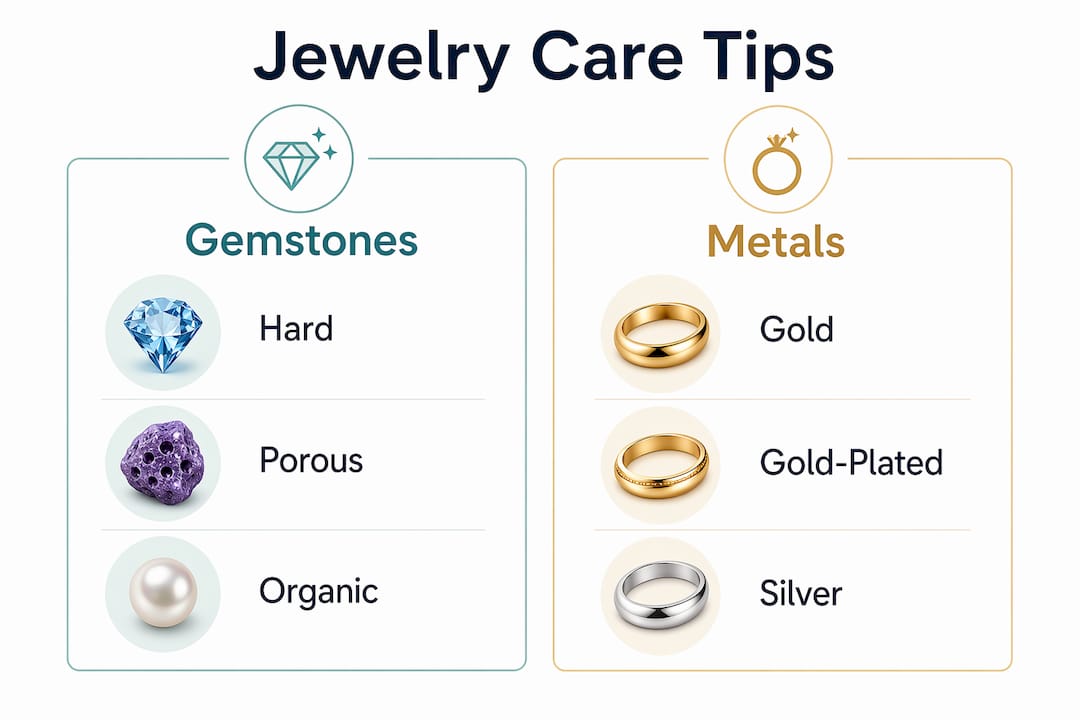
Gold-plated pieces deserve special attention. The plating layer is thin, and soaking or scrubbing strips it faster than most owners expect. A damp cloth wipe is all you need. If you own a rhodium-plated piece like an 18K yellow gold and sterling silver chain, the same gentle rule applies. Rhodium plating adds brightness and tarnish resistance, but it wears away with aggressive cleaning.
Pro Tip: Before cleaning any piece, identify the metal and stone type. If you are unsure, check the karat stamp or ask a jeweler. Cleaning the wrong way once can cause permanent damage.
Chlorine is the most underestimated threat to gold jewelry. Swimming pools and hot tubs contain enough chlorine to weaken the alloy bonds in 10K, 14K, and 18K gold over time. Always remove gold jewelry before entering chlorinated water.
What are the best practices for storing fine jewelry?
Proper storage directly impacts how long your jewelry lasts. Compartmentalized boxes and individual soft pouches are the industry standard for a reason. They prevent the two most common forms of storage damage: scratching and tangling.
Most owners are unaware that storing pieces together causes scratches within days, not months. A ruby, which sits at 9 on the Mohs scale, will scratch a pearl, which sits at 2.5–4.5, if they share the same drawer or pouch. The quality of the jewelry does not matter. Hardness differences cause damage regardless.
Follow these storage practices to protect your collection:
- Store each piece in its own compartment or soft pouch, never loose in a shared drawer.
- Use a lined jewelry box with individual sections for rings, chains, earrings, and bracelets.
- Keep jewelry in a cool, dry location away from direct sunlight and humidity.
- Hang necklaces and chains individually to prevent knotting and kinking.
- Place silica gel packets in your jewelry box to absorb excess moisture and slow tarnish.
- Avoid storing jewelry in bathrooms, where steam and humidity accelerate metal corrosion.
For gold jewelry storage, a fabric-lined box with a lid keeps dust and air exposure to a minimum. Anti-tarnish strips placed inside the box add another layer of protection for silver pieces stored nearby. These small additions cost very little and extend the life of your jewelry significantly.
Why are professional cleanings and inspections critical?
Home care handles the surface. Professional care handles everything underneath. An annual professional inspection catches 97% of potential structural issues before stone loss or breakage occurs. That statistic comes from American Gem Society survey data and reflects how much damage builds up invisibly between wearings.
A professional jeweler does more than clean. During an inspection, they check every prong for wear and bending, test clasps and closures for security, examine settings for cracks or loosening, polish the metal to remove surface scratches, and identify any stones that have shifted position. Each of these checks addresses a failure point that home cleaning cannot detect.
Here is what a standard professional maintenance visit covers:
- Ultrasonic or steam cleaning to remove deep-set dirt from settings and crevices.
- Prong inspection to confirm stones are held securely and no tips are worn flat.
- Clasp and closure testing to verify chains and bracelets close properly.
- Metal polishing to restore surface luster and remove light scratches.
- Written repair recommendations for any issues found during the inspection.
Watch for signs that require immediate professional attention rather than waiting for an annual visit. A stone that moves when you touch it, a clasp that does not close firmly, or a prong that catches on fabric all signal structural problems. DIY attempts to fix loose stones cause more damage than the original issue. Professional tools and training are necessary to avoid making the problem worse.
A common misconception is that professional cleaning is too harsh for delicate pieces. In practice, a skilled jeweler adjusts the cleaning method to the material. Ultrasonic cleaners are skipped for pearls, emeralds, and opals. Steam cleaning is used selectively. The professional’s job is to restore without risking damage, and that requires the same material knowledge you apply at home.
Consistency in maintenance matters more than intensity. Regular gentle care at home combined with annual professional inspections prevents the need for aggressive restorations. Restorations are expensive, time-consuming, and sometimes impossible for severely damaged pieces.
Key Takeaways
Fine jewelry protection requires daily habits, material-specific cleaning, proper storage, and annual professional inspections working together to preserve value and appearance.
| Point | Details |
|---|---|
| “Last on, first off” rule | Apply this rule daily to prevent up to 90% of chemical damage from cosmetics and lotions. |
| Material-specific cleaning | Match your cleaning method to the stone and metal type to avoid irreversible damage. |
| Separate storage | Store each piece individually to prevent harder stones from scratching softer ones. |
| Annual professional inspection | Schedule yearly checkups to catch 97% of structural issues before they cause stone loss. |
| Consistency over intensity | Regular gentle care prevents costly restorations better than occasional deep cleaning. |
Why knowing your materials changes everything
I have seen more jewelry ruined by good intentions than by neglect. Owners who care deeply about their pieces sometimes do the most damage because they reach for the wrong cleaner or skip the step of identifying what they actually own. A pearl strand soaked in soapy water. A gold-plated bracelet scrubbed with a rough cloth. An emerald ring run through an ultrasonic cleaner. Each of these mistakes is irreversible.
The shift that changes everything is learning what your jewelry is made of before you clean it. Once you know that your opal ring needs only a damp cloth, or that your 14K gold chain can handle a mild soap soak, care becomes straightforward. You stop second-guessing and start building a routine you can trust.
The owners who keep their jewelry in the best condition are not the ones who clean the most aggressively. They are the ones who clean consistently and gently. A two-minute wipe after wearing, a monthly soak for harder stones, and one professional visit per year. That rhythm is all it takes. The pieces that last generations are not the most expensive ones. They are the most cared for.
Fine jewelry carries memory as much as value. Caring for it is how you honor both. If you want to avoid the mistakes that shorten a piece’s life, common gold chain errors are a good place to start.
— Blayne
Fine jewelry worth caring for, from Bakergoldchains
Bakergoldchains builds its pieces from 10K, 14K, and 18K solid gold, sourced from reputable U.S. suppliers. Every piece is designed to reward proper care with lasting beauty and structural durability. When you start with quality materials, your maintenance routine actually works.
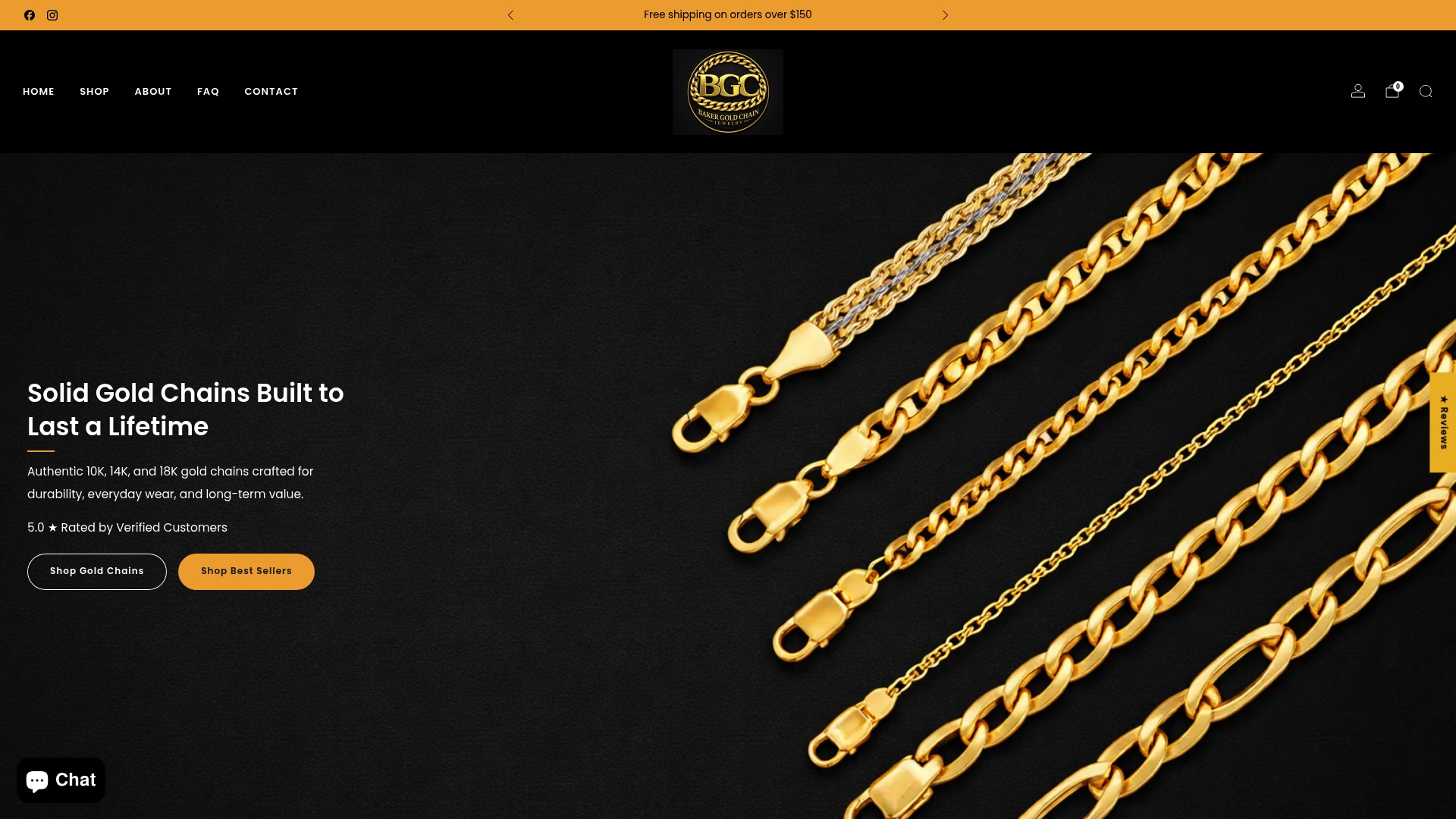
The 14K yellow gold graduated bead necklace is a strong example of a piece built for longevity. Solid gold construction means no plating to wear away and no base metal to corrode. Pair it with the care habits covered here, and it will look as good in twenty years as it does today. Bakergoldchains also backs every piece with a lifetime craftsmanship guarantee, so your investment is protected from day one.
FAQ
What is the “last on, first off” rule for jewelry?
The “last on, first off” rule means you put jewelry on after applying all cosmetics and remove it before any activity involving water or chemicals. Following this rule prevents up to 90% of chemical damage from lotions, perfumes, and hair products.
How often should fine jewelry be professionally cleaned?
Fine jewelry should be professionally inspected and cleaned once per year. Annual inspections catch 97% of structural issues, including loose prongs and worn clasps, before they cause stone loss.
Can you clean all gemstones the same way?
No. Hard stones like diamonds and sapphires tolerate gentle soaking and soft brush cleaning. Porous or organic gems like pearls and opals should only be wiped with a soft, slightly damp cloth, as soaking or chemical cleaners degrade their surface and structure.
Why does jewelry storage matter so much?
Storing pieces together allows harder gemstones to scratch softer ones within days. Compartmentalized boxes or individual soft pouches prevent scratching, tangling, and tarnish caused by air and moisture exposure.
What cleaning products should you never use on fine jewelry?
Avoid vinegar, lemon juice, bleach, and ammonia. These substances damage both metals and gemstones, causing discoloration, corrosion, and surface pitting that cannot be reversed with polishing.

