

How to Care for Gold Jewelry: Your 2026 Guide
Proper gold jewelry care is defined as the combination of gentle cleaning, safe storage, and regular professional maintenance to preserve shine and prevent damage. Whether you own a solid 14K chain or a plated hoop, the right routine makes the difference between jewelry that lasts decades and jewelry that dulls within months. Bakergoldchains recommends cleaning gold jewelry every 1–4 weeks at home, with professional inspections every 6–12 months for pieces you wear daily. The steps are simple, the tools are inexpensive, and the payoff is lasting.
How to care for gold jewelry: the right tools and products
The best way to clean gold starts with choosing the right supplies. You need mild, ammonia-free dish soap, warm water, a baby-soft toothbrush, and a soft microfiber or lint-free cloth. That combination covers nearly every at-home cleaning need without risking damage.
Harsh products cause real harm. Toothpaste and baking soda are mild abrasives that scratch gold surfaces over time, even when they produce a temporary shine. Bleach, ammonia-based cleaners, and chlorine weaken gold alloys and cause irreversible dulling or discoloration. Paper towels feel soft but are abrasive enough to leave micro-scratches on high-karat gold.
| Tool or Product | Safe to Use | Notes |
|---|---|---|
| Ammonia-free dish soap | Yes | A few drops in warm water is all you need |
| Baby-soft toothbrush | Yes | Use only on solid gold; very light pressure on plated |
| Microfiber cloth | Yes | Best for drying and polishing; lint-free preferred |
| Polishing cloth (jewelry-grade) | Yes | Use for final buff; do not scrub, just wipe gently |
| Toothpaste or baking soda | No | Abrasive; scratches gold finish over time |
| Paper towels | No | Rough texture causes micro-scratches on soft gold |
| Bleach or ammonia cleaners | No | Causes irreversible chemical damage to gold alloys |
Always work over a closed drain or a folded towel. Small pieces can slip through an open drain instantly, and a towel catches anything that falls.
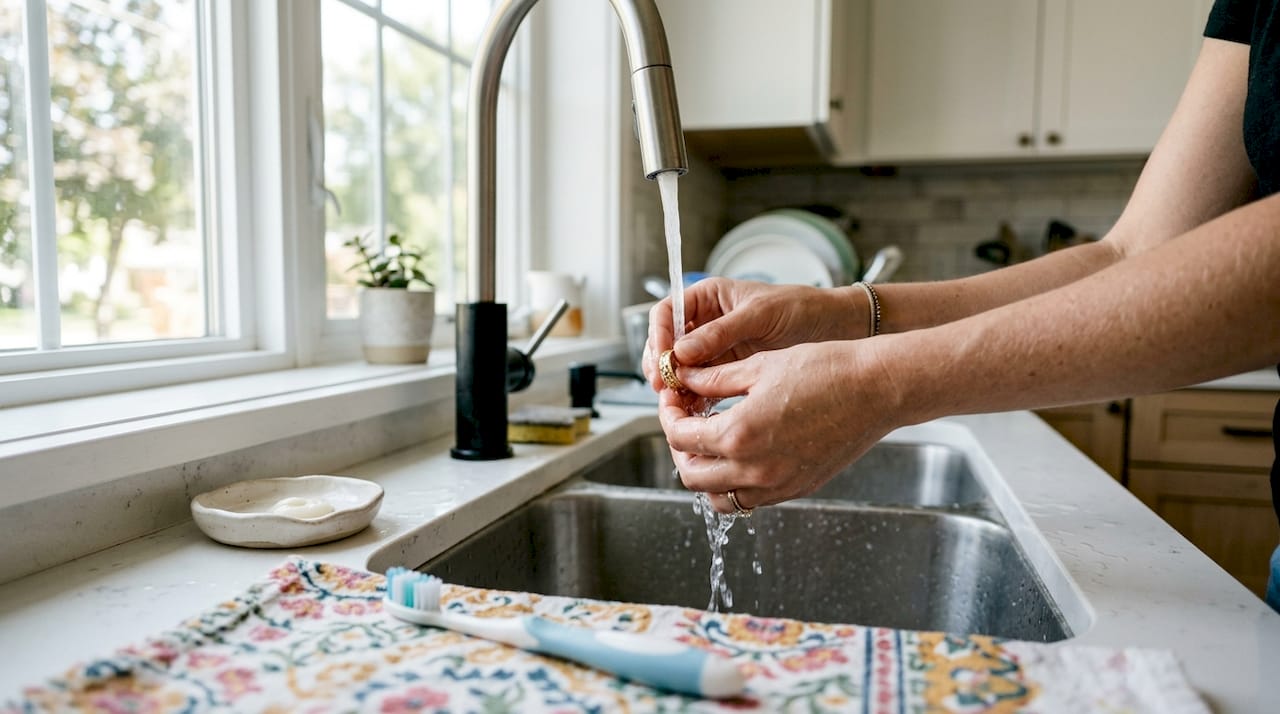
Pro Tip: A jewelry-grade polishing cloth is not the same as a regular cloth. Use it dry, with light strokes in one direction. Rubbing in circles creates fine scratches that dull the surface over time.
What is the step-by-step process for cleaning gold at home?
The safest home cleaning method uses warm water, a few drops of mild ammonia-free dish soap, and a 15–20 minute soak before any scrubbing begins. Skipping the soak is the most common mistake people make. It forces you to scrub harder, which causes micro-scratches.
Follow these steps for solid gold pieces:
- Fill a small bowl with warm (not hot) water and add two to three drops of ammonia-free dish soap.
- Place your jewelry in the bowl and let it soak for 15–20 minutes. This loosens oils, lotion residue, and everyday buildup without any abrasion.
- Brush gently with a baby-soft toothbrush. Focus on settings, chain links, and crevices where grime collects. Use light pressure only.
- Rinse thoroughly under warm running water. Hold the piece firmly or use a small strainer to avoid drops.
- Pat dry with a microfiber cloth. Do not rub aggressively. Let the piece air-dry completely before storing or wearing.
For plated gold, reduce the soak to 5–10 minutes and skip the toothbrush entirely. Plated gold requires extra caution because abrasive cleaning or over-scrubbing strips the thin gold layer. A soft cloth wipe is often enough for light cleaning.
Avoid ultrasonic cleaners at home unless the manufacturer of your specific piece confirms they are safe. Ultrasonic vibrations can loosen stone settings and crack certain gems. If you are unsure whether your piece is solid or plated, the solid vs. plated guide from Bakergoldchains explains how to tell the difference.
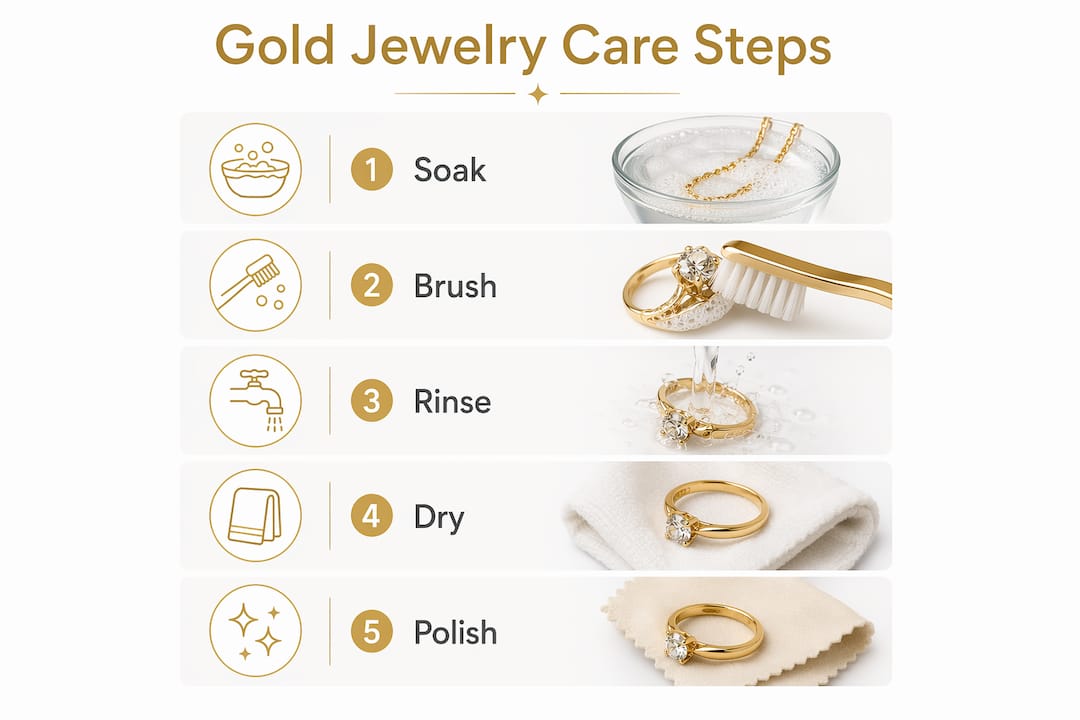
Pro Tip: The soak phase is the single most protective step in the entire process. It dissolves buildup so the brush barely needs to touch the surface. Rushing past it is the reason most at-home cleanings cause more harm than good.
How to store gold jewelry to prevent damage and maintain shine
Proper storage is as important as proper cleaning. Storing pieces individually in soft pouches or felt-lined compartments prevents scratches and tangling. Gold is a soft metal, and contact with other pieces, even other gold pieces, causes surface wear over time.
The right storage habits are straightforward:
- Store each piece separately in its own soft pouch or compartment. Never pile jewelry together in a single drawer or box.
- Keep jewelry in a cool, dry place away from direct sunlight and humidity. Heat and moisture accelerate tarnishing and weaken clasps.
- Avoid bathroom storage. Steam and moisture from showers degrade gold plating and loosen settings faster than almost anything else.
- Lay necklaces flat or hang them to prevent kinking and tangling. A wall-mounted jewelry organizer with individual hooks works well for chains.
- Keep a polishing cloth nearby so you can give pieces a quick wipe before storing them after each wear.
For plated gold specifically, storage matters even more. The thin gold layer on plated pieces is vulnerable to friction. Even soft fabric can wear it down if pieces rub together repeatedly. Wrapping plated items individually in tissue paper before placing them in a pouch adds an extra layer of protection.
The consequences of poor storage compound over time. Scratches dull the surface, tangles stress chain links, and humidity causes discoloration that looks like tarnish. None of these are easy to reverse at home. For more on choosing pieces built to withstand daily handling, Bakergoldchains covers daily wear gold jewelry in detail.
Pro Tip: Hang necklaces on individual hooks rather than coiling them in a box. Coiled chains develop kinks at stress points, and straightening them risks weakening the links. A simple over-the-door organizer costs very little and solves the problem completely.
What are the most common gold jewelry care mistakes?
Most gold jewelry damage is self-inflicted and entirely preventable. The errors below account for the majority of dulling, scratching, and structural damage that owners bring to jewelers.
“DIY hacks like baking soda and toothpaste are often well-intentioned but ultimately harmful due to mild abrasiveness on soft gold surfaces. The temporary shine they produce masks the micro-damage building underneath.” — Jewelry care experts
- Using toothpaste or baking soda. Both are abrasives. They scratch the gold surface and, over repeated use, permanently dull the finish.
- Exposing gold to chlorine, bleach, or ammonia. These chemicals cause irreversible damage to gold alloys, including discoloration and structural weakening. Remove all gold before swimming in a chlorinated pool.
- Wearing gold in the shower daily. Soap residue builds up in chain links and settings. Hot water and steam also degrade plated finishes quickly.
- Over-cleaning plated gold. Cleaning plated pieces too frequently strips the gold layer faster than normal wear. Once a month is the maximum for most plated items.
- Skipping the drain precaution. Rinsing jewelry over an open drain is how small earrings and pendants disappear. Always close the drain or use a bowl.
- Spraying perfume or applying lotion while wearing gold. Fragrance chemicals and moisturizer residue coat the surface and dull the finish. Put jewelry on last, after all products have dried.
For a deeper look at habits that shorten a piece’s life, the Bakergoldchains guide on common gold chain mistakes covers additional scenarios worth knowing.
When should you get professional maintenance for gold jewelry?
Home care handles the routine work, but professional maintenance handles what you cannot see. A jeweler checks for loose stone settings, weakened clasps, hairline cracks in prongs, and buildup in areas a toothbrush cannot reach. These are the problems that cause stone loss and structural failure.
| Care Type | Frequency | What It Covers |
|---|---|---|
| Home cleaning | Every 1–4 weeks | Surface oils, lotion residue, light tarnish |
| Home polishing | As needed | Light surface dullness between cleanings |
| Professional inspection | Every 6–12 months (daily wear) | Setting tightness, clasp integrity, deep cleaning |
| Professional inspection | Once a year (occasional wear) | General condition check, prong and setting review |
Professional cleanings every 6–12 months for daily-worn pieces deliver ultrasonic or steam cleaning that reaches areas impossible to clean at home. That level of cleaning also removes mineral deposits from hard water that accumulate invisibly over time.
Signs your piece needs professional attention before the scheduled interval include: a stone that moves when you touch it, a clasp that no longer closes securely, visible discoloration that does not respond to home cleaning, or a prong that catches on fabric. Any of these signals mean the piece needs a jeweler, not another soak. If you want to verify the purity of a piece before bringing it in, Bakergoldchains explains how to verify gold purity using methods that work at home.
For silver pieces in your collection, the same principle of regular professional care applies. Urbalenti NYC offers a useful parallel guide on storing sterling silver jewelry that reinforces many of the same storage principles.
Key Takeaways
Consistent home cleaning, safe storage, and scheduled professional inspections are the three practices that keep gold jewelry looking its best for years.
| Point | Details |
|---|---|
| Clean every 1–4 weeks | Use warm water, ammonia-free soap, and a baby-soft toothbrush for safe results. |
| Soak before scrubbing | A 15–20 minute soak dissolves buildup and prevents micro-scratches during brushing. |
| Store pieces individually | Soft pouches or felt-lined compartments stop scratching, tangling, and dulling. |
| Avoid harsh chemicals | Chlorine, bleach, ammonia, and toothpaste all cause permanent damage to gold. |
| Schedule professional care | Daily-wear pieces need a jeweler’s inspection every 6–12 months to catch hidden damage. |
What I have learned from years of watching people care for gold
The mistake I see most often is not neglect. It is over-confidence in DIY methods. Customers come in with pieces they have been “cleaning” with toothpaste for years, genuinely surprised that the surface looks dull. The damage is real and it is cumulative. Each scrub removes a microscopic layer of finish that never comes back.
The second pattern I notice is that people treat all gold the same. Solid 14K and plated gold are completely different materials when it comes to care. Solid gold forgives a lot. Plated gold does not. Knowing which one you own changes everything about how you clean it, how often you clean it, and how you store it.
What actually works is patience. The soak phase feels like wasted time until you realize it is doing all the heavy lifting. A 20-minute soak followed by a gentle wipe removes more buildup than five minutes of aggressive scrubbing, and it does it without touching the surface finish.
Professional inspections are the part most people skip, and they are the part that prevents the most expensive problems. A loose prong caught early costs almost nothing to fix. A lost stone costs far more, and that is before you factor in the sentimental value.
The simplest rule I can offer: treat your gold gently, store it separately, and let a professional look at it once a year. That routine alone will keep most pieces looking new for a lifetime.
— Blayne
Fine gold jewelry worth caring for, from Bakergoldchains
A good care routine only matters if the piece is worth caring for. Bakergoldchains carries solid gold jewelry made from 10K, 14K, and 18K gold, sourced from reputable U.S. suppliers with a lifetime craftsmanship guarantee. Every piece is built for long-term wear, not just a single occasion.
The 14K yellow gold graduated bead necklace is a strong example of a piece that rewards consistent care. For everyday wearers, the small wedding hoops in 14K yellow gold offer durability and classic style in a piece that cleans easily and stores flat. Free insured shipping applies to orders over $150, and flexible financing is available.
FAQ
How often should I clean gold jewelry at home?
Clean gold jewelry every 1–4 weeks at home using warm water and mild ammonia-free dish soap. Pieces worn daily need more frequent cleaning than those worn occasionally.
What is the best way to clean gold jewelry without damaging it?
Soak the piece in warm soapy water for 15–20 minutes, then gently brush with a baby-soft toothbrush and rinse thoroughly. Dry with a microfiber cloth and never use toothpaste, baking soda, or paper towels.
How should I store gold jewelry to keep it from scratching?
Store each piece individually in a soft pouch or felt-lined compartment in a cool, dry place away from sunlight. Keeping pieces separate prevents scratching, tangling, and surface dulling.
Is it safe to wear gold jewelry in the shower or pool?
Solid gold tolerates occasional water exposure, but daily showering builds up soap residue in settings and links. Chlorinated pool water causes irreversible chemical damage to gold alloys, so remove all gold before swimming.
When does gold jewelry need professional cleaning?
Daily-worn gold jewelry needs a professional inspection every 6–12 months. A jeweler checks stone settings, clasps, and prongs, and performs deep cleaning that home methods cannot replicate.

