

Statement Chain Collector Guide: Styles, Care, and Buying Tips
A statement chain is a deliberately scaled, visually dominant necklace — defined by width, weight, and finish — intended to be the focal piece of any look. Before you buy, choose by wardrobe register (professional, casual, or evening) and verify the hallmark.
Quick pre-buy check:
- What occasion will this chain serve?
- Does the width fall in the range you need (chunky or statement size)?
- Is a karat hallmark visible and documented?
Pro Tip: Snap a photo of the hallmark before you complete any purchase, online or in person. That single image becomes the foundation of your provenance record.
Key Takeaways
Solid gold statement chains hold their value best when chosen for a defined wardrobe role, verified with a hallmark, and supported by complete documentation from purchase through resale.
| Point | Details |
|---|---|
| Choose by wardrobe register | Match link style and width to professional, casual, or evening use before buying. |
| Verify hallmark and weight | Confirm the karat stamp and documented gram weight from every seller. |
| Prefer solid construction | Solid gold outperforms hollow or plated pieces in durability and resale value. |
| Follow a maintenance schedule | Monthly cleaning, annual inspection, and professional service every 3–5 years preserves finish and structure. |
| Bakergoldchains for verified pieces | Offers solid 10K/14K/18K chains with lifetime craftsmanship guarantee, insured shipping, and transparent metal certification. |
Table of Contents
- What makes a chain a statement piece — and which styles collectors seek
- How to choose a statement chain that fits your wardrobe
- What materials and hallmarks tell you about a chain’s quality
- How to care for and maintain statement chains
- How collectors should think about value, documentation, and resale
- What to check before you buy — and red flags to avoid
- Bakergoldchains: a trusted source for solid gold statement chains
- What experienced collectors know that most buyers miss
- Sources
What makes a chain a statement piece — and which styles collectors seek
A chain earns the “statement” label through scale, not pattern. Industry style guides treat roughly 6–9mm as chunky and 10mm or wider as statement/bold. Any link type — Cuban, rope, Figaro — scaled into that width range reads as a statement piece. You can explore the full taxonomy in this statement chain styles guide.
Statement necklaces function as an outfit’s focal point, and chunky chains are their most elemental form. They work best against simple necklines and minimal outfits, where scale can do its job without competing with pattern or texture.
Style quick-reference:
- Cuban/curb: Interlocked oval links, flat profile. At wider widths, reads as bold and structured. Classic for professional and evening wear.
- Rope: Twisted spiral links. Scaled up, it catches light dramatically. Versatile across casual and evening registers.
- Franco: Square links with a tight weave. Extremely durable at any width. Favored by collectors for longevity.
- Figaro: Alternating short and long links. At statement scale, the rhythm of the pattern becomes a design feature.
- Paperclip: Elongated oval links. At certain wider widths, it reads as architectural and modern.
- Byzantine: Intricate interlocked pattern. Even at moderate widths, the complexity reads as statement.
- Box: Square cross-section links. Clean and geometric at any scale.
- Snake: Smooth, flexible mesh. At wider widths, it drapes like fabric.
Lock-and-chain variations — padlock pendants, chunky Cuban links with hardware accents, gothic stacks — are prominent styles in 2026. For length, choker (14–16 inches) sits high on the collarbone and reads boldest; princess (17–19 inches) is the most versatile; matinee (20–24 inches) works well for layering or lower necklines.
How to choose a statement chain that fits your wardrobe
Stylists consistently recommend choosing a statement piece based on wardrobe register first. Pieces bought purely on visual appeal, without a defined role, often go unworn. For special occasions and formal wardrobes, the register question becomes even more specific.
Here is a practical framework:
- Identify your register. Professional: opt for Cuban or Franco links in suitable widths in yellow or white gold, princess length. Casual: rope or paperclip links in moderate widths, any length. Evening: Byzantine, snake, or wide Cuban links with bolder widths, choker or princess length.
- Match metal tone to your wardrobe. Yellow gold reads warm and works with earth tones; white gold or silver-tone reads cooler and pairs with neutrals and jewel tones.
- Set a weight tolerance. Heavier chains can fatigue the neck over a full day. Know your comfort range before you commit.
- Choose the right clasp. Lobster clasps are the most secure for heavy statement chains. Spring rings are adequate for lighter pieces. Box clasps with safety catches suit wide, flat chains.
- Simulate scale before buying. Cut a strip of paper or tape to the width you are considering and hold it at your neckline. This takes 30 seconds and prevents a costly misjudgment.
For layering, the 2:1:1 rule works well: one statement chain as the anchor, one medium chain, and two subtle pieces. Vary lengths by at least 2 inches between each layer to prevent tangling and visual clutter. A rope chain styled for different occasions makes a reliable medium-layer companion.
Pro Tip: Photograph your existing wardrobe’s necklines before shopping. Knowing whether you wear mostly crew necks, V-necks, or open collars tells you exactly which chain lengths and widths will actually get worn.
What materials and hallmarks tell you about a chain’s quality
Higher karat means richer color and greater purity, but also softer metal. For statement chains worn regularly, 14K is the practical sweet spot — durable enough for daily wear, pure enough to hold collector value.
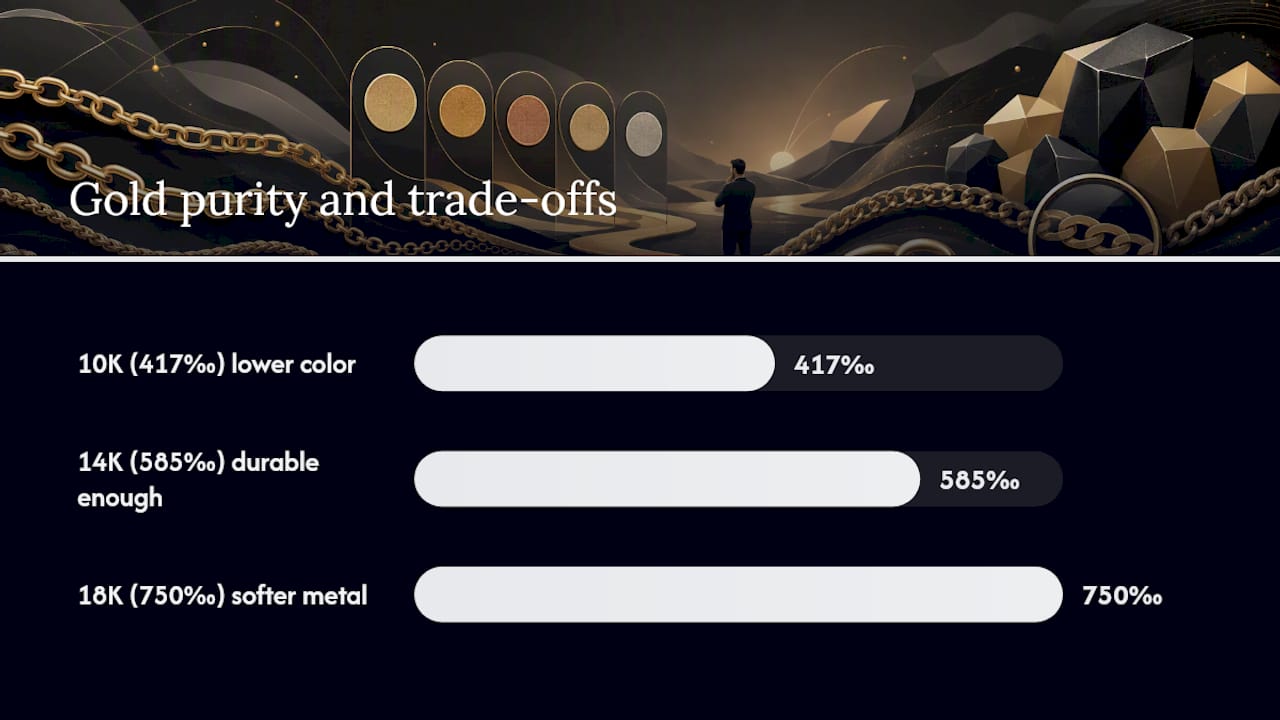
Solid vs. hollow vs. plated matters significantly for statement chains. Solid gold holds its weight and value; hollow gold looks impressive but dents more easily and has lower melt value. Gold-plated pieces — whether .925 sterling, 316L stainless, or brass base — wear through at high points over time. Material choices like .925 sterling, 316L stainless, and 18K plating each carry different durability and care implications.
Authentication checklist:
- Locate the karat stamp (10K, 14K, 18K, or 417/585/750 in European hallmarking).
- Request the documented weight in grams — a stated weight you can verify on a postal scale.
- Confirm soldered links rather than pressed or glued construction.
- Check clasp maker marks; quality clasps often carry their own stamps.
- For purchases over $500, request an independent appraisal or assay certificate.
Trust signals worth requiring from any seller: a clear hallmark, documented measurements (width, length, weight), a lifetime craftsmanship guarantee, insured shipping, and the option for independent appraisal. Bakergoldchains provides all of these as standard.
How to care for and maintain statement chains
Heavy-link chains need slightly different care than delicate ones. The weight and surface area mean more contact with skin, clothing, and air — which accelerates tarnish and wear at link joints.
- After each wear: Wipe the chain with a soft, lint-free cloth. Remove perfume, lotion, and sweat residue before storage.
- Weekly: Inspect clasps and any pendant bails for looseness. Catch a weakening solder joint early and it costs a fraction of a full repair.
- Monthly: Clean with warm water and a drop of mild dish soap. Use a soft toothbrush on textured links (Byzantine, rope). Rinse thoroughly and dry completely before storing.
- Annually: Have a jeweler inspect solder joints, clasp function, and finish. Fine jewelry care professionals recommend avoiding ultrasonic cleaners for plated pieces, as vibration accelerates plating wear.
- Every 3–5 years: Professional polishing and re-finishing for solid gold pieces that show surface scratches.
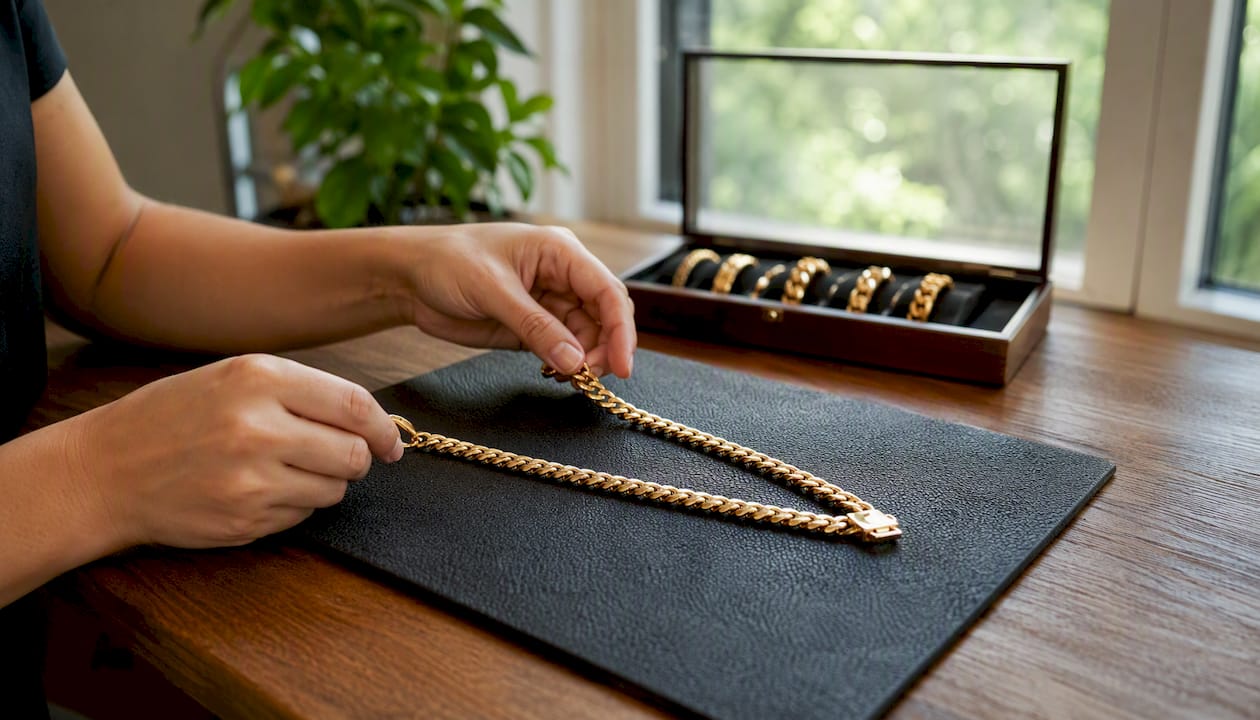
For storage, keep each chain in a separate compartment or pouch to prevent scratching. Anti-tarnish strips in a low-humidity drawer extend time between cleanings. Proper storage — flat or gently hung — prevents kinking in heavy-link chains. Collectors who travel frequently benefit from a dedicated jewelry travel organizer with individual slots for each piece.
Pro Tip: Store statement chains flat, not coiled. A heavy Cuban or Franco chain coiled tightly in a bag puts stress on link joints every time it shifts.
How collectors should think about value, documentation, and resale
The primary drivers of a statement chain’s resale value are material weight and karat, maker or brand, condition, and rarity of the link pattern. A well-documented 14K solid Franco chain in excellent condition will consistently outperform an undocumented piece of the same weight at resale.
Keeping thorough documentation is the single habit that separates a casual buyer from a serious collector. At minimum, retain:
- Original purchase receipt with seller details
- Photographs of hallmarks (close-up, in focus)
- Independent appraisal certificate
- Service and repair records
- Insured shipping receipts for high-value pieces
Condition and documentation together determine what a buyer will pay. A chain without paperwork is worth its melt value. The same chain with an appraisal, hallmark photos, and a service record commands a premium — sometimes significantly more — because the buyer’s risk drops to near zero.
Lock-and-chain styles and wide Cuban links are showing strong demand in 2026. Collectors who watch material specifications (.925 sterling, 316L stainless, solid 14K or 18K gold) can identify which pieces are likely to hold value versus those that will depreciate as trends shift.
Pro Tip: Build toward a capsule of 10–15 versatile, well-documented pieces rather than accumulating impulse buys. A focused capsule approach starting with three foundation pieces improves wearability and makes the collection easier to insure and appraise.
What to check before you buy — and red flags to avoid
Buying checklist:
- Confirm the karat hallmark is visible and matches the seller’s description.
- Request the weight in grams and verify it against published specifications.
- Ask whether links are soldered or pressed.
- Confirm solid vs. hollow vs. plated construction in writing.
- Inspect the clasp type and check for maker marks.
- Request a return policy and confirm insured shipping for orders over $150.
- For pieces over $500, ask for an independent appraisal or assay certificate.
- Request high-resolution, magnified detail shots of the hallmark and clasp before purchase.
Red flags:
- Vague metal descriptions like “gold tone,” “gold-filled,” or “gold-colored” with no karat stamp
- Missing weight or measurements in the listing
- Inconsistent or low-resolution photos
- No return policy or repair guarantee
- Pressure to complete the purchase before documentation is provided
- No insured shipping option for high-value items
Avoid common gold chain mistakes like accepting vague descriptions or skipping the hallmark check — these are the fastest routes to buyer’s remorse.
Sample questions to ask any seller:
- “Can you confirm the karat stamp and provide a close-up photo?”
- “What is the exact weight in grams and the width in millimeters?”
- “Are the links soldered, and is the construction solid or hollow?”
- “What is your return policy and do you offer insured shipping?”
Bakergoldchains: a trusted source for solid gold statement chains
Collectors who have worked through this guide know what to look for: a clear hallmark, documented weight and measurements, solid construction, and a seller who stands behind the piece. Bakergoldchains delivers all of that as standard on every order.
The catalog covers authentic solid 10K, 14K, and 18K gold chains — Cuban, rope, Franco, Byzantine, paperclip, and more — sourced from U.S. suppliers and backed by a lifetime craftsmanship guarantee. Free insured shipping applies to qualifying orders over $150, and financing options are available for larger purchases. Every piece comes with transparent metal certification, so your documentation starts the moment you check out.
Ready to add a verified statement chain to your collection? Browse the 14K gold statement necklace selection at Bakergoldchains, or contact the team directly to request specific weight and measurement details before you buy.
What experienced collectors know that most buyers miss
The most common mistake in statement chain collecting is treating scale as a substitute for purpose. A 14mm Cuban link is visually arresting on a rack or in a photo — but if your wardrobe is built around tailored blazers and crew-neck sweaters, that chain will spend most of its life in a drawer.
The collectors who build genuinely satisfying collections think in terms of role first. Every piece earns its place by serving a specific register: the wide Franco for evening events, the paperclip for professional settings, the Byzantine for weekend wear. That discipline also makes documentation easier, because each piece has a clear reason to exist in the collection.
Authenticity matters more than aesthetics at the point of purchase. A beautiful chain with no hallmark, no documented weight, and no return policy is a gamble — and the resale market will price it accordingly. Prefer documented authenticity every time, even when it means passing on a visually striking piece that cannot be verified.
Sources
- Statement Jewelry: Meaning and How to Wear It – Litkovska
- Chunky Chain Necklace: The Complete Style Guide (2026) – AJLuxe
- Lock and Chain Necklace Guide: How to Style the 2026 Trend
- Statement Jewelry Pieces: The Complete Guide to Bold Accessories That Transform Your Style
Bakergoldchains offers solid 10K, 14K, and 18K gold statement chains with a lifetime craftsmanship guarantee, free insured shipping on orders over $150, and transparent metal certification. Every piece is sourced from U.S. suppliers and comes with the documentation a serious collector needs. Visit Bakergoldchains to shop the full collection or request detailed specifications before you buy.
This article is general information, not a substitute for advice from a qualified financial advisor. Consult a qualified financial professional about your own circumstances before acting on anything here.

