

Ultrasonic Cleaner Gold Chain Safety: What Owners Must Know
Ultrasonic cleaning is generally safe for solid, intact gold chains in 10K, 14K, or 18K gold — but it can cause real damage to plated, hollow, glued, or previously repaired pieces. Before you drop your chain into a tank, run through this quick checklist:
- Inspect the chain under bright light for loose links, stretched sections, or visible solder seams.
- Remove all attachments — pendants, charms, and any non-metal components.
- Confirm the chain type — solid gold only; no plating, no hollow links.
- Use the basket or suspension tray — never place the chain directly on the tank floor.
- Choose a non-flammable solution — warm water with a drop or two of pH-neutral dish soap.
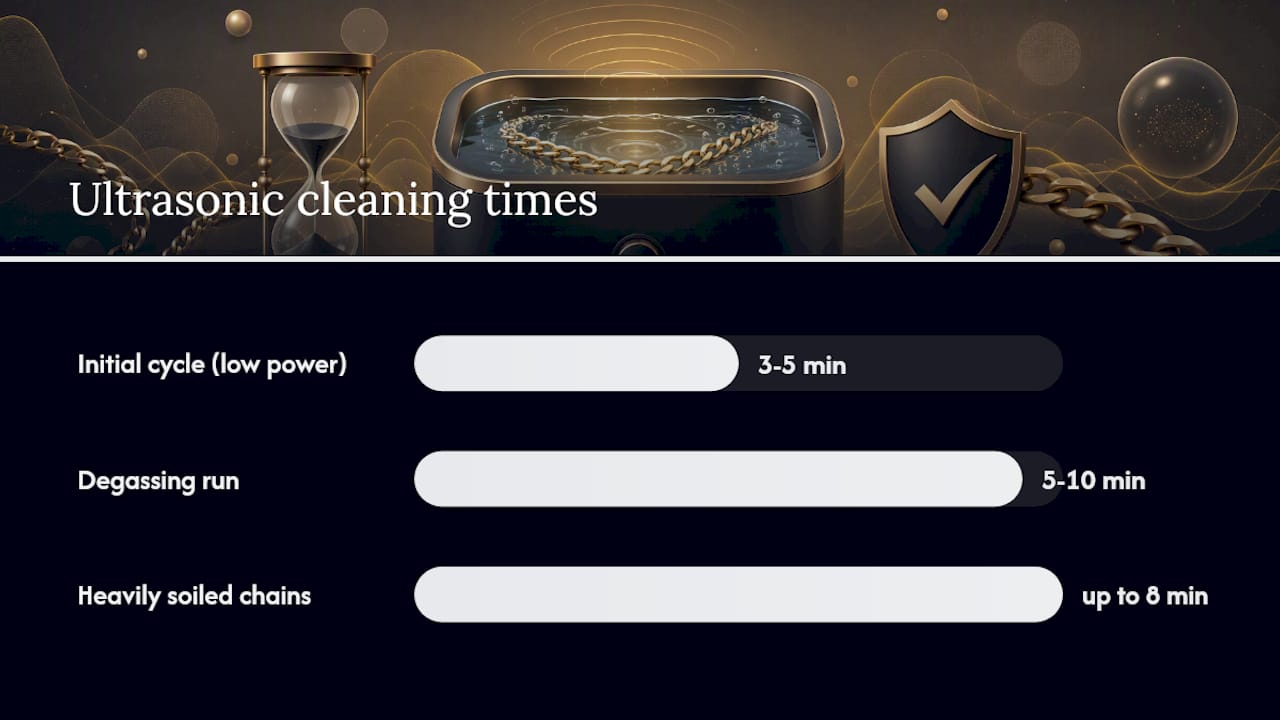
- Start with a short cycle — 3–5 minutes on the first run.
- Rinse in clean water and dry fully before storing.
Pro Tip: If you are unsure whether your chain is solid or hollow, press gently on a link between your fingernails. Hollow links flex slightly under pressure; solid links do not.
Key Takeaways
Solid, intact gold chains in 10K–18K are generally safe for ultrasonic cleaning when you inspect first, use a basket, choose a non-flammable solution, and keep cycles to 3–5 minutes.
| Point | Details |
|---|---|
| Inspect before every cycle | Check for loose links, solder seams, and damage under bright light before cleaning. |
| Always use the basket | Suspending the chain prevents peak-vibration damage to links and the tank transducers. |
| Keep cycles short | Start at 3–5 minutes; heavily soiled solid gold may go up to 8 minutes with caution. |
| Avoid plated, hollow, or glued pieces | These construction types are damaged by cavitation — clean them by hand instead. |
| Schedule professional inspections | A jeweler should inspect solder integrity and prongs every 1–2 months with regular home use. |
Table of Contents
- Is ultrasonic cleaning safe for your gold chain?
- What you must never put in an ultrasonic cleaner
- How to safely clean a gold chain at home with an ultrasonic cleaner
- Machine and chemical safety rules you must follow
- How to spot ultrasonic-related damage and what to do next
- When should you choose professional jeweler cleaning instead?
- Bakergoldchains’ recommended care for solid gold chains
- The case for conservative care over convenience
- Sources
Is ultrasonic cleaning safe for your gold chain?
Ultrasonic cleaning works by sending high-frequency sound waves through a liquid, creating millions of tiny bubbles that collapse against surfaces and lift away dirt, oils, and buildup. For solid gold chains, this process is highly effective. According to practical jewelry care guidance, ultrasonic cleaners clean solid gold chains very well, with 3–5 minute cycles using warm water and mild dish soap delivering reliable results.
The risk comes from construction, not karat alone. A 10K solid rope chain can handle an ultrasonic cycle far better than an 18K hollow Franco chain. Higher karat gold is softer, but that softness becomes a real concern only when the chain already has thin walls, weak solder joints, or pre-existing wear. Assess what you actually own before you press start.
Which chain types are safe vs. risky
| Chain Category | Safety Verdict | Main Risk |
|---|---|---|
| Solid 10K–18K, no damage | Safe with care | Minimal if inspected first |
| Hollow links (any karat) | High risk | Cavitation collapses thin walls |
| Gold-plated or vermeil | Avoid | Plating strips rapidly |
| Repaired or antique solder joints | Avoid | Ultrasonic stress reopens seams |
| Solid chain with attached soft gems | Avoid | Gems or adhesive may fail |
| Solid chain, no attachments, intact | Proceed cautiously | Low risk with short cycles |
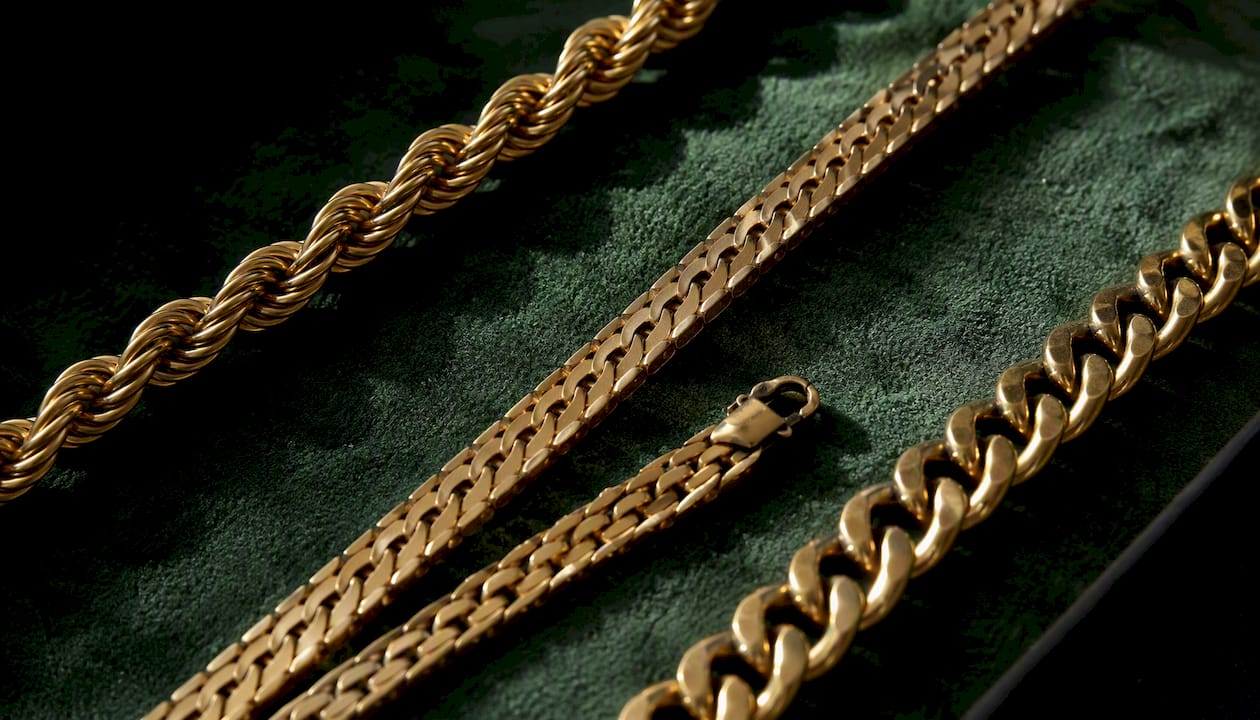
Pro Tip: Rope, Franco, and Cuban chains from Bakergoldchains in solid 10K–18K gold are among the construction types that respond well to short ultrasonic cycles — provided you inspect them first and keep cycles under five minutes.
What you must never put in an ultrasonic cleaner
Some materials simply cannot survive the cavitation process. The vibrations that lift grime from solid metal will fracture porous stones, dissolve adhesives, and strip delicate surface treatments. The following items are off-limits:
- Pearls — porous and organic; cavitation erodes the nacre layer permanently.
- Opals — high water content makes them vulnerable to thermal shock and surface cracking.
- Emeralds — almost always fracture-filled with oils or resins that cavitation removes, leaving visible cracks.
- Glued settings — the adhesive breaks down quickly, loosening stones.
- Enamel — vibration causes chipping and delamination.
- Wooden or organic components — absorb water and warp or crack.
- Fracture-filled or treated gemstones — the filler is stripped, exposing internal fractures.
Caution: Adhesives and porous materials fail for two reasons at once. Cavitation physically dislodges the bond, while the heated solution accelerates chemical breakdown. A stone that looks secure before the cycle can be loose or missing after it. As the Granbo Ultrasonic compatibility guide confirms, pearls, opals, emeralds, and glued items are all incompatible with ultrasonic cleaning, regardless of the metal they are set in.
Gold-plated pieces deserve a separate note. The plating layer is typically just a few microns thick. Ultrasonic cavitation strips it unevenly, leaving dull patches that cannot be reversed at home. If you own a 14K yellow gold necklace with freshwater pearls, keep it out of the tank entirely — the pearls disqualify it regardless of the gold content.
How to safely clean a gold chain at home with an ultrasonic cleaner
Follow these steps in order. Skipping the inspection is the most common mistake owners make.
- Inspect under bright light. Look for stretched links, kinked sections, visible solder seams, or any loose components. A jeweler’s loupe (10x) makes hairline cracks visible. If you find damage, stop and consult a jeweler before cleaning.
- Remove all attachments. Detach pendants, charms, and any non-metal elements. Open the clasp and lay the chain out flat to check its full length.
- Prepare the solution. Fill the tank to the marked operating level with warm water and 1–2 drops of pH-neutral dish soap, or use a manufacturer-approved, non-flammable ultrasonic cleaning solution. Never use alcohol, bleach, or mineral acids.
- Place the chain in the basket. Suspend the chain in the supplied basket or tray so it hangs freely without touching the tank floor. Peak vibrational energy at the tank bottom accelerates link wear and can damage the transducers.
- Set a short first cycle. Start at 3–5 minutes on low power if your machine is adjustable. For heavily soiled solid gold chains, some manufacturers allow up to 8 minutes with caution — but 3–5 minutes is the right starting point.
- Keep the lid closed while running. This reduces the risk of solution contact with skin or eyes during operation.
- Rinse in distilled water. After the cycle, lift the basket out and rinse the chain thoroughly under clean, distilled water to remove all detergent residue.
- Dry fully. Pat gently with a lint-free cloth, then air-dry vertically for at least 15 minutes before storing. Moisture trapped in chain links accelerates tarnish. Good gold jewelry storage starts with a completely dry piece.
- Inspect again. Check for any newly loose links or changes in flexibility before putting the chain back on.
Pro Tip: Degas the solution before your first cleaning run. Run the machine empty for 5–10 minutes to release dissolved air from the liquid. Degassed solution transfers ultrasonic energy more efficiently and cleans more evenly.
Machine and chemical safety rules you must follow
The machine itself carries real hazards. High voltage, hot solution, and energized cleaning chemistry all require attention before you start.
Electrical and operational rules:
- Disconnect power before filling or emptying the tank, as specified in the Branson 1510-DTH safety manual.
- Never run the unit dry. Operating without liquid damages the transducers and creates a fire risk.
- Keep the work area dry and the unit on a stable, grounded surface.
- Change the solution regularly. Contaminated solution loses cleaning power and can corrode metal surfaces, as the Ultra_6000FLT industrial manual notes.
Chemical rules:
- Use only water-based, non-flammable solutions. The Branson manual explicitly prohibits alcohol, gasoline, flammable liquids, and mineral acids in the tank.
- Review the MSDS (Material Safety Data Sheet) for any commercial cleaning solution before use, as recommended by the Ultra_2400FA system manual.
- Keep solution temperature below recommended operating limits to avoid excessive cavitation and chemical aggressiveness that can damage surfaces.
Personal safety note: Ultrasonic cleaning energizes otherwise mild solutions, making them more chemically active and potentially hotter than they appear. Wear gloves and goggles when handling the solution, and work in a ventilated area. As Creworks Equipment’s safety guide explains, contact with an energized cleaning solution can cause skin irritation or burns — even from a solution that seems gentle at room temperature.
How to spot ultrasonic-related damage and what to do next
Damage from ultrasonic cleaning is not always obvious right after a cycle. Some signs appear only after the chain dries or is worn again.
Visual signs to watch for:
- Stretched or misshapen links that were uniform before cleaning.
- Flattened sections in hollow-style chains.
- Missing or patchy plating on any gold-plated components.
- Loose or open solder seams, especially at clasps or repaired areas.
- Newly loose stones in any setting.
- Surface pitting or micro-fractures visible under magnification.
Behavioral signs:
- A sudden change in how the chain drapes or flexes.
- Links that catch or bind where they moved freely before.
If you notice any of these, act immediately:
- Stop wearing the chain.
- Dry it fully and store it flat in a soft pouch.
- Photograph the damage clearly, including close-ups of affected links or settings.
- Contact a jeweler for a professional inspection and repair estimate.
- Keep the photos for warranty or insurance purposes.
Ultrasonics can accelerate failure at pre-existing micro-cracks, and the stress accumulates with repeated use. A chain that survives ten cycles without visible damage can still be weakening internally — which is why regular visual inspection matters as much as the cleaning itself.
When should you choose professional jeweler cleaning instead?
Some situations call for a professional, regardless of how careful you are at home. Jewelers use calibrated ultrasonic baths with approved chemistries, controlled steam, and hands-on inspection that a home unit cannot replicate.
Go to a jeweler when:
- The chain is antique, has been repaired, or has unknown construction.
- Any gemstones or glued components are attached.
- The chain has high sentimental or monetary value.
- You wear the chain daily and have not had it inspected in over a year.
- You notice any of the damage signs listed above.
- You are unsure whether the chain is solid or hollow.
Professionals also check prong integrity, re-tip worn prongs, and address solder failures — tasks that a home ultrasonic cannot perform. A jeweler’s inspection typically includes a cleaning as part of the service, so you get both outcomes in one visit. Always ask for a written estimate before authorizing any repair work.
Pro Tip: Jewelers recommend inspecting prongs and solder integrity every 1–2 months if you use a home ultrasonic cleaner regularly. A quick visual check between sessions catches problems before they become costly repairs.
Bakergoldchains’ recommended care for solid gold chains
Bakergoldchains builds its chains in solid 10K, 14K, and 18K gold sourced from U.S. suppliers, and every piece carries a lifetime craftsmanship guarantee. That construction means our chains are among the types best suited to careful home ultrasonic cleaning — but “suited” does not mean “maintenance-free.”
For owners of Bakergoldchains solid gold pieces:
- Clean no more than once every 4–6 weeks under normal wear conditions. Daily-wear chains may benefit from more frequent gentle cleaning, but shorter cycles and more frequent rinses beat longer cycles less often.
- Always inspect before and after each cycle. Check clasps, links, and any solder points.
- Store your chain dry and flat, or hang it vertically in a dedicated jewelry organizer, after every cleaning session.
- Bring the chain to a jeweler for a professional inspection at least once a year, or any time you notice a change in how it looks or feels.
- Reduce how often you need to clean by following daily-wear precautions — keeping the chain away from chlorine, lotions, and heavy sweat when possible.
Our solid 14K graduated bead necklace is a good example of the construction type that handles conservative ultrasonic cycles well: solid metal, no glued components, and a simple link geometry that cleans evenly in 3–5 minutes.
Pro Tip: Avoid common mistakes that increase cleaning frequency unnecessarily. Lotions, perfumes, and chlorine are the biggest culprits. Apply them before putting on your chain, not after, and you will clean far less often.
The case for conservative care over convenience
There is a temptation to treat an ultrasonic cleaner as a set-it-and-forget-it solution. Drop the chain in, press the button, done. The problem is that the machine cannot tell you whether your chain has a hairline crack at a solder joint, a link that has been thinning for months, or a clasp that is one cycle away from failing.
The guidance in this article is deliberately conservative for a reason. Ultrasonic cleaning works well when the chain is solid, intact, and properly suspended. When even one of those conditions is missing, the same energy that lifts dirt can accelerate damage that was already forming. A three-minute inspection before every cycle costs nothing and can prevent a repair bill that costs considerably more than the cleaner itself.
The best approach pairs home ultrasonic cleaning with regular professional check-ins. Use the machine for routine maintenance between visits, and let a jeweler handle the deeper inspection and any structural concerns. That combination keeps your chain looking its best without taking unnecessary risks with a piece you likely wear every day.
Sources
The following sources were used to verify the safety guidance, cycle recommendations, and material compatibility information in this article:
- Branson 1510-DTH Ultrasonic Cleaner Manual (NIST-hosted PDF)
- Ultra_2400FA Instruction Manual (UltraSonic LLC)
- Ultra_6000FLT Instruction Manual (UltraSonic LLC)
- Can An Ultrasonic Cleaner Hurt You? Safety Risks and Prevention Guide — Creworks Equipment
- What Types of Jewelry Can Be Cleaned with an Ultrasonic Cleaner? — Granbo Ultrasonic

