

Yellow Gold: What Every Buyer Needs to Know
Yellow gold is a solid gold alloy whose warm color comes from fine gold combined with metals like copper and silver. For most buyers, 14K is often considered a practical choice for everyday rings, bracelets, and chains, while 18K delivers richer color for heirloom pieces and engagement rings. Bakergoldchains carries authentic solid gold in 10K, 14K, and 18K, with a lifetime craftsmanship guarantee and free insured shipping on qualifying orders.
Quick facts before you shop:
- Look for karat stamps: 10K, 14K, 18K, or fineness marks 417, 585, 750
- Solid gold holds its color permanently; plated gold wears through at edges over time
- 24K is nearly pure gold but too soft for most wearable jewelry
- Always buy from sellers who provide documented hallmarking and a clear return policy
Table of Contents
- What makes yellow gold look yellow?
- Karat guide: which purity level is right for you?
- How can you tell if yellow gold is real?
- How to clean and care for yellow gold at home
- What to check before you buy yellow gold jewelry
- Yellow gold vs. white gold, rose gold, and plated options
- Why buy from Bakergoldchains?
- Is yellow gold worth anything? Resale and long-term value
- Key Takeaways
- Why solid yellow gold is worth choosing
- Shop yellow gold chains and jewelry at Bakergoldchains
- Useful sources and where to verify hallmarks
What makes yellow gold look yellow?
The color is not a coating. It comes from the alloy composition itself: fine gold (Au) blended with copper and silver in specific ratios. Copper pulls the tone warmer and more orange; silver cools it toward a paler, greenish-yellow. Adjust those ratios and you change the hue, even within the same karat grade.
That is why two 14K pieces from different manufacturers can look noticeably different side by side. One jeweler might use a higher copper ratio for a deeper, richer tone; another might add more silver for a lighter, classic yellow. The alloy recipes by karat vary widely, and the manufacturing finish (high-polish, matte, brushed) amplifies those differences further.
A few other factors worth knowing:
- Nickel-free alloys are available and recommended for buyers with sensitive skin. Some manufacturers substitute palladium or zinc for nickel to reduce allergic reactions.
- Zinc is occasionally added in small amounts to improve castability and reduce porosity in the finished piece.
Pro Tip: Photography and lighting can make the same piece look anywhere from pale champagne to deep amber. When shopping online, ask for photos in natural daylight or request a video — it gives you a much more accurate read on the actual color.
Karat guide: which purity level is right for you?
Karat grades tell you exactly how much fine gold is in a piece. Higher karat means more gold, a richer color, and a higher melt value. It also means a softer metal, which matters for pieces worn daily.
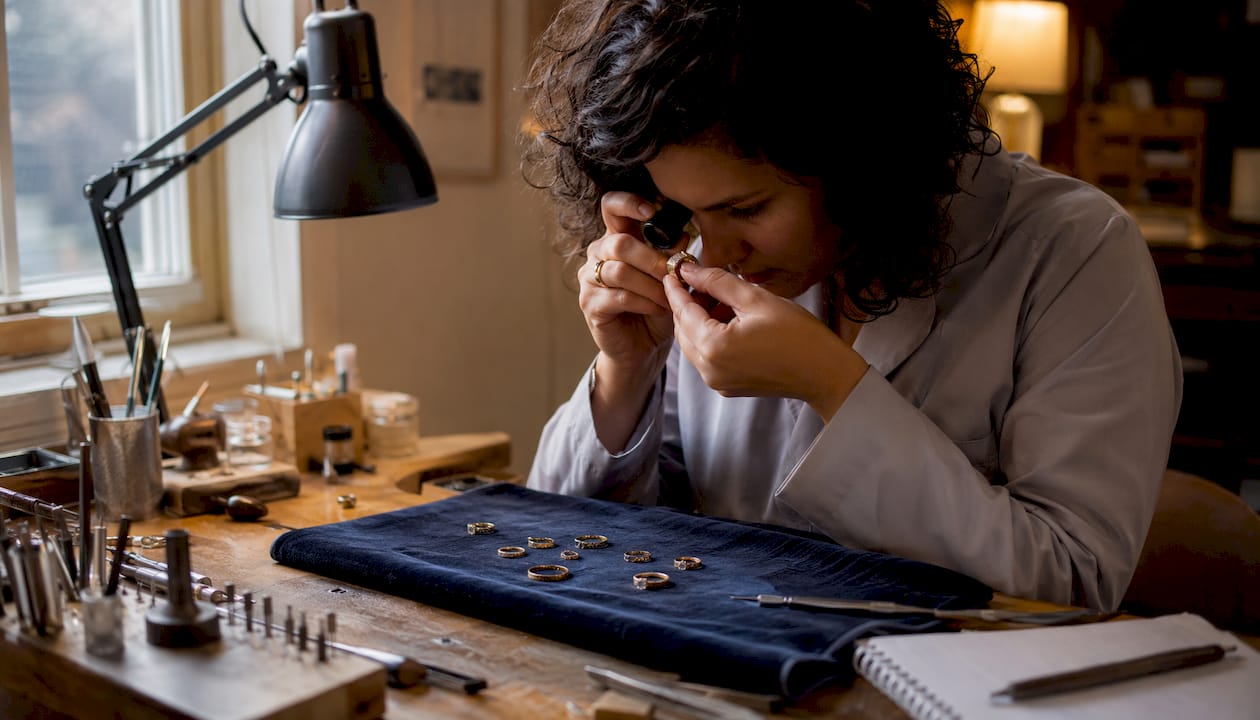
| Karat | Fine Gold Content | Typical Color | Durability | Best For |
|---|---|---|---|---|
| 10K | ~41.7% | Light yellow | Highest | Budget everyday wear, children’s jewelry |
| 14K | ~58.3–58.5% | Medium-rich yellow | Very good | Daily rings, chains, bracelets |
| 18K | ~75% | Deep, warm yellow | Good | Heirloom pieces, engagement rings, fine jewelry |
| 24K | ~99.9% | Vivid, bright yellow | Very low | Bullion, investment; rarely wearable |
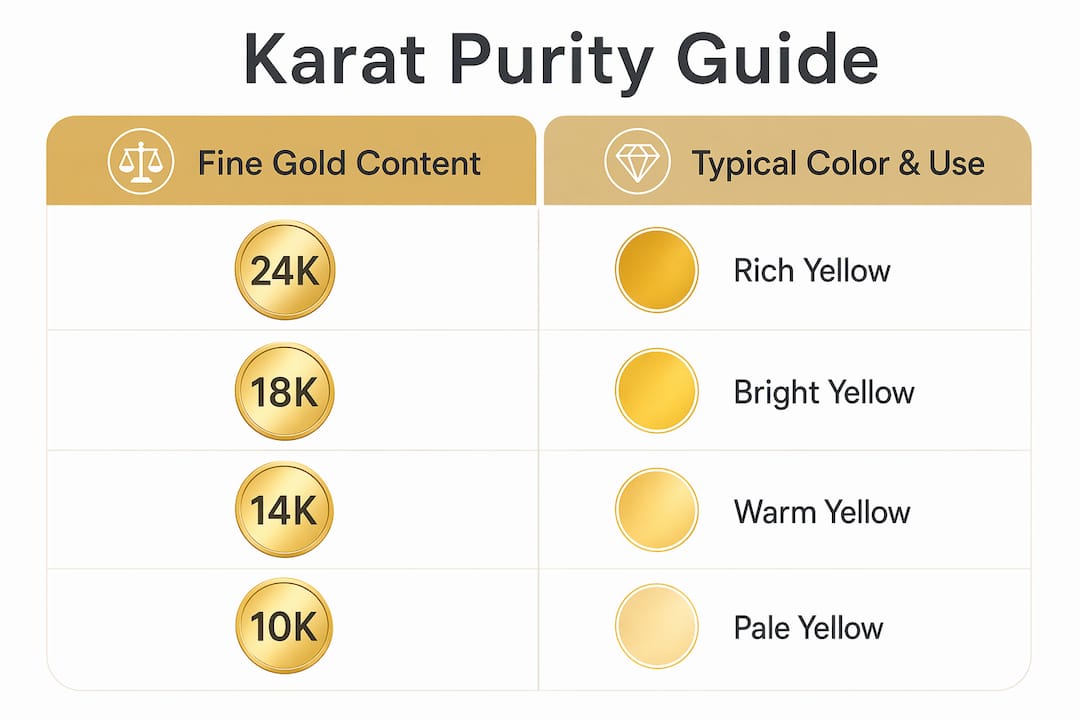
For everyday rings and bracelets, 14K hits the right balance: enough gold content for lasting color and real melt value, with enough alloy hardness to resist daily scratches. Eighteen-karat pieces are the right call for a wedding band or an heirloom necklace where color depth and prestige matter more than scratch resistance. Educational resources consistently recommend 18K for premium heirloom pieces and 14K for practical everyday wear.
Twenty-four karat gold is essentially pure and bends easily under normal pressure. Jewelers almost never use it for rings or chains because a stone setting or a clasp would deform with regular wear.
How can you tell if yellow gold is real?
Genuine gold jewelry carries a karat or fineness stamp as its first and simplest authenticity signal. Here is where to look and what to do if something seems off.
Where to find hallmarks:
- Inside the shank of a ring
- On the clasp or a tag of a necklace or bracelet
- On the post or back of an earring
- Common stamps: 10K, 14K, 18K or their fineness equivalents 417, 585, 750
Visual checks that take 30 seconds:
- Consistent color all the way through, including at edges and clasps
- No different-colored base metal showing through at wear points
- Weight that feels substantial for the size (gold is dense)
- Stamps that are clean and legible, not smudged or re-stamped
Simple home tests (use as red flags, not final verdicts):
- Magnet test: Real gold is not magnetic. If a piece pulls toward a strong magnet, it contains ferrous metal and is not solid gold. This test rules out obvious fakes but cannot confirm genuine gold on its own.
- Acid test: A small scratch on a testing stone, treated with nitric acid, changes color based on gold content. This is a last-resort test and should never be done on a valued piece without professional guidance.
Stamps marked GF (gold-filled), GP (gold-plated), or GEP (gold electroplated) are not solid gold. These pieces have a base metal core with a thin gold layer on the surface. They look similar to solid gold initially but wear through at edges over time.
Pro Tip: Before buying from any seller, ask three questions: What is the exact karat? Can you provide the item weight in grams? What is your return policy if the piece does not match the description? A seller who hesitates on any of these is a red flag.

When buying a piece that includes diamonds, request a GIA grading report for the stone. The Gemological Institute of America sets the standard for diamond grading in the U.S., and a GIA report confirms both the stone’s quality and that the piece was made to professional standards.
How to clean and care for yellow gold at home
Higher-karat yellow gold is corrosion-resistant and does not tarnish the way base metals do. Lower-karat pieces with more copper can develop a slight patina over time, but regular cleaning keeps them looking sharp. Here is a routine that works for most solid gold jewelry.
Light cleaning (weekly or as needed):
- Fill a small bowl with warm (not hot) water and a few drops of mild dish soap.
- Place the piece in the bowl and let it soak for 10–15 minutes.
- Use a soft-bristled toothbrush to gently scrub around settings, links, and engravings.
- Rinse thoroughly under clean running water.
- Pat dry with a soft, lint-free cloth and let it air-dry completely before storing.
Deeper cleaning (monthly or before a special occasion):
Follow the same steps above, but extend the soak to 20–30 minutes and use a slightly warmer water temperature. For intricate chain styles like Cuban or Franco links, pay extra attention to the inner link surfaces where skin oils accumulate.
Daily habits that protect your pieces:
- Remove gold jewelry before swimming in chlorinated pools or hot tubs. Chlorine can weaken alloy bonds over time, especially at lower karats.
- Take off rings and bracelets before applying lotion, perfume, or cleaning products.
- Avoid ultrasonic cleaners for pieces with porous gemstones (emeralds, opals, pearls) — the vibration can loosen settings or damage the stone.
For polishing, a jeweler’s polishing cloth handles light surface scratches at home. Deep scratches or significant surface wear call for professional refinishing, which a qualified jeweler can do by re-polishing or rhodium-free buffing. For a full step-by-step maintenance guide, Bakergoldchains has a detailed gold jewelry care resource worth bookmarking.
Storage: Keep each piece in a separate soft pouch or a lined jewelry box compartment. Gold is soft enough that chains and rings stored together will scratch each other.
What to check before you buy yellow gold jewelry
A short checklist prevents most buying mistakes, whether you are shopping online or in a store.
Before you commit to a purchase:
- Karat stamp confirmed: The piece should show a legible karat or fineness mark in the expected location.
- Item weight listed: Reputable sellers list gram weight. It lets you calculate a rough melt value and compare prices across listings.
- Return policy in writing: A minimum 30-day return window is standard for reputable online retailers. No return policy is a serious red flag.
- Warranty or craftsmanship guarantee: Bakergoldchains provides a lifetime craftsmanship guarantee on its solid gold pieces. Ask any seller what their equivalent is.
- Alloy and plating disclosure: The listing should state whether the piece is solid gold, gold-filled, or plated. Vague descriptions like “gold tone” or “gold color” almost always mean plated.
- Shipping insurance: For any order above a modest value, insured shipping protects you if the package is lost or damaged in transit.
Pricing red flags: Gold has a market price per troy ounce that you can check any day. If a piece is priced dramatically below what the gold content alone would cost at melt value, something is wrong. Either the karat is misrepresented, the piece is plated, or the weight is less than stated.
For chains specifically, the diamond-cut cable chain on Bakergoldchains shows exactly how a reputable listing presents weight, karat, and dimensions clearly. That level of transparency is the baseline you should expect from any seller.
Yellow gold vs. white gold, rose gold, and plated options
The three solid gold colors share the same fine gold base. What changes is the alloy mix, and that changes everything about maintenance, appearance, and skin compatibility.
White gold gets its color from alloy metals like palladium or nickel, but the result is typically a light gray rather than a true white. Most white gold jewelry is rhodium-plated to achieve a bright white finish, which means it needs periodic replating as the rhodium wears off. Yellow gold needs no plating at all. Its color is inherent to the alloy and stays consistent for the life of the piece.
Rose gold gets its distinctive pink tone from a higher copper ratio. It tends to be slightly harder than yellow gold at the same karat because of that copper content, but it can cause reactions in people with copper sensitivities.
Gold-filled and plated pieces are a different category entirely. Gold-filled has a thicker gold layer bonded to a base metal core and lasts longer than plated, but it is not solid gold. Plated pieces wear through at edges within months to years depending on the thickness of the layer and how often the piece is worn. For fashion jewelry you plan to rotate seasonally, plated is fine. For anything you wear daily or plan to pass down, solid gold is the only choice that holds its value and appearance long-term.
Pro Tip: If you have a nickel allergy, ask specifically for nickel-free yellow gold. Many 14K and 18K yellow gold alloys use copper and silver without any nickel, making them a safer choice than some white gold alloys that rely on nickel for color.
Why buy from Bakergoldchains?
Bakergoldchains stocks authentic solid gold in 10K, 14K, and 18K, sourced from reputable U.S. suppliers. Every piece carries a legible karat stamp, and the site provides transparent metal certification so you know exactly what you are buying before the order ships.
Bakergoldchains buyer protections at a glance: Lifetime craftsmanship guarantee on all solid gold pieces. Free insured shipping on orders over $150. Transparent karat and alloy disclosure on every product listing. Clear return policy with documented purchase records. Financing options available for higher-value pieces.
Here is what that means in practice:
- Authenticity: Every piece is solid gold, not plated or filled. The karat stamp on the piece matches the listing description.
- Shipping: Orders over $150 ship with insurance, so your purchase is protected in transit.
- After purchase: The lifetime craftsmanship guarantee covers manufacturing defects. If you have questions about resizing, warranty claims, or karat-specific details, the customer service team can walk you through the process.
- Financing: Flexible payment options mean you can invest in a higher-karat piece without paying the full amount upfront.
For buyers who want to see how yellow gold pieces are presented at the product level, the yellow gold diamond hoop earrings listing is a good example of how Bakergoldchains documents karat, weight, and stone details in one place.
Is yellow gold worth anything? Resale and long-term value
Yellow gold holds real monetary value because the material integrity is tied to its gold content, not a surface treatment. That is the core difference between solid gold and plated jewelry when it comes to resale.
Melt value vs. retail value: Melt value is the gold content of a piece multiplied by the current market price per troy ounce. Retail value includes design, craftsmanship, brand, and condition. A well-designed piece from a recognized maker can sell for significantly more than its melt value. A plain chain will typically sell closer to melt.
Where to sell yellow gold:
- Jewelry buyers and gold dealers: Fast and straightforward, but expect offers at or slightly below melt value.
- Pawn shops: Convenient but usually the lowest offers.
- Consignment through a jeweler: Better for designer or branded pieces where the design adds value.
- Online auction platforms: Can reach collectors willing to pay above melt for distinctive designs, but requires more effort and carries shipping risk.
Preserving resale value: Keep the original purchase documentation, avoid irreversible modifications like deep engraving on a plain band, and maintain the piece’s condition through regular cleaning. A piece in excellent condition with original paperwork will always sell faster and for more than one without.
Pro Tip: Before selling, get at least two independent offers. Gold buyers’ margins vary widely, and a second opinion often reveals a significantly better price.
Key Takeaways
Yellow gold’s value and appearance are built into the alloy itself, making it the most durable and resale-friendly choice for buyers who want jewelry that lasts.
| Point | Details |
|---|---|
| Karat determines everything | 14K balances durability and color for daily wear; 18K is richer and better for heirloom pieces. |
| Hallmarks are your first check | Look for 10K, 14K, 18K, or fineness marks 417, 585, 750 in the expected location before buying. |
| Solid gold vs. plated | Stamps like GF, GP, or GEP mean plated or filled, not solid gold; plated pieces wear through at edges over time. |
| Care keeps color consistent | Warm water, mild soap, and a soft brush weekly preserves finish; avoid chlorine and harsh chemicals. |
| Bakergoldchains | Offers authentic solid gold in 10K, 14K, and 18K with a lifetime craftsmanship guarantee and free insured shipping over $150. |
Why solid yellow gold is worth choosing
Most buyers focus on color and price when they first start looking at gold jewelry. Those matter, but the more you understand about how yellow gold is made, the more you realize the real question is whether the color you see will still be there in ten years.
With solid yellow gold, the answer is yes. The warm tone is part of the alloy, not a coating that wears away. That is a meaningful distinction when you are buying something you plan to wear every day or pass on to someone else. Plated pieces look identical in a photograph and cost less upfront, but they are a different product with a different lifespan.
The buyers Bakergoldchains serves tend to understand this already. They are not looking for the cheapest option; they want something real, documented, and built to last. Transparent hallmarking and honest karat labeling are not extras at Bakergoldchains. They are the baseline. If you have questions about which karat fits your lifestyle or want guidance on a specific piece, the customer service team is there to help.
Shop yellow gold chains and jewelry at Bakergoldchains
Bakergoldchains offers solid gold pieces in 10K, 14K, and 18K, with every listing showing karat, weight, and alloy details upfront. No guesswork, no vague descriptions.
The Graduated Bead Necklace in 14K Yellow Gold is a strong starting point if you want a classic, versatile piece that works for everyday wear and special occasions alike. Every order over $150 ships with insurance, and the lifetime craftsmanship guarantee covers manufacturing defects for the life of the piece. Browse the full selection at bakergoldchains.com and use the financing options if you want to invest in 18K without paying the full amount at once.
Useful sources and where to verify hallmarks
The following resources are reliable references for hallmark standards, diamond grading, and gold composition:
- GIA (Gemological Institute of America): The primary authority for diamond grading in the U.S. and a trusted source for gold and jewelry education. Visit retailer.gia.edu for professional grading standards.
- CAMEO (Conservation & Art Materials Encyclopedia Online), Museum of Fine Arts Boston: A peer-reviewed metallurgy reference covering alloy compositions and historical gold standards.
- Independent assayers: For any high-value piece where authenticity is uncertain, an independent assay from a certified precious metals laboratory provides a definitive answer on gold content. The American Society of Jewelry Appraisers and the National Association of Jewelry Appraisers both maintain directories of qualified appraisers in the U.S.
Keep your paperwork. Store the original purchase receipt, any certificate of authenticity, and GIA reports with the piece itself. If you ever sell, resize, or insure the jewelry, that documentation makes the process faster and often results in a better outcome.
For ongoing care guidance and karat comparisons, Bakergoldchains maintains buyer education resources at bakergoldchains.com/blogs that cover these topics in depth.

