

When to Replate Gold Jewelry: Clean, Replate, or Upgrade
Replate gold jewelry when the base metal is visible beneath the surface, when plating flakes or peels, or when gentle cleaning no longer restores the color. If the finish is just dull, try cleaning first with mild soap and a soft microfiber cloth. If that reveals silver or copper tones underneath, or if you see flaking, replating is your next step. And if the piece has been replated multiple times already or the base metal is damaged, buying solid gold is often the smarter long-term choice.
Quick decision guide:
- Dull finish, plating intact: Clean gently first; replating is not yet needed
- Color loss at edges or clasps: Visible base metal means replating is required
- Flaking or peeling: Strip and replate professionally
- Repeated replating on a damaged base: Consider replacing with solid gold
- Lifetime durability goal: Authentic 10K–18K solid gold eliminates replating entirely
Most replated pieces last for a limited period depending on plating thickness and how often the piece is worn. Professional replating in the U.S. typically costs $30–$150 per piece, with most items in the $50–$100 range.
Table of Contents
- What are the signs your gold jewelry needs replating?
- How does professional gold replating actually work?
- How long does replating last on gold jewelry?
- What does gold replating cost in the U.S.?
- Should you replate or replace the piece?
- How do you choose a trustworthy replating jeweler?
- Aftercare steps that extend your replated finish
- What replating cannot fix
- When should you buy solid gold instead of replating?
- Key Takeaways
- The honest truth about replating that most guides skip
- Skip the replating cycle with solid gold from Bakergoldchains
- Useful sources
What are the signs your gold jewelry needs replating?
Knowing when to fix gold plating starts with a close look in bright light. Hold the piece near a lamp or window and check these specific spots.
Observable signs that mean replating is needed, not just cleaning:
- Visible base metal: Silver, copper, or brass tones showing through at edges, ring shanks, or clasp interiors
- Flaking or peeling: Small chips of gold lifting away from the surface
- Color loss at high-friction points: The back of a pendant bail, the inside of a bracelet clasp, or the underside of a ring band
- Green skin or persistent discoloration: A sign the base metal is reacting with your skin; cleaning won’t stop this
- Rough or pitted texture: The surface feels uneven where it was once smooth
- Sharp color contrast: A clear line between gold and non-gold areas, especially at clasps
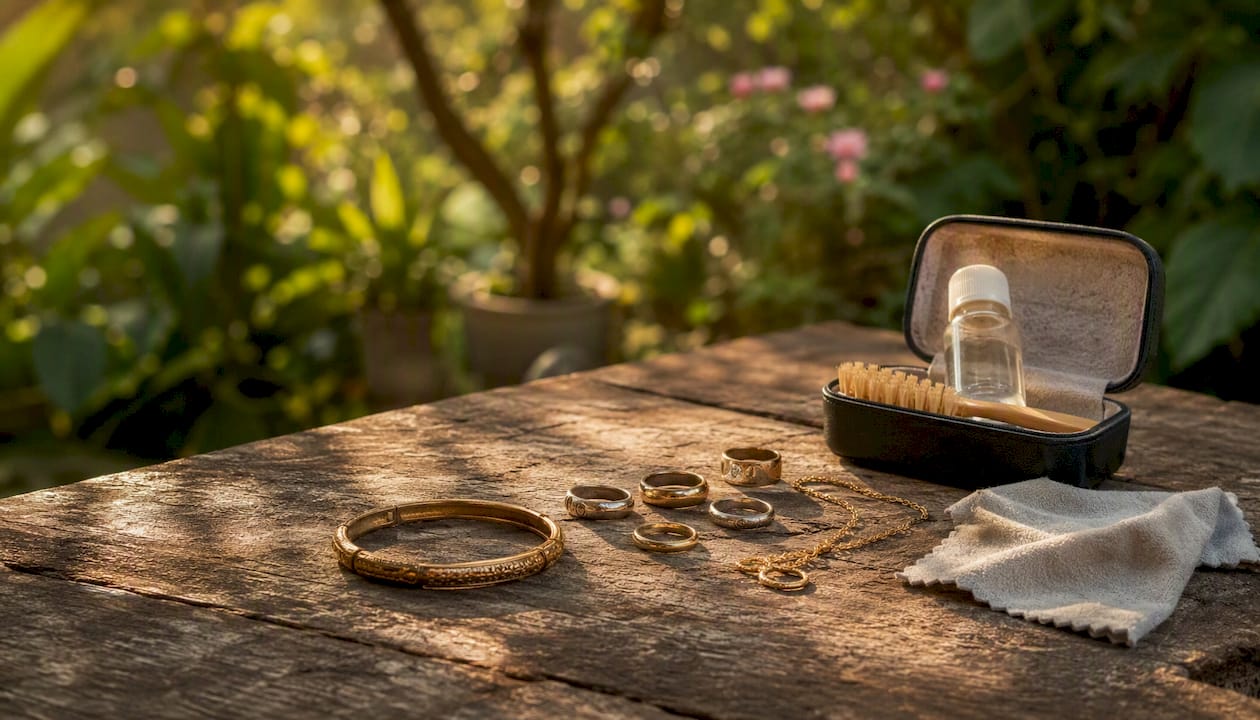
To test, clean the piece gently with warm water, a drop of mild dish soap, and a soft brush. Dry it with a microfiber cloth and inspect again. If the dullness lifts and the color is uniform, cleaning was enough. If the finish still shows base metal or uneven color, replating is needed.
Pro Tip: Run your fingernail lightly along the edge of a clasp or ring shank. Flash plating (very thin, under 0.5 µm) tends to wear through at a sharp, clean line. Thicker plating wears more gradually and shows a softer transition. A sharp, sudden color change usually means the original plating was thin to begin with.
How does professional gold replating actually work?
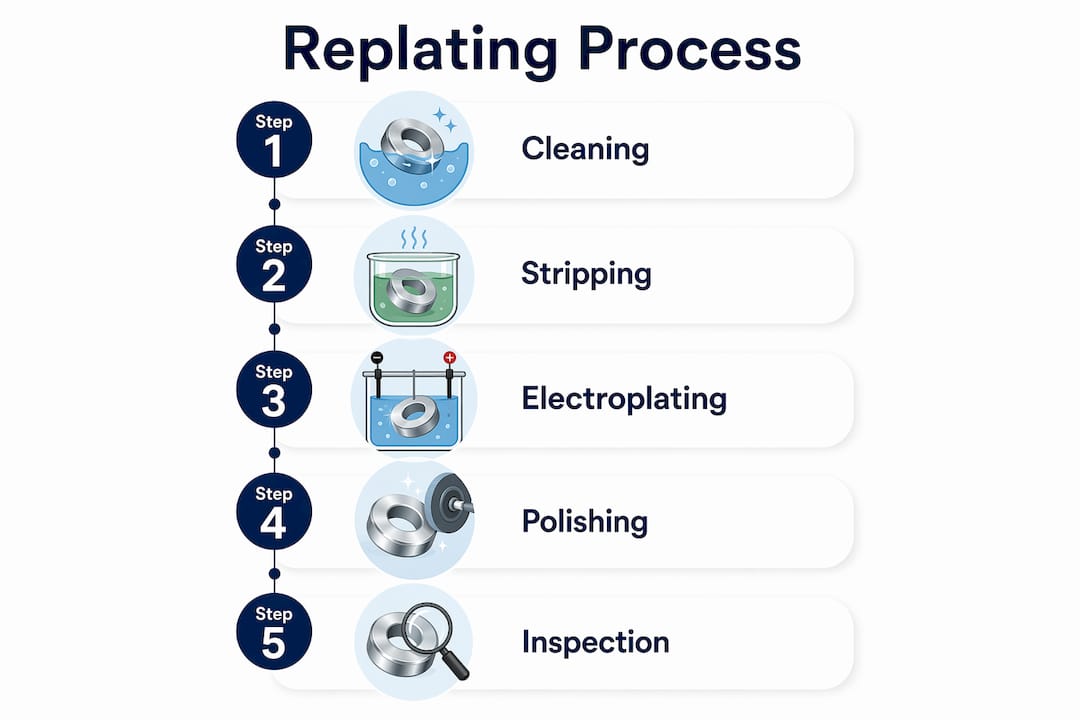
Professional replating is a multi-step electrochemical process, not a simple paint-over. Understanding the steps helps you ask better questions when choosing a jeweler.
The typical sequence runs: inspection → stripping old plating → polishing → ultrasonic cleaning → strike layer application (if needed) → electroplating → rinse and final inspection. Turnaround is usually 2–7 business days for standard work, up to 14 for complex or stone-set pieces.
A few terms worth knowing:
- Microns (µm): The unit for plating thickness. More microns means more durability.
- Flash plating: Under 0.5 µm. Looks great initially but wears through in months.
- Heavy plating: 2–3+ µm. Lasts years with proper care.
- Strike layer: A thin intermediate coat (often nickel, palladium, or copper) applied before gold to improve adhesion, especially on brass or copper bases.
- Gold vermeil: Sterling silver base with at least 2.5 µm of gold, per U.S. FTC standards.
- Gold-filled: A thick mechanical bond of gold to a base metal, more durable than standard plating.
- Rhodium plating: Used on white gold to restore brightness and protect the surface.
Base metal matters significantly. Stainless steel accepts replating well and resists oxidation between cycles. Brass and copper oxidize more readily, which can weaken adhesion over time and may require a strike layer at every service. Modern shops using pulse plating technology produce more uniform deposits and better wear resistance than older bath methods.
How long does replating last on gold jewelry?
Lifespan after replating depends on three things: plating thickness, the item’s position on your body, and your daily habits. Here are realistic ranges:
| Plating thickness | Typical lifespan | Best for |
|---|---|---|
| Flash (under 0.5 µm) | 3–6 months | Low-wear decorative pieces |
| Standard (0.5–1 µm) | 6–18 months | Pendants, earrings |
| Heavy (2–3+ µm) | 2–5 years | Rings, bracelets, daily wear |
Rings and bracelets wear through plating fastest because of constant friction against surfaces and skin. Pendants and earrings, which see far less abrasion, hold a finish much longer. High-friction geometries like ring shanks and clasp interiors need thicker plating and more frequent attention.
Sweat, body oils, lotions, and perfume all accelerate wear. So does sleeping or working out in your jewelry. Replating is not permanent; the new gold layer faces the same environment as the original. Stainless steel bases tend to hold replating longer than brass or copper, all else being equal.
What does gold replating cost in the U.S.?
Professional replating typically costs $30–$150 per piece at U.S. jewelry shops, with most items in the $50–$100 range. Factors that push the price up include:
- Piece size and complexity: More surface area or intricate links cost more
- Desired plating thickness: Heavy plating uses more gold solution
- Stripping and polishing: Needed when old plating is uneven or corroded
- Stone-set items: Require extra care to protect settings during the process
- Mail-in shipping and insurance: Add $15–$30 for insured round-trip shipping
Turnaround is generally 2–14 business days. For consumers with large collections needing frequent replating, a home plating kit can make economic sense once you’ve replated enough pieces to recover the upfront equipment cost. That said, DIY kits require practice to achieve a uniform finish, and professional service is still recommended for sentimental or high-value pieces.
Should you replate or replace the piece?
Use this checklist to decide:
- Does the piece have sentimental or design value? If yes, replating is worth considering even at higher cost.
- Is the base metal in good condition? No deep scratches, dents, or corrosion? Replating will adhere well.
- How many times has it already been replated? Multiple cycles without stripping can produce uneven layers.
- Does replating cost more than ~50% of a comparable new piece? If so, replacement is likely the better value.
- Is the design discontinued or irreplaceable? That tips the scale toward replating.
- Do you want zero maintenance long-term? Solid gold from 10K to 18K requires no replating, ever.
For pieces you wear every day and want to last a lifetime, solid gold is the practical choice. Replating is cost-effective for sentimental or high-quality pieces, but for inexpensive items, repeated replating costs can exceed the price of a replacement.
How do you choose a trustworthy replating jeweler?
Ask these questions before handing over any piece:
- What plating thickness do you offer, in microns? A good shop gives you a specific number, not a vague “thick coat.”
- Do you apply a strike layer? Critical for brass or copper bases.
- Do you have before-and-after photos of similar work?
- What is your warranty or guarantee on the plating?
- How do you handle stone-set items? Brush (selective) plating is safer for pieces with gems than full tank immersion.
- Is your shipping insured and tracked for mail-in orders?
Red flags: vague answers on thickness, no sample photos, recommending full replacement without inspecting the base metal first, or quoting only flash plating for a ring or bracelet.
Aftercare steps that extend your replated finish
The first 48 hours after replating matter most. Wait at least 24–48 hours before wearing the piece, and keep it away from water and chemicals during that window.
After that, a consistent routine makes a real difference:
- Clean gently with mild soap, a soft brush, and warm water; dry with a microfiber cloth
- Store each piece separately in an anti-tarnish pouch to prevent scratching
- Remove jewelry before workouts, swimming, or applying lotions and perfume
- Rotate pieces so no single item takes all the daily friction
- Apply a thin clear barrier coating only when your jeweler recommends it for your specific piece
Avoiding common gold chain mistakes like sleeping in jewelry or storing pieces loose together shortens the interval between replating services faster than almost anything else. For detailed storage guidance, Bakergoldchains has a full care guide worth bookmarking.
Pro Tip: After replating a ring, put it on last when getting dressed and take it off first. That single habit reduces contact with soaps, lotions, and perfumes by a significant margin and can add months to the finish.
What replating cannot fix
Replating is a surface treatment only. It cannot hide or repair what is underneath.
- Deep scratches and dents: The new gold layer follows the contour of the base metal. Scratches remain visible.
- Corroded or pitted bases: Poor adhesion on a compromised surface leads to early peeling.
- Repeated thin replating without stripping: Layers build unevenly and can flake in patches.
- DIY errors: Improper surface prep or wrong voltage produces thin, patchy finishes that fail quickly.
- Allergic base metals: If the base metal contains nickel and causes skin reactions, replating only delays the problem until the new layer wears through.
Always inspect the base metal before committing to replating. If a jeweler sees damage beneath the surface, professional stripping and a strike layer are the minimum standard for a result that lasts.
When should you buy solid gold instead of replating?
Replating makes sense when a piece has real sentimental or design value and the base metal is sound. Outside of those conditions, the math often favors replacement or upgrading to solid gold.
- Replate when: The base metal is undamaged, the piece is sentimental or irreplaceable, and replating costs less than half the price of a comparable new piece
- Replace or upgrade when: The base metal is corroded or dented, the piece has been replated multiple times, or you want a finish that lasts without ongoing maintenance
- Choose solid gold when: Lifetime durability is the priority and you want to stop the replating cycle entirely
Authentic 10K, 14K, or 18K solid gold never needs replating. Bakergoldchains carries solid gold chains, pendants, earrings, and bracelets sourced from U.S. suppliers, all backed by a lifetime craftsmanship guarantee. For buyers who want jewelry that holds up for decades without a maintenance schedule, solid gold is the straightforward answer.
Key Takeaways
Replate gold jewelry when the base metal is visible or cleaning fails to restore color; for lifetime durability, authentic solid gold eliminates the replating cycle entirely.
| Point | Details |
|---|---|
| Clean before replating | Try mild soap and microfiber first; replate only when base metal shows or plating flakes. |
| Lifespan by thickness | Flash plating lasts months; standard (0.5–1 µm) lasts 6–18 months; heavy (2–3+ µm) lasts 2–5 years. |
| U.S. cost range | Professional replating typically costs $30–$150 per piece, with most items in the $50–$100 range. |
| Replate vs. replace rule | If replating costs more than ~50% of a comparable new piece or the base metal is damaged, replacement is the better value. |
| Bakergoldchains solid gold | Authentic 10K–18K solid gold from Bakergoldchains requires no replating and carries a lifetime craftsmanship guarantee. |
The honest truth about replating that most guides skip
Most replating guides treat the process as a straightforward fix, and for the right piece, it is. But there is a pattern worth naming: many people replate the same inexpensive piece two or three times before realizing they have spent more on maintenance than the piece ever cost. The math is not always obvious in the moment, especially when the replating quote sounds modest at $60 or $70.
What I find more useful is asking a different question before you book a replating service: not “can this be replated?” but “is this worth replating?” A piece with real sentimental weight, a discontinued design, or a solid base metal is an easy yes. A fashion piece bought for $40 that has been replated once already is a much harder case to justify.
The other thing guides understate is how much the base metal determines the outcome. A stainless steel base will hold a replate well. A corroded brass base will not, no matter how skilled the jeweler or how thick the new gold layer. Honest inspection before any service is the step that separates a good result from wasted money.
For buyers who want jewelry that simply holds up without a maintenance calendar, solid gold is not a luxury upgrade. It is the practical, lower-effort choice over a ten-year horizon.
Skip the replating cycle with solid gold from Bakergoldchains
If you are tired of tracking when your pieces need replating and budgeting for repeat service visits, solid gold is the straightforward alternative. Bakergoldchains offers authentic 10K, 14K, and 18K solid gold jewelry sourced from U.S. suppliers, with a lifetime craftsmanship guarantee on every piece. No replating, no base metal showing through, no maintenance schedule.
A piece like the 14K yellow gold graduated bead necklace is built to wear daily for decades without a single trip to a jeweler for surface restoration. Orders over $150 ship free with full insurance. Browse the full collection at Bakergoldchains and find a piece you will never need to replate.
Useful sources
- Gold Replating Signs (Kartik Art) — Diagnostic guidance on when cleaning is enough versus when replating is required.
- How Long Does Gold Plated Jewelry Last? (Atlanta Findings Company) — Explains wear mechanisms and why replating is a recurring maintenance task, not a permanent fix.
- Gold Plated Replating Guide (Kartik Art) — Covers the replating process step by step, base-metal suitability, and U.S. cost ranges.
- How to Replate Gold Jewelry (JewelryMFG) — Detailed lifespan estimates by plating thickness and guidance on DIY versus professional service.
- Restore Gold-Plated Jewelry at Home (BriteCo) — Practical cleaning guidance and clear guidance on when home cleaning is no longer sufficient.
For a professional opinion on your specific piece, consult a local jeweler who can inspect the base metal in person before committing to replating.

